

Information on current losses of the Russian Federation due to sanctions as of 03.03.2026.
1. The decline in rail freight transportation in Russia deepened in February amid the general economic slowdown.
– RZD’s freight volumes decreased by 3.2% year-on-year to 84.2 million tons. After a brief stabilization last autumn, the decline resumed and continues year-on-year since October 2023.
– By the end of 2025, the load decreased by 5.6% to 1.116 billion tons, the lowest in 16 years. Over 35% of transportation consists of export cargoes, primarily coal, metals, oil, and oil products, which are sensitive to external market conditions and sanction restrictions.
– Freight transport is a key source of income for the monopoly, but the company faces increasing financial pressure due to the highest borrowing costs in two decades.
– The government and banks are discussing possible support measures — raising tariffs, debt restructuring, and selling non-core assets.
– This is an attempt to keep the systemically important company afloat amid stagnation and a structural reduction in the freight base, reflecting the overall exhaustion of the Russian economy.
2. Russia’s largest steel pipe producer TMK is suspending operations at one of its pipe rolling shops at the Pervouralsk New Pipe Plant due to weak domestic demand.
– The company stated that due to the overall industry situation, the production program has been adjusted, and some units whose products are currently not in demand will be temporarily halted.
– This effectively means a forced reduction in capacity utilization. The decline in demand for pipe products reflects a broader cooling in the investment and construction sectors, as well as curtailing infrastructure projects.
– For the industry, largely dependent on oil and gas and pipeline orders, this means a shrinking sales market and increased price pressure.
3. The Russian central bank has filed a lawsuit against the European Union in the EU General Court in Luxembourg, seeking to challenge the indefinite freezing of approximately 210 billion euros in sovereign assets blocked after Russia’s full-scale invasion of Ukraine.
– The regulator’s statement claims that the EU Council’s decision on December 12, 2025, allegedly violates the right of access to justice, inviolability of property, and the principle of sovereign immunity of states and their central banks.
– Moscow also claims that the regulation was adopted with procedural violations and essentially deprives the Bank of Russia of the opportunity to defend its interests in European courts.
– It concerns the largest volume of frozen Russian state funds abroad — mainly central bank reserves held in European financial institutions before the war began. The EU previously stated that the assets would remain frozen until the war ends and Russia pays reparations to Ukraine.
– The lawsuit is an acknowledgment that Moscow lacks the means to unblock the funds politically and is forced to resort to legal battles.
– At the same time, the process creates additional risks for the Russian side: the trial could draw more attention to the role of the central bank in financing the war economy and supporting the Kremlin’s budgetary expenditures under sanctions.
– Simultaneously, the Russian regulator has already filed a multi-billion lawsuit in Moscow against the European depository where most of the assets are held.
– However, the EU has repeatedly emphasized that the frozen funds will remain a tool of pressure on Russia until it ceases aggression and compensates for the damage caused.
4. The volume of frozen private assets of Russian citizens in Germany has decreased by about a third over two years.
– As of 2025, the amount of frozen assets is 2.9 billion euros. For comparison, in 2024, it was 3.3 billion euros, and in 2023, it was 4.4 billion euros.
– Before the full-scale war against Ukraine, the volume of frozen Russian assets in Germany was minimal — about 342,000 euros, but in 2022, after the sharp expansion of sanctions, it increased rapidly.
– Asset freezing is based on the 2014 EU regulation adopted after the annexation of Crimea. The document allows for sanctions against individuals involved in undermining Ukraine’s territorial integrity and independence.
– The German Ministry of Finance explains the reduction by stating that some sanctioned individuals have been removed from the lists after successfully contesting the restrictions in court. At the same time, the ministry is reassessing the mechanisms of individual sanctions in accordance with legal changes adopted in 2022.
– The decrease in the volume of frozen funds may also be linked to a weakening of control over compliance with sanctions. This poses risks to the effectiveness of the sanctions regime and requires additional attention from the government.
5. German electronic components continue to find their way into Russian military equipment, including drones.
– According to the War and Sanctions resource, about 137 components have been identified under the “Made in Germany” category, more than half of which are found in Russian drones. Others are found in missiles, radar equipment, military equipment, and helicopters.
– The most common are transistors, with pumps, chokes, generators, capacitors, transformers, and batteries also recorded. Products from the Bavarian company Infineon Technologies are most frequently mentioned.
– Other manufacturers include TDK Electronics, Würth Elektronik, Bosch, and Pierburg (a subsidiary of Rheinmetall).
– Some of these transistors can be freely purchased online — including on eBay — in small batches. Formally, supplies to Russia, Belarus, or Kazakhstan are restricted, but products may reach through third countries, such as Georgia or China.
– According to Ukrainian military intelligence, in many cases, Russian entities use front companies to order components directly in Europe, concealing the end recipient. Subsequently, the parts are either smuggled into Russia or go through intermediaries in third jurisdictions.
– The facts point to systemic gaps in the control of exports of dual-use goods.
– Despite sanctions, Russia maintains access to critical Western components, allowing the production of drones and missiles to continue the war against Ukraine.
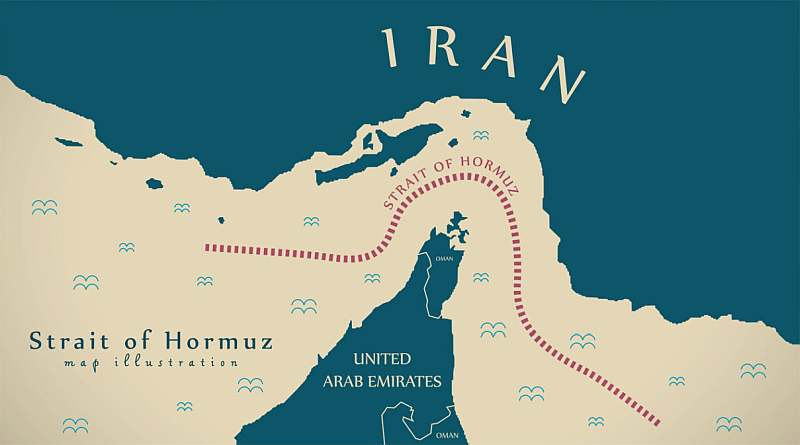
6. The blockade of the Strait of Hormuz could double gas prices in Europe.
– According to Goldman Sachs scenario assessments, a full blockade of the strait for one month could cause gas prices in Europe to rise by more than 130% to about 74 euros per MWh.
– If disruptions last for two months, quotes could approach 100 euros per MWh. This is a stress scenario, not a baseline forecast.
– About 20% of the world’s liquefied natural gas (LNG) shipments pass through the Strait of Hormuz, primarily from Qatar. Unlike the oil market, the gas segment has less flexibility: the infrastructure for LNG production and transportation is rigidly tied to specific capacities and routes, making quick rerouting difficult.
– Tensions in the market increased after reports of a production halt at Ras Laffan Industrial City — the world’s largest LNG complex operated by QatarEnergy.
– In light of these news, European gas futures showed a sharp rise: intraday dynamics exceeded 50%, and the Dutch benchmark for next month’s delivery ended trading in the mid-40 euros per MWh range — the highest level since March 2025.
– Ras Laffan provides about one-fifth of global LNG exports, so even a temporary halt creates significant risks for the global supply-demand balance.
– An additional factor of tension was the reduced passage of tankers through the Strait of Hormuz — a key energy flow artery from the Persian Gulf.
– Europe enters this period with gas storage reserves below average seasonal values and high dependence on LNG imports.
– Even without an actual prolonged blockade, the mere risk of escalation can maintain heightened volatility and exert additional pressure on prices.
7. China is secretly pressuring Iran not to block the Strait of Hormuz.
– Bloomberg, citing industry sources, reports that China has unofficially approached Iranian officials with a call to refrain from attacks on oil and gas tankers in the Strait of Hormuz area and not to disrupt energy exports, particularly Qatari LNG.
– Beijing also publicly called on all parties to the conflict to ensure the safety of shipping.
– The spokeswoman for China’s Ministry of Foreign Affairs stated that military actions must cease, escalation should be avoided, and the safe passage of vessels should be ensured.
– China is the world’s largest importer of oil and gas and heavily relies on supplies through the Strait of Hormuz, through which a significant portion of global energy trade passes.
8. Searches took place in the offices of EFG Bank Luxembourg, a subsidiary of the Swiss group EFG International, in Luxembourg.
– Investigative actions took place on February 24, 2026, with the participation of 24 police officers and two prosecutors as part of an investigation initiated in 2025 regarding compliance with anti-money laundering and counter-terrorism financing norms.
– EFG previously appeared in episodes related to dubious transactions with funds from Russia. In 2017, EFG Private Bank accepted about $100 million from a client from the Russian Federation, described as being close to Ramzan Kadyrov’s circle.
– Information about transfers in the interests of Kadyrov’s circle became known from court proceedings in the United Kingdom.
9. The Finnish Customs Service released data on the impact of EU sanctions on trade with Russia, stating that the key objectives of the restrictions have yet to be achieved.
– According to the agency’s director-general, despite a significant reduction in bilateral trade, the sanctions policy has not provided the expected weakening of the economic, technological, and military potential of the Russian Federation.
– According to the published data, before the full-scale aggression of Russia against Ukraine in December 2021, 955 Finnish companies exported goods to Russia, and 480 conducted imports. As of December 2025, only 25 companies continued to export to Russia, and 11 conducted imports.
– The share of the Russian direction in Finland’s foreign trade currently accounts for about 0.4% of exports and approximately 1.1% of imports, whereas in peak years it reached 11.6% of exports (2008) and 18.7% of imports (2011).
– The head of customs emphasized that despite the sharp decline in trade volumes, the EU recently did not introduce the 20th package of sanctions, even though the war has been ongoing for four years.
– According to him, the objective of the sanctions is to weaken Russia’s economic, technological, and military development, but this goal has not yet been achieved with the existing package of restrictions.
– In this context, he called discussions about the possible lifting of sanctions premature.
