
Maksym Maiorov / Local History
“Residents of Crimea, dissatisfied with the coup on the Maidan, organized themselves, defended against nationalist attacks and provocations, and held a referendum” — this was the official Kremlin stance on the events in Crimea at the beginning of 2014. The Russian propaganda was silent about the tens of thousands of military and civilians who were secretly brought to the peninsula during those days. However, the “Crimean Spring” would have been impossible without outside influence.
Greatness as the Only Salvation
“Crimea is not a disputed territory. Russia recognized the borders of today’s Ukraine long ago. Any discussion of such goals by Russia has a provocative tone”, said Kremlin dictator Vladimir Putin in an interview with ARD on August 29, 2008. Less than six years remained before the Russian invasion of the peninsula.
Since the dissolution of the USSR, Moscow faced a dilemma: to bring its person to power in Kyiv and gradually take control over the entire Ukraine or brutally seize part of the “brotherly” state, risking losing the rest forever. While Russians harbored hopes for Kuchma or Yanukovych, the harsh scenario was paused. However, the Kremlin’s favorites repeatedly disappointed. Meanwhile, Crimea was gradually integrating into an independent Ukraine. Time was playing against Russian imperial ambitions.
Putin’s third presidential term began with mass protests on Bolotnaya Square at the turn of 2011-2012. To quell public dissatisfaction, the Kremlin needed victories but was unable to achieve them peacefully and humanely. The proven means remained — the imperial drug called “greatness”. At the beginning of 2014, the corrupt Yanukovych regime in Kyiv collapsed. Ukraine’s administrative vertical was effectively destroyed, the power block paralyzed, and opponents of the Euromaidan were dissatisfied and sought revenge. It was the perfect moment to act.
On March 1, 2014, the Russian representative at the UN, Vitaly Churkin, presented a copy of a statement by Viktor Yanukovych: “As the officially elected President of Ukraine… I appeal to the President of Russia, Putin, to use the Armed Forces of the Russian Federation to restore law and order, peace, legal order, stability, and protect the population of Ukraine”. However, later on the departmental medal of the Russian Ministry of Defense “For the Return of Crimea,” awardees saw a different chronology of the Kremlin’s special operation: February 20 — March 18, 2014.
Silent, therefore polite
At the beginning of 2014, a significant contingent of the Ukrainian Armed Forces, border guards, internal troops, special units of the Ministry of Internal Affairs, and the Security Service of Ukraine were stationed in Crimea — totaling over 20,000 individuals. They were armed with tanks, armored vehicles, artillery systems, anti-aircraft, and coastal missile systems, among others. In Sevastopol and at Lake Donuzlav were based 17 warships, approximately 30 support vessels, and a number of different types of cutters of the Navy. The flagship “Hetman Sahaidachny” was returning from the anti-piracy operation “Atalanta” in the Gulf of Aden and thereby avoided capture. The border guards also had their own ships and cutters.
The head of the coastal defense forces, Ihor Voronchenko, already had experience in restraining the Russians. During the crisis around the Tuzla Spit Island in the fall of 2003, he, as the commander of the 501st separate mechanized regiment, was in full combat readiness to meet them in Kerch. However, at that time, political circumstances did not allow the commanders to realize their military talents.
The contingent of the Russian Black Sea Fleet in Crimea amounted to 12.5 thousand military personnel. Most of the units were located in Sevastopol. There were all its ships and the main ground force — the 810th separate marine brigade. Russia leased two airfields from Ukraine — in Kacha near Sevastopol and in Hvardiiske near Simferopol.
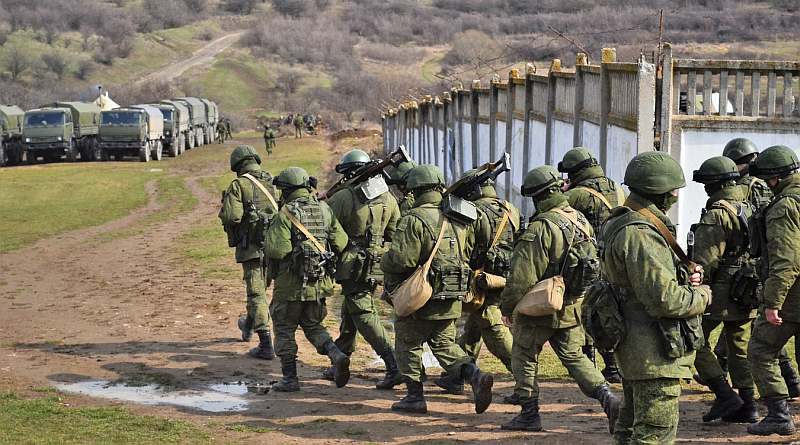
During February-March 2014, Russia deployed nearly 30,000 more soldiers to the peninsula. Initially, they were transported covertly — by landing ships and military transport aircraft. Mostly these were motor rifle, airborne units, and special forces. These military personnel appeared in the streets of Crimean cities without insignia or state affiliation but in new and impressive “Ratnik” gear. Crimean residents ironically nicknamed the strangers “little green men.” In contrast, Russian propaganda invented the nickname “Polite People” for them. The politeness was primarily characterized by silence.
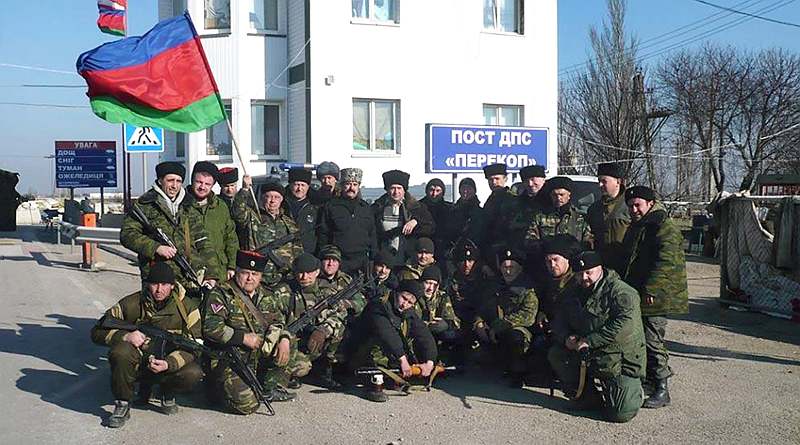
The peninsula also saw a mass arrival of men in civilian clothes: athletes, political activists, Serbian Chetniks. On February 28, an Il-76 flew from the Moscow region to Hvardiiske with a group of Afghan war veterans, security firm employees, bikers, and others — a total of 170 militants. They were accommodated in the military sanatorium “Yalta” in the city of the same name on the southern coast. Several thousand representatives of the Kuban Cossack army arrived by ferry from the Krasnodar region. Many of them had experience in “hot spots.” The Apostle Andrew the First-Called church (of a well-known patriarchate) in Kerch served as a transit point for the Cossacks.
There was no shortage of locals deceived by propaganda either. Sevastopol’s “Berkut,” which had acted as an instrument to suppress Euromaidan, quickly sided with the enemy. Pro-Russian political forces activated. The “self-defense” of Crimea, headed by Mikhail Sheremet, met in the office of the “Russian Unity” party in Simferopol. Abducted activists Reshat Ametov, Andriy Shchekun, and Anatoliy Koval’skyi were held “in the basement” at this address. Nearby, at the republican military commissariat, militants of the “Crimean army” camped out. Future “stars” of the war in Donbas Igor Girkin (“Strelkov”) and Igor Bezler (“Bes”) were in charge here.
Assault under the cover of pensioners and children
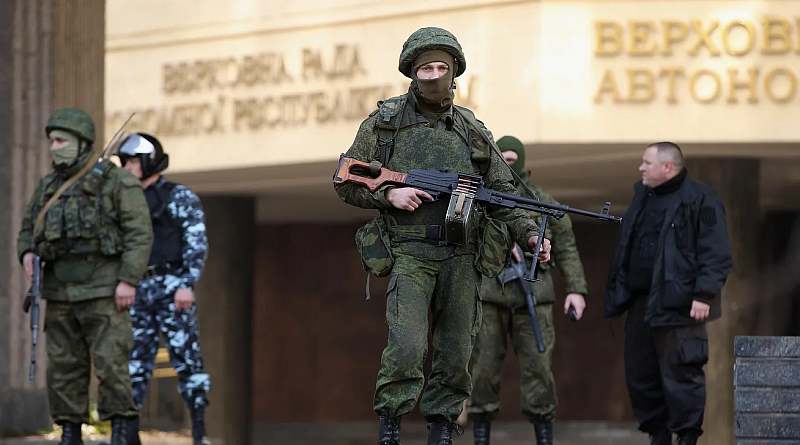
The occupation began with the seizure of government bodies. On February 27, around 4:00 AM, a well-armed detachment of Russian special forces took over the building of the Supreme Council of the ARC. Subsequently, “little green men” also stormed the Crimean government. From then on, the deputies and ministers of the autonomy operated under Moscow’s oversight.
Checkpoints appeared at the entrance to Crimea. The transportation blockade of the peninsula was organized in layers: at the front stood the “Berkut” officers, behind them the Kuban Cossacks, then the naval infantry of the Black Sea Fleet, and deep in the rear, motorized rifle units with heavy equipment and weapons.
Another priority target for the invaders was the airports. Civil militants and Russian military occupied the “Simferopol” airport and military airfields in Belbek, Novofedorivka, Kirovskoye, and Dzhankoy.
All Ukrainian military units were subsequently besieged. The Russian fleet blocked our ships from the sea. As success increased, so did the occupiers’ audacity. They no longer hid and seized the ferry crossing. Echelons of equipment and soldiers openly moved across it.
Before capturing military units, the Russians encouraged them to switch sides. They knew that most Ukrainian military personnel were not inclined to shoot. They claimed a coup had taken place in Kyiv, nationalists had seized power, and they planned to retaliate against Crimea residents. They appealed to “brotherly feelings” and promised high salaries and career advancement. Ultimately, they intimidated and blackmailed.
The assault on the units followed a typical scheme: a noisy crowd of civilians, including pensioners, women, and children, moved towards the gates and passages. They were backed by several dozen militants—Cossacks or “self-defense.” Behind them stood equipped Russian soldiers, ready to use weapons in case of resistance. If civilians and Cossacks could not independently overcome the barriers, “little green men” broke through them with trucks or armored vehicles. Everything happened just as Putin warned at a press conference: “Let someone try to shoot at their people, behind whom we will stand. Not in front, but behind. Let them try to shoot at women and children.”
Treachery and Resistance
Post-revolutionary Kyiv did not have a successful plan to protect Crimea. They relied on international arbitration — open war with Russia seemed futile. Therefore, the instruction to their military was simply to “hold on” and “not succumb to provocations.” On March 2, the commander of the Navy, Denys Berezovsky, who had been appointed to this position just a day before, defected to the Russians. Some senior officers, like the commanders of the 36th Coastal Defense Brigade Serhiy Storozhenko and the 501st Marine Battalion Oleksandr Saienko, hesitated for a long time and ultimately did the same. The new Navy commander Serhiy Haiduk, head of the Coastal Defense Directorate Ihor Voronchenko, commanders of the 1st Marine Battalion Dmytro Delyatytskyi, and the 204th Tactical Aviation Brigade Yuliy Mamchur held out to the very end and were captured.
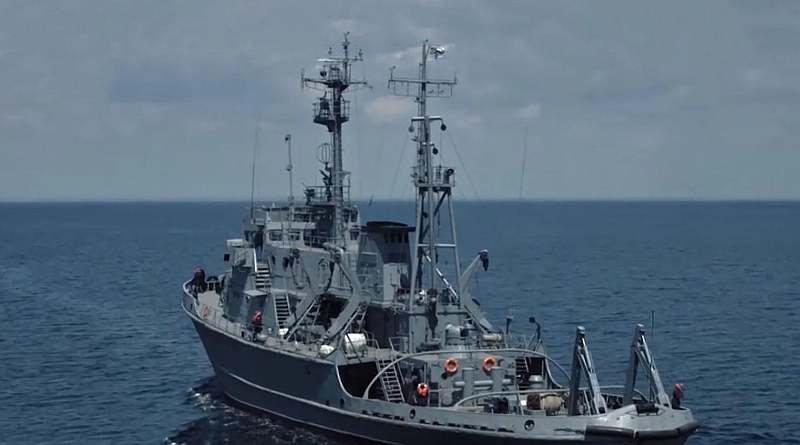
The border guards took the initiative. Ships from the Sevastopol and Kerch Marine Guard detachments slipped out of Crimean harbors and made it to Odesa and Berdiansk. Aircraft and helicopters of the 10th Naval Aviation Brigade led by Ihor Bedzai managed to escape. They flew from Novofedorivka to the Kulbakino airfield near Mykolaiv. The legendary minesweeper “Cherkasy” became a symbol of resistance. Blocked by sea and land in Lake Donuzlav, the crew, led by Yuriy Fedash, refused to surrender. On March 25, the Russians captured the ship using three boats with special forces and two combat helicopters. “Cherkasy” was the last military unit in Crimea under the Ukrainian flag. The occupation was not bloodless. During the assault by Girkin’s militants on the 13th Photogrammetric Center of the Navy in Simferopol, Ukrainian warrant officer Serhiy Kokurin was killed by gunfire.
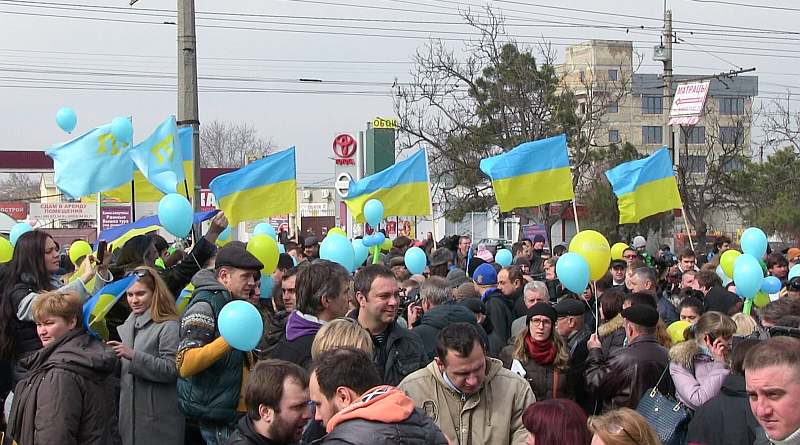
There is still a widespread myth about the total pro-Russian sentiment of Crimea’s residents and the lack of civil resistance to the occupation. However, the armed intervention by Russia began, among other reasons, because the separatists’ potential was insufficient for an independent “return to the native harbor.” On February 26, a day before the capture of the parliament and government, two rallies gathered in front of the Supreme Council of the ARC: one for Russia, and the other for the unity of Ukraine. The Crimean Tatar Mejlis managed to mobilize more supporters than Sergey Aksyonov’s “Russian Unity.” On that day, the autonomy’s deputies did not dare to make anti-state decisions. On March 3, Reshat Ametov held a solo protest in front of the Council of Ministers of the ARC. He was kidnapped, tortured, and killed by “Crimean self-defense” militants. The rallies were especially massive on the Shevchenko holiday on March 9. Hundreds of people came out in support of Ukraine’s unity in different cities, exposing themselves to attacks, kidnappings, and torture.
The protest actions were coordinated by the civic organizations “EuroMaidan-Crimea” and “Maidan-Sevastopol.” Activists from the Euromaidan came from Kyiv to help. Some of them, like journalists Olena Maksymenko, Kateryna Butko, and Shura Ryazantseva, were captured at a checkpoint by Berkut officers. Residents of the peninsula helped our military in the blocked units by passing them food, cigarettes, and clean clothes. It was during this time that the powerful Ukrainian volunteer movement began to emerge.
Referendum without an alternative
The first decisions made in the name of the captured Supreme Council of the ARC on February 27 were to schedule a “referendum” and replace the prime minister: instead of the “regional” Anatoliy Mohyliov, Sergey Aksyonov was chosen. His party had three deputies out of a hundred in parliament. It is unclear whether the necessary quorum was even present in the hall at that time. A major success for Moscow was the collaboration of Vladimir Konstantinov, who was the head of the republican parliament at the time. He still leads the Russian “deputies” of Crimea.
The Kremlin sought to carry out the annexation as quickly as possible. The date of the referendum was changed several times. Initially, this event was to take place on May 25, then it was moved to March 30, and finally settled on March 16. Participants were asked to decide whether they were for “reunification with Russia as a subject of the Russian Federation” or for “restoring the Constitution of the Republic of Crimea of 1992.” The second option was unclear to many, and the option to “leave everything as it is” was not provided at all.
“Reunification” was supported by 96% of Crimea’s residents, according to Russian propaganda. Independent estimates indicate that the turnout for the fake “referendum” was only 32%. People voted whoever and as many times as they wanted. The very next day, the Supreme Council of the ARC adopted an illegal resolution on Crimea’s independence and asked the Kremlin to incorporate this “state” into the Russian Federation as a federal subject. On March 18, Aksyonov, Konstantinov, and the “people’s mayor” of Sevastopol, Chaly, signed the corresponding agreement with Vladimir Putin. Three days later, the Kremlin dictator signed the “act,” which was ratified by the Federal Assembly. At that time, not even all Ukrainian units in Crimea had come under enemy control.
