
Dr. Jack Watling, RUSI / Translation by iPress
Senior Research Fellow at the Royal United Services Institute (RUSI) Jack Watling warns: despite Russia’s inability to secure victory, it is betting on exhausting Ukraine and dividing the West and plans to continue the war through 2026. According to Watling, the only path to sustainable peace is to demonstrate Ukraine’s ability to resist for a long time while simultaneously increasing the cost of the war for the Kremlin. Meanwhile, US proposals for peace on unfavorable terms are dangerous as they undermine Europe’s trust and could leave Ukraine in a defenseless position. Therefore, the key task remains continuous military, economic, and political support for Ukraine from Europe until Russia feels enough pressure to engage in genuine negotiations.
Russia’s full-scale invasion of Ukraine is entering its fifth year, and both Russia and Ukraine are feeling increased pressure. For Ukraine, the question is whether it can achieve a mutually painful stalemate that leads to a ceasefire. For Russia, the plan remains unchanged—to exhaust Ukraine’s ability to resist. However, under current conditions, a cessation of hostilities is dangerous for both Kyiv and the Kremlin.
International attention is focused on negotiations imposed by the US. Washington offers Ukraine security guarantees if it agrees to withdraw from the remaining territories in Donbas. At the same time, US rhetoric regarding Europe and its National Security Strategy have undermined confidence that these guarantees will be fulfilled. Moreover, the territories Ukraine is offered to leave form its defensive belt, and withdrawing from them would force its troops to take unprepared and unprotected positions. As a result, any breach of the truce during the implementation of agreements would leave Ukraine in a significantly weakened military position. In short, the US proposal is poor.
Meanwhile, Russia maintains a maximalist position. The Kremlin believes it can continue the war until 2027 and views the current negotiation process as a means to divide the transatlantic alliance. Europe is rearming, but this takes time, so many European states believe that a sudden truce on unfavorable terms would expose the continent to serious risks. The White House wants a quick ceasefire to pave the way for restoring economic relations with Russia. However, given that Russia spends approximately 500 billion dollars a year on defense (in purchasing power parity) and is unlikely to reduce this spending in the event of a ceasefire, lifting sanctions in Europe is considered very dangerous. Therefore, the US and the EU have diametrically opposite goals.
At the same time, the US has ceased providing significant military assistance to Kyiv, even hindering European purchases of American weapons through the PURL system. Although the European defense industry is expanding production, Kyiv still lacks critically important supplies. European unity is also under constant attack from Russian sabotage forces, which gives the Kremlin reason to hope that the current level of support for Ukraine may decrease, directly impacting the battlefield situation.
Conditions for Russia and Ukraine
Russia has managed to destroy a significant part of Ukraine’s energy network. While this is felt most acutely in winter during low temperatures, the consequences will have a lasting impact on public services, education, and industry. The result may be an increase in the number of Ukrainian refugees heading to Europe. Russia will use this to intensify hostility towards Ukrainians, playing on Europe’s concerns about economic migration, and will try to divert Europe from the foundation of Ukraine’s resilience: military-technical assistance.
Over the past year, Russian gains have been made possible by the increased lethality of Russian shelling and the reduction in Ukrainian troop numbers, enabling Russia to conduct infiltration and undermine Ukrainian defensive positions. However, throughout 2025, some of Ukraine’s most effective units developed methods for conducting offensive operations in modern conditions. This enabled successful counteroffensives in the Kupiansk direction and in the south of the country. The question for Kyiv is whether the tactics of these units can be spread to the rest of the front. Improving the training process in Ukraine is key to addressing the issue of army formation and thus strengthening frontline units so that Russia cannot continue its infiltration tactics when vegetation returns in spring.
Russia is likely able to maintain the current level of mobilization despite high losses from Ukrainian fire, although an increasing share of recruits are mobilized reservists or forcibly conscripted rather than volunteers. If Russia continues to achieve steady advances or accelerates them, the Kremlin will persist in these efforts. If progress significantly slows, Putin’s perception of his prospects may change, particularly amid rising internal political risks.
A critically important factor is the damage Kyiv and its partners can inflict on Russia while the Ukrainian army holds the front. Kyiv’s long-range attack drones have diminishing impact as Russia increases the density of its passive defense systems. But long-range cruise missiles provide the opportunity to hit many more targets. Individual European countries have laid the legal groundwork for systematically intercepting Russia’s shadow fleet, but have so far avoided implementing such measures. The Russian economy is capable of continuing the war, but with reserves depleting and debt rising, it also becomes more vulnerable to shocks. The question is whether Europe is ready to apply pressure.
For Kyiv, a ceasefire threatens the loss of territories with strategic military significance, with no real prospects for sustainable security. Politically, it will be difficult for Zelensky to “sell” this domestically. Therefore, Ukraine will likely continue to fight and must demonstrate to Russia that it can wage war for a long time. The Kremlin, in turn, believing that it can achieve militarily what is currently being discussed diplomatically, and sensing that its pressure increases over time, will continue negotiations but essentially drag out the process. If Russia does not suffer significantly greater losses or more substantial economic damages, its aggression will persist.
Thus, for Europe, three policy directions must remain unchanged: aggressive counteraction to Russian subversive activities, constant supply of weapons to the Ukrainian army, and active sanctions policy against Russia. The USA will try to accelerate the end of the conflict. However, since Washington has ceased a significant portion of its support for Ukraine, undermined allies’ trust, and made it clear that it will avoid serious pressure on Russia, its influence is quickly diminishing. If a deal imposed by the USA does occur, the stability of future peace will be doubtful.
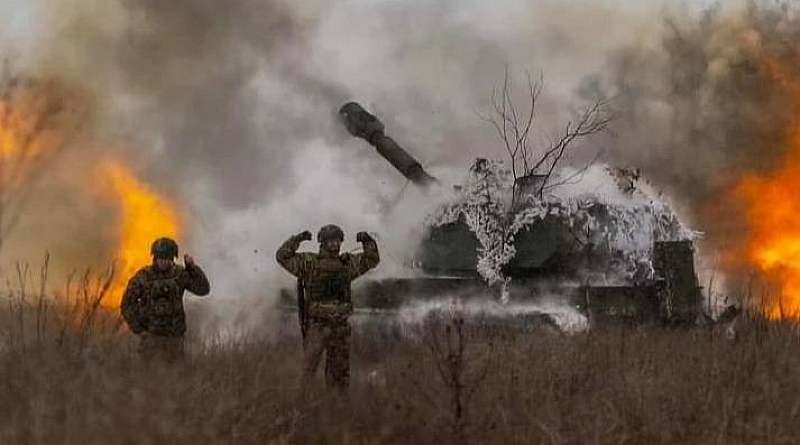
Photo: General Staff of the Armed Forces of Ukraine
