
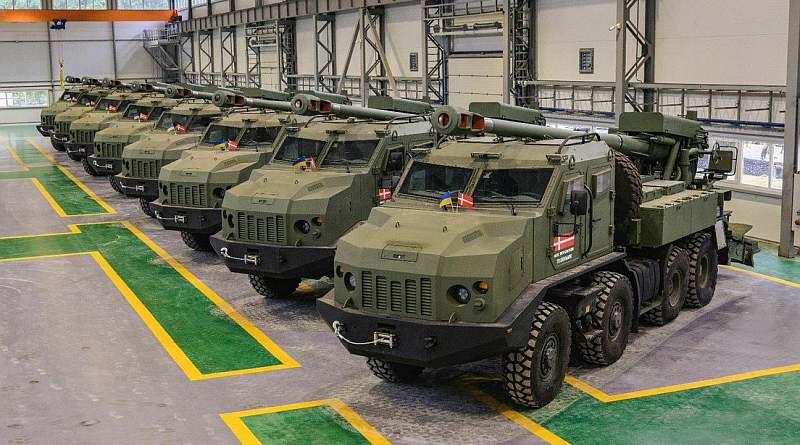
At least two Ukrainian defense companies are starting to build their production facilities in Denmark. The choice of Denmark is a cold, honest, harsh, and absolutely pragmatic calculation by both sides. We gain safe and reliable production, protected from Russian attacks. Denmark builds its advanced defense line thanks, in part, to our technologies, as for them, it’s a question of physical survival in a future major war. The government of Mette Frederiksen takes the most radical position regarding support for Ukraine, ignoring Russia’s threats of “escalation” over the production of fuel for Ukrainian missiles on Danish soil.
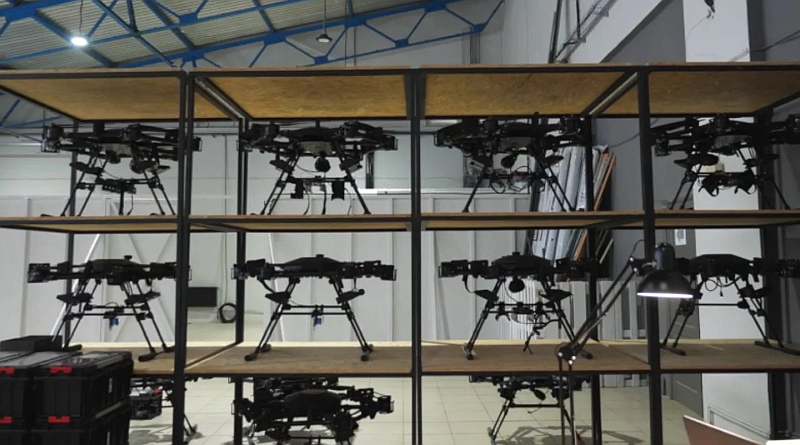
Skyfall — interceptor drones
On Tuesday, February 24, 2026, the Danish Ministry of Defense officially confirmed the start of negotiations with the Ukrainian company Skyfall regarding the opening of production facilities on Danish territory.
Skyfall is a Ukrainian miltech startup, known for its unmanned systems, including attack drones and interceptor drones (such as the Shrike model or heavy “Vampires”). Currently, the company is assembling around five thousand “Vampires” per month and needs facilities that are immune to “Iskanders” and “Kinzhals.”
The goal is to create strategically important production to meet the needs of both the Ukrainian Armed Forces and potentially Denmark itself. This is the second major Ukrainian manufacturer entering Denmark. Interceptor drones against “Shaheds” and heavy platforms for bombing strategic targets, supply, and remote mining. It’s logically necessary for both sides.
Fire Point — rocket fuel
Fire Point became the first Ukrainian defense enterprise to start large-scale production abroad, specifically in Denmark. In December 2025, in the city of Vojens, southern Denmark, construction began on a factory for the production of solid rocket fuel and gunpowder.
Fire Point specializes in:
– deep strike drones (FP-1) and medium range (FP-2) — hundreds of successful strikes;
– cruise missiles FP-5 Flamingo — a stumbling block whether they exist or not, discussions have been ongoing for many months, recently proof landed in Votkinsk;
– ballistic missiles series FP-7 and FP-9 — I think the fuel is for them.
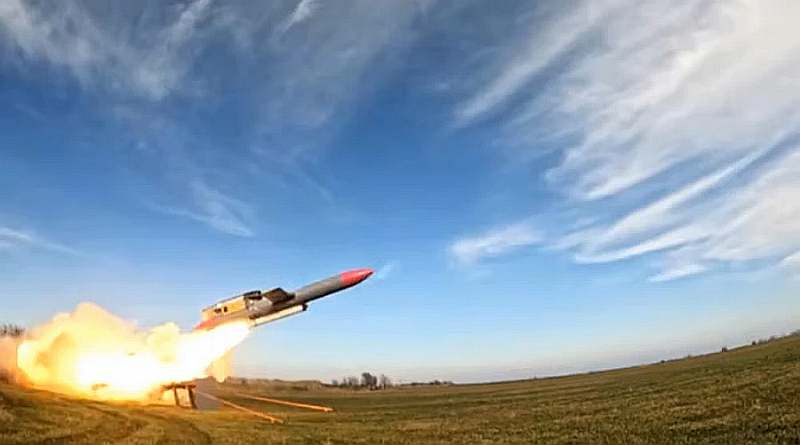
The plant is located near the Skrydstrup airbase, providing logistics and security. Production is set to begin full scale in the fall of 2026 — scaling not only Kotluban, Votkinsk, and hits on “Oreshnik”, but also ballistic targets that are only being brought to pre-series production.
“Danish Model” of Financing
Denmark was the first country to start financing weapons production directly in Ukraine, and now joint ventures on its own territory. In 2025, Denmark allocated over €1.26 billion to support Ukrainian production of only long-range drones.
Production within the NATO country is protected from Russian missile strikes, ensuring stability of supply (Security of Supply).
Denmark has a developed high-tech sector (wind energy, shipbuilding, IT), which is ideally suited for integration with Ukrainian combat experience in UAVs and breaking through strong air defense and electronic warfare.
Geographically, Denmark is the cork in the neck of the Baltic Sea. They control the straits through which the Russian Baltic fleet from Kaliningrad and St. Petersburg will attempt to break into operational space. To avoid being trapped at bases between minefields and Storm Shadow/SCALP strikes. Danes have lived for generations with the understanding that in the event of a direct confrontation, Russians will attempt to break through this corridor.
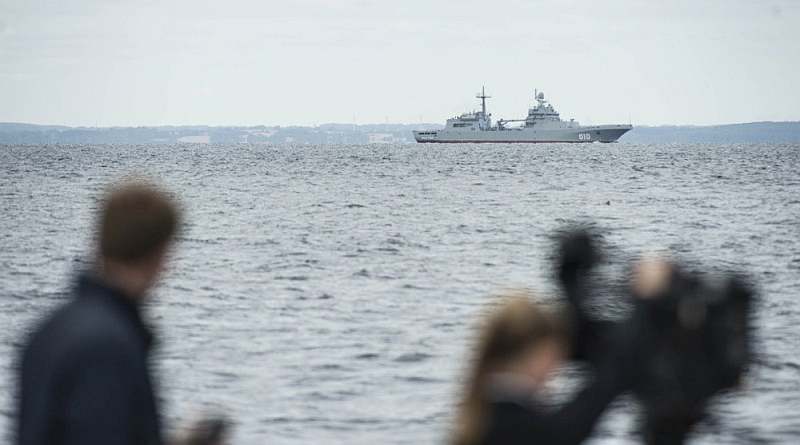
Now that the Baltic has become NATO’s internal sea following the accession of Sweden and Finland, Denmark has transformed into the main logistics and technology hub of this northern fortress. Placing Ukrainian factories for the production of solid rocket fuel and strike drones there means hiding them in the most unreachable missile-safe, firmly covered by the umbrella of unified Scandinavian air defense and hundreds of fifth-generation aircraft.
The Scandinavian fleets are formidable, technological, and very dangerous—the C-2 submarine that surfaced under the ice of the Gulf of Finland and the battleship “Marat,” which took a hit in the stern in 1939, attest to that.
Additionally, it’s a matter of political courage and bureaucratic speed, which the old European giants completely lack. While the EU as a whole ponders mythical “red lines” and sinks into negotiations, and the USA is dependent on internal political swings, Copenhagen acts like a daring military startup. They were the first to realize that the old doctrine was stalling and launched the famous “Danish model.”
The essence of this model is in numbers and pragmatism: they were the first to start pouring money not into the purchase of Western scrap through major overhauls, but directly into Ukrainian defense factories. In 2024, they allocated the first 1.2 billion Danish kroner (around $170 million) to pay for the production of 18 “Bohdana” self-propelled artillery units, which went to the front just two months later. Subsequently, this sum of direct investments in the Ukrainian defense industry increased to 4.2 billion kroner (about $600 million), to which they also added frozen Russian assets.
This model has now evolved: from direct financing in Ukraine to the creation of joint ventures on Danish territory with budgets measured in hundreds of millions of euros.
The merger of Ukrainian survival experience in this technological meat grinder and the Danish industrial school creates the perfect symbiosis. Our companies, relocating drone assembly or rocket fuel chemical production there, gain legal access to Western dual-purpose supply chains. They no longer need to smuggle in chips, sensors, or fuel precursors under the threat of a ballistic strike on the workshop. In Denmark, they become legal, operate by NATO standards, and quietly mass-produce weaponry, which then travels directly to our front lines via logistical routes.
Essentially, this is a brilliant strategic move. Denmark buys itself security and access to the technologies of tomorrow’s warfare without sending its people to the trenches. And we receive an uninterrupted, invulnerable conveyor that cannot be reached by either the “Iskander” or sabotage. We have now learned to place its gears out of the enemy’s reach, so they work to our advantage.
