
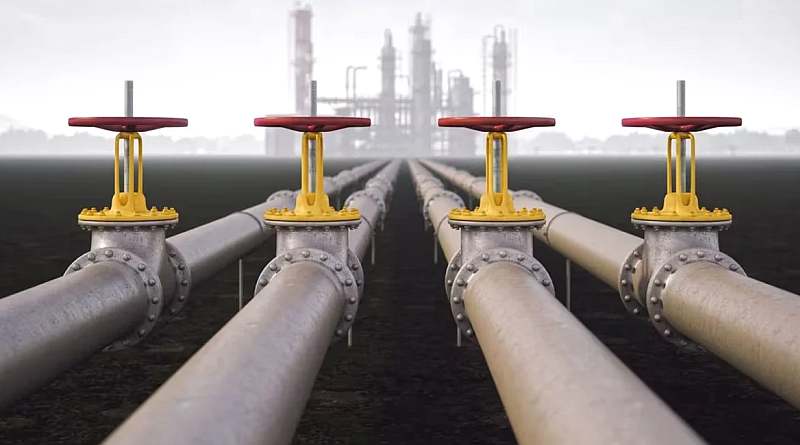
Due to the shutdown of the “Druzhba” pipeline, Hungarians and Slovaks stopped selling diesel to Ukraine and threatened to cut off electricity exports. What could be the consequences for us, and who is responsible for the damage to the sinister pipeline?
Harsh Words and Economic Ties
The hostile positions of Hungarian Prime Minister Viktor Orban and Slovak Prime Minister Robert Fico have become a part of wartime routine for Ukrainians. In our eyes, these states are gradually gaining the image of Belarus: though not directly involved in the war on Russia’s side, they are helping in various ways.
Behind the sharp rhetoric lies important economic pragmatism for all parties. Historically, Slovakia has been our main hub for reverse gas flow from the EU, freeing us from direct dependence on Russia’s Gazprom. Both countries are closely linked to Ukraine’s energy system. The import of electricity through their borders saves us from prolonged blackouts. The Hungarian company MOL and Slovak Slovnaft are important suppliers of diesel fuel and gasoline to us.
On the other hand, Hungary and Slovakia still depend on the transit of Russian oil through Ukrainian territory via the “Druzhba” pipeline. The leader of the Slovak industry (U.S. Steel Košice plant) critically depends on the supply of iron ore from Ukraine. Hundreds of thousands of Ukrainian workers have become a real salvation for Hungary and Slovakia, whose economies suffer from a demographic crisis.
On January 27, due to a Russian attack, the mentioned “Druzhba” pipeline was damaged, resulting in its shutdown. This prompted the Hungarians and Slovaks to announce the halt of diesel exports to Ukraine. Soon, there were also threats to cut off electricity supply.
A Pipe from Russian Friends
Who is responsible for the damage to “Druzhba”? Ukraine claims it was caused by a massive missile-drone attack by Russia that took place on January 27, 2026, when the Russians struck near the town of Brody in the Lviv region. According to Ukrtransnafta, technological equipment and one of the largest oil reservoirs were damaged. As of late February, repair work is ongoing but is being delayed by shelling and the complexity of the damage.
Orban and Fico have a different version of events. They believe Ukrainians are intentionally delaying repairs or even simulating the impossibility of transit to pressure Budapest and Bratislava. Ukraine allegedly wants to force them to unblock aid and the EU accession process.
Their main argument is that Ukraine has already contributed to stopping the oil flow to the neighbors. Specifically, in August and December 2025, the Armed Forces of Ukraine and the Defense Intelligence of Ukraine confirmed strikes on “Druzhba” facilities in Russia (at the “Unecha” station in the Bryansk region).
One way or another, this time our western neighbors have decided to demonstrate not only verbal protest. How critical could the halt of diesel and electricity imports be for us? Let’s figure it out further.
No Need to Worry About Diesel
In a comment for Weekly, the director of the consulting group “A 95,” Serhiy Kuyun, stated that there’s no need to worry about the halt of Hungarian-Slovak supplies: “They are not that large (up to 10% of the market), and we have managed without them several times before. The last time was in the fall of last year. Nothing significant happened. We have substitutes.”
The expert claims that the losses for Hungary from stopping “Druzhba” will be significantly larger: “Orbán will have a hard time: he needs to use strategic oil reserves while also transporting Russian oil by sea and pumping it through Croatia (which seems to have agreed, though it proclaimed the inadmissibility of Russian oil imports. What pacifists!). This will be long and expensive. All these years, Orbán has stated the impossibility of diversifying supplies, and now that things got heated, he ran to the Croats seeking help with the pumping. Ironically, the Russian friends themselves stopped this flow by attacking the oil pumping station in Brody at the end of January.”
Indeed, throughout 2025, Hungary and Slovakia’s share in Ukrainian diesel imports dropped to about 10%. Ukraine has reoriented to supply through Poland and seaports (Greece, Romania). Currently, over 80% of fuel comes this way.
The consequences may include short-term price spikes, but a global deficit at gas stations is not forecasted.
Another Matter with Electricity
In January 2026, Hungary and Slovakia provided up to 70% of the total electricity imports to Ukraine (about 50% from Hungary, about 20% from Slovakia). These are significant volumes, and a halt in their supply could substantially impact Ukraine. To understand the volumes, we import about 2 GW, and the total demand is 16–17 GW, meaning imports cover 11–13% of our needs.
In a comment for Weekly, the analyst of the company “NaftoRynok” Oleksandr Sirenko confirmed that Hungarian-Slovak supply is important for us, yet it’s not so critical: “Here’s the thing, these are not free supplies; Slovakia or Hungary didn’t just decide to help Ukraine with electricity. It’s all on a commercial basis agreed between traders, at far-from-subsidized prices. Basically, it’s business for Slovak and Hungarian companies.”
“If needed, Ukraine can replace the resource from other sources. Maybe not entirely, but some part for sure. Even last year, there was an instance when the line with Slovakia went for repair for about two months. And Ukraine imported electricity normally; the supplies were replaced.”
Alternatives for Ukraine are primarily Poland and Romania. The Poles have already declared their readiness to help by increasing generation and exports to Ukraine. Of course, their capacities will not be enough if the Hungarians and Slovaks completely cut off supplies, but warming and increased solar generation with the onset of spring should help us.
Waiting for Elections
If the neighbors do indeed cut off our electricity supply, it will mark the beginning of a new phase in their political confrontation with Ukraine. After all, it would be a direct blow to the nation’s ability to survive under the harsh conditions of genocidal war. Most likely, the parties will again reach a temporary compromise, as economic suicide is not part of the plans of Kyiv, Budapest, or Bratislava.
Perhaps we won’t have to endure Hungarian hostility for much longer. Parliamentary elections will take place there on April 12, and Orban’s party “Fidesz” is currently trailing behind the opposition party “Tisa,” whose rhetoric is significantly more favorable to Ukrainians.
