Four years since that terrible day when full-scale war invaded every Ukrainian home. And twelve years since Russia began its invasion, annexing Crimea and igniting war in Donetsk region.
For some, this great war somehow came as a surprise. For others, it did not. I believe it’s more logical to prepare and thus deter the aggressor from attacking, than to cover your ears and eyes, ignoring warnings from everywhere. We made all possible efforts then to prepare the country and save people. We warned, drafted laws, demanded money be redirected to the military, and prepared for battle.
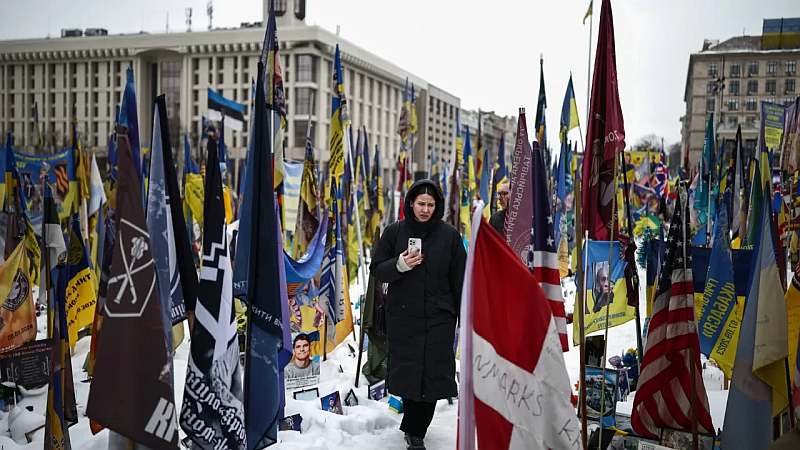
And thinking about it now, I really wished I was wrong then. That there wouldn’t be a great war. That Hlib Babich, Oleh Barna, Serhiy Ikonnikov, Yuri Karakai, and thousands of other Ukrainians would be alive. That so many flags wouldn’t be flying in cemeteries. That there wouldn’t be horror in Bucha and Irpin. That our cities would be quiet and peaceful.
But we must speak honestly and directly. Despite all our efforts, the state was not ready for the full-scale invasion. Not on the level of people—the people did the impossible, and thanks to that, we endured. It was the government that proved unprepared with its “later,” “not the right time,” “don’t escalate,” with the habit of shifting responsibility and economizing on security.
But there is a fact that Russia did not calculate: Ukrainians will not agree to disappear, surrender, assimilate. In the early days, we were held not by a reliable system, but by character, mutual trust, the ability to self-organize. And the endless heroism of the army that stood firm. We paid a terrible price for this. Therefore, we now have no right to live ignoring reality.
The phase of fighting “on character” is over. Without systematic work by the state, we can no longer endure.
Weapons and ammunition are needed, protection and training for soldiers, fortifications, technological weapons, reforms in the military, domestic production, order in the state. The economy needs to be stabilized and good relations with allies restored. A competent government with zero tolerance for corruption is needed, making the right unpopular decisions instead of pretty presentations. Needed, needed, needed.
This day became a day of memory that obliges. For those we can no longer bring back. For those who are now holding the line. Four years is a long time. But not enough to get used to. We will not get used to it. But we will stand firm.
* * *
The endless February that hasn’t ended yet. Although I was convinced that Putin would attack, it was impossible to be fully prepared for it mentally. I remember the first hours of February 24.
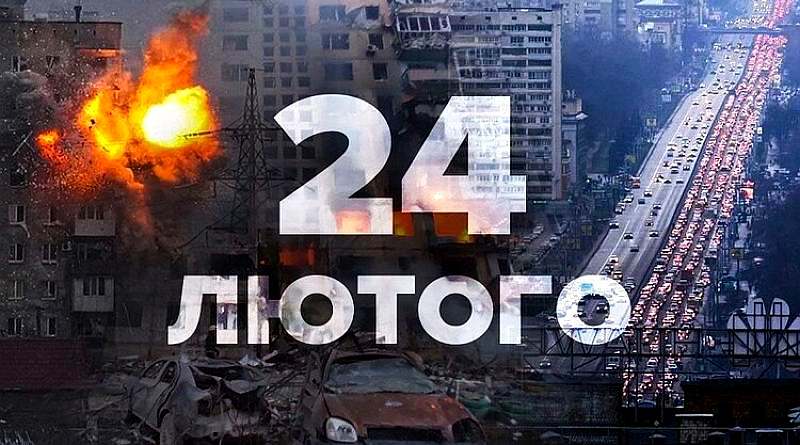
An empty highway to Kyiv, a huge traffic jam on the way out. In our office on Lavrska, there was a line of men and women, all of them saying: give us weapons. The guys are learning to shoot, women are learning to bandage wounds. A thousand people sleeping on the floor in whatever they have. The first missions, the first humanitarian tasks, the first deliveries of the most necessary items, which the army simply lacked: helmets, first-aid kits, bulletproof vests. Looking back, strange tasks—getting fuel that can’t be found, concrete for nonexistent checkpoints… The feeling is like you’re in a dream, and your main task is to protect as many of those around you as possible.
I look at these frames from four years ago and realize: we have endured, we have become steel. We have lost many and, unfortunately, lost the incredible sense of unity when the whole country washes the enemy off our land with one wave.
This is a great test for the nation, but I believe we will pass it.
* * *
The endless four-year February of the thirteenth year of the Russo-Ukrainian war.
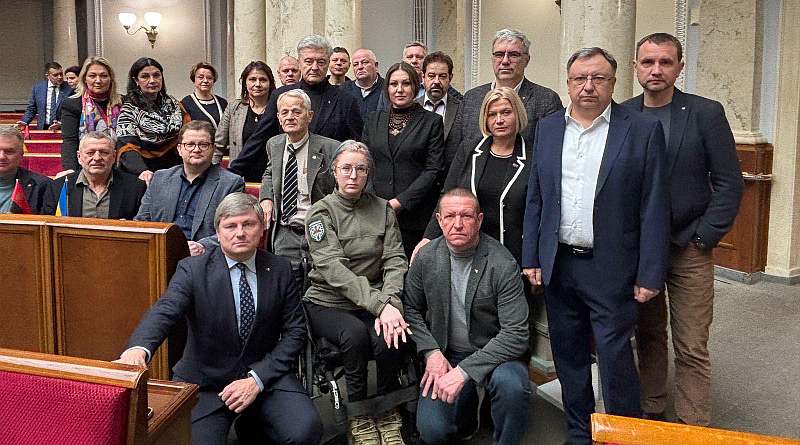
Enemies gave us three days, and friends—two months. Only the Ukrainian nation clearly knew that we would never surrender. Today we gathered in the Verkhovna Rada thanks to those who stand on the front line. Those who hold not only the line of defense, but the line of Ukrainian history.
We endured. In 2014—2019, security was a priority of the Ukrainian government. At that time, the Armed Forces were built, the foundation of the language was laid, and the Ukrainian church was created. It was this reserve of strength that ensured the survival of the Ukrainian state.
I am shocked by the investigation published in The Guardian. Hundreds of interviewed witnesses, dozens of pieces of evidence and pages of investigation that indicate the unpreparedness of the government for a full-scale invasion.
Therefore, today, on this anniversary, I would like to hear from the authorities an apology to the Ukrainian people for the lack of preparation. An apology for corruption in defense, embezzlement in fortification construction and during the “great construction.”
The Ukrainian people paid a terrible price for this. We lost Oleh Barna. We lost Yuriy Karakai. We lost Hlib Babich. We lost Serhii Ikonnikov. We lost… And it is to the families of fallen soldiers that the authorities must apologize.
But now we must focus on a common cause: moving towards Europe, building a coalition in parliament, and forming a coalition government. This is the main task facing the Verkhovna Rada.

Four years ago, we didn’t make a decision to stay in Kyiv and defend the capital from the barbarians. It simply didn’t require discussion: we stand for defense without talks.
We had no fear or desire to leave and wait it out. We fully understood all possible consequences and that’s why we were in the capital. At the base of the European Solidarity office, the 206th Territorial Defense Battalion was formed. Our people carried out various tasks – from patrols and shifts at checkpoints to organizing supplies of weapons and food for defense forces. We caught Russian saboteurs, came under fire from occupiers, and together with everyone who stayed, we defended our land against the onslaught while the armed forces were being redeployed to the capital, which Zelensky did not allow because he didn’t believe in the invasion.
I am proud to be in such a team!
Later, when the Russian scum were driven away from Kyiv, the authorities began to divide Ukrainians into “right” and “wrong” again. Political pressure on us resumed – switching off TV channels, criminal cases against politicians and their families, defamation in Yeremak-sponsored media and telegram channels, sanctions, and persecution, etc. But what we were falsely accused of turned out to be true regarding the Zelensky government.
Ukraine has withstood the occupiers for four years, knocked Russia’s teeth out, and continues the sacred work of destroying the beasts. Now it’s also time to deal with the internal enemy that robs and bleeds the state.
The fight continues, and we will win. Ukraine will win.
The fourth anniversary of the full-scale invasion of the twelve-year war in the centuries-old confrontation with the horde.
The question remains: could this invasion have been avoided? Were there other scenarios?
It is clear that Putin attacked back in 2014 when Ukraine was officially neutral. Dates were engraved on medals when Yanukovich, loyal to Moscow, was still president. It’s clear that Moscow in its current form prioritizes the empire above all else. In 2013, Putin had all the benefits that could be bought with Russian resources and tricked out with Russian reputation. Yet he sought to break Ukraine under his rule, reviving the empire.
The heroic defense of 2014-15 and the diplomatic trap set for Putin in Minsk halted a large-scale war and determined subsequent actions: Ukraine and the world must deter Russia from renewing aggression, seek opportunities, and await the moment to reclaim the seized territories.
However, this path required great skill. War is not arithmetic, but mathematics. Ukraine constantly had to demonstrate the capability and readiness to inflict losses on the aggressor that would outweigh the gains. The way to achieve this was through missile programs, fortifying vulnerable directions, continuously improving armaments, and training troops…
This was canceled after 2019, after “looking into Putin’s eyes,” and after negotiations in Oman.
In February 2020, execution of missile and other programs was “postponed,” the fulfillment of state defense orders fell, and some enterprises even had to reduce working hours. Despite the nominal increase in expenditures for “defense and security,” only the “law enforcement” component realistically grew at the expense of the military (the authorities adhere to this approach to this day). Troops were withdrawn from positions and lines.
Overall, this logic was described by Volodymyr Zelensky himself in the well-known statement “We could increase the army, but then we could not finance roads, which is very important for us.”
Some experts explain this logic as an “underestimation of risk,” claiming the authorities did not believe in the reality of war with Russia. But, since the war had been ongoing since 2014, it turned out they did not believe in reality.
Whether there was more incompetence, disbelief in their own country, or malicious intent here, the investigation will establish. And the current government behaves in such a way that conducting such an investigation is inevitable.
Especially since “don’t look up” behavior from the current government throughout 2021 and even early 2022, when the accumulation of Russian troops with obvious intent to invade was evident to everyone. Except the authorities.
That was the last chance to demonstratively prepare, forget political differences, increase army funding, gather reservists, renew and fill the defense lines with troops…
The authorities did the opposite.
The reaction of the “servants” to our reproach on the morning of 24.02.22 was indicative. In response to “Well, barbecues?!” they could only manage to reply, “What about your NATO?”
In this paradigm, they live to this day. Everyone else is to blame. And they themselves believe they owe nothing to anyone, as their leader instructed, “I owe you nothing.”
Instead, not even logic and strategy, but simply the instinct of self-preservation should have driven towards something else. Towards uniting forces and capabilities. This was the case for a short period when Kyiv was surrounded, and the enemy was breaking into the country in multi-kilometer columns.
Then the government forgot about road theft (though they tried to push payments for their accomplices in projects), and about “going to Moscow,” and about intentions to imprison Poroshenko. The Rada worked in working discussions, in which effective decisions were born.
But the enemy fled from Kyiv, the panic passed, and the government returned to its old ways. Slandering and repression against the opposition, anti-corruption institutions, activists, journalists. Amidst this – billion-dollar embezzlements. Promotion not of capable and competent individuals, but loyal and spineless ones.
And because of this – insufficient support for the Defense Forces, lagging in protection and community support, weak foreign policy, when unconditional support at the beginning turned into a difficult competition.
All this can and must be corrected.
The same reasons that weakened Ukraine before the invasion and opened the road to the aggressors now weaken the opportunities to defeat the enemy and force them to retreat.
Every day that the Armed Forces of Ukraine and the Defense Forces in general do not receive the necessary resources, communities do not deploy secure generating capacities, and abroad they gather not aid projects but applause from the domestic electorate, the cost grows.
Because the cost is paid in blood. It is the duty of politicians to realize their responsibility. To form a coalition of unity and a professional government of salvation. This will neutralize the greatest threats – incompetence, corruption, and the substitution of national tasks with petty ambitions to remain in power and avoid responsibility…
During the period of stagnation of the “servants,” we must endure this time. And then take advantage of the opportunities.

At four o’clock in the morning on February 24, 2022, the fresh frosty air of our peaceful country, which was asleep, was cut by the terrible roar of enemy missiles and bombs. It was the enemy coming to kill us.
Even before this, for almost 10 days, thousands of their shells, under conditions of a ceasefire and quick peace, were digging into our positions along with defenders in the territories of Donetsk and Luhansk regions.
Ukraine, with its women and children under the explosions of rockets and bombs and the roar of tanks, was waking up. This is how our war began.
The true story of this war is yet to be written. It is worth it, as it will be filled with stories of brave and wise people who saved not only many lives but also an entire nation that disturbed both age-old enemies and indifferent, traitors and corrupt individuals who exploited it for years, living in a “what difference does it make” mode and waiting for the “Russian world.”
The key hero of this war, of course, is our Ukrainian people and our Armed Forces, who despite disappointment, deceit, and political manipulations skillfully conducted by the enemy, continue the fight not only for their future but also for their history.
To our misfortune, despite the fierce resistance from the same enemies, overcoming the enemy in battles, we received a new war, which became a consequence of the old world’s fear against the new plague. This war, not satiating its appetites, opens more and more fronts – from energy and our own history to the front for peace on the streets. The enemy, like that same fifth column, has neither honor nor conscience and, unfortunately, no fear.
Some in this world, as 100 years ago, believe that evil can be fed and calmed. However, we cannot be broken or deceived, because we have no choice. Our main weapon is our unity.
It will still be difficult for us, but it will definitely no longer be shameful.
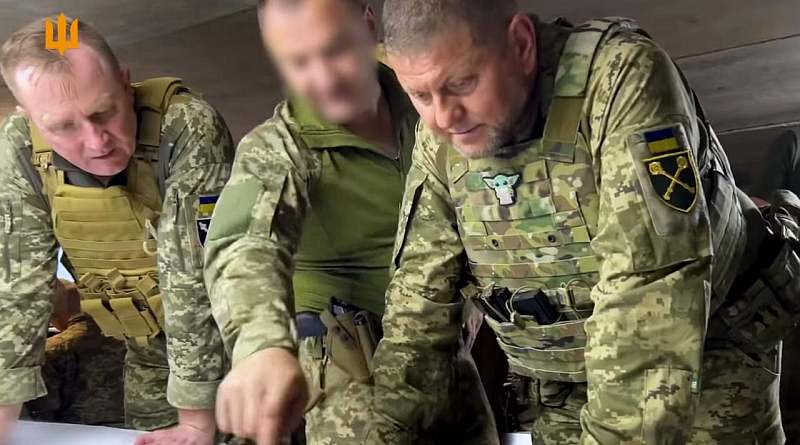

Today the feed recalls how the great war began 4 years ago. The first strikes, explosions, evacuations, assemblies…
“Remembering” is right. It is very useful. “Remembering” should prompt questions like “why did everything happen as it did?”. And to seek answers to this question.
This search will undoubtedly lead to other questions: “what did those in responsible positions do?”, “who and what DIDN’T do?”, “and what SHOULD have been done?”…
Because “Remembering” should also be about responsibility. For what?
For “disengagement” along the line of contact in the JFO zone.
For demined Mariupol raid.
For stopping military procurements.
For a working week (!) at the Kharkiv tank plants lasting… THREE HOURS.
For the pressure on those who developed the Ukrainian missile program.
For stopping defense financing and reducing the funding of the Armed Forces in 2019-2021.
For the large road construction while there was no large construction of defense lines.
For non-evacuation of people… many lost their lives.
For the announced barbecues, but received the smell of ruins…
Perhaps someone will add to the list. Not now, of course, it’s not the time, but later…
Someday that “time” will come, and the main question will arise “who is to blame that the events unfolded as they did?”. Because if “Remembering” is limited only to the reflection “little candle-gif”, without this “who is to blame?”, then is such memory worth anything?
Shaun Walker in “The Guardian” writes “… Most importantly, the Ukrainian government was completely (!) unprepared (!) for the upcoming attack, while President Volodymyr Zelensky over the months (!) dismissed increasingly urgent American warnings (!) as panic and suppressed (!) the concerns of his own military and intelligence elite at the last minute, which ultimately made limited attempts to prepare behind his back.”
Should this “unprepared,” “dismissed warnings,” “suppressed concerns” just be “Remembered,” or should there be accountability?
And remember, the opposition demanded from the Servants to add 50 billion hryvnias to the defense budget? Remember? Then, it seems, Deputy Venislavsky stated that this was populism. And Zelensky said the legendary phrase “We can increase the army two to three times, but then, for example, we won’t be able to build roads.” Source, if you need it, here.
Should this just “Be remembered”? Just remember and that’s all?
And these lines from “The Guardian”: “… the political leadership simply refused (!) to accept it (the inevitability of the attack) until the very end.”
Or this: “… in mid-November, UK Defense Secretary Ben Wallace … informed (!) Zelensky that London believed the Russian invasion was now a matter of ‘when,’ not ‘if.’ He urged (!) Zelensky to start preparing the country for war… Zelensky seemed to listen passively.”
Is this also just about “Remembering” or something more?
About the fact that a big war was coming, official Kyiv was hinted back in July 2021, and in October they were told directly “not if, but when.” October – 5, damn it, months until February 24th! Five months when a narrow circle knew everything, and the country knew nothing. How much could have been done if the state and society had started preparing for the predicted war from July… or at least from October. Would there then have been Lilac Park, Mariupol theater, Bucha, Irpin, Izium…
Rhetorical question. And it will be so until those who know HOW IT ALL WAS start to speak. Those among the civilian and military leadership who were witnesses or participants in decisions/change of decisions.
They are silent now. Perhaps “for now,” perhaps “and will continue to be silent.” So society is left only with “if only…”
Only history doesn’t do “what-if-ology.” Only “Remember.” And sometimes the desire to “Recall everything” and ask for everything.
For those who haven’t read the article in “The Guardian” on the night before the 4th anniversary of the invasion, it’s a particularly useful text. To know and remember.
Memory to those taken by the great war. Honor to those who defend the state with arms. Gratitude to those who support the army with volunteer shoulders. A bow to every donor. It has been, is, and will be difficult for you all… but you are no longer ashamed. And this is also about “Remembering.”

For 4 years we have been alive because we were together, united, focused on victory. We were.
From the onset of the full-scale invasion to today, we have had less: people, ammunition, military equipment, money, influence on the international stage.
From the beginning, we were the underdog, on whom no one bet. Except for us ourselves.
Because we knew ourselves, felt the elbow next to us and the whole country rallied around the Armed Forces to survive. Recalling those times, the first thing that comes to mind is a young girl who kept Molotov cocktails in her kitchen to throw at Russian tanks if they appeared on the streets.
We weren’t too strong or skilled, but we were together, just like on the Maidan. Only now it wasn’t one Maidan, it was the whole country. Including those who did not share the ideas of Maidan.
There were no politicians, no pomp and hypocrisy. There was only us and the enemy that needed to be stopped. Army, volunteers, people’s donations — all for the front and victory.
And it worked. And it worked well. Until the very moment when politicians began to see the military as competitors for power.
I remember very well who first dared to shamefully ridicule the military. It was Maryana Bezugla, call sign Konchena. When she called the acting commander of the Armed Forces an alcoholic, I was shocked. Because before that, throughout our resistance, the army and civilians were one organism, and no one dared to say a bad word about the army. And Konchena managed. Because she’s a member of parliament. Because she’s in power.
Thus ended the era of unity between the people and the army. And the era of ACCUSING our army of all mortal sins began.
“Meat assaults,” “commanders do not protect,” “pigs in headquarters” — these and other Russian psyops spread, and the sacred people picked it up. Sincerely believing that if you trash your army, there will be a line of volunteers eager to defend the fools who ruined the reputation of the army simply because betrayal is fun and exciting and gets lots of likes.
All this nonsense that’s been going on in recent months is a very alarming signal. And I would like those who make decisions to hear this signal. Because wars are not won that way.
Today, the excellent publicist and Ukrainian Armed Forces warrior Pavlo Kazarin wrote very correctly about the difference between the Russian mercenary army and the mobilized army of Ukraine. The mobilized army is very difficult and traumatic for society. It is a great miracle that we have stood for 4 years and are still standing, despite the enormous fatigue from the war.
Now is a good time to implement reforms in the army and society, or at least to cut off the hands of the Galushchenkos, Mindiches, Yermaks, and all those involved in abuse and betrayal in the square.
Society seeks justice. It has the full right to it. Justice is the foundation on which patriotism and people’s readiness to defend their state stand.
We must become united again. Stop the talk about elections. Stop the talk about referendums. Stop criticizing the army, just shut up and refrain from barking at those thanks to whom you are alive and in your homes, and not in Siberian camps or in emigration. Stop everything that distracts from the war. Then we will win.
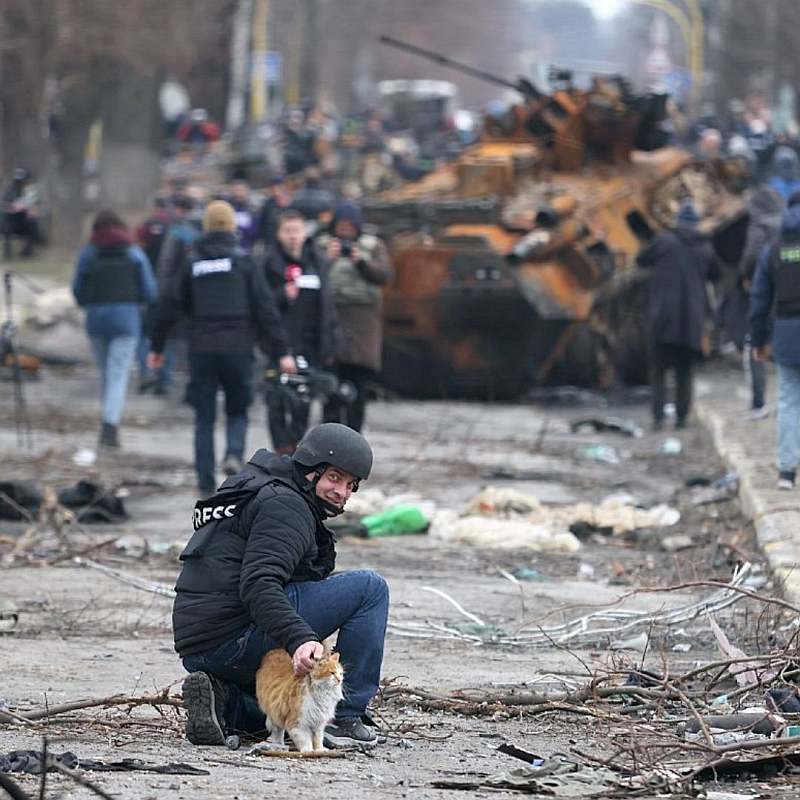
I wrote everything back then, on February 21. And in several posts before that, in the DESO topic near Odessa. The war will become a catastrophe for Eastern Europe, but avoiding it is practically impossible.
It always hurts me physically when I realize what we have lost.
What people. What opportunities. What living standards.
Ukraine should be in the G20.
We are at a perfect crossroads. Access to the Black Sea is not just about beaches, it’s a direct, cheap access to the Middle East, Africa, and Asia markets. At the same time, we have a land border with the largest solvent market on the planet – the European Union. It’s an ideal base for placing production: assemble here, load onto a truck or train, and in a day the goods are in Germany without any hassle with container ships.
Our ability to feed 400 million people in a world where the climate is going crazy is a powerful asset. Plus, our mineral resources. Ukraine is a Klondike for the Western military-industrial complex and high-tech: titanium and iron ore (without them there will be neither aviation nor shells), uranium (the basis for nuclear energy, which is now experiencing a renaissance), lithium, and graphite (these are batteries, electric vehicles, and the future of energy).
With such a set, we should dictate raw material prices for European high-tech, not just ship out logs and ore.
SAU more per month than France, maritime drones, missiles that fly further than “Tomahawks” (record 1500 according to Khosta in the West), EW, ASMs — 15+ countries in the world make them, and we are among them, “Deltas”, “Krapivas”, closed production of tanks and APCs. This is not the major league, but the level of Turkey and Israel in prospect. And this is proof that minds are capable of generating the most complex technological products with high added value.
But then dioxin in candies, or a gas war, or proxies, or an invasion, then oligarchic monopolies, or corrupted institutions. They thought we were weak, we thought so too, but they and we were wrong. It cost Moscow trillions of money and hundreds of thousands of lives. And we paid a dear and terrible price.
Each of us now has numbers in the phone that won’t answer and that we can’t bring ourselves to delete. Don’t become that number. Survive. Sending you warmth and love — to the moon and back, as my niece says. To everyone we argued with, got banned, quarreled with, and teased each other. It’s dust. The main thing is that we are here, unlike many worthy people.
And we are a country, even the dumbest Russian knows that now. Voronezh without light, and in the workshop in Udmurtia, a huge hole. Imperial schizophrenia is treated with only one medicine, and now they are taking it in strong doses.
Hugged, lifted, crunched, careful with the hand, and set.

Relief, it seems. That’s what I felt four years ago. Well, apart from other things, of course: fear, adrenaline, hustle.
For several years, while the ATO smoothly transitioned into the JFO, and combat orders turned into rewards for not shooting, this lingered in the air: “when will it all end?”
It ended. As expected, it ended with a big war.
In the rush of the first days, trying to quickly manage civilian affairs and immerse myself in non-civilian ones, I kept catching this feeling: “Everything is going as it should.”
Like a cancer that ripened in the body and finally burst under the surgeon’s knife. An abscess that burst and flooded the whole country. I don’t know why I have medical analogies, hell if I know.
And now… an ordinary day. Drones fly, the military launches and hits, the Ministry of Defense and the General Staff scold manufacturers (sometimes rightly), technology scolds designers (always rightly), the country lives, having bought so many ecoflows that you can power a pulsetron and knock down enemy satellites to hell.
And I still feel some relief. Because the world and the world order have finally shown their true face, and it is very different from ours. The number of teeth and the fatness of the cheeks. We may screw up often, but we fight for real.
NATO, open the sky. We will strike.
Such is the fuss.

I will share with you my personal observations of this difficult day four years ago.
I knew exactly when the Russians would start the invasion. Obviously, I wasn’t the only one who knew.
Having prepared the car, a supply of fuel, water, and food for a few days, I deliberately went on the air again at three in the morning on the 24th (after about eight broadcasts following the actual declaration of war on Ukraine on February 22nd), warning the citizens about the time of the attack and giving advice on how to act best.
Feeling that I had done what I could to ensure that not only high-ranking officials and other employees of state structures but also ordinary Ukrainians were informed, I left.
I left with my wife, daughter, and dog not to the west, but to the east, to the Sumy region, towards the Ukrainian-Russian border, where our relatives lived.
We drove on the Pryluky (“tank”) highway. All the bridges were, of course, in place. We drove in that direction alone. Starting from the city of Romny, we did not see a single car moving in the same direction.
Instead, an endless column of service vehicles with corresponding state numbers (I counted more than five hundred) was heading towards us, with employees of various law enforcement organizations and their families driving to meet, fleeing the advancing occupiers. This must have been the order… No questions.
But no one intended to evacuate other Ukrainians, the elderly and children, women and men, who were preparing Molotov cocktails and did not have access to weapons. Even when Russian tanks were already heading for Sumy, many people were asking what was happening and what to do…
We can make many declarations about unity, about equality, but this striking inequality then cut very sharply…
Inequality in receiving information, inequality in the State’s treatment of its citizens during evacuation (even such chaotic one), inequality in access to weapons to protect their loved ones and their Motherland.
We must not remain silent about this experience. The war is not over. Many challenges still lie ahead.
It’s somewhat awkward to see how some officials are already “awarding themselves the medals of winners.”
God willing, the people of Ukraine will have victory and long-lasting peace, and then we MUST clarify all the circumstances and all actions: both the true HEROES and those who are now shaping THEIR (often not entirely truthful) story of the beginning of the large-scale Russian invasion of Ukraine.
Without giving a clear assessment of the past – you cannot build a just future!

Four years of endless war
Outside the window is already the fourth grim anniversary of the beginning of the most terrible and destructive war in modern European history. No statistics on the losses and damage from Putin’s ruthless decision to destroy the sovereign Ukrainian state and its people convey the depth of horror and the scale of the geopolitical catastrophe.
The essence of this catastrophe lies in the collapse of the previous model of interstate relations. If there was previously an illusion of hope in international law and legality, a belief in the inviolability of long peace in Europe, now none of this practically exists. However, the existence of Ukraine, its resilience in opposing Putin’s war, are genuine indicators of the hopes for the possibility of small and medium-sized states surviving the situation of being in the global predator’s menu.
The fourth anniversary of the unparalleled Russian invasion generates an incredible number of emotions, stirring consciousness with the thought of the devaluation of Russia’s status in the world, and highlights the flaws of the stubborn approach of the Russian military in solving all problems only through massive violence.
It is precisely the Russian military that is the world’s main antihero of modern times. Wherever a Russian soldier sets foot, he is unwelcome; he is a killer, rapist, villain, bearing no relation to the Soviet soldiers of World War II times. The grandchildren of the victors over Nazism have become the worst embodiment of Putin’s neo-fascism, silent supporters of the course of terror and intimidation.
Putin is even pleased that by sending his warriors to kill in Ukraine, he has discredited the army as an organized political force for generations. It is now just a gathering of war criminals, its leadership riddled with corruption. Putin’s generals profit from the trade of death and lead Russian society toward total mobilization, as Putin’s spokesman Peskov says the goals of the invasion of Ukraine have not yet been achieved. The loss of 1.2 million personnel, 11.7 thousand tanks, 24 thousand armored vehicles, and nearly 800 planes and helicopters is not yet a reason for the Kremlin to despair and retreat from the policy of bloodshed.
On the contrary, an additional cult of war is being introduced. If previously the focus was on the frank victory frenzy on May 9th, now Putin has shifted the emphasis to February 23rd. Yesterday he stated: “February 23 is one of the most significant national holidays, which has become a symbol of the people’s love for our defenders.”
Every month, the regime requires 30–35 thousand lives to maintain the image of a steamroller that will crush the defiant Ukraine. Even with minimal advancements at the front, or even entirely fake victories, Putin’s clique is not intending to transition to peace. The “Spirit of Anchorage” is merely a Russian ruse for the global West. In reality, although the front is at a standstill and there are very few prospects for developing Russian offensive operations, Moscow still intends to push through its ultimatum, where territorial issues like Donbas are just an excuse for terror against Ukraine. Everyone remembers well that in 2022, Putin began the “SVO” allegedly just to protect Donbas, but it escalated into a full-scale conflict.
There is a feeling the Russian intelligence services are inflating a true third world war to hide the failure of Russian leadership and the image of a strong and invincible power.
Otherwise, why did the SVR and Naryshkin articulate the thesis about Ukraine’s nuclearization, supposedly that London and Paris could transfer a nuclear bomb to Kyiv, thereby providing Ukraine with the most powerful security guarantees. Russian propaganda is inflating this fake, Medvedev threatens a nuclear strike on Ukrainian territory and supplier countries. Clearly, such a scenario is overall excluded by 99.9%, but Moscow just needs a reason to demonize Ukraine and Europe.
Rumor has it that Putin is being told about the dissatisfaction of the masses and part of the elites with Russia’s entanglement in a protracted war and the total absence of a vision for the future. Thus, extreme measures are being taken: Ukraine is made into a nuclear bogeyman, and inside Russia, Lubyanka is given carte blanche to find conspirators planning an anti-Putin coup. Truly tragic, unfortunately, are the intermediate outcomes of four years of war, which was supposed to be Putin’s triumph but became his grave.