
We continue in the format of “briefly, from various directions.”
1. Lyman Direction
The forward units of the Russian 144th Motorized Rifle Division (mr division) of the 20th Combined Arms Army (CAA) of the “Zapad” group, supported by several units of the 2nd mr division of the 1st Tank Army (TA) from the same group, made several active attempts to break through to Lyman from the north and northwest, moving in the directions of Derylove—Drobysheve and Kolodyazi—Stavky.
At the same time, units of this same division (144th mr division) had to repel a number of counterattacks by the Armed Forces of Ukraine in the area of their tactical bridgehead on the Netrius River near Serednye and Novoselivka.
The situation in this direction is quite dynamic, with ongoing intense “encounter” battles taking place in the so-called “gray zone” north and northwest of Lyman.
It is evident that the command of the Russian 20th CAA is trying at all costs to break through to the Yarova—Novoselivka—Drobysheve—Pryshyb area to completely block Lyman from the northwest and advance as far as possible towards Sviatohirsk, as well as to the Oleksandrivka—Sosnove line. This would create conditions for a further deep encirclement of Sloviansk from the north.
Currently, the enemy is forced to engage in fierce battles in the northern part of Drobysheve to secure a foothold there, and is attempting to hold Stavky. The enemy’s advancement, even from a tactical perspective, is minimal.
However, the overall situation around the Lyman defense area of the Armed Forces of Ukraine continues to deteriorate, as the Russian 25th CAA has penetrated quite deeply into the defense system of the Armed Forces of Ukraine to the east and southeast of Lyman, advancing to the Dibrova-Ozerne line, and has managed not only to maintain its separate assault groups on the southeastern outskirts of Lyman (in the area of Vyshneva and Partizanska streets) but also to advance further—to the Maslyakivsky Cemetery.
Currently, its forward units (likely from the 67th mr division, 164th, and 169th separate motorized rifle brigades) are persistently trying to penetrate the southern part of Lyman, advancing from the Dibrova side, along the road to Zakytne (from the side of the “Patriot” camp-camping and Varadero beach), as well as along the railway that runs through the forest southeast of the city. In other words, it can already be said that battles have begun directly for Lyman itself.
2. Sloviansk (formerly Siversky) Direction
Currently, this is the most threatening direction for the Armed Forces of Ukraine in an operational sense. It is evident that the command of the enemy’s 3rd Combined Arms Army from the Southern Military District has effectively leveraged the advance of the neighboring 25th Combined Arms Army from the Western Military District along the northern bank of the Siverskyi Donets, achieving quite successful tactical-level progress with the forward units of their 127th and 6th separate motorized rifle brigades along the southern bank of the river.
Specifically, the enemy managed not only to hold Zakytne, repelling a series of counterattacks by the Ukrainian Armed Forces in this area, but also to break through between it and Platonivka, where the Ukrainian Armed Forces still hold several positions, advancing toward Kryva Luka and occupying a section of terrain to the south of it. Moreover, their forward assault groups have evidently already begun battles for Kalenyky, attempting to strengthen and expand this breakthrough while simultaneously seeking to capture Riznykivka with constant attacks/assault actions from Svyato-Pokrovske.
However, in the southern part of the 3rd Combined Arms Army’s sector, the situation for the Ukrainian Armed Forces continues to worsen. Units of the 123rd separate motorized rifle brigade, reinforced by several units from the 85th and 88th separate motorized rifle brigades, are successfully advancing on both sides of the Sloviansk-Bakhmut road and have already reached the line of Nykiforivka-Pryvillya, also capturing Novomarkove and Minkivka.
It is evident that at this stage, the command of the Russian 3rd Combined Arms Army has as its immediate task to reach the line of Mykolaivka-Nykanorivka with its main forces (i.e., approaching Sloviansk from the east proximally), while part of the forces breakthrough to the line of Vasyliivska Pustosh-Vasyutynske (i.e., approaching Kramatorsk from the east proximally).
In this context, it should be noted that the fact that Russian troops in this direction, after taking Sieverodonetsk, have been able to effectively advance along a corridor that gradually narrows (between the Siverskyi Donets and the Sloviansk-Bakhmut road that runs northwest), enhances their advantage in forces and means, as it allows them to continually increase the operational and tactical density of their forward units and formations. Simply put, this allows them to gradually increase the amount of assault infantry in specific areas and directions through its “natural” concentration.
Overall, it should be noted that in the context of the upcoming summer campaign of Russian forces in 2026, the units and formations of the 3rd Combined Arms Army from the Southern Military District are undoubtedly closer compared to other Russian military groups, acting conditionally “toward” Sloviansk and Kramatorsk, to achieving (implementing) one of their main current tasks — taking starting areas and progressing to the appropriate lines for further operational deployment of strike groups for the purpose of initiating a hypothetical Sloviansk-Kramatorsk offensive operation.
3. In conclusion, a few words about the general prospects for Russian troops in the summer of 2026, particularly in the context of their possible Sloviansk-Kramatorsk offensive operation.
It is already becoming clear that its prospects directly depend on several factors simultaneously, among which I highlight a few main ones, including:
– There is a direct link between these prospects and the results of the current winter offensive of Russian forces, operating on three operational directions — Lyman (Western Military District), Sloviansk (Southern Military District), and Kostyantynivka-Kramatorsk (part of the Southern Military District’s forces, reinforced by a “mixed group” from parts and formations from other operational directions).
The closer they can “creep up” (break through) in advance to the Sloviansk-Kramatorsk agglomeration, the more chances they will have for success in the respective offensive operation. Currently, the most dangerous in this regard is the Russian group operating specifically in the Sloviansk direction, because, unlike the Lyman and Kostyantynivka directions, it CONTINUES to advance at a pace exceeding, albeit not by much, the advance of Russian troops on the other two directions.
– It is also evident that these prospects directly depend on the ability of the Russian military command at a strategic level to form and ensure the operational deployment of appropriate strike groups in this direction, a significant part of which, evidently, should be strategic reserves of the Russian armed forces.
Objectively, their needs in forces and resources for conducting a hypothetical Sloviansk-Kramatorsk offensive operation are an order of magnitude higher than the corresponding indicators, for example, of those Russian groups that stormed the Pokrovsk-Myrnohrad agglomeration. Although, according to the “canons” of the current war, they are already considered unprecedented.
– In connection with the above, a rather natural question arises — how exactly does the enemy’s command (Russian troops) primarily plan to form and deploy these strike groups?
If primarily through strategic reserves, then in such a case, they will need a lot, moreover almost SIMULTANEOUSLY, of ADDITIONAL manpower, weapons, and military equipment (WME), material and technical resources, and so on.
If the Russian command plans to do this mainly through operational-strategic regrouping of troops, especially from other operational directions, this would mean the necessity of reducing offensive activity precisely in those directions. After all, in such a case, it is IMPOSSIBLE to advance simultaneously and everywhere.
Furthermore, those Russian troop groups already deployed in these directions and which clearly have not yet completed their immediate tasks — to reach the initial areas of the future offensive and respective lines, are evidently quite “battered” at the moment, meaning they have suffered significant losses in manpower and materially-technical aspects while advancing in winter. As such, they clearly need proper reinforcement. For they, undoubtedly, together with strategic reserves, must form those very strike groups that, according to the probable plan of the Russian General Staff, are to participate in this hypothetical offensive operation.
I fully understand the etymology of what is happening now in the General Staff of the Russian armed forces. The military-political leadership in the Kremlin demands from them a “quick and decisive success,” preferably in the Sloviansk-Kramatorsk direction, as this at least fits the approximate “canon” of SVO victory concerning the so-called “liberation of the Donbas people,” which in a certain situation can be presented as achieving the “ultimate goals and tasks” in the war (since this is the last major city agglomeration in Donbas controlled by Ukraine).
In line with these “tasks,” Russian generals in striped pants are actively drawing arrows of their future strikes and breakthroughs on maps, not particularly pondering the correspondence of the “grand scope” of these plans with the harsh realities of war.
For example, it is quite possible that the Russian 3rd Guards Tank Army might still break through from the east to the outskirts of Sloviansk and partially to Kramatorsk. However, today no one is willing to predict how much time it will take for the Russian 20th and 25th Guards Tank Armies to eliminate the Lyman bridgehead of the Ukrainian Armed Forces on the Siverskyi Donets. Likewise, it is unlikely anyone will predict how much time, effort, and resources will be needed for the Russian troops to capture Druzhkivka and Kostiantynivka (without which it will be very difficult for them to advance on Sloviansk and Kramatorsk). Moreover, it is very “desirable” to capture Dobropillia… and “restore” and maintain the front along the Oskil, to avoid a sudden counterattack by the Ukrainian Armed Forces on their flank at the most crucial moment of the operation, which, as it turns out, the Ukrainian Armed Forces are STILL CAPABLE of.
In other words, the combination of two factors—time and opportunities—is becoming increasingly important in the current Russian-Ukrainian war, with a clear advantage of the former. In this sense, the Kremlin cannot delay its “decisive victory” within the framework of implementing the “war of attrition” strategy due to internal financial, economic, and consequently socio-political reasons.
It turns out, they cannot “wait out” this war. Because the longer the Kremlin “sits” in this war, the more expensive this “sitting” costs them, with the costs increasing at “sharply unacceptable” rates. Consequently, ultimately, they might “wait out” to who knows what.
This is precisely why they urgently need “a few convincing operational victories.” And most importantly, sufficiently QUICK victories that could possibly be presented as a victory in the entire war. The problem is that QUICKLY, for now, the Kremlin is unable to achieve even such an imitation of victory.
Therefore, it seems to me, this summer they will clearly try to “end this costly sitting” on their own terms with one “decisive blow” (an offensive in 1-2 key directions). Accordingly, the Lyman, Sloviansk, and Kramatorsk-Kostiantynivka directions (which we will consider in the next review) clearly gain special, almost strategic, significance in this regard.
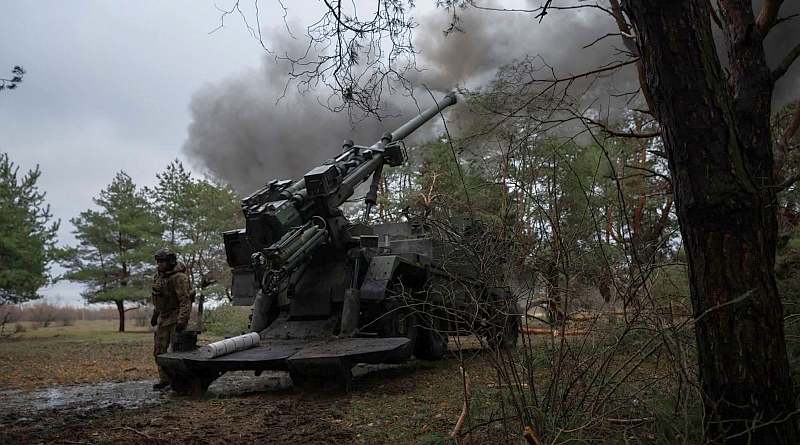
Photo: 148th Independent Artillery Brigade of the Air Assault Forces of the Ukrainian Armed Forces
