

Information on current losses of the Russian Federation due to sanctions as of 21.02.2026.
1. On the evening of February 20, Ukrainian forces struck the Votkinsk Plant in Udmurtia, one of the key enterprises of the Russian military-industrial complex, which produces missiles for the Iskander-M and Topol-M complexes, as well as other missile programs.
– Workshops No. 22 and No. 36 were hit, after which a fire broke out on the premises. The enterprise is located almost 1,500 kilometers from Ukraine, highlighting the ability of the Armed Forces of Ukraine to strike strategic targets deep in the rear of the Russian Federation.
– On the night of February 21, the Samara region also came under attack. Reports indicate an attack on the Neftogorsk gas processing plant, owned by Rosneft. According to preliminary information, at least five fuel tanks caught fire, and the fire spread to the neighboring oil stabilization production.
– Commissioned back in 1967, the enterprise has a design capacity of 0.73 billion cubic meters of gas per year and is an important link in the processing of natural and associated petroleum gas.
– A series of strikes on military and fuel infrastructure demonstrates the growing vulnerability of the Russian military-industrial complex and energy sector.
– Attacks on key enterprises supplying missile production and fuel processing create additional pressure on the Russian economy and military logistics, increasing internal risks for the Kremlin even in regions far from the front.
2. Corporate crisis deepens in Russia: more than half of large companies ended 2025 with reduced profits, massively cutting investments and preparing for layoffs.
– Only 19% of companies continued to invest as usual. A third of enterprises significantly reduced investment programs, another 33% partially cut them, and 15% completely froze all projects. Business is effectively switching to survival mode.
– Liquidity issues are becoming systemic. 72% reported an increase in accounts receivable, in particular due to non-payments by state corporations. This indicates a disruption of financial flows even in the quasi-state sector.
– In 2025, profitability fell for 62% of civilian enterprises, and the share of unprofitable companies increased. Businesses are facing a sharp rise in costs, a shortage of working capital, and a gradual depletion of internal reserves.
– Especially vulnerable are city-forming plants and enterprises in single-industry towns: some have already moved employees to part-time employment.
– In the second half of 2026, a transition to mass layoffs is possible. Among the real scenarios are production shutdowns and a wave of bankruptcies.
3. Russia sold about 300,000 ounces of gold.
– In January, the Central Bank of Russia reduced its gold reserves to 74.5 million ounces — the first decrease since October. Moscow took advantage of record high prices to partially monetize reserves.
– The average price of gold in January was about $4,700 per ounce. According to market quotes, selling such a volume could generate up to $1.4 billion for the budget.
– Amid limited access to international financial markets and frozen currency assets, the Kremlin is increasingly forced to rely on gold as a source of liquidity.
– The fact of selling a reserve asset indicates an increased need for budget financing under sanction pressure and rising military expenditures.
4. Orban blocked the allocation of an EU loan of 90 billion euros to Ukraine.
– On February 20, Hungary’s ambassador to the EU opposed the mechanism of raising funds through the issuance of joint debt under the guarantee of the EU budget. Unanimity of all 27 member states is required for the decision, giving Budapest the opportunity to effectively derail the package.
– The loan was agreed upon by EU leaders in December 2025 as critically important financial support for Ukraine. Of the total amount, 60 billion euros were planned for military aid, and 30 billion for budgetary needs. The EU was to pay the interest, with the principal repayment expected after Russia pays reparations.
– According to the publication, without this financing, Ukraine may face a budget deficit as early as April 2026. Budapest’s position creates additional risks for the stability of European support for Kyiv and exacerbates internal contradictions in the EU amid Russia’s war against Ukraine.
5. An email data leak exposed a global scheme to circumvent oil sanctions on Russia worth $90 billion.
– Journalists from the Financial Times uncovered a massive network circumventing oil sanctions. The cause of the exposure was a technical error: almost 50 formally independent companies used one private mail server, indicating centralized management.
– The scheme involves 48 entities registered at different addresses, which coordinated the export of Russian oil while concealing its origin and the involvement of sanctioned producers.
– After US sanctions against “Rosneft” and “Lukoil” in October 2025, the little-known Redwood Global Supply became a key intermediary, quickly turning into one of the largest exporters of Russian oil.
– An analysis of Russian and Indian customs data showed that companies in the network used a shared IT infrastructure, which allowed masking the real participants of the deals and complicating compliance with price restrictions.
– The documented volume of transactions exceeds $90 billion, but the real scale may be significantly greater.
– The EU has already stated that the investigation materials could be grounds for new sanctions against the entire ecosystem of intermediaries.
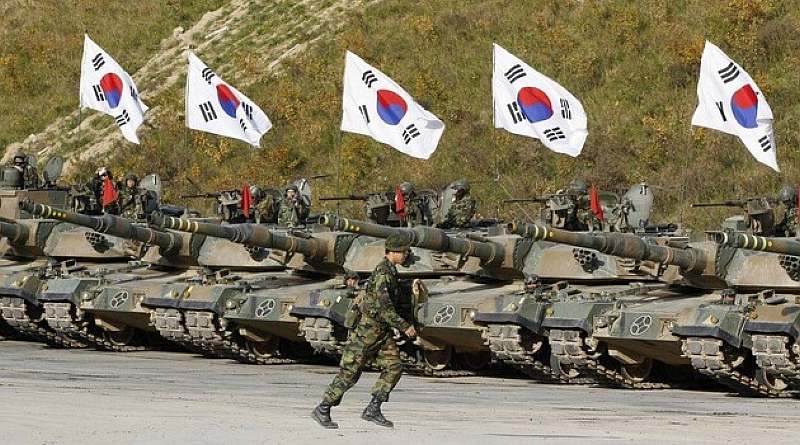
6. South Korea may join NATO’s program to supply arms to Ukraine.
– Seoul is considering various support formats, including joining the Prioritized Ukraine Requirements List (PURL) initiative—a mechanism that allows partner countries to finance the procurement of critically important weaponry for Kyiv.
– Since the beginning of the full-scale war, South Korea has limited itself to humanitarian and non-lethal assistance, but the approach may now change.
– The PURL program was launched by NATO in July 2025 after the reduction of direct military aid to Ukraine by the United States during Donald Trump’s presidency. The initiative provides for the coordination of contributions through a special Alliance fund, which finances the procurement of American weapons and equipment according to the priority needs of the Ukrainian army. Specifically, through this mechanism, Ukraine receives anti-aircraft missiles for Patriot air defense systems.
– The possible inclusion of South Korea—one of Asia’s leading economies and a major producer of high-tech products—would mean the expansion of the international coalition supporting Ukraine and strengthening the resource base for the procurement of modern weaponry.
– For Russia, this would be another signal of growing international isolation and the expansion of the geography of military-technical support for Kyiv.
