
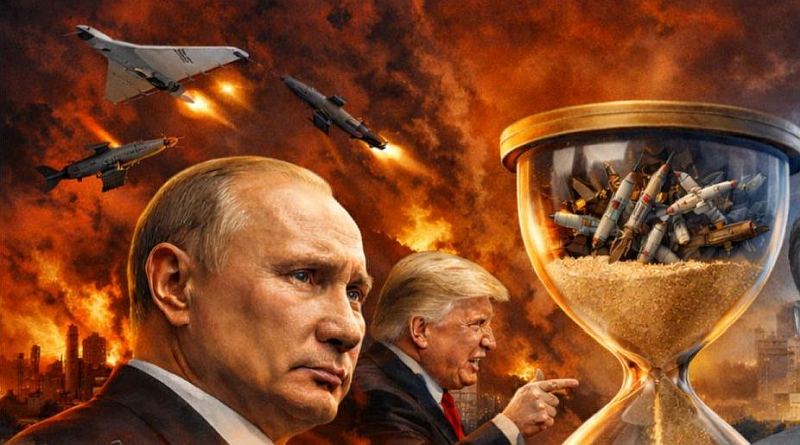
Whether a peace agreement can be reached, Putin’s readiness to attack Poland or the Baltic countries, the arrest of Nicolás Maduro, and the activities of Ukrainian special services – these thoughts were shared by former head of CIA special operations in Europe and Eurasia Ralph Goff in an interview with the host of the program “Western Studio” Antin Borkovskyi on Espresso.
The situation is truly extremely complex: the Russians want to buy time and simultaneously push through additional demands. They are trying to deceive part of the world elites with proposals of peace. In Ukraine, we don’t quite believe in this, but the situation is serious. With your immense experience, how do you currently assess the trends that a peace agreement will be reached? Do you believe in it? Perhaps you have some additional information.
I would say that the Russians are not only trying to deceive the West but are doing so quite successfully. Negotiations are systematically prolonged. Russia traditionally adheres to maximalist positions, which have long been a characteristic feature of its negotiation style.
So far, I see no signs that the Russian side is genuinely interested in substantive negotiations, as they lack convincing reasons to do so.
Putin believes he is playing ahead. He bets on the gradual exhaustion of the West. In this logic, the question “why stop?” appears quite pragmatic to the Kremlin.
As for the prospects of the negotiation process, in my opinion and based on my experience, the West should consistently increase pressure both militarily and economically. On the battlefield, the critical factor remains the actions of Ukraine with the support of its partners.
In the economic sphere, the support of Europe and the USA is essential, but Ukraine’s own resilience and ability will be crucial.
The situation is dramatically complex. On one hand, we have the updated American national security doctrine. On the other, we’ve heard about the Greenland case. These are certain cracks in what was established after World War II, and the Russians will try to exploit it. But what might the Russians, particularly Putin, be preparing for? We don’t see them reducing military production, and we see that they are meticulously preparing people – and these are concrete indicators.
The issue with Greenland, in my opinion, seems more like a distraction. It reflects accumulated tension in the relations between the United States and Europe, which has recently become more noticeable. Putin is undoubtedly watching this closely and trying to find opportunities for his own advantage.
Certain discrepancies within NATO indeed exist, but the political dynamics in Europe are variable and often adjusted by electoral processes.
Putin should be cautious in his conclusions. Assumptions about the possibility of easy influence over Trump could prove to be a strategic mistake.
In fact, a tougher U.S. position has served as a stimulus for Europe to strengthen its own defense role.
A similar, though much more dramatic, pattern can also be seen in Ukraine’s case. The Russian invasion, despite its catastrophic cost, led to an unprecedented strengthening of Ukrainian national identity. A tragic but historically defining consequence.
Now, as President Trump encourages Europeans to take greater responsibility for their own defense, they are increasingly aware of the inevitability of this process. As a result, we see an increase in defense spending in many European countries, with Germany playing a leading role, while Poland and the Baltic states remain key participants.
This dynamic indicates that Europe is gradually strengthening its ability to compensate for what is often perceived as a partial reduction in the American presence. Trump is not abandoning NATO, but rather revising the approaches to the US role in the Alliance. Therefore, Putin should avoid drawing overly simplistic or optimistic conclusions in this regard.
The Soviet Union and present-day Russia have always worked with psychological analysis services. We understand that the Russians have now drawn a psychological portrait of Trump. I think the Americans have also drawn a psychological portrait of Putin. They collect information and thus have a guideline and know how to press on sensitive points. This is a psychological moment.
Besides this, there are also issues of teams. Each president is not just a president, but also has a team of people ready to play and deploy a certain strategy. For example, if we talk about the Russians’ awareness of what is happening in Washington and in the environment close to the American president.
There is a noticeable asymmetry between Russian and American perceptions of the world. From my experience, Russians are much more focused on the United States, closely monitoring American politics and trying to interpret American behavior.
For most Americans, Russia, on the contrary, is not a constant element of everyday attention. Such a difference in focus often forms distorted mutual perceptions. In this sense, both sides often lack self-awareness.
Regarding leaders, President Trump is a complex and unpredictable political figure. Attempts to overly simplify his logic or consider it entirely predictable can become sources of strategic mistakes.
In my observations, Vladimir Putin has evolved significantly since he first became president of the Russian Federation.
If you look at his early photos, before noticeable changes in appearance, he gave the impression of a fairly ordinary public figure. He regularly appeared in public and seemed much more engaged in public life.
Over the years, along with changes in appearance, his psychological portrait likely transformed as well. He became increasingly isolated, especially noticeable during the coronavirus pandemic. Many remember the iconic shots of the extremely long table, which became a symbol of this distance.
The isolation seems to have taken not only a physical form but also a broader one, particularly in the context of information perception and interaction with the environment. His closest circle, in my opinion, gradually formed from people who were reluctant to convey unwanted or problematic information to him. Such dynamics inevitably reinforce the effect of seclusion.
As for his nuclear rhetoric towards the world and Europe, in my opinion, it is about a person who demonstrated distinct concern about personal safety, especially during the pandemic. If a leader is so focused on personal health and security, it is difficult to imagine that this person would willingly enter a nuclear war.
It seems that this rhetoric is largely intended for psychological effect and deterrence. In the absence of a direct existential threat to the regime itself, such statements appear more as a tool of pressure rather than intent.
In this context, I believe the US and Europe have reasons to maintain a tougher stance towards Putin.
Such personalities can wage war for a long time. These are people with an accentuated approach to life, to war. Putin issued an ultimatum that concerned not only Ukraine, but NATO and the United States – before the full-scale invasion, he demanded the withdrawal of American presence from Central Europe, including Estonia, Lithuania, Latvia, Poland, Czech Republic, Hungary. Several governments have already changed – in Slovakia, in the Czech Republic, and this is a certain problem, but it doesn’t mean we can’t resist.
The issue of Narva remains relevant. How do you assess Putin’s readiness to open a second front through provocation either against Poland or Estonia?
That’s why the war in Ukraine is so significant. In my opinion, it’s not just a conflict between two states, but a confrontation of two value systems.
On one side are the principles of the democratic West. On the other, the model of autocratic regimes embodied by Russia. Just look at its circle of partners: North Korea, Iran, and China. I sometimes joke that this is not the kind of company people strive to join.
Regarding the risk of war expansion, events in Ukraine are crucial. If Putin achieves his goals and feels a sense of impunity, it could potentially stimulate further escalation, particularly towards the Baltic countries.
He might not only look at Narva, a predominantly Russian-speaking region of Estonia, but also at broader geopolitical constructs, including the possibility of creating a land corridor between Russia and Kaliningrad through Lithuania, in the so-called Suwałki Corridor.
That’s why the outcome of the war in Ukraine is of critical importance. It’s not just about Ukraine’s fate but about deterring potential Russian expansion in other parts of Europe. A convincing defeat of the Kremlin is a key factor for strategic stability.
The paradox of the situation is that for years Putin justified his actions by the need to stop NATO expansion. However, the Russian invasion caused the opposite effect. The alliance gained new members, including Sweden and Finland. Finland’s accession, with its long border with Russia, particularly highlights the contradictions in Moscow’s initial logic.
Thus, the war in Ukraine has long ceased to be a local conflict. Its consequences directly affect the security architecture of the entire West.
And now, an extremely interesting story. There lived the president of Venezuela, Nicolás Maduro. In the evening, he was drinking tea or cocoa, wearing a gray tracksuit. Air defense systems, presidential security were operating according to protocols. Security protocols were coordinated with the Chinese, the Russians, the Cubans.
He didn’t finish his cup of cocoa – something happened. The lights went out, and President Maduro found himself in headphones and glasses in an unfamiliar place – on an American plane taking him to an American court.
After that, we heard the American president revealing some details. I don’t know who advised President Trump to voice this – that some new, top-secret, inexplicable weapon was used in this operation.
I understand there are 10 levels or 10 categories of secrecy and confidentiality. But perhaps you could share something non-classified?
So, first of all, I believe that Maduro’s tracksuit was received after he was captured in his palace.
I would like to commend my former colleagues from the CIA for the effective work in gathering intelligence that made this operation possible, as well as the colleagues from the Joint Special Operations Command, who conducted it without losses on the American side. I hope Putin took note of this, given the limited capabilities of his forces in similar scenarios.
Regarding talks of a “secret weapon,” we should consider the rhetoric and style of President Trump himself, who often presents such topics with irony. Whether it was a literal statement or a figurative expression is hard to say. Meanwhile, reports mentioned significant losses among the guards. Such tactical effects are entirely achievable with conventional means, including flashbang grenades.
A flashbang grenade does not create shrapnel, but at a close distance, it can cause severe disorientation and noticeable physical effects. From what I’ve heard from colleagues, no “secret technology” was used. More likely, the security forces were simply overwhelmed by the nature of the attack.
Despite significant media resonance, there are no grounds for sensational conclusions in this story, in my opinion.
The key point lies elsewhere. It seems that Washington’s political patience reached its limit, after which a decision for action was made. The further development of the situation will largely depend on the broader geopolitical context, including the presence of foreign advisers in Venezuela. In strategic logic, such processes rarely conclude with one episode.
This is generally a fantastic operation, and I think everyone was surprised. Probably, now the Russians and Chinese have also updated their security protocols. Because perhaps it should have started not with Maduro, but with the Russian Federation. Our special operation “Spider Web” was successful and very successful, the Russians did not expect this.
How do you assess the Russians’ readiness to protect their strategic objects? They consider Putin a strategic object, and Putin does not want to end up in an American or Ukrainian court.
Yes, the “Spider Web” operation was truly extraordinary both in terms of target selection and execution. It can be compared to the most high-profile and complex special operations of modern times.
At the same time, I would like to emphasize to the American audience that, besides the direct combat results, the most impressive aspect is the level of secrecy. As someone who has had experience interacting with Ukrainian and other services, the key factor for me is that the operation remained completely confidential, ensuring the effect of complete surprise for the Russian side.
In the early years following the collapse of the Soviet Union, cooperation between Western and Ukrainian services was accompanied by noticeable caution. Western partners often acted reservedly due to fears about potential influence or infiltration by Russian structures. It might not have been about direct control, but the risk factor was perceived as significant. Therefore, the exchange of the most sensitive information often remained limited.
The prevailing logic was that any transmitted information could potentially end up in Moscow.
The “Spiderweb” operation showed that Ukrainian services were largely able to minimize these risks. There were no information leaks. The surprise effect was complete. The FSB was unprepared for this turn of events. This not only dealt another blow to its reputation but was also a significant success for Ukraine.
I sincerely tip my hat to the Ukrainian services.
We understand, “Oreshnik” is a potential nuclear carrier, and the Russians are testing it now. And they are testing the American air defense systems installed in Ukraine. So, they are demonstrating something. However, regarding the additional weapon arsenal, which was supposed to be a game-changer, we understand that similar know-hows are possibly with the Russians, the Chinese, the Americans — and Ukraine has it too, referring to flamingos and not only. The story of the Russian “Oreshnik” — who is it aimed at?
In my opinion, the use of “Oreshnik” rather indicates a lack of effective alternatives. Despite years of missile and drone attacks, Russia has failed to achieve strategic objectives. The massive recent strikes — hundreds of drones combined with missile attacks — have been particularly revealing. They aim to exhaust defenses but have not led to a breakdown in public resilience or the destruction of key industrial potential.
Even under colossal pressure, Ukraine shows the ability to develop and strengthen its capabilities.
I would caution the Russians that future Ukrainian weapons systems, though not any mythical wonder weapon, will inevitably increase pressure both on Russian military capabilities and the economy. Therefore, it is critically important for the West to increase investments so that Ukraine can deploy these capabilities as quickly as possible.
A telling example of Ukrainian resilience was observed about an hour ago. We were in a café in Lviv when an air raid alert was announced. Within a few minutes, there was an explosion. The speed indicated a missile strike, and it later became known that it was about a “Kinzhal.” The reaction of the people was telling: no panic. Those who deemed it necessary headed to shelters, but most calmly continued their activities.
Ukrainian society remains resilient and unbreakable. The key takeaway is obvious: the West must not only maintain but consistently strengthen its support for Ukraine, creating conditions where negotiations become a necessity for Russia, not a tactical choice.
The Russians are employing a brutally simple tactic. They are targeting our civilian energy infrastructure, aiming to make people suffer. Why do they want people to suffer? They hope to create a certain psychological change in society. But if they had studied history well, they would remember that the Nazi blockade of Leningrad didn’t end with Leningrad’s surrender. The brutal, barbaric bombing of Dresden didn’t result in the Germans capitulating. People suffer, but from a military tactic and strategy standpoint, it should not lead to the desired outcome. Yet, they continue with it.
How do you assess Ukraine’s capabilities – can we make the Russians feel the pain to help them understand the impact of their strikes on our civilian infrastructure, where people die from the cold?
Yes, I believe it’s possible, as modern societies significantly differ from those of the past. Today’s Russians are not the same as the Soviets of the 1940s. The internet, globalization, and openness of the information space inevitably change expectations, behavior, and perception of reality. This fully applies to Russian society as well.
At the same time, we cannot ignore the massive losses that Russian troops face on the battlefield.
It’s mainly not about the elite. A significant portion of the political and economic class, including the population of the largest cities, still doesn’t feel the full burden of the war. As a result, there’s an effect of distancing, a kind of psychological bubble that softens the perception of the real consequences of the conflict.
I believe Ukrainians can disrupt this bubble, create tangible discomfort, and stimulate societal pressure on the elites, which could potentially change the internal dynamics in Russia. Under certain conditions, this logic could theoretically create additional incentives for negotiations. However, at this moment, I don’t consider it likely.
Possibly, over the next six months or a year, if battlefield losses continue to increase, and additional pressure mounts — including limitations on the shadow fleet of Russian oil transport and reduced oil purchases by certain countries — the cumulative effect could become significantly more noticeable.
We are already observing how European countries are gradually reducing their dependence on Russian energy resources.
I believe that over time, the cumulative effect for Russia may become tangible. Meanwhile, the West must maintain consistency and determination, continuing the policy of pressure. Escalation from the Kremlin should not trigger confusion or a passive response. The logical answer is further pressure and strategic endurance.
The story with General Alekseyev, deputy chief of the main department of the Russian General Staff, is a very serious position. We saw a strange version where two elderly people over 65 were recruited, trained, and yet failed to shoot him. And supposedly General Alekseyev was leaving his mistress – it’s quite a story.
However, it concerns the use of political assassinations with specific goals. Speaking generally about such scenarios, they relate to both our adversary and us. There have been several high-profile, strange murders in Ukraine as well. Middle Eastern tactics are used—suicide agents, except instead of a suicide vest, they receive instructions via Telegram and retrieve weapons from a stash. How serious and widespread can this become?
In Europe, the so-called “gray zone” is increasingly discussed. This refers to incidents in Poland, Germany, and other countries. According to available information, Russian intelligence services are using online recruitment, sometimes with cryptocurrency funding, to organize acts of sabotage. Similar processes are observed in the war region, although at a much harsher level.
Regarding the reports of the attempt on General Alikseyev, final conclusions are premature. It remains unclear whether it concerns an external operation or an expression of internal struggle within the Russian power circles. After the events related to Prigozhin, the actions of certain security service representatives caused noticeable tension.
Alikseyev’s presence in Rostov and his behavior then also became the subject of numerous discussions. In similar situations, the real picture usually becomes clearer only with time.
There have been both unsuccessful and successful attacks, reflecting the formation of a new paradigm of modern conflicts. At the same time, this is a serious signal for the West.
Such wars are no longer limited to the borders of direct participants. The key lesson from the events in the gray zone is that Russia is increasingly perceiving Ukraine and Europe as elements of a broader confrontation. In these circumstances, the West must clearly understand the nature of this dynamic and respond systematically and consistently.
How do you generally assess the prospective development of Ukrainian diversionary services, Ukrainian intelligence services? We increased the number of personnel in the special unit of the Security Service of Ukraine “Alpha.” They have performed very well in various situations. Now the commander of “Alpha” has become the acting head of the Security Service of Ukraine. But the Russians are also learning, and I think the Russians also have their developments—would like you to compare the dynamics.
And speaking of American assistance, do you not see that it is starting to freeze a bit? At one time, the “sleepy” President Joseph Biden gave us a lot. And I am still grateful to President Biden for what he allocated to us—this is about the dynamic of support. How do you see and assess it?
American assistance to Ukraine has not stopped. It was reduced, but support continues. As far as I know, the budget still provides for about half a billion dollars allocated for Ukraine. This means that assistance continues.
Speaking of the confrontation between intelligence services, Ukrainians have two defining advantages. First, they have gained significant experience in a very short time. Second, the conditions of war have forced them to act as effectively, flexibly, and efficiently as possible.
The Russian side, in turn, often demonstrates a certain arrogance. Russian services sometimes tend to overestimate their capabilities—at least, that has been my previous experience.
They undoubtedly remain capable, and underestimating them would be a serious mistake. At the same time, certain successes of the Ukrainian services are truly impressive, and “Pavutyna” is just one of many examples.
One of the chronic features of intelligence activity is the asymmetry of publicity: failures quickly become public knowledge, while successes mostly remain in the shadows.
In the context of competition, the Russian services – FSB, SVR, and GRU – have historically been characterized by intense rivalry, which at times has bordered on open conflict.
From the Ukrainian side, it is appropriate to maintain cautious optimism about the level of interagency cooperation. Competition undoubtedly exists, and given the internal specifics of the country, rumors about changes in influence and dynamics are a constant background.
Meanwhile, the appointment of Kyrylo Budanov, the former head of military intelligence, as head of the Office of the President opens up new opportunities. This is a figure capable of enhancing coordination and promoting the most efficient, effective, and coherent work of Ukrainian services.
When a state is smaller than its adversary, size itself can turn into an advantage. This creates conditions for greater flexibility, closer interaction, and reduced duplication of efforts, particularly in targeting, operational activity, and information exchange.
Ukrainian services appear to have all the prerequisites to fully leverage these advantages. Accordingly, further successes can reasonably be expected in the future.
