
Has the enemy truly broken the so-called Kyiv energy ring, can destroyed power plants be replaced with decentralized generation, and how to ensure the vital functions of the capital if it loses connection with the unified energy system of the country?
What is the “Kyiv Energy Ring”
In recent weeks, we often hear “the enemy has broken the Kyiv energy ring.” However, this does not mean that Kyiv is an energy island surrounded by an energy circle. It actually refers to the power transmission lines and substations surrounding the capital, as well as power plants and thermal power stations located within the notional circle.
“The Kyiv energy ring, in a narrow sense, is a network of electric power transmission at a voltage of 330 kV around Kyiv. In a broader sense, which is being discussed now, it is the energy ring plus the main thermal power plants, which the enemy is currently targeting, and the Kyiv Hydroelectric Station, as well as higher-voltage substations that essentially ensure the interaction of this energy ring with the country’s unified energy system,” explains Valeriy Bezus, Vice President of Energy Club and former head of the State Agency for Energy Efficiency and Energy Saving of Ukraine. “There is no talk in professional circles about any alternative to the Kyiv energy ring. It cannot be left unrestored. The only question is increasing its resilience.”

According to the expert, resilience concerns both natural disasters and military risks – missile and drone attacks, terrorism, cyberattacks.
“Regarding the military-terrorist attacks currently occurring, the level of security can be increased, but it cannot be fully guaranteed. The cost of solutions that would protect the energy system with active and passive measures, i.e., air defense systems plus physical protection, is astronomical. No energy economy can withstand that,” says Valeriy Bezus.
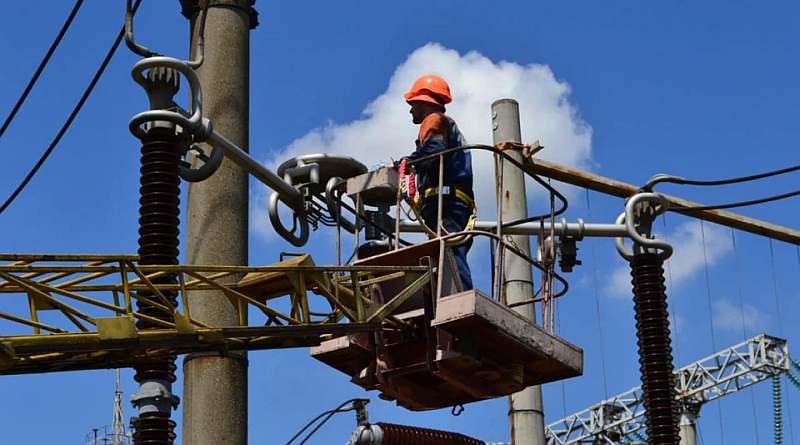
According to Volodymyr Omelchenko, director of energy programs at the Razumkov Center, if we speak about the energy ring specifically as the high-voltage transmission lines and substations around Kyiv by Ukrenergo, they have been damaged but not destroyed. The 750 kV Kyiv substation, through which electricity is supplied to Kyiv from the Rivne nuclear power plant, also periodically suffers attacks but is being restored.
“The main equipment of the substations is transformers. They are under the second level of engineering protection. Therefore, in principle, the transformers are intact, but other equipment gets damaged and is restored, and so on in a cycle,” says Volodymyr Omelchenko.
How much electricity the capital consumes
According to Volodymyr Omelchenko, Kyiv, on average, consumes 1500 MW of electricity. During peak periods, the capital’s energy consumption reaches 1700-1800 MW, which is almost the capacity of two nuclear power units. Therefore, to ensure the energy resilience of Kyiv, decentralized generation should be developed around the city.
“This includes cogeneration, solar stations, biomethane power plants, and a powerful Energy Storage system. In Kyiv itself, it is also necessary to build to make the system more balanced. Kyiv should supply at least 50% of its own electricity, so it is worth constructing about 600-700 MW of decentralized generation. These are real things. If actively pursued, it can be achieved in 2.5 to 3 years,” says Volodymyr Omelchenko.
This means making sure Kyiv can partially supply itself with electricity in case the substations are damaged and it is not possible to receive it from outside the conditional ring, that is, from the unified energy system.
“Considering the situation of conditionally independent functioning of a micro-energy system as a sustainable solution is absurd. It’s about ensuring functioning during a crisis period until the possibility of electricity transmission from the UES is restored,” says Valeriy Bezus. “In wartime conditions, with the presence of such means of destruction as ballistic missiles and drones, setting a task to ensure 100% independent functioning of Kyiv should not even be attempted. We need to determine the level of provision to prevent a technological catastrophe in winter conditions. And from this level, in my opinion, plans B and C should be developed.”
The main focus is on ensuring a certain level of sanitary requirements.
“We have regulatory requirements from the Soviet Union era that residential premises must have at least 20°C. It must be honestly acknowledged that in a crisis situation, the regulated temperature might drop, for example, to 15°C, but this should occur, conditionally, over five hours. So, it’s necessary to determine the minimally acceptable conditions, agree on them with the public, and accordingly set technical tasks,” says the expert.
Should the Destroyed Kyiv Power Plants Be Restored
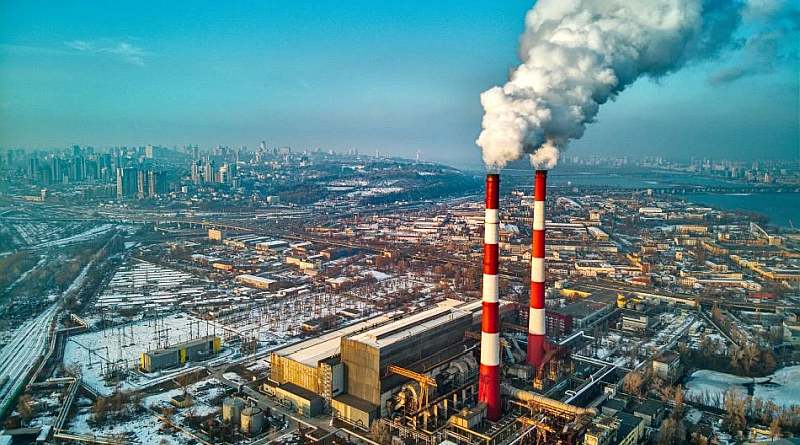
Kyiv’s heating system relies on three power plants – Darnytsia (CHP-4), CHP-5, and CHP-6, which generate both heat and electricity. There are also nearly two hundred small boilers, but the most densely populated districts of the capital depend specifically on the large power plants. However, the system that operated quite efficiently in peacetime became the Achilles’ heel of the capital during the war. This winter, Russia concentrated attacks on these power plants, and after each strike, thousands of buildings were left not only without electricity but also without heat. Therefore, Kyiv Mayor Vitali Klitschko is criticized for not having built a network of local boilers in the four years of the war.
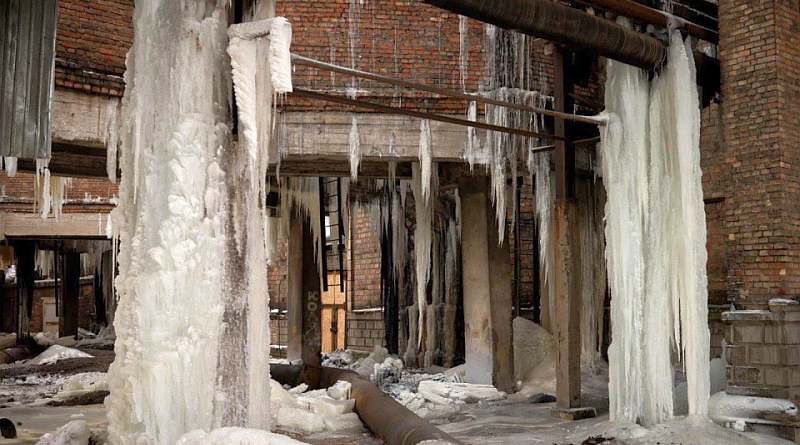
Despite the criticism, the mayor insists that it is impossible to completely replace the capital’s centralized heating system (the largest in Europe and originally built for large power plants) with local heat sources or cogeneration units.
“Meanwhile, the direction of cogeneration development is unequivocally important — for additional electricity generation for critical infrastructure and other city needs. That means implementing alternative technologies should go hand in hand with the modernization and protection of the centralized heating system,” reported Vitali Klitschko after a meeting of the Kyiv energy security and resilience council.
“It’s worth considering whether everything needs to be restored. If we talk about CHP plants, we can start the restoration with the thermal part rather than the electricity generation part. We need to see what equipment might still be available in countries that have abandoned large CHP plants, and whether they have it in storage. For example, Lithuania delivered a fairly large amount of equipment to us,” says Volodymyr Omelchenko. “Perhaps by next winter it will be possible to restore 30-40% of the thermal generation of what existed at CHP plants. But this is insufficient and, again, risky. Who’s to say the Russians won’t shell these CHP plants next winter? It’s incorrect to make the livelihood of the entire Left Bank (where one and a half million people live) dependent on a few CHP plants.”
According to him, along with repairing the damage to CHP plants, mobile modular boiler houses with a capacity of up to 10 MW should be built. 50-70 such boiler houses can be built quickly and they are significantly cheaper than cogeneration units that generate both heat and electricity. Gas piston power plants also need to be built.
On the other hand, Valeriy Bezus is convinced that Kyiv needs to maintain the integrity of the city’s heat energy system because distributed heat generation will cost consumers more. Therefore, block-modular boiler houses can only be a temporary heat supply source until the crisis period is over.
“CHP plants need to be restored. Of course, it’s necessary to enable extra small distributed high-efficiency cogeneration. Regarding capacity, there can be debates. In my opinion, 100-120 MW of distributed high-efficiency small cogeneration for the city of Kyiv may be sufficient for functioning in a priority mode. Additionally, approximately 200 MW of installed capacity for block-modular boiler houses is needed, which can be quickly activated and conservatively used after crises subside,” says Valeriy Bezus. “And this is a relatively cheap solution to activate Plan A, Plan B, and Plan C. But essentially, the heat supply model in Kyiv, which operated before the full-scale invasion, is quite robust and opens up prospects for quality modernization. This is a legacy of the Soviet Union, but it is a good legacy, and unfortunately, it has not been preserved at the same level in every city as in Kyiv.”
In the cover photo: Kyiv CHP-5. Photo: Wikipedia
