

Information on current Russian losses due to sanctions as of 02/15/2026.
1. Ukrainian UAV attack damaged the port terminals of Taman and a fuel tank.
– On the night of February 15, drones attacked the Black Sea port of Taman in Russia’s Krasnodar Krai. This was reported by the regional operational headquarters.
– As a result of falling debris, a tank with oil products in the port caught fire. Damage to the port infrastructure was also recorded.
– This is not the first strike on the facility: in December 2025, a UAV attack already damaged two berths, two ships, and a fuel oil pipeline. At that time, four oil product tanks were burning in the port.
– The port of Taman is one of the key export hubs in southern Russia. It handles the transshipment of diesel fuel, oil, fuel oil, and vacuum gas oil.
– Repeated attacks on the infrastructure increase the risks of shipment disruptions and create additional pressure on Russia’s fuel export logistics.
2. The Central Bank of Russia lowered the forecast for Russian oil prices to $45 per barrel.
– The Central Bank of Russia revised its macroeconomic forecast, reducing the expected average price of Urals oil for 2026 to $45 per barrel — the lowest since the pandemic.
– The estimate is a quarter lower than the budgeted $59 and $10 less than the regulator’s October forecast. Forecasts for 2027-2028 have also worsened — to $50 and $55, respectively.
– The Central Bank acknowledged “significant risks” associated with the decline in oil prices. The global market has shifted into surplus, and for Russia, the situation is further complicated by sanctions.
– After the US imposed sanctions against Rosneft and Lukoil in the fall of 2025, and increased pressure on India to reduce Russian oil purchases, Urals prices plummeted: from $53.7 in October to $44.9 in November, $39.2 in December, and $41 in January.
– It is estimated that last year, the Russian economy missed out on $33 billion in export revenue, and this year, losses may amount to about $20 billion — the Central Bank expects exports to decline from $419 billion to $399 billion. For the budget, this means a massive deficit.
– At $45 per barrel, the shortfall in oil and gas revenues could reach 2.8 trillion rubles. If the current levels of around $41 persist, losses could grow to 4.3 trillion rubles, potentially expanding the deficit to 8 trillion. In such conditions, the government will have to either cut expenditures or increase debt and raise the tax burden on businesses and the population.
– The drop in oil prices is becoming not a short-term fluctuation but a systemic factor pressing on the financial stability of the Russian economy.
3. Due to sanctions, Russia will start “reassembling” Airbus.
– Russian airline “Ural Airlines” has announced the launch of a program to extend the service life of Airbus A320 family aircraft beyond 96,000 flight hours.
– After the cessation of official cooperation with the manufacturer and restricted access to original components, Russian airlines are effectively deprived of full support from Airbus.
– Conducting complex work in centers not certified by the manufacturer raises questions about compliance with international safety standards.
– It is essentially an attempt to independently maintain the airworthiness of Western aircraft in isolation. This highlights the depth of problems in Russian civil aviation: the fleet depends on imported technology, access to service infrastructure is limited, and the extension of service life occurs without direct control from the developer.
– As a result, instead of modernizing the sector, Russia is forced to resort to “internal cannibalism” and experimental maintenance schemes, indicating systemic degradation of the aviation sector under sanctions pressure.
4. The US may impose tariffs of 133% on the import of Russian palladium.
– The US Department of Commerce has preliminarily supported the introduction of anti-dumping duties on the import of unwrought palladium from Russia at a rate of 132.83%. A final decision is expected in June after procedures in relevant agencies are completed.
– The investigation was initiated by Sibanye Stillwater, which owns palladium mines in Montana. The petition claims that Russian palladium is supplied to the American market at prices below fair value, creating a significant competitive advantage for Russian manufacturers.
– It also points to government support for Russian companies in the form of grants, preferential loans, and weaker environmental requirements.
– A key producer of palladium in Russia is “Norilsk Nickel,” which holds leading positions in the global market for this metal.
– Imposing tariffs of over 130% effectively closes the American market for Russian suppliers or forces them to operate with significant price losses.
5. In January 2026, China partially compensated for the sharp reduction in Russian oil supplies to India, becoming the main destination for additional export volumes. This is stated in the International Energy Agency’s monthly report.
– According to the IEA, maritime imports of Russian oil to China have increased to a record 1.7 million barrels per day. Supplies of Urals crude have reached a historic high—about 500,000 barrels daily.
– This has partially cushioned the losses following a significant drop in exports to India, which became noticeable for Russian companies by the end of 2025.
– However, the potential for further increasing supplies to China seems limited. For purchases to increase, Beijing would either have to displace other suppliers or increase reserves.
– In January, China already reduced imports from Middle Eastern countries by 630,000 barrels per day—to 5 million, but the possibility of further volume redistribution remains in question.
– Alternatives to the Chinese direction, under the pressure of sanctions, are virtually non-existent, and maintaining export volumes is ensured through price discounts. This means a reduction in foreign exchange earnings and tax revenue to the budget.
– Thus, record volumes of supplies to China do not indicate a strengthening of Russia’s position but rather mask a structural problem—the loss of market diversification and increased negotiating weakness, which makes oil revenues increasingly vulnerable to Beijing’s external decisions.
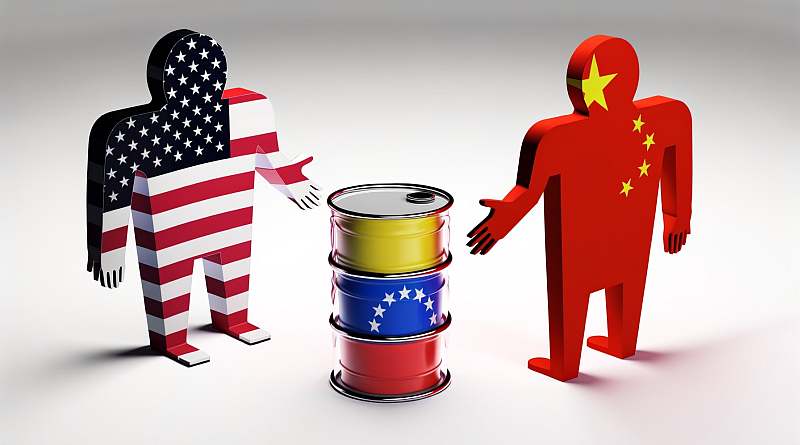
6. China began purchasing Venezuelan oil from the USA.
– China purchased a batch of Venezuelan oil previously sold by the US government. This was reported by US Energy Secretary Chris Wright, noting that “legitimate Chinese business deals on legal terms are welcome.” Contract details are not disclosed.
– Since January 2026, the oil market is being restructured following Washington’s control over the Venezuelan oil sector. Previously, Chinese refineries were the largest buyers of Venezuelan oil, acquiring it with significant discounts due to sanction restrictions.
– Now supplies are being made through the American sales channel, altering the configuration of raw material flows.
– Supplies of Venezuelan oil are also directed to India and Israel. Indian refiners have purchased a large batch of Merey crude, and state companies are advised to increase imports from Venezuela and the USA.
– According to JPMorgan estimates, production in the country could increase to 2 million barrels per day within two to three years.
– For Russia, this means increasing competition in Asian markets. Venezuelan oil, previously partially displaced by sanctions, is returning to global trade under US control.
– With Moscow already dependent on a limited circle of buyers and selling raw materials at discounts, the emergence of additional volumes from Latin America creates a risk of further pressure on prices and a reduction in its export revenues.
