
Oleh Chernysh, Illya Abishev / BBC
Ukrainian sources confirm the success of the Armed Forces of Ukraine’s counteroffensive at the junction of the Zaporizhzhia and Dnipropetrovsk regions, as well as south of Zaporizhzhia.
“In several areas in the Southern operational zone, the Armed Forces of Ukraine counterattacked the enemy’s forward positions, achieving certain results,” writes Ukrainian military expert Kostyantyn Mashovets.
Initially, Russian military bloggers began reporting on the “deep advance” of the Armed Forces of Ukraine in several areas of the Zaporizhzhia direction.
“In the Eastern Zaporizhzhia direction, attacks continue by a mass gathered by the enemy from several Separate Assault Regiments, heavy fighting is ongoing along the Gaichur River border, with encounters recorded west of Huliaipole,” reported the Russian Telegram channel “Rybar” in a summary on February 9.
“Despite the fact that in certain areas the enemy managed to relatively penetrate deeply into the control zone of the Russian Armed Forces, there are currently no critical problems. Difficulties are mostly associated with issues in the operation of Starlink terminals and non-flying weather,” it noted.
The Russian TG channel “Special Forces Archangel” stated that Ukrainians “launched a serious offensive” and “were able to wedge into the Russian defense.”
“They are advancing slowly for now, the main trouble for both sides is communication, specifically ‘Starlink’, which is glitching across the front, requiring work with only stations, complicating coordination. Likely, the next assault will be on Berezove — a decent force is already gathered there, and then probably they will push on Novomykhailivka,” the post read.
Berezove and Novomykhailivka are villages at the junction of the Zaporizhzhia and Dnipropetrovsk regions, 30 km north of Huliaipole. The Russian army announced their capture at the end of September 2025.
Statements from the Ukrainian side
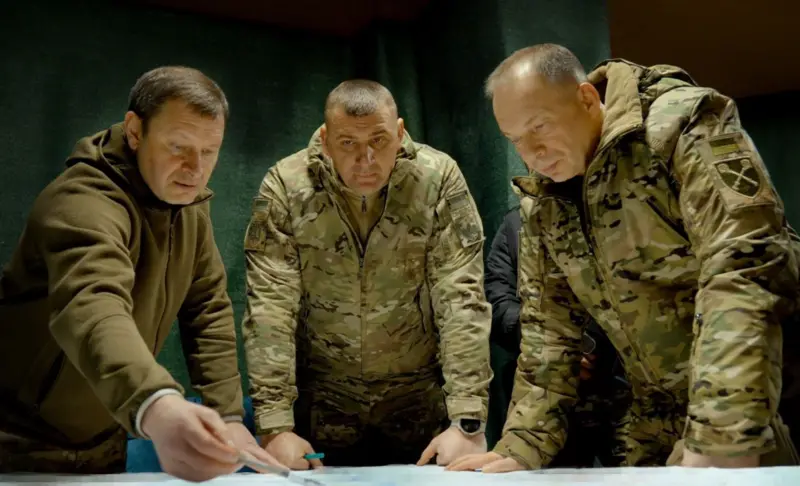
The Commander of the Armed Forces of Ukraine, Oleksandr Syrskyi, reported on February 11 that he held a working meeting with commanders of the Air Assault Forces and assault regiments on the operational situation in the Zaporizhzhia and Dnipropetrovsk regions.
However, the General Staff did not disclose details about a possible “counteroffensive” in the South.
Nevertheless, certain units and groups began reporting successes on this section of the front.
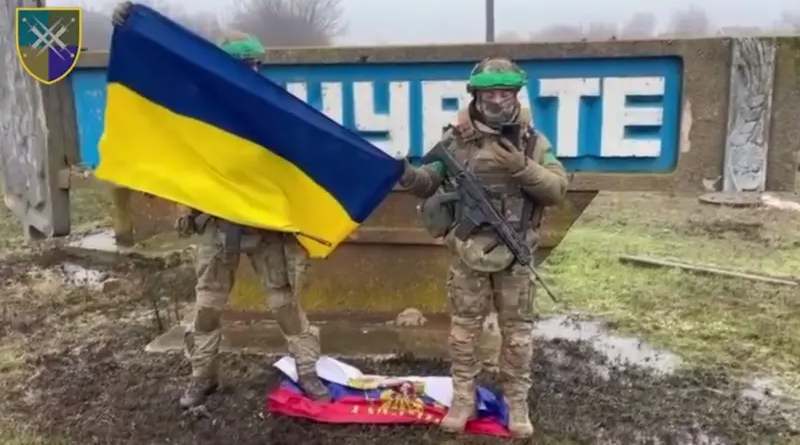
On February 9, the press service of the Southern Defense Forces reported establishing control over the villages of Ternuvate and Prydorožne in Zaporizhzhia, where individual enemy groups had previously infiltrated. The Russian Ministry of Defense announced their occupation at the end of January – beginning of February.
These settlements lie 20 km north of Huliaipole on the western bank of the Gaichur River near an important route to the town of Pokrovske (Dnipropetrovsk region).
Moreover, the 33rd assault regiment, fighting on this front section, reported on February 11 the liberation of another neighboring village – Kosivtseve.
Russia had reported its capture at the end of December of the previous year.
The press service of the 33rd regiment called this a “counter-diversionary operation.”
Additionally, Russian forces were driven out from another flank of the Zaporizhzhia region – near the villages of Prymorske and Lukyanivske. These settlements are 25-30 km south of the regional center.
The First Assault Regiment of the Armed Forces of Ukraine also reports on successful actions near Huliaipole.
“The Armed Forces have some successes in the Huliaipole direction, which cannot be disclosed yet, as the operation continues. The information the enemy is currently spreading on Telegram is accurate,” said unit commander Dmytro Filatov.
Spokesperson for the Defense Forces of the South, Vladyslav Voloshyn, comments cautiously on the actions of Ukrainian units in the Zaporizhzhia direction.
“This is not a classic counteroffensive or counterstrike,” he stated during the February 12 telethon.
According to him, the Armed Forces of Ukraine conducted counter-sabotage and search-strike actions, destroying enemy groups that infiltrated, particularly near the village of Ternove.
On Thursday evening, Kostyantyn Mashovets announced further successes of Ukrainian troops’ “counterattacking actions” near Huliaipole.
“The advanced units of the Armed Forces moved in the direction of Ternuvate – Dobropillia, seemingly having already crossed the Haichur River and liberated the latter… Ukrainian troops also apparently managed to engage in battles for Varvarivka, dislodging the enemy from positions in Pryluky and Olenokostiantynivka,” the analyst reported.
According to him, Russian troops, under pressure from the Armed Forces, are forced to retreat eastward beyond the Huliaipole – Pokrovske road, which they took under their control a few weeks ago.
The Ukrainian analytical and OSINT project DeepState described the actions of the Ukrainian army in Zaporizhzhia as a success but urged not to overestimate the scale of these operations.
“There are a number of conducted clearances, there are certain successes in this… However, it is not worth being enchanted by something that doesn’t exist on such a scale as we would like, to avoid later disappointment,” said project co-founder Roman Pohorylyi.
Starlink Effect
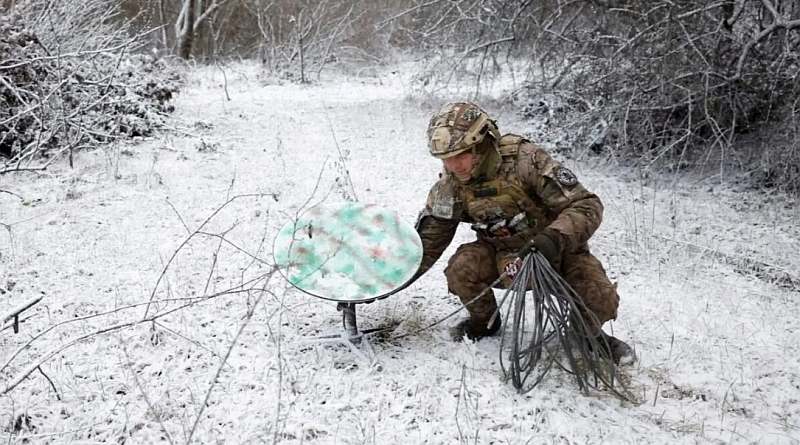
The successes of the Armed Forces of Ukraine in the Zaporizhzhia region are partly due to the fact that Russian troops lost the ability to use Starlink terminals, a senior NATO official told the BBC.
Earlier, the Ukrainian Ministry of Defense reached an agreement with the American company SpaceX to disconnect Starlink satellite communication terminals that are not included in Ukraine’s “white list”. This was done to prevent these terminals from being used by the Russian army, which obtained them through “grey imports”.
Russia used them to maintain communication at the front, and there were even more exotic methods—Starlink was installed on long-range drones that attacked targets deep within Ukraine.
“Currently, disconnecting this connection has put the Russians in a difficult position in terms of command and control, and this certainly means they will have to resort to more noticeable and traditional means of managing these units,” said a NATO representative.
“Whatever alternatives the Russians come up with, they are unlikely to be as effective. Therefore, I think this is something we will definitely see on the battlefield. And I’ll put it this way: some part of the recent success Ukraine achieved in Zaporizhia is probably related to the change in Russia’s access to Starlink,” he believes.
Situation in Zaporizhia
Last fall, the Russian army noticeably intensified in the Zaporizhia region—in its southeastern part and south of the regional center.
By the end of the year, it almost fully captured Huliaipole—a city that long served as a stronghold for the Ukrainian Armed Forces and approached Zaporizhia within 25 km.
Experts call these two directions the most threatening for Ukraine’s southern defense.
Further advancement of Russian troops towards Zaporizhia will create the danger of shelling the city with artillery and increase the threat of drone attacks.
And west of Huliaipole are vast open spaces and few settlements, making defense difficult.
In these conditions, even small-scale counterattacks, if successful, are significant. At a minimum, they allow defenders to gain time and bring in reserves to the threatened direction.
Cover: Ukrainian military ousted Russians from the village of Ternuvate in Zaporizhzhia. Photo: Defense Forces of Southern Ukraine
