

Information on current Russian losses due to sanctions as of 11/17/2026.
1. Ukrainian forces attacked the Crimean bridge for the second time in a day: reports of one span collapsing.
– On the night of November 17, Ukrainian Defense Forces attacked the Crimean bridge across the Kerch Strait again. After a series of powerful explosions, the Russian occupation authorities completely stopped car traffic on the crossing once more. This happened only a few hours after travel was restored in reverse mode.
– The monitoring channel “Crimean Wind” reported a hit near the bridge arch. OSINT channels released videos of a direct hit on the arch, and later – reports from the site that one of the spans had collapsed into the water and the arch was no longer visible. The collapse information is currently confirmed.
– Damage to the bridge was recorded after the first attack on the night of November 16. Satellite images showed holes in the road surface in at least two places and deformation of the arch structure. As a result, car traffic was stopped for almost 17 hours.
– The repeat attack was confirmed by the Kremlin-appointed head of Crimea, Sergei Aksyonov. The Russian authorities are once again forced to restrict traffic on the strategic crossing despite enhanced security and a deployed air defense system.
2. Ukrainian drones hit the “Gazprom Neftekhim Salavat” refinery in Bashkortostan: numerous fires broke out at the facility.
– On the night of November 17, Ukrainian Defense Forces attacked the “Gazprom Neftekhim Salavat” refinery in Bashkortostan, approximately 1300–1400 km from the Ukrainian border. Hits and numerous fire sites were recorded at the facility.
– The General Staff of the Armed Forces of Ukraine confirmed the refinery was hit: impacts with subsequent fires were recorded on the site. The operation was jointly conducted by Special Operations Forces units and the SBU.
– “Gazprom Neftekhim Salavat” is one of the largest oil refining and petrochemical complexes in Russia, part of the Gazprom group. Its processing capacity is up to 10 million tons of hydrocarbon raw materials per year.
– The facility produces gasoline, diesel fuel, fuel oil, bitumen, polyethylene, and other petrochemical products. This is not the first attack on the complex: after previous strikes in July and October 2026, fires occurred, and in July, oil processing was completely halted.
3. Russia has moved over half of its export settlements into the shadows — approximately $194 billion for the first nine months of 2026.
– The main reason for this was the sanctions that complicated Russian companies’ access to the international payment system and forced them to create bypass mechanisms to receive export revenue. According to the Russian Central Bank, in the third quarter, the share of ruble payments for exports reached a record 67.1% compared to 14-15% before the full-scale invasion of Ukraine.
– The dollar, euro, and currencies of other countries that Moscow considers “unfriendly” accounted for only 9%, with the remaining currencies making up 23.9%. This payment system is significantly more expensive for Russian exporters. Due to intermediaries, conversion, and complex payment routes, the total costs of transfers have increased several times compared to the pre-war level. At the same time, the risks of delays and contract disruptions are increasing.
– Part of the foreign exchange earnings remains outside the Russian financial circuit and does not enter the domestic market, complicating its use and weakening the transparency of currency flows.
4. Ukrainian strikes have paralyzed three major refineries supplying fuel to Moscow.
– As a result of the November campaign of Ukrainian strikes on Russian oil refining, three major refineries that supply fuel to Moscow and the metropolitan region have been halted.
– The “YANOS” refinery in Yaroslavl, with a capacity of 314,000 barrels per day, completely stopped processing after being attacked on November 3. The “LUKOIL-Nizhny Novgorodnefteorgsintez” (NORSI) refinery in Nizhny Novgorod, which supplies oil products to the metropolitan region via pipeline, was also halted. The Ryazan refinery of “Rosneft” lost about 90% of its capacity after an attack on November 5, with processing reduced from 342,000 to 34,000 barrels per day.
– The only refinery in the metropolitan region that continues to operate is the Moscow refinery of “Gazprom Neft.” However, it has not fully recovered from the Ukrainian strike in July: the facility is running at approximately 70% capacity — 168,000 barrels per day at a design capacity of 240,000 barrels.
– The strikes have also significantly limited the operation of other major oil refineries. The Omsk refinery, attacked on November 11, operates at about 30% capacity, and the Kirishi refinery (KINEF) in the Leningrad region lost about 70% of its capacity after the attack on November 9. Russian oil refining is facing simultaneous pressure at several key facilities, and disruptions have affected the main sources of fuel supply to Moscow.
– This creates additional risks for supplying fuel to Russia’s largest consumer market.
5. Russia increased oil production and export of oil products in October, taking advantage of a temporary halt in Ukrainian attacks on refineries and agreements with the US regarding diesel fuel.
– However, despite increased deliveries, production remains significantly below the levels set by OPEC+ quotas. Over the month, production rose by 210,000 barrels per day to 8.73 million barrels. Export of oil products increased by 260,000 barrels to 1.49 million barrels per day, reaching the highest level since June.
– Deliveries of diesel and gas oil saw the most significant increase, doubling to 270,000 barrels per day. In total, Russia shipped 1.13 million tons of this product in October — almost four times the initially declared 300,000 tons as part of agreements between Moscow and Washington.
– The main buyers were Turkey, which received 240,000 tons, and Brazil — 160,000 tons. Meanwhile, no batch of Russian diesel reached the US: American companies are wary of legal risks, so additional volumes are directed to other markets through offset mechanisms.
– The temporary easing of pressure on Russian refineries allowed them to resume production and export, but it did not solve the problems of the Russian oil industry: production remains below OPEC+ quota benchmarks, and agreements with the US have not opened the American market for Russian diesel.
6. The European Union has expanded sanctions against the Russian oil and gas sectors, including port infrastructure, refineries, and hydrocarbon extraction companies in the list.
– The restrictions cover enterprises involved in the export of Russian raw materials, their processing, and realization. The sanctions affected the St. Petersburg Oil Terminal, “RusChemAlliance” — one of the operators of the gas processing complex construction in Ust-Luga, “RusGazDobycha,” and the management company “Ust-Luga.”
– The restrictions were also extended to assets of the “Tatneft” group: “KalmTatneft” (50% owned by “Tatneft”), “Tatneft-NAO” (100%), and “Yambuloil” (50%). The sanctions list included NNK enterprises in Komi and Sakhalin, the Khabarovsk Refinery, the Omsk and Moscow refineries of “Gazprom Neft,” the Kirishi Refinery “KINEF” of “Surgutneftegas,” “Orsknefteorgsintez,” the Novoshakhtinsky, Ilsky and Slavyansky refineries, as well as the Saratov Refinery.
– The EU’s sanction pressure covered several links of the Russian oil industry — from extraction and transportation to processing. The inclusion of major refineries in the list is particularly significant, some of which have already suffered from Ukrainian strikes and are operating with limited capacity.
7. European control is increasingly complicating the operations of the Russian “shadow fleet”: tankers are detained, intercepted, and inspected directly on maritime routes.
– Since 2025, the maritime incident map has recorded 19 reports of attacks, detentions, captures, and inspections of vessels. The main areas are the Black and Mediterranean Seas, as well as the coasts of Northern and Western Europe.
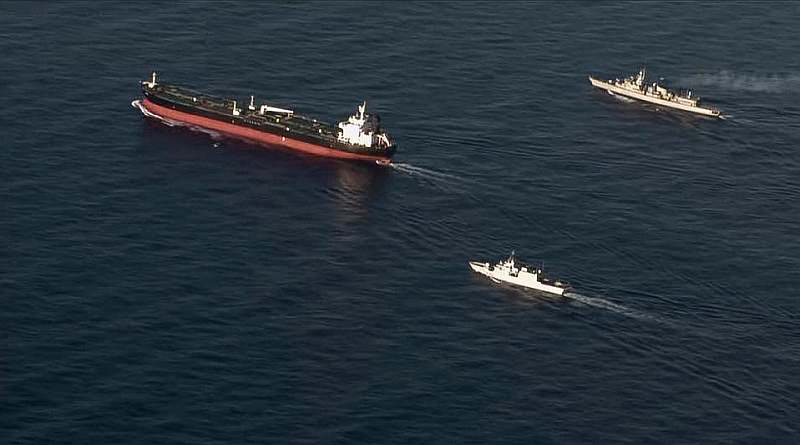
– One of the latest incidents occurred on November 13 in the Mediterranean Sea: EU forces under Operation IRINI boarded the tanker MIDAG and found that it was using a false flag. The vessel is suspected of belonging to Russia’s “shadow fleet.” According to The Insider, in May, the tanker loaded oil at the Russian port of Kozmino and subsequently came under US sanctions for transporting Iranian oil. After the inspection, MIDAG was not detained and continued its voyage.
– For Russia, increasingly active control of maritime routes means increased costs and risks for oil exports. Inspections, detentions, and the threat of capture force operators to seek more complex routes and ways to conceal the origin of cargo.
– This raises transport costs, creates risks of delivery delays, and strengthens the position of buyers who can demand greater discounts from Russian suppliers.
8. Deutsche Bank has for years helped Russian oligarchs maintain access to the Western financial system, despite warnings about money laundering risks and clients’ ties to the Kremlin.
– Internal bank documents obtained as part of an international journalistic investigation indicate that the management prioritized profits from Russian clients over the warnings of their own compliance experts.
– Among the bank’s clients were Oleg Deripaska, Viktor Vekselberg, Mikhail Fridman, and Petr Aven, as well as large Russian companies — Gazprom and Sibur. The bank classified the latter as high-risk due to the owners’ connections with individuals close to Putin.
– Internal documents assessed clients based on political vulnerability, corruption risks, wealth origins, and connections to sensitive industries. Despite these warnings, Deutsche Bank management continued to expand its Russian business.
– The investigation also revealed how Russian oligarchs adjusted their ownership structures in response to Western sanctions. For instance, Mikhail Fridman and Petr Aven stepped down from leadership roles in the investment company LetterOne and reduced their combined stake to 49.9998% to avoid falling under sanction rules. Andrey Melnichenko transferred shares in the coal group SUEK and EuroChem to his wife a day before EU sanctions were imposed.
– After Russia’s full-scale invasion of Ukraine began, Deutsche Bank initially tried to maintain its presence in the Russian market. On March 10, 2022, CEO Christian Sewing told employees that the bank would not leave the country. However, the very next day, it announced the winding down of its business in Russia. Prior to this, the bank even opened a new office in Moscow in December 2021, just months before the invasion.
– The documents also remind of previous Deutsche Bank scandals: between 2010–2015, it was exposed for conducting operations involving the laundering of tens of billions of dollars for Russian criminals, spies, and oligarchs.
– Fines related to the bank’s Russian activities amounted to 1.1 billion euros. New leaks cast doubt on the effectiveness of the reforms the bank promised after these revelations, highlighting how long the commercial interests of a Western financial institution outweighed the risks of collaborating with Russian capital.
