
Mariia Tsaturian / Dzerkalo Tyzhnia
During the war, the calendar year for Ukrainians increasingly resembles a walk around a bewitched circle of illusions, carefully constructed by official communication channels. These illusions cover an uncomfortable truth: in the fifth year of the full-scale war, the state has failed to create conditions for the development of decentralized generation because political elites are not ready to give up manual control over energy assets from which they have been accustomed to collecting rent for decades. Therefore, the scenario is the same every year. In spring, as soon as massive Russian strikes on energy subside, we are announced “powerful preparations.” In summer, we receive encouraging news of new megawatts that will appear in the energy system by next winter. In September, officials report on the colossal volume of renovation work and 100% readiness for the “toughest winter in history.” Then, they take us on emotional swings around a possible energy truce which Russia will breach anyway. Then reality crashes into this circle: Russian missiles and countless drones hit Ukrainian power plants and networks, followed by the return of blackout schedules.
This year, reality broke in earlier than usual: the first massive energy strike Russia carried out on September 30. By October, it conducted about six series of massive strikes, between which drone attacks continued almost without interruption, and the Ukrainian energy system was on the verge of a large-scale accident that energy experts call a blackout. Kyiv, central, northern, and eastern regions live almost constantly in emergency shutdown mode before the cold and only occasionally return to planned schedules. The reason is seriously damaged high-voltage grid facilities (Ukrenergo substations 330–750 kV and distribution company substations 110 kV).
The enemy is deliberately destroying the energy system’s ability to transmit electricity from the western and southern regions, where large generation facilities (nuclear power stations) are mainly located, to the east, where consumption is concentrated. The goal is to split the energy system so that the Left Bank remains predominantly in darkness, while the Right Bank experiences light or very mild power outage schedules.

The energy of Kyiv is under special attention from the Russians. No new generation capacities in an amount capable of at least partially replacing the knocked-out thermal power plants from last winter have appeared in the capital, so the city is entirely dependent on electricity supply from the main grid. Strikes on thermal power plants this fall have deepened this dependence, and attacks on high-voltage substations around Kyiv, the so-called Kyiv energy ring, in early November left 80–85% of the capital’s consumers without power simultaneously.

Simultaneously, the Russians are creating an energy deficit in the system by hitting generation, which they have accurately targeted over years of war. Large thermal and hydroelectric power stations, as well as heating facilities in left-bank regions’ cities, are under attack. Some of them have not recovered from last year’s shelling and will not return to operation this winter.
All of this fully aligns with the three main tactics of Russian terror honed in previous years. The first is the “scorched earth” tactic, used by the Russians since 2023: its logic is to “cut out” cities and regions that are most dependent on network power from the energy system. This happened in previous years with traditionally energy-deficient Odesa, then with Kharkiv, which plunged into darkness after the destruction of energy facilities around it. All this turned out to be a horrific rehearsal before the attempt to deprive Kyivans of light, heat, and water this year.
The second tactic is the “salami slicing”: the Russians gradually destroy key facilities, giving Ukrainian energy workers time, equipment, and effort to restore before hitting again. The third is missile “carpet bombing” of large power stations, and sometimes main substations across the country, well known to Ukrainians since the fall of 2022.
Why? Russia’s strategic goals are multi-layered: to deprive power and freeze the capital and major cities, exhaust Ukraine’s resources, collapse the economy, sow panic and despair, intimidate international partners, and distract our attention and resources from the front. All of these serve the global aim—to force Ukraine into peace on Russian terms, that is, to capitulation.
So the prospects for the winter of 2026–2027 are increasingly clear: if Russia maintains the intensity of its strikes, the state of the energy system will be determined by the weather, as it directly affects electricity consumption. Experience from previous wartime heating seasons shows that during a relatively mild winter, with temperatures down to -10 °C, the power deficit during evening hours after massive attacks could reach 4–4.5 GW. If the schedules are planned, this translates to approximately 2–3 shutdown cycles and 8–12 hours without electricity per day. If the winter is as cold as last year, when temperatures dropped to -20 °C, the deficit could be 7 GW, equivalent to the winter consumption of a small European country. This would result in about 3–4 cycles and over 12–16 hours without power. The answer to how much new distributed generation Ukraine has actually built and how well prepared it is will be given by the winter itself: it will be shown by the energy system’s ability to cover peak consumption and reduce the energy deficit after Russian strikes.

To freeze and plunge Ukraine into darkness, Russia is mobilizing all its military, technical, and propaganda capabilities. The knowledge of our energy system is combined with a thorough study of the mistakes we made while preparing for previous wartime winters, to strike where it hurts the most. This year, they have significantly expanded their arsenal: scaling up the production of relatively cheap attack drones and combining them with expensive ballistics because they know that Ukrainian air defense currently lacks a comprehensive response to these threats.
The propaganda is equally targeted. Pre-existing “wormholes” in our public consciousness, like “there’s no electricity because the government steals it and sells it abroad,” work against the backdrop of calming official communication in the spirit of “it will be tough, but we are prepared and will cope.” The myth of stolen and sold electricity to Europeans is fueled by the fact that no one explains to society the main point: any electricity export to Europe, if it occurs at certain hours of the day, is also a consequence of Russian attacks that destroy the ability to transmit electricity within the country from west to east.
Russians will always strike at our weaknesses, both technical and mental: at what we poorly calculated, superficially analyzed, and did not prepare, hoping they wouldn’t notice. The enemy knows well that where it’s weak, it breaks. In the fifth year of full-scale war, when both Russian strategies and tactics are clear, the Ukrainian government seemingly should not have left such chances.

However, Ukraine is again repeating the mistakes in preparation for previous heating seasons. At their core is the erroneous assumption that during a war it is enough to prepare only for the upcoming winter using peacetime algorithms and protocols. We still lack a strategic “long view” to address how to prepare for heating seasons 3-5 years ahead considering the enemy’s tactics and goals. Analysts from the Ukraine Facility Platform highlighted three key issues in this year’s preparation in their report “Fifth Winter: A Race Against Time.”
First: the government has again focused on countering Russian terror methods that worked a few years ago but no longer have the same effect today. The focus was once again placed on restoring old large power stations: Energy Minister Denys Shmyhal reported in September about a record 4.8 GW of restored capacities. However, their operation could be halted by the first series of massive missile strikes.
Second: resources were invested in shelters at energy facilities that no longer meet current military threats. According to the minister, about 200 shelters have been built for high-voltage autotransformers, which are undoubtedly needed. However, Russians have already bypassed this protection, destroying other critical equipment of key high-voltage substations with dozens of drones.
Third: responsibility was shifted to communities, which actually do not have the capacity to effectively implement resilience plans. Their implementation in the fall was deemed unsatisfactory by Prime Minister Serhiy Koretsky. Meanwhile, the government relied on the energy system’s resilience and reassured the public with the same message “the toughest winter awaits us, but we will cope.”
The way out of this trap is obvious. If the enemy systematically knocks out large power plants and makes entire regions hostages of the main network, generation needs to be decentralized and dependence on main infrastructure reduced: distributed across communities and brought closer to the consumer. Hundreds of small facilities (5-10 MW each) in and around communities can at least partially power critical infrastructure during peak winter consumption hours, and it’s much harder to knock them all out than a single large thermal power plant or substation by “Ukrenergo.” Moreover, a small installation can be built or repaired within months, while some blocks of large thermal power plants cannot be brought back online even within half a year.
This is exactly what the government has not done: it has not created conditions in which businesses and communities would together build new decentralized generation.
Why? Because it requires the government and parliament to make a series of systemic decisions that reduce the politically motivated manual control of the state over energy.
First — create conditions for private investments in generation. This requires unpopular regulatory decisions that have been postponed for years. The most important of these is to resolve the debt crisis in the energy market, the volume of which already exceeds 2 billion euros: stop accumulating new debts and force those who set tariffs lower than cost to cover the difference. As long as debts are growing, investors will not believe they will be paid and will only build generation for themselves.
Second — fulfill the commitments Ukraine has already made within the European integration framework: independent corporate governance of state energy companies, an independent industry regulator NKREKP, market unification with the EU, and a gradual abandonment of manual price regulation. These reforms deprive the state of the ability to manually allocate money and access to the market, thereby weakening the system in the long run. However, nearly a year after the corruption scandal known as “Mindykgate,” investors still do not see the promised changes.
The vicious circle can only be broken if the government begins to honestly communicate with society about the risks and finally makes the decisions that have been postponed for years. These decisions are unpopular, which is why they are deferred year after year. Millions of Ukrainians pay the price for the delay in dark and cold homes, with this price increasing every winter.
This winter, everything depends on speed: whether Ukraine can restore and build energy facilities faster than Russia destroys them and whether vulnerabilities are closed before the enemy finds them. So far, Russia is ahead in this battle: it employs tactics developed in previous years, while we are still preparing for the past or upcoming winter.
However, we have every chance to win. Ukrainian power engineers have been restoring light under fire for the fifth year, and their professionalism has repeatedly saved the country. We know how to quickly adapt and build entire ecosystems, as demonstrated by the defense industry. However, the energy sector needs solutions that allow these capabilities to be realized. If it all ends again with the vicious circle of “powerful preparation,” this winter could be the last that the power system endures on its remaining strength.
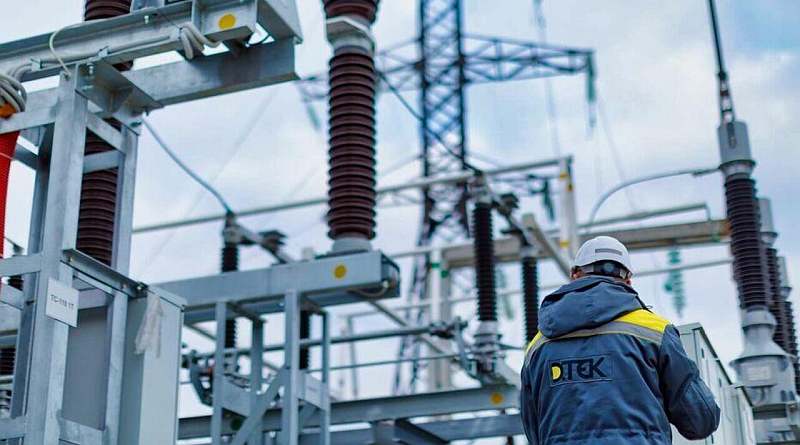
On the cover: Repair work begins immediately after receiving permission from the Armed Forces and the State Emergency Service. Photo: DTEK
