
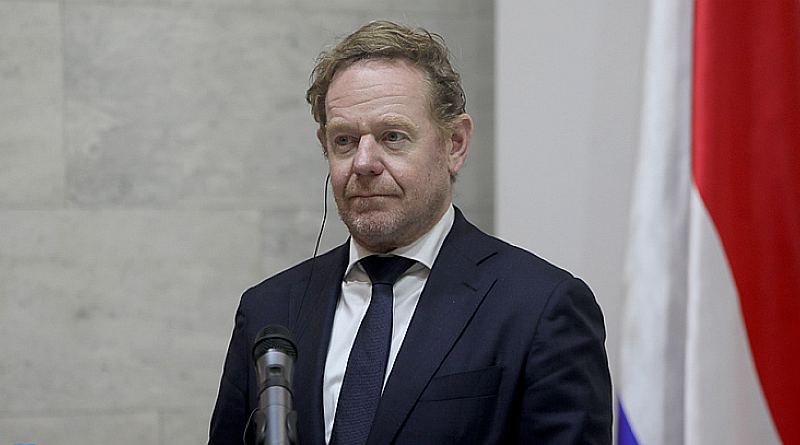
Iryna Drabok, The Hague / Ukrinform
The Netherlands continues to be a reliable partner of Ukraine, confirming this with concrete steps in providing assistance and political support in the face of Russian aggression.
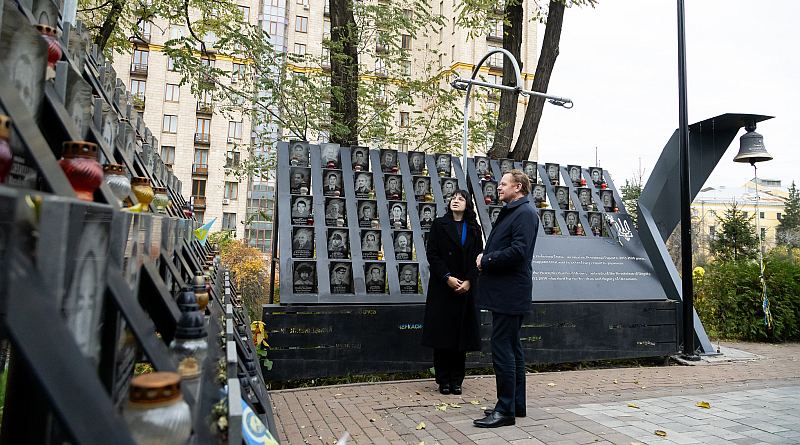
Minister of Foreign Affairs of the Netherlands David van Wil visited Ukraine in October 2025 to personally reaffirm unwavering support for our country.
During the visit, he announced additional aid to Ukraine ahead of the winter period in the amount of 25 million euros.
Already in January 2026, the Netherlands announced additional aid of 23 million euros to support Ukraine’s energy sector.
Additionally, the country plans to provide Ukraine with over 3 billion euros in military aid in 2027–2029, and about 400 million euros for other areas of support.
This month, the new government of the Netherlands is set to officially begin work, and David van Wil will no longer hold the position of Foreign Minister.
The new government in the Netherlands may be sworn in as early as February 23. Parties D66, VVD and CDA will form a minority government in the Netherlands. This is a unique situation, as there has been no minority government in the Netherlands since World War II.
In an exclusive interview with Ukrinform’s correspondent in The Hague, David van Wil, still serving as Minister, spoke about support for Ukraine, its European integration prospects, and priorities for international cooperation, emphasizing the importance of solidarity in these challenging times.
PRESSURE ON RUSSIA WILL BE KEY TO FORCE PUTIN INTO SERIOUS NEGOTIATIONS
– Due to attacks on the energy infrastructure, millions of Ukrainians are left without heating, electricity, and water. What support does the Netherlands provide? What has been done already, and what is planned to help Ukraine survive amidst the energy terror?
– It’s terrible how Russia is using harsh winter frosts as a weapon in the war against Ukraine. Attacks on energy infrastructure continue and intensify even during peace talks, leaving millions without gas, water, and electricity in freezing temperatures. The Netherlands is providing support by financing urgent energy infrastructure repairs, purchasing gas abroad, and training energy personnel. We are also supplying much-needed materials, including generators, transformers, and cables from Dutch companies. By 2026, 133 million euros are allocated for energy support.
– In your opinion, is the response of European countries to the consequences of Russian attacks sufficient? Do you think the current level of military and financial support for Ukraine from European partners is enough to deter Russian aggression?
– European countries have already done a lot. We have imposed unprecedented sanctions against Russia, supplied high-quality weapons and military equipment, including F-16s, Patriot missile systems, and Leopard tanks.
We also provide financial assistance to prevent Ukraine’s economy from collapsing, support for urgent repairs of critical infrastructure, and long-term recovery efforts, even as the war continues. But Russia is still waging war and even intensifying it. So we need to do more. The Netherlands is a significant voice in the EU, NATO, the Coalition of the Willing, the Ukraine Defense Contact Group, and the Ukraine Donors’ Platform, to encourage all international partners to increase support. Particularly because this support is related to European security.
– You have repeatedly urged partners not to “turn a blind eye” to Russia’s war on Ukraine. What effective pressure tools on Russia do you see today?
– As I’ve mentioned, the EU has imposed sanctions against Russia and those facilitating this war at an unprecedented level. We know this harms Russia’s economy and isolates it on the international stage. At the same time, we must be realistic: this hasn’t thrown enough sand into Russia’s military machine to force it to stop the aggression.
Ultimately, besides our efforts as the European Union, pressure from the U.S. on Russia and its partners will be crucial in truly forcing Putin into serious negotiations and ending this illegal war.
BROAD SUPPORT FOR UKRAINE IN PARLIAMENT REFLECTS PUBLIC SUPPORT IN THE NETHERLANDS
– Given changes in the U.S. approach to global security and international ally support, what risks arise for the European Union and world order, and what role do you think Europe should play in this situation?
– In its National Security Strategy, as well as the National Defense Strategy, the U.S. has made it clear that it expects Europe to take more responsibility for its own security and defense. This message isn’t new, but the current U.S. administration has made it more explicitly stated and urgent. And in this matter, they are right. Europe needs to increase its investment in defense. During the NATO summit in The Hague last year, allies agreed to raise defense spending to 3.5% of GDP. By strengthening Europe’s contribution to NATO, we reinforce our transatlantic security and ensure the Alliance’s reliability and future resilience.
– How would you describe the attitude of Dutch society towards the war in Ukraine after nearly four years of full-scale Russian aggression? Do you think the level of solidarity with Ukraine is changing?
– In our parliament, there is broad support for Ukraine, which I believe reflects the widespread support for Ukraine in Dutch society. I think most people are well aware that supporting Ukraine is extremely important not only for Ukraine’s future but also for the future of European security and stability in general. Various polls and studies in the Netherlands also indicate that the majority of Dutch people hold this position.
– Last year, residents of the Netherlands received informational brochures with recommendations on preparing for possible emergencies, including power and internet outages. Hence, the government is seriously considering the risk of war or a large-scale security crisis in Europe. How do you assess the likelihood of such a scenario?
– Events of recent years, particularly Russia’s invasion of Ukraine, have shown us how important it is to be prepared for emergencies. To raise awareness and resilience, the Dutch government has launched a campaign aimed at helping people prepare. It includes an informational brochure explaining what to do in emergencies, where to reach out, and how to obtain necessary information, for example, in case of a power outage.
CYBERATTACKS ORIGINATING FROM RUSSIA PRESENT A SERIOUS THREAT
– Amid Russia’s war against Ukraine, the number of cyberattacks and other hybrid threats against European countries is increasing. How prepared do you think the Netherlands and the European Union are for these challenges, and what role does Ukraine’s experience and cooperation in cybersecurity play?
– Considering how dependent our societies and economies are today on digital infrastructure, cyberattacks originating from Russia present a serious threat. We also know that Russia aims to destabilize European countries through other hybrid actions, including sabotage and informational operations. Therefore, it’s important to enhance our resilience to such threats.
The Netherlands has significant experience in cybersecurity and advocates for strengthening European and international cooperation to enhance cyber resilience and counteract malicious cyber activities. It’s also important to impose real costs on adversaries for hybrid actions and cyberattacks against European countries. In this context, our cooperation with Ukraine, as well as the knowledge and experience they can share, is incredibly valuable.
– Ukraine is not yet a member of NATO or the EU, but de facto it is part of the European security and defense architecture. How do you see the further development of this process?
– Indeed, cooperation between European countries and Ukraine in the field of security and defense has significantly strengthened in recent years. We assist in the training of Ukrainian forces, supply military equipment that easily integrates with European systems, and collaborate on deepening Euro-Atlantic integration. For example, through NATO’s Comprehensive Assistance Package for Ukraine and the NATO Joint Analysis, Training, and Education Center. We support the prospect of Ukraine joining NATO once all conditions are met and consensus among allies is reached. We also support Ukraine’s accession to the EU, a process that is currently underway. Given Ukraine’s combat experience and the prospect of its membership in the EU and NATO, I believe it is in our mutual interest to deepen cooperation in these areas.
– Ukraine insists on a peace plan based on international law and respect for sovereignty. What key elements does the Netherlands consider fundamentally important in such a plan? Under what conditions, in your opinion, can such negotiations be successful?
– For us, the most important thing is for Ukraine to decide its own future. Because first and foremost, it concerns your country, your people, your borders, and your future. Ukraine occupies a very constructive position in the current peace negotiations, but Russia has yet to show serious readiness to reach an agreement through negotiations to end the war. Increasing pressure on Russia and supporting Ukraine – politically, militarily, and non-militarily – remain necessary to change Putin’s calculations.
PEACE MUST BE BACKED BY STRENGTH
– Security guarantees remain a key issue for Ukraine. In your opinion, what should real and effective security guarantees for Ukraine look like, and what role can the Netherlands, the European Union, and NATO play?
– I agree with NATO Secretary General Mark Rutte’s statement that lasting peace needs to be backed by strength.
The coalition of willing nations has developed plans for creating Multinational Forces for Ukraine in case a ceasefire regime is established. Without going into details, military plans include strengthening Ukrainian forces and contributing to a sense of security on land, sea, and in the air.
However, these plans are part of and dependent on current peace negotiations. So, how they will ultimately look, of course, depends on the agreed peace framework with all necessary control mechanisms and guarantees.
The Netherlands has a positive stance on future contributions to the military plans of the Coalition, provided, among other things, that a ceasefire is ensured and approval is obtained from Dutch domestic policy.
– The Netherlands supports the establishment of a Special Tribunal for the crime of aggression against Ukraine. What is the role of the Netherlands in launching the Special Tribunal? Will it be located in The Hague?
– From the beginning, the Netherlands has been actively involved in the creation of this Special Tribunal, from negotiating the form and mandate with a special group of countries to proposing to host its initial stage in The Hague. During my last visit to Kyiv in October last year, I announced that preparation for the actual establishment of the tribunal, which will include an advanced group and the tribunal’s basic composition, will be carried out in The Hague.
– The EU allocated the first 10 million euros for the Special Tribunal. Do you know exactly how these funds will be used?
– Thanks to this voluntary contribution from the EU, the advanced group preparing the establishment of the Special Tribunal on the crime of aggression was able to start its work at the beginning of this year.
NETHERLANDS WELL AWARE THAT UKRAINIANS ARE DEFENDING NOT ONLY THEIR COUNTRY
– Do US sanctions and reputational issues surrounding the leadership of the International Criminal Court (ICC) create additional risks for the effectiveness of investigations into Russia’s crimes against Ukraine?
– The Netherlands strongly supports the International Criminal Court both as a member state and as the host country. The Court’s investigations, including those related to the war in Ukraine, are crucial for ensuring justice and accountability. Together with other state parties to the ICC’s Rome Statute, we are doing everything possible to enable the Court to perform its mandate as unobstructedly as possible.
– What message would you like to address to Ukrainians who have been living in conditions of full-scale war and constant attacks from Russia for almost four years?
– I want to express my deep admiration and respect for the courage and resilience of the Ukrainian people. The way you have persisted, resisted, and defended your country for almost four years is incredibly impressive. I also want to express my sincere condolences for the losses you have suffered in your families and among your loved ones, and I think about the Ukrainians living under the brutal Russian regime in the temporarily occupied territories.
– What impressions and feelings did you have after your visits to Ukraine?
– During my visits to Ukraine, I witnessed incredible strength and determination, hearing stories of struggle, survival, and resilience. It inspired me, and I am confident that it inspires many people around the world. You can continue to count on the support of the Netherlands, as we are well aware that you are defending not just your country, but our continent.
Cover photo: Ukrinform
