

Information on current losses of the Russian Federation due to sanctions as of 10.02.2026.
1. Russia’s coal industry plunges into crisis: losses increased nearly fivefold.
– The net loss of Russian coal companies for January-November 2025 increased nearly fivefold compared to the previous year, reaching 334.9 billion rubles against 68.7 billion rubles a year earlier, according to Rosstat data.
– The share of profitable companies in the industry during the reporting period decreased to 33.3% (compared to 46.7% in 2024), while two-thirds of enterprises (66.7%) are operating at a loss. The sharp deterioration in financial indicators poses serious risks for regions whose economies critically depend on the coal industry.
– Additional pressure on the situation comes from the decline in global coal demand, the development of renewable energy, logistical problems and restrictions from Russian Railways, as well as complications in international settlements due to sanctions.
– The combination of these factors deepens the industry’s crisis and makes its recovery prospects extremely uncertain.
– The coal industry, which has been a pillar for several Russian regions for decades, is losing financial viability, exacerbating budgetary and social risks for the Russian economy overall.
2. In Russia, an infrastructure project for the transshipment of liquefied hydrocarbon gas (LHG) in Primorsky Krai has failed.
– The Far East and Arctic Development Corporation is terminating an agreement with the company “Kvazar-N” — a resident of the Free Port of Vladivostok — through court action.
– The project envisioned the construction of a terminal with a storage capacity of up to 40,000 cubic meters of LHG, a railway spur, and auxiliary infrastructure. The declared investment volume was 333.3 million rubles, with implementation deadlines from 2020 to 2022.
– However, the investor did not allocate funds, did not submit reports, and the company’s revenue remained zero in recent years.
– The project collapse occurs against the backdrop of a capacity deficit for LHG transshipment in Russia’s Far East and increased sanctions pressure. After the EU embargo introduced in December 2024, Russia is attempting to redirect LHG exports to Asia.
– In 2025, rail shipments to China increased by 77%, but sea export remains limited due to a lack of terminals.
– The failure of the investment project once again underscores the structural problems of Russian energy logistics, which have been exacerbated by sanctions and a lack of real investors.
3. The EU proposes sanctions against Georgian and Indonesian ports for transshipping Russian oil.
– The European Union plans to deliver a new blow to Russia’s export infrastructure by imposing sanctions against seaports in third countries involved in trading Russian oil for the first time.
– As part of the 20th package of sanctions against Russia, the ports of Kulevi in Georgia and Karimun in Indonesia, which were used to service flows of Russian oil bypassing restrictions, could come under constraints.
– The new package also envisages expanding the “blacklist” to include 43 more tankers involved in transporting Russian oil, indicating increased pressure on the so-called “shadow fleet” of the Kremlin.
– Moreover, the EU is preparing sanctions against banks in Kyrgyzstan, Tajikistan, and Laos that, according to Brussels, helped Russia circumvent financial restrictions. Meanwhile, two Chinese banks could be excluded from the sanctions list.
– New restrictions might also impact “Bashneft” and eight Russian refineries, further complicating the operations of Russia’s oil sector and reducing its export capabilities.
4. In the 20th EU sanctions package, prepared by February 24, new figures included “Bashneft” and eight Russian refineries, including the Tuapse refinery.
– If the package is approved, European businesses will be completely prohibited from any business contacts with these entities. However, for “Bashneft,” the sanctions are rather formal: its parent company “Rosneft” has long been under strict restrictions, and the actual break with Western partners occurred even earlier.
– The new measures appear to close remaining legal loopholes that some contractors might have used.
– The restrictions are more sensitive for the Tuapse refinery — the only Russian refinery on the Black Sea oriented towards export.
– Direct sanctions make docking ships in the port toxic for companies associated with European insurance or shipowners.
5. The US intercepted another tanker from Russia’s “shadow fleet.”
– American military forces in the Indian Ocean seized the tanker Aquila II, which Russia used to circumvent international sanctions.
– The vessel belonged to the so-called “shadow fleet” of the Kremlin and attempted to evade control, violating the US-established regime of restrictions for sanctioned tankers.
– The tanker carried Russian and Venezuelan oil. Aquila II is under sanctions from the US, EU, UK, Switzerland, Canada, and Ukraine, making its operation illegal on most global routes.
– In January 2025, the US Department of the Treasury also imposed sanctions against the vessel’s owner — Sunne, a company operating in Russia’s energy sector.
– The capture of Aquila II dealt another blow to Moscow’s attempts to maintain oil exports bypassing sanction pressure.
6. The US is investing $9 billion to free Armenia from nuclear dependency on Russia.
– The United States announced a $9 billion investment in Armenia’s nuclear energy, aiming to reduce the country’s critical dependence on Russia.
– The relevant civil nuclear energy cooperation agreement was signed by US Vice President J.D. Vance during his visit to Yerevan. The agreement establishes a legal framework for the export of American nuclear technology and fuel, opening the way for American companies to participate in the construction of a new nuclear power plant to replace the Soviet-built Metsamor Nuclear Plant. Currently, it provides about 40% of Armenia’s electricity but is scheduled for decommissioning in 2036.
– The funding is planned in two stages: $5 billion in the first stage and another $4 billion in the second. The funds are intended for the purchase of nuclear fuel and maintenance, indicating a gradual move away from Russian suppliers.
– Although Armenia has not formally chosen an American project yet, the signed agreement effectively breaks the monopoly of “Rosatom,” which has controlled the country’s nuclear sector for decades. Prior to Vance’s visit, representatives of the Russian state corporation attempted to maintain their position by offering Yerevan “comprehensive cooperation.”
– The nuclear energy agreement is part of a broader shift by Armenia towards the US. Simultaneously, the country is strengthening military cooperation with Washington: Yerevan has already received American drones worth $11 million.
– Strengthening ties between the US and Armenia implies further displacement of Russia from the South Caucasus — both in energy and in security and regional logistics.
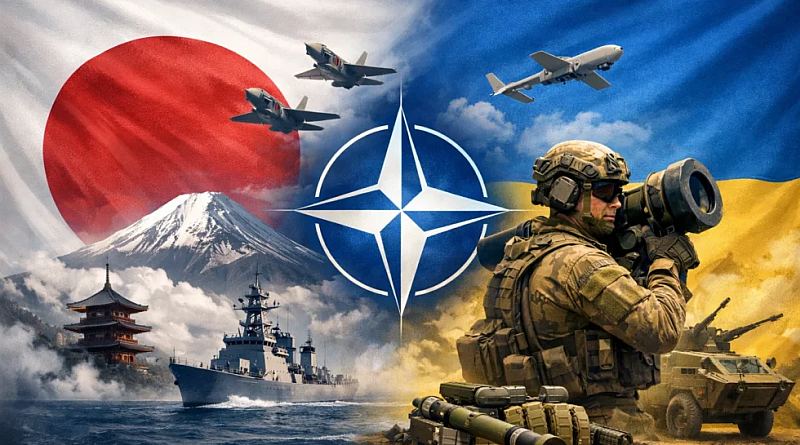
7. Japan joined NATO’s program to arm Ukraine.
– Japan decided to join NATO’s program to finance the supply of American weapons and equipment for Ukraine. Several NATO countries and the Ukrainian side have already been informed, and an official announcement is expected soon.
– As part of the initiative, Tokyo will finance the purchase of non-lethal American-made equipment, including radar systems and bulletproof vests, which are critically needed by Ukraine to counter Russian aggression.
– This involves the PURL mechanism (Prioritized Ukraine Requirements List) — a special US and NATO program designed to provide Ukraine with priority weaponry and equipment.
– Through this mechanism, missile supplies for Patriot air defense systems are provided. Partner countries finance the purchases through a special NATO fund.
– The Alliance emphasizes that even non-lethal aid is crucial for Ukraine, and Japan’s joining the program is considered a significant political and strategic signal.
– Australia and New Zealand have already joined the initiative earlier.
8. Greece and Malta hesitate over the EU ban on Russian oil supplies.
– The European Union’s attempt to increase pressure on Russian oil exports within the 20th sanctions package has faced resistance from Greece and Malta. Both countries opposed the idea of replacing the price ceiling with a complete ban on maritime services needed for transporting Russian oil.
– During the EU ambassadors’ meeting on February 9, representatives of Athens and Valletta expressed “concern” over the potential consequences of such a move.
– This involves a potential ban for European companies on providing insurance, freight, and logistical support for the transport of Russian oil—regardless of price.
– Greece and Malta also demanded additional clarifications regarding sanctions against foreign ports involved in the transshipment of Russian oil, as well as strengthening controls over the sale of ships to limit Moscow’s “shadow fleet.”
– To adopt sanctions, unanimous consent from all 27 EU countries is required, and the position of these two maritime nations effectively stalls the implementation of one of the strictest scenarios for exerting pressure on Russia’s oil revenues, which remain a key source of funding for the war.
