
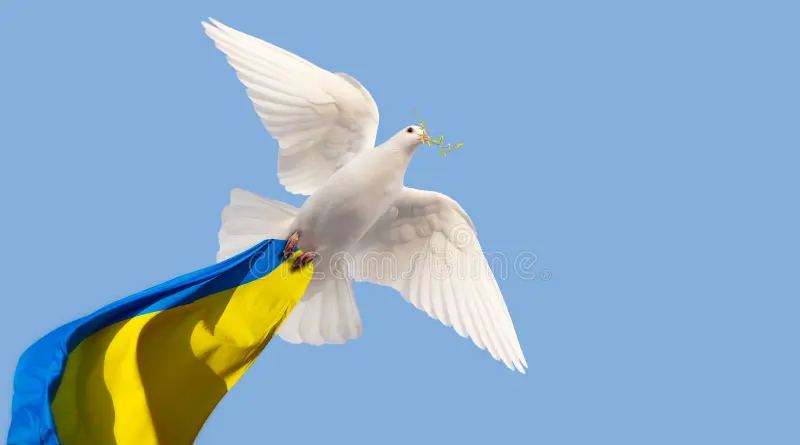

This year will be pivotal—not only for Ukraine but for the world order as a whole.
Promises to hold presidential elections and approve a peace agreement in a referendum by spring appear more like political aspirations than realistic scenarios. On one side—the administration of Donald Trump, on the other—Vladimir Putin.
Trump is interested in a ceasefire not for humanitarian reasons. At the end of the year, parliamentary elections will be held in the USA, where Democrats have serious chances to regain control of Congress. In such a case, Trump risks becoming a “lame duck,” and the impeachment process could become a real possibility again. That’s why it is critically important for him to prove that the “peace” he promised has indeed come. He once promised to achieve it within 24 hours.
Furthermore, Trump has always thought in business terms. In his view, business could be conducted jointly with Russia. This approach is not new. Even during the Ukrainian elections in 2019, pro-Trump circles in the USA, along with Russians, worked on removing Petro Poroshenko from power—a politician whom Moscow openly hated. Anyone else who could be negotiated with was preferred. Initially, they bet on Yulia Tymoshenko, later on Volodymyr Zelensky, whom the Kremlin considered inexperienced and convenient.
The plan was simple: massive American investments in Russia, joint entry into the Ukrainian market, and the actual transformation of Ukraine into Russia’s financial prey—with American involvement. Trump believed this way he could pull Russia away from China. But reality turned out to be more complicated.
Simultaneously, Trump consistently attempts to weaken the European Union—as an economic competitor and a political player. In this, his interests temporarily align with Putin’s. For the Kremlin, the dissolution of a Europe united by values is a strategic goal. Through supporting far-right parties, Putin seeks to bring to power forces that think solely in terms of money and are easily corruptible. These forces will not hinder the restoration of Russia’s imperial project.
Why is Russia interested in peace? Because its economy is in an extremely poor state and will only weaken further. There are no military successes, no strategic prospects on the front. Russia cannot capture Ukraine militarily. The Kremlin’s only chance is to impose “peace” on its terms, achieve the lifting of sanctions, return money, and try to establish a pro-Russian government in Ukraine.
That’s why we see an attempt at a political blitzkrieg: a rapid change of power, a quick agreement, a swift declaration of “victory.” But no Ukrainian government will agree to capitulation—under any circumstances.
This does not mean elections are not being prepared. Both the government and the opposition are preparing them. Just in case. What if the war can be stopped quickly, what if this one chance out of a hundred comes through!
However, it seems there will be no elections and no peace agreements this year. This is evident in the format of the negotiations: they involve military personnel who talk not about politics, but technical scenarios, including the possible freezing of the conflict. Even achieving this will be difficult for Russia: it will present ever-new conditions, impossible to fulfill.
Thus, the war will most likely continue throughout this year.
Our key task is to maintain the unity of the European Union and support from the USA. In the United States, most voters from both Republicans and Democrats support Ukraine, and no president can fully ignore this stance. Europe will also continue to support us, which is why Russia will try to destabilize the situation as much as possible, spread anti-Ukrainian propaganda, and weaken Western societies.
If the Russian elite realizes there are no military prospects, sanctions will only intensify, and the economy will continue to decline, it will lead to the gradual dismantling of Putin’s system. At this moment, Russian imperialism will begin to crumble like a house of cards, and all Ukrainian territories will return to Ukraine.
But to achieve this, we need three things: full support from the European Union, support from the United States of America, and internal unity. Russia tries to wear down Ukrainian society with hits on energy and infrastructure, to push us towards internal strife. This scenario must not be allowed.
The Ukrainian government’s responsibility for maintaining unity and professionally counteracting Russian influences—in America and Europe—is extremely high today.
If we withstand this year, we can talk about real peace next year. Not humiliating. And not capitulatory.
