

While the Kremlin continues to pretend that it’s ready to fight “forever,” the West has begun tightening a true noose—not in statements, but in real economics and logistics.
January 2026 finally confirmed: the so-called “shadow fleet” is not a strategy or a solution, but a temporary crutch.
And this crutch has finally started being methodically knocked out from under the Kremlin’s KGB personnel.
The Trump White House finally remembered that it’s interested in results, not an endless process.
That’s why the focus shifted from announcing sanctions on paper to their real implementation—with concrete actions and tangible consequences.
The result is the capture of key violating tankers. From Marinera to M/T Skipper. Without unnecessary diplomacy and without illusions about “gray areas.”
But maritime interceptions are only half the story.
The other half is the destruction of demand.
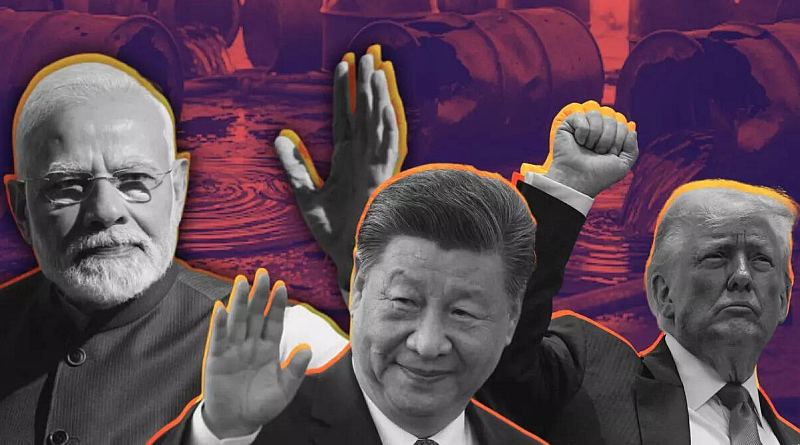
India: the end of “cheap oil with no questions.”
In January, there was a significant shift: India, a key buyer of Russian oil in 2023–2025, began refusing new purchases. Formally, due to sanctions, insurance, and payment risks. In fact, due to a change in the risk/reward balance.
China: buying, but dictating terms
China is a more complex and cynical case. Beijing does not “refuse” demonstratively. It does something much worse for the Kremlin:
it takes advantage of the partner’s weakness:
• sharply pressures for discounts,
• demands maximum transparency and control over logistics,
• avoids shadow schemes that could affect Chinese banks, insurance companies, or state corporations,
• and increasingly insists on deliveries in a format beneficial exclusively to it—in terms of price, timing, and currency conditions.
For Russia, this means one simple thing: even those barrels reaching China bring significantly less money than before.
And any complication in logistics or a new round of interceptions instantly reduces these volumes as well.
Why this matters—in numbers
1. Decrease in logistical capacity.
In just one month, about 200,000 tons of net tonnage have been removed from circulation. This translates to millions of barrels that physically did not reach the buyer.
2. Logistical collapse.
January’s captures, “kinetic sanctions,” and India’s cooling have already knocked out about 10% of Russia’s shadow export capacity compared to the 2025 average.
3. Domino effect.
Apart from the confiscated ships, over 40 tankers are either idle or chaotically changing flags and owners. The cost of risking the loss of an entire ship exceeds any possible profit.
4. Hit to cash flow.
When simultaneously:
• the physical volume of exports falls,
• the circle of buyers narrows,
• China pays less,
• and logistics costs rise,
oil revenues diminish much faster than seen in official statistics.
Main conclusion
The Kremlin’s “long game” strategy was based on two assumptions:
1. The West would not dare physically intercept ships.
2. Asian buyers would always turn a blind eye to risks.
It seems both assumptions turned out to be false.
When the Kremlin’s oil revenues fall not because of prices, but because:
• ships are afraid to go to sea,
• India is taking a pause,
• China dictates terms,
the term “eternal war” is shortened not gradually, but in geometric progression.
Economics is the science of resources.
And resources tend to run out faster than KGB fantasies about world domination.
