

Information on the current losses of the Russian Federation due to sanctions as of 09/26/2026.
1. Ukrainian UAVs attacked Ilsky and Afipsky refineries in Krasnodar Krai.
– On the night of September 26, drones attacked the Ilsky and Afipsky oil refineries in Krasnodar Krai, Russia. Fires broke out at both enterprises.
– A fire erupted at the Ilsky refinery after the attack. The enterprise is located in the Seversky District of Krasnodar Krai, about 50 km from Krasnodar. Its capacity is about 6.6 million tons of oil processing per year.
– At the Afipsky refinery, a fire also broke out after the drone attack. According to preliminary data, part of the technical equipment caught fire. The Afipsky refinery has a design capacity of about 6.25 million tons of oil per year and produces, among other things, diesel fuel and gasoline components. The enterprise has repeatedly been attacked.
2. Lukoil’s Perm refinery completely ceased oil processing after a UAV attack on September 25.
– At the enterprise, which has a capacity exceeding 12 million tons of oil per year, intershop pipelines, storage tanks with petroleum products, and individual secondary processing units were damaged and caught fire. Due to damage to technological equipment, the plant stopped processing oil raw materials.
– Perm refining and petrochemical plant is the seventh-largest refinery in Russia by processing volume. In 2024, it processed about 12.6 million tons of oil, or 252,000 barrels per day. The plant produces about 2 million tons of gasoline and 5.3 million tons of diesel fuel per year.
– The Perm refinery became the third Russian plant to stop processing due to UAV attacks in one week. The Novoshakhtinsk oil products plant ceased operations on September 25, and the Kuibyshev refinery of Rosneft on September 22.
– Since the beginning of September, at least eight Russian refineries have stopped operation due to attacks. Among them are the Moscow refinery of Gazprom Neft, Yaroslavl refinery, and Ryazan refinery.
3. Russia has incorporated a record discount on oil into the budget.
– The Russian government expects a significant increase in the discount on Russian oil next year, which will reduce foreign exchange earnings from its export. According to the forecast by the Ministry of Economic Development, on which the budget is based, the average price of Russian oil in 2027 will be $53 per barrel, with Brent prices at $73. Thus, the Urals discount to Brent will be $20 per barrel, or 27%. This is the largest discount that the Ministry of Economic Development has included in its budget forecasts.
– For comparison, the budget for 2026 considered a discount of about 16% — $11 per barrel. In the budgets for 2025 and 2024, it was about 15%.
– The Ministry of Economic Development also forecasts a reduction in crude oil exports — from 244 million tons in 2026 to 230.8 million tons in 2027, and in 2028–2029 — to 216.6 million tons. The forecast for gas and LNG exports has also been worsened.
– Gas supplies to distant foreign countries are expected to be at the level of 77.5 billion cubic meters compared to the previous 82.5 billion, and LNG exports — 39.5 million tons instead of 46.9 million tons.
– Due to falling prices and export volumes, the foreign exchange earnings of Russian oil and gas companies may decrease from $219.4 billion in 2026 to $194.1 billion in 2027 — the lowest since 2020. In 2028, it is forecasted to decrease further to $192 billion.
4. Russia expects the biggest investment drop in 11 years.
– Investments in the Russian economy in 2026 will decrease by 5.4% — the largest drop in 11 years. This forecast by the Ministry of Economic Development is included in the updated macro forecast for 2027–2029.
– At the beginning of the year, the agency expected a reduction in investments of only 1.5%. In 2025, they decreased by 2.3%. The government does not predict a quick recovery of investments either.
– In 2027, they will grow only by 0.2%, in 2028 — by 2.5%, and in 2029 — by 3%.
– As a result, in three years, investments will only return to the level of 2025 and remain 2.3% lower than the 2024 indicator. The decline accelerated at the beginning of 2026.
– In the first quarter, Rosstat recorded a 14.6% year-on-year reduction in investments — the highest since 2009. By the end of the first half of the year, the decline was almost 10%. According to the Ministry of Economic Development, in 2029, the volume of investments will still not reach the level of 2024.
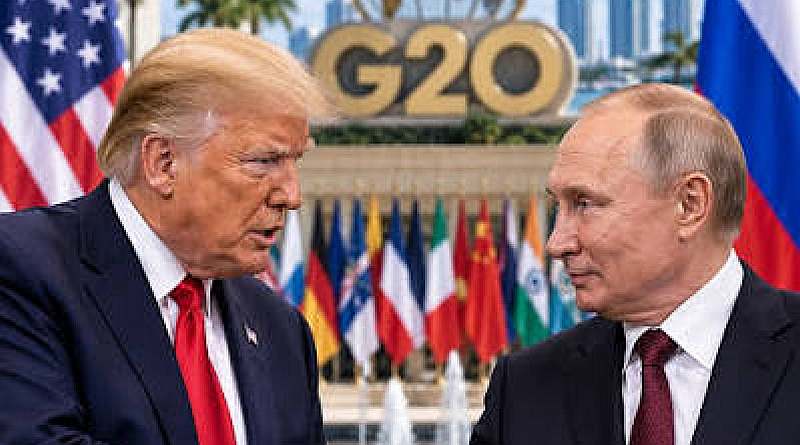
5. 14 US senators urged Trump to cancel Putin’s invitation to the G20 summit.
– A bipartisan group of 14 US senators urged President Donald Trump in a letter to withdraw Putin’s invitation to the G20 summit, which will be held in December in Miami.
– The authors of the letter stated that Putin’s participation could legitimize and normalize the actions of the Russian government, which continues the war against Ukraine. They also emphasized that Putin, Russian Finance Minister Anton Siluanov, and other members of the Russian delegation are under US sanctions.
– According to the senators, maintaining the international isolation of Russia’s leadership should remain a lever of pressure to end the war. The letter was initiated by the head of the Senate Armed Services Committee, Republican Roger Wicker, and Democratic Senator Jeanne Shaheen. It was signed by six more Democrats and six Republicans.
– The invitation to Putin to the summit was previously announced by US Secretary of State Marco Rubio. He stated that the participation of the Russian president would allow him to interact with Trump and other world leaders.
