

Information on current Russian losses due to sanctions as of 09/22/2026.
1. Another Ukrainian drone attack on the Kuybyshev oil refinery «Rosneft» in Samara.
– Explosions were heard in the area of the enterprise on the night of September 22, and witnesses reported a strong fire following the attack.
– Preliminary reports suggest that one of the technological blocks of primary oil processing may have been hit. Kuybyshev refinery has a capacity of about 7 million tons of oil per year. The plant produces gasoline, diesel fuel, aviation kerosene, and other oil products.
2. Moscow refinery «Gazpromneft» completely halted oil processing after a Ukrainian drone attack on Sunday.
– As a result of the drone strikes, both primary processing units of the plant caught fire — AVT-6 with a capacity of 21,400 tons per day and the EURO+ combined unit with a capacity of 18,800 tons. Together they ensure 100% of the refinery’s primary processing capabilities.
– Since September 21, wholesale batches of oil products from the Moscow refinery have not been offered on the St. Petersburg International Commodity Exchange.
– The Moscow refinery, with a capacity of 14 million tons of oil per year, has become the fifth Russian refinery in September to halt fuel production due to drone attacks. Previously, the Yaroslavl, Ryazan, Syzran, and Saratov refineries stopped with a total capacity of over 15 million tons per year.
3. The Russian government is cutting civilian budget expenditures to fund the war against Ukraine and curb the deficit growth.
– Russia’s Ministry of Finance has reduced civilian spending by about a third. Regions have also been tasked with reducing the number of budgetary and civil service employees by 15%.
– When planning the 2026 budget, the Russian authorities aimed to reduce the deficit from 5.7 trillion rubles in 2025 to 3.7 trillion rubles, or 1.6% of GDP. To achieve this, VAT and taxes for small businesses were increased.
– However, by the end of January–August, the federal budget deficit reached 5.8 trillion rubles, or 2.5% of GDP. By the end of the year, it is expected to exceed the planned measure, though the authorities hope to keep it within 3% of GDP.
– The growing budget gap forces the Russian authorities to postpone civilian expenses and allocate more resources to military needs.
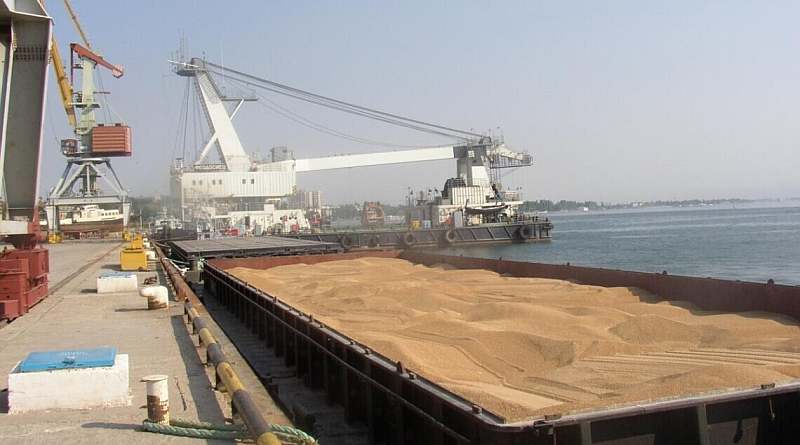
4. Russia is re-equipping Baltic and Arctic terminals for grain exports following strikes on Black Sea ports.
– Russia has started converting terminals for handling fertilizers, coal, and other cargo in Baltic and Arctic ports for grain export, which previously mainly passed through the Black Sea. In the previous export season, almost 90% of Russian grain shipments by sea were via Black Sea ports.
– After Ukrainian drone strikes, Russian companies began redirecting cargo to the Baltic and Arctic. In the port of Ust-Luga, the Ultramar terminal, which specializes in mineral fertilizers and has a declared capacity of 37 million tons per year, began accepting grain. Cargoes from Russia’s largest grain trader, Demetra, are being redirected there. In September, railway grain transport applications to Ultramar amounted to about 260,000 tons.
– In St. Petersburg, the terminals Modul and BSMZ have also started working with grain. Russian Railways has prioritized grain transport to the Baltic and Arctic, which are already receiving state subsidies.
– In Murmansk, preparations are underway for an ice-free port capable of receiving Panamax-class vessels to handle grain. The first batch of 40,000 tons has already been scheduled for railway transport from the Stavropol region.
– Meanwhile, the capacity of new routes is significantly lower than that of the Black Sea ports. It is estimated that Baltic terminals can handle 2–7 million tons of grain compared to over 60 million tons in southern Russia.
– Russian grain export in July–August decreased by 31% to 4.4 million tons. In September, shipments might fall by half, to 2.45 million tons, exacerbating the grain surplus among Russian farmers.
5. Through a network of front companies, Russia processed $6.9 billion through international banks.
– The Kremlin-supported Russian fintech company A7 used a network of front companies and a massive document forgery scheme to funnel more than $6.9 billion through the international banking system.
– Hundreds of thousands of A7’s internal documents show that the company used traditional money laundering schemes and fake invoices to process payments via banks connected to SWIFT. Among them are Standard Chartered, Citigroup, Deutsche Bank, DBS, JPMorgan Chase, and the largest UAE bank First Abu Dhabi.
– Through accounts at Standard Chartered in Hong Kong alone, $1.1 billion flowed from the end of 2024 to August 2025, through DBS — $273 million, and Citigroup clients received $74 million.
– Through the accounts of 17 organizations in First Abu Dhabi, A7 conducted over $1.8 billion in outgoing payments. Evidence was found of the use of at least 100 front companies, with more than 100 similar structures mentioned in the documents. Most of them were shell companies controlled by A7, and a significant portion of the funds ultimately ended up in accounts in China.
– The scheme was used not only for routine commercial payments. In one case, A7 employees discussed a payment of $510,000 for 500 night vision devices for a Russian client. To pass bank scrutiny, they prepared documents describing the goods as tempered glass and then considered listing them as shoes.
– A7 also had a database of thousands of company seals and gave front companies instructions on changing customs codes, product descriptions, buyers, and delivery details to conceal the Russian origin of payments.
– A7 was established in Russia and Kyrgyzstan with the involvement of Moldovan oligarch Ilan Shor and backed by the state-owned Promsvyazbank, which has close ties to the Russian defense industry. The Kremlin positioned A7 as an alternative to Western payment infrastructure after Russian banks were cut off from SWIFT.
6. Russia uses Western technologies to recruit foreigners for war.
– The Russian network for recruiting foreigners to participate in the war against Ukraine uses Western digital platforms, advertising systems, and artificial intelligence technologies.
– Researchers have identified 89 websites, seven social media accounts, and 39 messenger accounts or channels linked to recruitment. The network targets young men from Africa, Asia, and Belarus, offering jobs in Russia disguised as positions in construction, security, the film industry, or visa application assistance.
– Some ads promised potential recruits $15,000 upon signing a contract and a $3,000 monthly salary. Part of the advertising was placed through Facebook, and Google search queries directed users to sites actually used for military recruitment.
– The operation also relied on Western technological infrastructure. One of the main recruiting brands was hosted on a server in Amsterdam, sites were created using artificial intelligence tools from American and Swedish companies, and software from an Austrian company collected personal data of people filling out forms. This information was then transferred to Russia.
– Meta has already removed more than 300 ad campaigns related to such recruiters, reported Code for Africa. Google stated that it is actively investigating the facts reported and will take action if violations are found.
– According to estimates by Ukrainian officials, between 1,700 to 1,800 citizens from 36 African countries were recruited to participate in the war on Russia’s side. Moscow denies organized recruitment and claims that foreigners join the Russian army voluntarily.
7. In August, China sharply increased its purchases of Russian oil, offsetting a reduction in supplies from the Middle East.
– Imports from Russia reached 11.2 million tons, or 2.64 million barrels per day, which is a 41% increase from a year earlier and 23% higher than July’s figures.
– Just sea shipments of Russian oil to China increased to 1.68 million barrels per day from 1.4 million in July — the highest since March. Russia supplies China with another about 1 million barrels per day through pipelines. The largest decrease in supplies was from Saudi Arabia. Against this backdrop, Russian oil has become one of the key sources for replacing scarce volumes for Chinese refiners.
– The increase in demand has already raised the price of Russian ESPO above $120 per barrel — for the first time since April, and the premium of this grade to Brent has reached $20–30 per barrel.
– China also increased purchases through Malaysia — to 620,000 barrels per day, 74% more than in July. Supplies from Indonesia were about 730,000 barrels per day, 16% more on an annual basis.
– The increase in Russian oil purchases occurs amid disruptions in oil supplies from the Middle East due to war and shipping restrictions in the area of the Strait of Hormuz.
– At the same time, China is attempting to diversify imports: state-owned Sinopec announced plans to increase purchases from Brazil and Africa.
8. After a new US sanctions law, Putin transferred an American holding’s asset to a Russian company.
– Putin transferred 100% of the shares of LLC “Aptar Vladimir,” owned by the American holding AptarGroup, to the temporary management of the Russian company H&N. The decree was signed on September 21 — two days after U.S. President Donald Trump signed a new sanctions bill against Russia.
– H&N includes former Russian assets of Danone. It is headed by Yakub Zakriev, the nephew of Chechnya’s head, Ramzan Kadyrov. “Aptar Vladimir” produces plastic caps, closures, and dispensers for the food, cosmetics, and pharmaceutical industries. In 2025, the enterprise earned revenue of 1.75 billion rubles and a net profit of 537 million rubles.
– The plant belongs to the French Aptar Europe Holding, which is part of the American AptarGroup. The American holding operates in more than 20 countries, and its sales in 2025 amounted to approximately $3.8 billion.
– This is another case of transferring assets of Western companies to Russian structures. On September 17, assets of Auchan, Nestle, FM Logistics, and “Lemana PRO” (formerly Leroy Merlin) were also transferred to temporary management.
9. The EU may lift sanctions on Usmanov and Fridman in exchange for extending restrictions against 3,000 Russian individuals and companies.
– EU countries are considering a deal to lift sanctions on the Russian-Uzbek billionaire Alisher Usmanov and Russian businessman Mikhail Fridman in exchange for extending restrictions against about 3,000 other Russian individuals and legal entities.
– EU ambassadors agreed on the proposed package, but as of September 21, there was no final approval from all governments. In particular, Latvia refused to support the agreement.
– Under the proposal, sanctions against other Russian individuals and companies will be extended for three years — significantly longer than the usual six or 12 months. France, along with Slovakia, advocated for excluding Usmanov from the sanction list.
– Following this, Luxembourg demanded a similar decision for Fridman.
– Ukraine and a number of EU countries, including the Baltic states, oppose the possible lifting of sanctions. Ukrainian Foreign Minister Andriy Sybiha stated that excluding Usmanov and Fridman from the list is unacceptable.
