

Information on current Russian losses due to sanctions as of 08.02.2026.
1. Ukrainian drones attacked the largest chemical enterprise in the Tver region, linked to the production of rocket fuel.
– The attack targeted the Redkino Research Plant — the largest chemical enterprise in the region, which manufactures fuel for cruise missiles X-55 and X-101.
– The attack was carried out by the forces of the Alpha Special Operations Center. A massive fire broke out on the plant’s territory after the strikes, confirmed by NASA FIRMS satellite monitoring data and reports from local residents on social media.
– Even a temporary halt in the enterprise’s operations, which is under Western sanctions, complicates the production of rocket fuel used by Russia for strikes on Ukraine’s civilian infrastructure.
2. Russian oil exports fell sharply in January at double-digit rates amid a collapse in supplies to India and a reduction in purchases by China.
– Seaborne shipments from Russia amounted to about 3.4 million barrels per day, 11% less than in December, according to market data. The Indian direction saw the most decline: supplies fell by more than 55% — to approximately 505,000 barrels per day.
– China, despite maintaining its status as a key buyer, also reduced its import of Russian oil — to about 874,000 barrels per day, which is almost a third below the December level.
– Thus, two traditional “anchor” markets for Russian exports simultaneously began to retreat. Simultaneously, there was a sharp increase in supply volumes formally indicating Singapore as the destination.
– This indicates the activation of “ship-to-ship” transfers and attempts to redirect flows through alternative routes amid the shrinking of direct sales channels.
3. Three tankers with sanctioned Russian LNG are stuck off the southern coast of China, indicating increasingly severe problems with fuel sales from the Gazprom LNG Portovaya plant.
– The ships have been idling at various regional points and are not heading to unloading terminals. This situation is atypical for the Asian market, where LNG demand is usually stable.
– According to ship monitoring and satellite images, the LNG Soars tanker has been near Hong Kong since late November after transloading LNG at sea from another ship that arrived from “Portovaya.”
– The Perle tanker was spotted at the end of January near the southern coast of Hainan, and Kunpeng is cruising without a clear route south of Hong Kong.
– The simultaneous idling of several vessels with sanctioned cargo is seen by traders as a sign of buyers’ reluctance to assume sanction risks.
4. Russian LNG deliveries to the European Union in January 2026 reached 2.276 billion cubic meters, a record high.
– This is due to the EU’s final ban on importing Russian LNG starting January 1, 2027, and penalties for contract violations, prompting traders to rush to close remaining deals.
– Total LNG imports to the EU in January amounted to 12.2 billion cubic meters, with key suppliers remaining the USA and Trinidad and Tobago (about 8 billion cubic meters).
– Despite the January record, Russian LNG exports to the EU declined by 5.6% in 2025, confirming Russia’s displacement from the European market.
– January in Europe was marked by cold weather with frosts and increased demand for heating gas, partially boosting imports but not changing the overall trend of reducing Russian supplies.
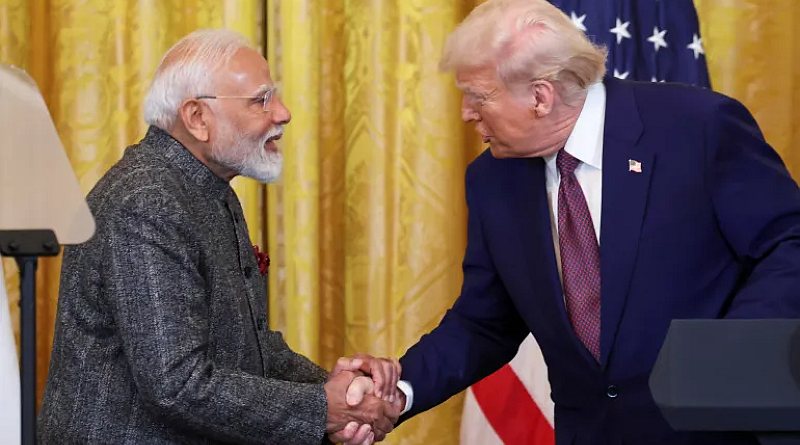
5. The USA lifted additional tariffs for India following energy and security agreements.
– President Donald Trump signed an order to lift the additional 25% tariff on Indian goods, instituted due to purchases of Russian oil.
– The decision took effect on February 7. As a result, the effective tariff rate for India was reduced to 18%. According to the document, India committed to halting direct and indirect imports of Russian oil, expressed readiness to purchase American energy, and signed a framework agreement with the US for a ten-year defense cooperation.
– India has already begun implementing a politically approved, though not formally directed, shift away from Russian barrels. After public statements by Prime Minister Narendra Modi and Donald Trump, the market received a clear signal of a course change.
– It’s not about an immediate cut-off: about 300,000 barrels per day continue to arrive at Nayara, linked with “Rosneft,” and individual batches may be occasionally purchased by Reliance, Hindustan, or Bharat without public disclosure.
– Meanwhile, key state players are already changing logistics. Indian Oil Corporation has begun reorienting towards traders Vitol and Trafigura for arrangements from alternative regions, primarily Venezuela, whose oil has already started entering India.
– An additional strategic signal of this shift was the first export of Indian diesel to Europe after the ban on “Russian molecules,” demonstrating the technical ability to segregate resources and India’s interest in maintaining access to the European oil product market devoid of Russian origin.
6. The United Kingdom is preparing to seize ships of Russia’s so-called “shadow fleet” and is even considering options for military captures.
– Possible scenarios for the forcible detention of tankers were discussed at meetings with NATO allies. Last month, the Royal Marines held a closed briefing for British parliamentarians and members of the House of Lords, focusing on Russian threats, as well as the situation in the Arctic and the Far North.
– One of the meeting participants stated that the marines are “eagerly awaiting orders” to seize the vessels. In January, according to Lloyd’s List Intelligence, at least 23 “shadow fleet” vessels were recorded in the English Channel and the Baltic Sea, using false or forged flags.
– Most of them are associated with the maritime export of Russian oil to China, India, and Turkey. Lloyd’s List editor-in-chief Richard Meade noted that the Royal Navy has legal grounds to challenge the actions of such vessels, as they effectively lack nationality.
– However, according to him, London is acting cautiously so far due to the risks of escalation. A month ago, the United States, with the assistance of the United Kingdom, pursued and detained the tanker Marinera between Scotland and Iceland.
– At the end of January, British Defense Minister John Healy announced the intention to convene a meeting of Baltic and Northern European countries to discuss “military options” that could be applied.
– He also suggested that confiscated Russian oil could be sold, and the proceeds or resources could be directed to support Ukraine.
