

Information on current Russian losses due to sanctions as of 09/07/2026.
1. Ukrainian drones attacked the Perm Oil Refinery.
– In Perm on the morning of September 7, drones attacked “LUKOIL-Permnefteorgsintez” (PNOS). Local residents report explosions, significant groups of drones flying over, and plumes of smoke at the industrial enterprise.
– PNOS is one of the largest oil refineries in Russia, belonging to the “LUKOIL” group. The enterprise has a capacity of over 13 million tons of oil per year.
– The plant produces motor gasoline, diesel fuel, aviation kerosene, fuel oil, bitumen, and other petroleum products. PNOS has been attacked multiple times before.
– After the previous attack on August 21, according to ASTRA, the primary atmospheric-vacuum distillation unit at the plant might have been damaged.
2. Russia’s military machine has spent over 57 trillion rubles since the start of the war.
– In the first half of 2026, Russia spent 10.687 trillion rubles on the army and weapons production — 30% more than the same period in 2025. This is according to calculations by German researcher Janis Kluge based on data from the Russian Ministry of Finance.
– Compared to 2024, military spending increased by 65%, or 4.211 trillion rubles, with 2023 — by 145%, and with the first year of the full-scale war — by 285%. Compared to the pre-war 2021, spending on the army increased more than fivefold.
– At the same time, 2/3 of military spending is classified. From January to June, only 3.546 trillion rubles were spent openly, while 7.141 trillion rubles were allocated to classified articles. The volume of such hidden expenses increased by 42% over the year and more than sevenfold compared to the pre-war period.
– Since the beginning of 2022, Russia has already directed 57.144 trillion rubles, or about $660 billion at the current official rate, to the army and weapons procurement.
– This is almost the full volume of all of the Russian central bank’s gold and foreign exchange reserves — $720.3 billion as of August 1, and more than double the value of the country’s gold reserves — $292.8 billion.
3. Ukrainian drone strikes are increasingly impacting Russia’s economy.
– Ukrainian long-range drones are causing increasing damage to the strategic sectors of the Russian economy. The consequences of the attacks are accumulating, and the Russian economy itself has already begun to slow down.
Energy.
– The most devastating were the strikes on refineries, which led to fuel shortages and supply restrictions. According to Energy Aspects, in August, Russian refineries processed 3.8 million barrels of oil per day compared to 5 million barrels the previous year. To compensate for the deficit, Russia began importing gasoline even from distant countries, including India, relaxed fuel quality standards, and banned diesel exports. Gas prices in Russia have risen by 19% this year, complicating the Central Bank’s fight against inflation, which is about 6% annually, with a target of 4%.
E-commerce.
– Since July, Ukraine has carried out over 30 attacks on the logistics centers of Wildberries and Ozon. According to Data Insight, infrastructure and goods damages exceeded $10 billion, and sales losses over the next 12 months could be at least $12 billion.
– Putin has already acknowledged the economic losses from Ukrainian strikes, estimating them at 1% of GDP — about $25 billion, but stated that they “are not critical.” The banking sector.
– Problems with Wildberries create additional risks for banks, particularly VTB, which is a major creditor of the company and its suppliers. Estimates suggest Wildberries owes VTB $6–7 billion. VTB’s shares have fallen more than 25% this year, reaching historic lows at the end of August. Meanwhile, Russians are increasingly converting money into cash. In the second quarter, individuals withdrew more funds from bank accounts than they deposited, marking a change in the previous trend.
Agriculture.
– Ukrainian strikes on export terminals and ships in the Black and Azov Seas have significantly complicated the export of Russian grain. In August, Russian wheat exports declined by more than 50% year-on-year — to the lowest level since 2010. Export restrictions have created a surplus of grain in the domestic market and lowered prices for Russian farmers.
Aviation.
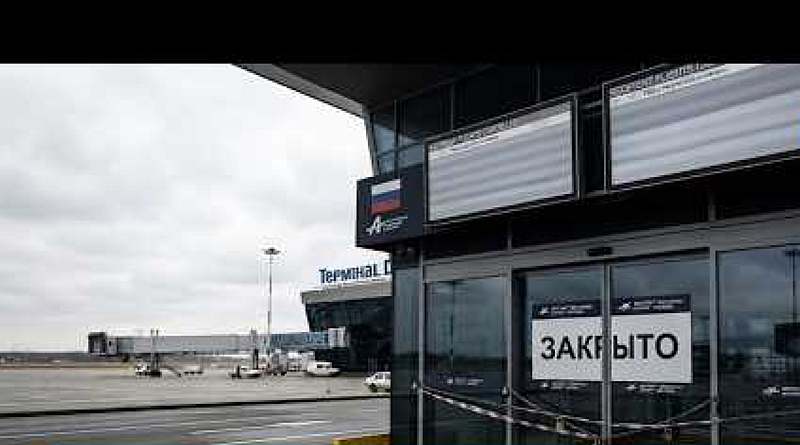
– Due to the threat of drones, Russian airports regularly suspend operations, causing delays and flight cancellations. In August, Russian airports temporarily closed 993 times — approximately five times more than in the previous six months.
– Ukrainian strikes create not only one-time losses for Russia but also a cumulative economic effect — from reduced oil processing and grain exports to losses in trade, the banking sector, and civil aviation.
4. Russian airports set a record for closures due to drone attacks.
– In August, Russian airports had to temporarily cease operations 993 times due to Ukrainian drone attacks.
– Throughout the month, 32 airports had to be closed due to attacks, including those in the Moscow region and near St. Petersburg. The August figure set a record, exceeding the number of closures in July by more than a third.
– Over the entire summer, there were 2182 instances of temporary airport closures. For comparison, throughout the year 2025, there were 1923 instances.
– Simultaneously, in August, Osprey Flight Solutions recorded another record — approximately 16,000 Ukrainian UAVs crossed the border and penetrated the airspace that Russia continues to leave open to civilian aviation.
– In June and July, there were over 11,000 and 13,000 such drones, respectively. At the beginning of the year, the figure was about 4–5 thousand per month, rising to 7544 in May.
– Russian civilian aviation increasingly has to operate under conditions of extensive and prolonged air traffic restrictions.
5. “Aeroflot” warned of a reduction in the SSJ-100 fleet due to the failure of import substitution.
– Russian airlines might begin losing SSJ-100 aircraft if the state does not fund the replacement of foreign SaM-146 engines with Russian PD-8 engines.
– The CEO of “Aeroflot” stated that airlines cannot independently afford to re-engine the aircraft. According to him, without state subsidies, there will be a “gradual withdrawal of the fleet for all companies operating the SSJ-100.”
– The withdrawn aircraft will have to be compensated by increasing the flight hours of the remaining fleet.
– The problem arose after French company Safran ceased participation in a joint venture with Russian UEC in 2022, which provided maintenance and production of parts for the “hot” section of the SaM-146 engines.
– Estimates suggest that replacing one SaM-146 with a Russian PD-8 costs 2.1–2.3 billion rubles. Russian import substitution for the SSJ-100 is hindered not only by technological problems but also by the need for large-scale budget financing. Without it, part of the aircraft may simply be withdrawn from service.
6. Russia could control over a third of the world’s uranium production by 2040.
– Russia is rapidly increasing uranium production and control over foreign deposits, which could pose a new threat to the West’s energy security.
– According to CSA’s forecast, by 2040, Russia could control 36% of the world’s uranium production capacities, increasing Western countries’ dependence on Russian raw materials amid an anticipated surge in demand due to the construction of new nuclear power plants. In 2024, Russia produced about 5% of the world’s uranium. However, with foreign deposits controlled by Russian companies, Russia’s share in global production capacities already constituted nearly a quarter.
– Notably, Rosatom’s subsidiary Uranium One controls mining capacities of about 10,000 tons of uranium in Kazakhstan. The company is also developing uranium deposits in Tanzania and Namibia, and last year Moscow signed an agreement with Niger to expand cooperation in uranium.
– Such concentration of production in Russia’s hands could repeat the scenario of Europe’s dependence on Russian oil and gas until 2022.
– Russia also remains a major supplier of enriched uranium, necessary for operating nuclear reactors, to Europe. The USA has banned the import of Russian uranium, but exemptions allow certain supplies to continue until 2028.
– The issue is exacerbated by a global uranium shortage: new deposits are being developed slowly due to lack of investment and delays in obtaining permits.
– As a result, Russia gains the opportunity to increase its market share precisely when the need for nuclear fuel is growing.
7. China secretly supplied Russia with raw materials for attack drones.
– The Chinese state company Jilin Chemical Fiber Group secretly supplied Russia with raw materials for producing attack drones. According to the investigation, the company directly sent 46 tons of polyacrylonitrile (PAN) — a precursor for carbon fiber production — to Russia.
– The shipment was labeled with a “civilian” customs code, which, according to experts, might indicate an attempt to conceal its true purpose and bypass sanctions.
– The recipient was Alabuga-Fiber, a subsidiary of Rosatom in the Alabuga special economic zone in Tatarstan. The plant produces carbon fiber for Geran drones based on Iranian Shahed.
– Documents collected by the Ukrainian center USCC and verified by Western governments confirm the supplies. The U.S. House of Representatives Committee on China also recognized the documents as authentic. It is estimated that the supplied raw material volume could suffice for approximately 1,300 attack drones.
– China denies involvement in supplying components for Russian attack drones, and Rosatom claims adherence to the law.
– The investigation may provide grounds for the USA and its allies to impose secondary sanctions against Chinese companies aiding Russia in sustaining attack drone production.
8. The wealth of the richest Russians decreased by almost $20 billion.
– The combined wealth of the 18 richest Russians on the Bloomberg Billionaires Index has decreased by nearly $20 billion since the beginning of 2026, down to $263.28 billion. Their fortunes heavily depend on the value of companies and assets, commodity prices, the ruble’s exchange rate, sanctions, and credit costs.
– The reduction in the largest private fortunes highlights the accumulating problems in the Russian economy: weak growth, expensive loans, declining investment activities, and the sanction pressure on the value of Russian businesses.
– Russia’s economy is essentially balancing on the edge of stagnation. In the September macroeconomic survey by the Central Bank, the GDP growth forecast for 2026 was lowered to 0.5%. For comparison, in 2024, the economy grew by 4.9%.
– Meanwhile, the average key rate in 2026 is expected to be around 14.5%, maintaining high borrowing costs for businesses and holding back investments. In such a scenario, the Russian economy might avoid a sharp decline but remain in a prolonged stagnation with growth around 0–1%.
– The main issue is not the mere reduction in billionaires’ wealth, but the decreased incentives for private businesses to invest in new projects.
