
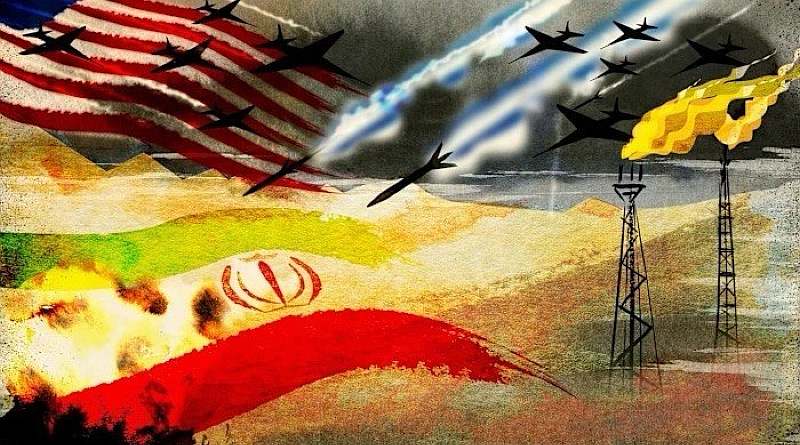

The current stage of escalation in the relations between Washington and Tehran demonstrates the impasse of diplomatic efforts. American leadership’s statements about the unacceptability of Iran obtaining nuclear weapons, voiced amid the suspension of the shipping agreement through the Strait of Hormuz, push the Middle East towards a new round of full-scale war. Accusations, mutual ultimatums, and recorded attacks on regional infrastructure indicate that the parties have exhausted their compromise limits.
An analysis of the international situation allows for at least three scenarios of event development.
The first scenario suggests maintaining a regime of high-intensity tactical hybrid warfare. In this scenario, Washington and Tehran refrain from direct total ground operations but increase asymmetric strikes. The use of drones, targeted attacks on military objects, cyberattack exchanges, and monetary rewards for neutralizing servicemen become a constant norm.
The second scenario involves escalating the conflict into a full-scale regional war with the participation of U.S. allies and pro-Iranian groups. The blocking of the Strait of Hormuz, sharply reducing tanker passage, inevitably provokes a global energy crisis. In such a scenario, the White House would be forced to deploy large-scale naval and air forces to forcibly unblock trade routes.
The third scenario, currently the least likely, relies on the resumption of mediated negotiations through third countries such as Oman or Pakistan. However, the rigid positions of the parties make the conclusion of a stable long-term agreement unrealizable.
The geopolitical dynamics of this confrontation have a direct and highly contradictory impact on Russia.
On one hand, the sharp escalation of the situation in the Middle East and the slowdown of tanker traffic lead to an inevitable spike in energy resource prices. The increase in oil prices on global markets generates additional revenue for the Russian budget, compensating for sanction-related losses.
The involvement of the U.S. in another lengthy military campaign inevitably diverts Washington’s financial, military, and technological resources away from the European theater of military operations.
On the other hand, a hypothetical military defeat or significant weakening of Iran poses substantial strategic risks for Moscow. Tehran acts as a crucial military-technical and trade-logistical partner for Russia under conditions of isolation. The destruction of Iranian infrastructure could block the developing “North-South” international transport corridor, significantly hindering the access of Russian goods to the Indian Ocean. Additionally, large-scale chaos in close proximity to the southern borders of the CIS creates threats of spreading instability, increased radicalism, and a surge in trans-border crime.
Thus, the confrontation between Iran and the U.S. enters a critical phase where any ill-considered action could trigger a domino effect, reshaping the balance of power on the global stage. Moscow faces the necessity of balancing between immediate economic benefits and preventing long-term geopolitical catastrophes.
