
Phillips P. OBrien / Translation iPress
American historian, professor of strategic studies at the University of St Andrews (Scotland) Phillips O’Brien explains in the weekly review that the Kremlin’s allies – Iran, China, and North Korea – provide Moscow with exactly the support it needs, while Ukraine’s partners have for years artificially limited their assistance, forcing Ukraine to fight the war in a way it did not want to. He argues that the Trump administration deliberately doses the supply of Patriot interceptors to maintain leverage over Kyiv and used it this week to force Ukraine to scale back a successful campaign against Russian oil exports through the Black Sea. Meanwhile, he notes that despite the usually pessimistic tone of Western media, Ukrainian troops have been systematically liberating territories this summer without excessive losses.
This review focuses on the role of allies in the Russian-Ukrainian war – the most interesting and simultaneously the most worrying topic of the past week. Ukraine’s allies (I use the word, being aware of its ambiguity) should have already helped it win the war. They are much wealthier, technologically advanced, and seemingly genuinely interested in Ukraine’s victory – at least from a European perspective. Yet Ukraine’s allies have always tried to measure assistance and limit it in inexplicable ways. This has forced Ukraine to fight the war in a way it didn’t want, and now has made it extremely vulnerable in one area.
Russia’s allies act differently: they give Moscow exactly what it needs to conduct the war the way it wants. Iran transferred the Shahed drone technology, which became the basis for Russia’s “Geran.” China has sharply increased its purchases of Russian oil and the supply of increasingly important components. North Korea has provided massive artillery shell supplies, sent troops to the front line, and now missile units. The North Korean example shows that to be truly useful as an ally, one does not need a large economy or a wide technological base. Pyongyang provides Moscow with combat-ready units that truly fight – much more than any of Ukraine’s partners have ever done.
North Korean troops at a parade in Moscow, May 2026. North Korea has proven to be an extraordinarily useful ally for Russia.
The question arises: what role do the USA actually play in this war? This week the answer became quite clear – Washington is using its influence over Ukraine to aid Russia. This is not a forced step, but a conscious choice.
Recently, the Ukrainian side published specific data on the territory liberated in recent months, which is noteworthy news, even though coverage of the war has again become quite pessimistic regarding Ukraine.
Russia’s allies are more useful than Ukraine’s
In the last ten days, reports have increasingly appeared about Pyongyang’s intention to deploy a significant group of ballistic missiles to assist Russia in conducting long-distance strikes on Ukraine. The most detailed information about this plan was reported by Ukrainian intelligence on August 5, naming both the location of the unit and the type of missiles. According to their data, the first North Korean missile formation was set to deploy near Voronezh and consist of 120 ballistic missiles and six launchers.
Zelensky developed this topic, stating that ultimately Russia may receive from Pyongyang another 30 or even 50 thousand military personnel with appropriate support. Sources of these assessments or the list of units Pyongyang might transfer to Russia were not provided by Zelensky.
The next day, the President of Ukraine made a more specific statement and linked a specific missile strike with North Korean forces: according to him, at least part of the missile strike on Zaporizhzhia the day before was carried out by North Korean missile units. The attack resulted in the death of 9 people.
In Ukraine, there is some confusion that partners, especially in Europe, but also in Asia, are trying not to react to this story. For Kyiv, the involvement of North Korean military units and their missiles in attacks on Ukrainian cities and civilian populations is an extraordinary event. Ukraine hoped this would provoke a serious reaction from Europe.
Regarding Asian countries, primarily South Korea and Japan, which are most threatened by Pyongyang, Ukraine also expected greater support. In an evening address on August 10, Zelensky linked the interests of Europe and Asia with the need to help Ukraine counter this move.
This is the first time in Russia’s history that they no longer have a safe strategic rear. And this is the first time they cannot fight without supplements from North Korea. They are now preparing to deploy an additional contingent of Koreans on their territory. They received, imagine, additional ballistics from North Korea. Everyone in the world must understand what this means. It’s not just about the lives of people in Ukraine, not just about threats to us. Ballistics from North Korea, their other weapons are being improved thanks to collaboration with Russia. The more North Korean hits here in Ukraine and Europe, the more their missiles and soldiers are used, the more they will correct their imperfections and ignorance, the more dangers there will be later for Japan, the Republic of Korea, the Philippines, and other countries in the region.
Unfortunately, Ukraine’s partners have downplayed the significance of this topic or ignored it altogether. One South Korean official reportedly called such a step by Pyongyang illegal but made no specific promises of aid. The rest remained silent.
To some extent, this is not surprising. North Korea, like Iran, provides Russia with all the direct military aid it can, without any conditions. Moscow’s allies want it to win and believe that the support they provide should be used at Russia’s discretion. This also applies to thousands of North Korean soldiers who have already fought and died under Russian command, reclaiming parts of the Kursk region for Russia.
In return, the allies themselves receive a lot. Russia significantly supported Iran during its war with the USA, including helping Iran identify targets for strikes on American forces, and reportedly provided significant technological assistance to Pyongyang to enhance its missile forces.
This is how this terrible cycle of mutual benefit works: in 2024, North Korea sends troops to Russia, Russia helps Pyongyang improve its missiles, and then Pyongyang transfers part of the improved missile forces to Russia for strikes on Ukraine. And the cycle repeats.
Russia also gained significant benefit from supporting Iran: this assistance forced the USA to spend vast amounts of ammunition, withdraw part of its forces from the Persian Gulf, and generally weaken American presence in the Middle East.
The contrast with the behavior of Ukraine’s allies is striking. They have consistently tried to limit both what Ukraine receives and how it can be used. Aid was used not only for support but also to control and limit Ukraine. This made the war longer and bloodier than it should have been.
The reason lies in a completely flawed understanding of the situation. Partners constantly weigh whether Russia will suffer too much, whether the aid provided will be so effective that Putin will become angry, and whether effectively arming Ukraine will complicate achieving a “peaceful” agreement.
Russia’s allies, in turn, give what they can, receive what they can, and allow Russia to wage its war. This model has proved to be ruthlessly effective.
In fact, the US is a rather useful ally of Russia
When I write, and I do so often, that Trump has sided with Putin and is aiding Russia’s military campaign, I am regularly countered with the argument: this can’t be true, as the US continues to sell (very small) amounts of arms to Ukraine through the PURL mechanism. Skeptics argue, if Washington were truly intent on helping Putin, would it allow any arms to be sent to Ukraine at all?
I hope this week’s events have made the answer to this question quite clear even to the biggest skeptics. The US continues to provide military assistance to Ukraine in small doses because it gives Washington powerful leverage—the ability to influence both how Ukraine conducts its war and how European states prepare.
For example, by supplying Ukraine with a small number of Patriot interceptors through Europe, the Trump administration forces Kyiv to align with Washington. Unfortunately, this also delayed European states from developing their own modern air defense systems. With no alternatives available, Ukraine is ready to make extraordinary concessions for the mere prospect of receiving more Patriot interceptors.
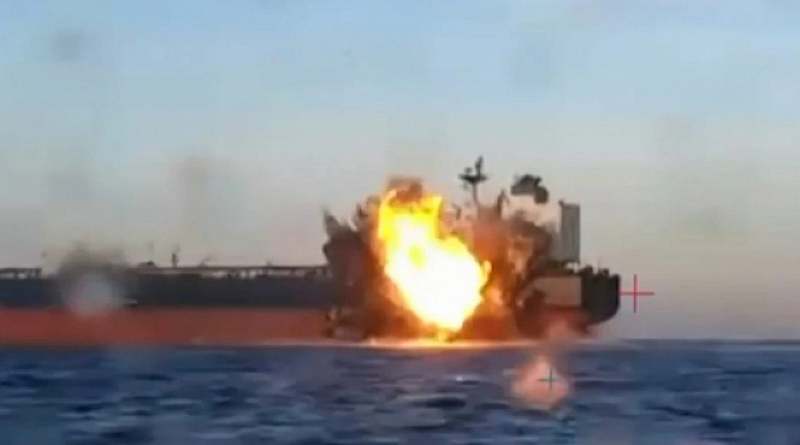
This week we saw a starkly effective example of what the US can do with this leverage. For most of the past year, Ukraine has conducted a remote air-sea campaign against Russia’s ability to export oil through the Black Sea port of Novorossiysk. After isolating Sevastopol, Novorossiysk also became Russia’s main naval base in the Black Sea. However, the US decided to weaken this campaign. According to FT, in early August, Vice President J.D. Vance asked Zelensky to halt operations against non-Russian tankers using the port and against a significant part of the port’s infrastructure.
Here’s how another publication described it:
Washington was concerned that Ukraine would further destabilize oil markets and harm American companies by striking tankers carrying oil transported via pipeline from Kazakhstan to the Caspian Pipeline Consortium terminal in the Russian port of Novorossiysk.
Vance asked President Volodymyr Zelensky to cease attacks during a phone call on July 31.
Since then, Ukraine has not attacked tankers near the Caspian Pipeline Consortium (CPC) terminal.
Ukraine agreed not to strike CPC infrastructure or non-Russian vessels, provided these ships are not under Ukrainian sanctions and do not carry Russian oil or other Russian cargo, officials noted.
However, the term “non-Russian” in itself means nothing here: the shadow fleet vessels, used by Russia to transport oil, are deliberately registered under non-Russian flags to avoid sanctions. Thus, the U.S. effectively demanded that Ukrainians stop a very effective campaign beneficial to Russia.
The argument about oil prices is also completely unconvincing. If the U.S. really cared about oil prices, they could have intervened earlier. In my opinion, they are doing this now because Putin desperately needs money.
Ukrainians clearly felt they had no choice but to agree to this U.S. request that benefits Putin. It can also be seen how the supply of Patriots could have been used in this process: On August 8, Zelensky announced that Ukraine was offered a very small monthly batch of Patriot interceptors, and at the same time acknowledged that their quantity is extremely insufficient for the country’s needs.
Ukraine’s dependence on Patriots means that even small deliveries give the U.S. leverage. This time, Washington used it to do a huge favor for Putin – and Ukraine, unfortunately, was forced to immediately make this concession.
If Washington truly cared about global commodity prices, it could have called on Russia to stop attacks on ships transporting Ukrainian grain to and from Odesa. This Russian campaign is effective and gaining momentum. As recently reported by the New York Times, it could soon affect global food prices and cause significant price increases for consumers.
Russian strikes coincided with the beginning of the harvest season, and Ukraine is one of the leading producers of wheat, corn, and barley, so this campaign could cause chaos in global food supply chains. In 2022, during the first months of the full-scale war, Russia blocked Ukrainian ports. This caused a spike in global food prices and, according to estimates, increased the risk of acute food shortages for about 70 million people.
Thus, inflation caused by Russia currently seems to suit the U.S. Instead, due to inflation theoretically triggered by Ukraine, Kyiv immediately receives an official request to retreat.
The Trump administration is often dismissed because of its clumsiness and incompetence. However, when it comes to aiding Russia, it shows ruthless efficiency – as we have seen in recent days. By strictly rationing access to Patriot interceptors, the U.S. has gained significant leverage over Ukraine. If Washington completely stopped these supplies, for Russia, it would be even worse.
Ukraine is slowly but steadily liberating territory
Good half of the summer has already passed, and in previous years, it was around this time that Western press started to report on the successes of Russia’s summer offensive. For instance, in this period in 2024, predictions about the inevitable fall of Pokrovsk began to appear, although it actually took the Russians another year to take the city. Last year, during this time, the media mostly wrote about a personnel crisis in the Ukrainian army, which supposedly would lead to further Russian advances.
I mention this because this year, the reports are not about stable Russian advances, but rather some successes by Ukrainian forces. Three days ago, the Ukrainian high command published the results of the offensive actions since the beginning of 2026. Zelensky summarized them in an evening address on August 12.
The offensive operation, which lasted from January to August this year, was carried out by airborne troops and other involved units. Its main goal was to disrupt the plans of the Russian occupiers for further advancement and to push the Russians beyond the administrative border of the Dnipro region.
Thanks to the active actions of Ukrainian defenders, a significant blow was dealt to the occupation forces. Russian losses amount to at least 9,550 killed and more than 6,600 wounded. An exchange fund for Ukraine was also replenished.
During the operation, 745 square kilometers of territory were liberated, and 26 villages in the Dnipro, Donetsk, and Zaporizhzhia regions were returned under Ukrainian control.
Note: The Institute for the Study of War (ISW), using a very cautious assessment methodology, cites a slightly lower figure — from 600 to 700 square kilometers of liberated territory. However, this is not much less than the official data.
The full picture of how Ukraine manages to achieve this will become clearer later. However, it is already visible that the tactic of using small groups of well-prepared and motivated soldiers with strong technological support is working. These groups know how to find short “windows” when Russian drones are disabled or absent in a certain area. The military maintains constant communication and continuously receives intelligence data, making it harder for the opponent to catch them by surprise or unprepared. They methodically advance into Russian positions, reclaiming small areas while maintaining relative safety.
This topic was thoroughly discussed with General Havrylov in a joint podcast back in December 2025. Later, I dedicated a separate piece on Ukrainian interception tactics that seem to have been yielding results in recent months.
The liberated areas are still relatively small. However, it is important to recognize that Ukrainians seem to be advancing without the losses that such operations would have cost earlier.
Cover image: Oil tanker hit by Ukrainians in the Black Sea in 2025. The USA wants Ukraine to stop such attacks. Photo: video screenshot
