
Oleksandr Kovalenko / Obozrevatel
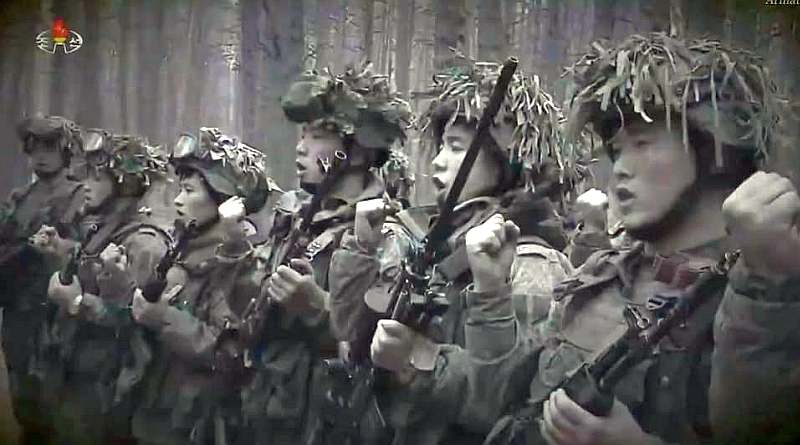
Since June, reports have started appearing in the information space that North Korea may provide additional support to Russia in the war against Ukraine. According to the latest information shared by President Volodymyr, Pyongyang plans to send an additional 30 to 50 thousand servicemen to Russia. It was also reported that KN-23 launchers will be deployed. How much has the threat to Ukraine from the DPRK increased and how are the Russian occupation forces using the resources received? Let’s find out.
Russia has repeatedly appealed to Kim Jong Un to increase the number of North Korean troops in the Kursk region, as well as the possibility of using DPRK servicemen in battles on Ukrainian territory – but until recently, they received no affirmative answer in Moscow.
The fact that Pyongyang has agreed to increase its presence in Russia may indicate that Moscow offered a sufficient and completely satisfactory price for such services to Kim Jong Un. So much so that he is ready to send to Russia a group the size of two army corps, which is two and a half times larger than the Kursk “trial batch” of 2024.
The only question is how expanded the functional use of this group will be and whether it will appear on Ukrainian territory?
Chuche on the March
The North Korean group of servicemen sent in 2024 (the size of an incomplete army corps) performed tasks exclusively within Russia – in the Kursk region. The appearance of North Korean soldiers in Ukraine was rare – and only in early 2025, when ROV launched an offensive in the Sumy border zone on the Northern-Slobozhansky direction.
But these incidents were due to both the poor orientation of the North Koreans on the ground and possibly the deliberate dispatch by Russian commanders to perform combat tasks on Ukrainian territory.

However, the massive involvement of North Korean military in Ukraine did not occur due to Kim Jong-un’s refusal to deploy his forces outside of Russia—on the sovereign territory of another state. But will Pyongyang’s policy change in 2026-2027?
If Kim Jong-un had agreed to use his military on Ukrainian territory, it is quite expected that the contingent in Kursk Oblast (comprising nearly 12,000 people) would have already joined Russian forces in Sumy Oblast, but this has not happened yet.
So, is the issue of expanding the roles of DPRK military personnel still being discussed, or is Kim Jong-un willing to provide resources only for their use within Russia?
In both cases, the simultaneous reinforcement of the Russian army by 30,000 people is a clear strengthening of a particular direction or even two. After all, wherever these 30,000 North Koreans may end up, even without participating in combat in Ukraine they automatically free up resources of the Russian military group, which, in addition to offensive actions, must provide border security. Primarily, this concerns Russia’s Bryansk, Kursk, and Belgorod Oblasts.

For example, the appearance of an additional 15-20 thousand personnel in the rear zone for border control in Belgorod Oblast would allow the release of the same amount of ROV resources to strengthen pressure on Vovchansk, Kupiansk, or even Velykyi Burluk.
Therefore, even without the presence of these 30,000 North Korean military personnel on Ukrainian territory, they pose a threat simply by freeing up excess ROV resources. This will be especially relevant in the autumn-winter period, when, amid general mobilization, the ROV command will need a maximum influx of human resources on the battlefield.
North Korean Ballistics
Since the end of June – early July, the statistics of the Ukrainian Air Force on Russian shelling of Ukrainian territory have once again featured North Korean ballistic missiles KN-23.
In a piece on OBOZ.UA “Russia Intensifies Missile Strikes on Kyiv: What the Enemy is Betting On, Can “Two Walls” Save Us, and What to Do Without Interceptors for Patriot”, I described what these missiles are and how they differ from the Russian 9M723, on which they were based.
Recently, Reuters, citing the Main Intelligence Directorate of the Ministry of Defense of Ukraine, reported that in the Voronezh region of the Russian Federation, within the 112th Guards Missile Brigade, a North Korean missile unit of about 90 servicemen was deployed. Additionally, North Korea has already transferred about 40 KN-23 and KN-24 ballistic missiles to Russia, with plans for a total of 120 missiles and 6 launchers.
These actions by Pyongyang do not contradict the party’s chosen line of providing assistance to Russia without physical presence on Ukrainian territory, so that the KPA cannot be accused of violating sovereign borders.
In turn, 120 missiles and six launchers can enhance the potential of Russian missile terror, and the North Korean military themselves will gain practical experience in using such means in real combat conditions.

Essentially, 120 missiles for six launchers means 10 paired launches for each launcher. If these launchers are used in weekly massive bombardments, this ammunition supply can potentially last for 2-3 months (with rational use), which is sufficient for Russia to not feel a shortage of ballistic means of terror during the transition to the autumn-winter period.
Conclusions
North Korean troops are necessary for Russia at least to establish control in the rear area of three border regions with Ukraine (Bryansk, Kursk, and Belgorod), which will allow a significant additional resource of the Russian Armed Forces to be freed for combat operations in the Sumy, Kharkiv, and possibly Chernihiv regions.
Whether KPA servicemen will participate in combat operations on Ukrainian territory is still doubtful, but it’s important to always consider the most negative scenarios, and this is one of them. Given the level of training and the moral-psychological profile of the average North Korean soldier, such reinforcement of Russian Armed Forces on the battlefield in Ukraine is extremely undesirable and will exert significant pressure in the area where they might end up.
The missile resources received by Russia from North Korea will complement terror with an insufficient quantitative component, which will allow the enemy to plan strikes for approximately the next 2-3 months.
Clearly, all these actions are directly related to the general mobilization that will be deployed in Russia in the fall, which only emphasizes the Kremlin’s intention to continue the war at any cost.
The material is published as part of a joint project between OBOZ.UA and the group “Information Resistance”.
