
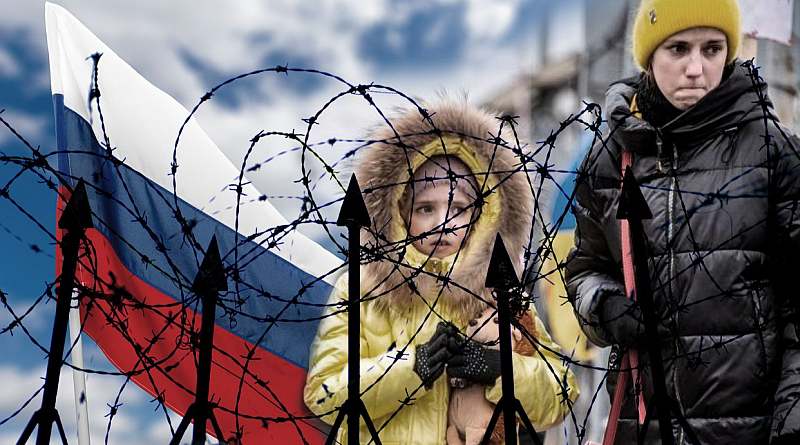

Information on current Russian losses due to sanctions as of 08.08.2026.
1. Ukrainian UAVs attacked the Syzran Oil Refinery of Rosneft.
– Ukrainian UAVs attacked the Syzran oil refinery of Rosneft in the Samara region. Local residents reported explosions and a fire in the area of the enterprise.
– According to preliminary data, one of the strikes might have hit the atmospheric vacuum distillation (AVT) unit and the tank farm of the refinery.
– The Syzran refinery is one of Rosneft’s key enterprises in the Volga region. Its capacity is about 8.9 million tons of oil per year. The plant produces gasoline, diesel fuel, aviation kerosene, and other petroleum products.
– The enterprise has repeatedly been the target of Ukrainian strikes. In April, after a UAV attack, the plant was forced to stop processing due to damage to technological equipment.
2. The EU demands guarantees from Turkey that the gas is not of Russian origin.
– European countries are requesting documentary confirmation from Turkey that the gas exported through its territory is not of Russian origin. This was stated by Turkish Energy Minister Alparslan Bayraktar.
– According to him, European buyers are ready to purchase gas from Turkey, particularly from the Sakarya field, but they want to be sure it is not Russian. Bayraktar acknowledged that it is physically impossible to determine the origin of gas in a mixed pipeline flow.
– Meanwhile, when concluding trade agreements, Turkey must document the country of origin of the gas. The minister stated that Ankara will adhere to the EU’s legal requirements regarding energy exports.
– For Russia, this creates an additional problem: European buyers are increasingly stringently checking the origin of gas, trying to prevent Russian resources from entering their market through third countries.
3. New Zealand announced a new package of sanctions against Russia.
– The restrictions concern 33 individuals and companies, including cybercriminals and those involved in the abduction and forced relocation of Ukrainian children.
– “Children should never be used as tools of war,” emphasized New Zealand Foreign Minister Winston Peters. He added that New Zealand remains concerned about attempts to abduct and re-educate Ukrainian children within Russian state programs.
– Since March 2022, New Zealand has imposed sanctions on over 2,000 people, companies, and vessels, as well as applied several trade restrictions.
4. North Korea earned a record $22 billion since the start of Russia’s war against Ukraine.
– Since the start of Russia’s full-scale war against Ukraine, North Korea has received up to $22 billion in foreign currency revenues. This is almost four times more than in the previous four years.
– In 2025, North Korea’s foreign exchange earnings reached $8.38 billion — six times more than in 2021, before the Russian invasion.
– The sharp increase in income was primarily due to military cooperation with Russia. Pyongyang supplies Moscow with Soviet-caliber artillery shells, missiles, and other weaponry, receiving money, food, and military technology in return.
– According to Ukrainian intelligence estimates, by the end of 2025, North Korea could meet up to 50% of Russia’s needs for 122- and 152-mm munitions.
– North Korea also sent 16–22 thousand military personnel to Russia, receiving, according to estimates by South Korea and CSIS, about $2000 per month for each serviceman.
– Russian money and technologies allowed Kim Jong Un’s regime to accelerate the development of its military industry and nuclear program. According to the Bank of Korea’s forecast, North Korea’s economy grew by 3.5% in 2025, marking the third consecutive year of growth.
– The war that Russia is waging against Ukraine has become an unexpected source of record foreign currency and military technology influx for one of the world’s most isolated regimes.
5. The EU increased its import of Russian LNG by 14% — France buys the most.
– In June 2026, the European Union imported 14% more LNG from Russia than a year earlier, despite plans to completely abandon Russian gas by 2027. Moscow’s revenues from the sale of Russian LNG increased to €60 million a day. This undermines the EU’s plans to stop importing Russian gas.
– France remains the largest buyer of Russian LNG in the EU. The port of Montoir in Brittany received four times more Russian LNG in June than in May.
– According to Bruegel, in the second quarter, Russian gas accounted for 13.4% of the EU’s total gas imports. Virtually all Russian LNG to the EU comes from the Yamal terminal.
– In the first half of 2026, EU countries received 136 shipments from there, or 9.97 million tons — a record volume. The EU plans to stop importing Russian LNG from 2027, but the current increase in purchases indicates that the dependence on Russian gas is decreasing much more slowly than planned.
