

Information on current losses of Russia due to sanctions as of 04.08.2026.
1. On the night of August 4, Ukrainian drones again attacked several targets deep inside Russia, hitting oil refining and logistics infrastructure.
– According to Russian sources and OSINT data, explosions and fires have been recorded in the Samara, Moscow, and Leningrad regions. In the Samara region, the Syzran refinery, owned by Rosneft, caught fire after the attack. Released videos show a large fire and thick black smoke over the facility. The plant has a design capacity of about 8.9 million tons of oil per year and is one of the key refineries in the Volga region.
– In the Moscow region, the area of Chekhov was hit. After the attack, a fire broke out at the Wildberries logistics complex. At the same time, there are reports that the drones might have also struck nearby industrial enterprises — the Chekhov recycling plant, which processes car tires, and the Hydrostalkonstruktsiya plant, which produces metal structures for industrial and infrastructural facilities.
– Another strike hit the Wildberries logistics complex in Krasny Bor (Leningrad region), where a fire also broke out. The complex in Krasny Bor is one of the largest logistics hubs of the marketplace in northwestern Russia. It was constructed to replace the Wildberries warehouse in Shushary, which was almost completely destroyed by a large fire in January 2024. The area of the new complex is about 154,000 square meters, and it ensures the processing and distribution of goods for St. Petersburg, the Leningrad region, and other regions in the northwest of the country.
2. The Volgograd refinery of Lukoil completely stopped oil processing after the Ukrainian drone attack.
– The Volgogradneftopererabotka plant ceased processing oil raw materials from July 31 due to a fire that occurred after the drone strike.
– The enterprise is among the top ten largest refineries in Russia and accounts for about 5% of the country’s total oil refining. According to sources, as a result of the attack, both primary and secondary processing units were halted, including two key primary distillation units: AVT-1 with a capacity of 18.9 thousand tons per day, accounting for about 40% of the plant’s capacity; AVT-6 with a capacity of 15 thousand tons per day, or about 32% of the enterprise’s capacity.
– Due to the damage, the units that provide over 70% of the Volgograd refinery’s production capacity have been put out of action. This is the second attack on the enterprise since the beginning of summer. Following the strike on May 29, the plant was also forced to temporarily halt production.
3. Over 320 gas stations in Russia have closed due to the fuel crisis.
– The fuel crisis in Russia has led to the mass closure of gas stations. Since the beginning of 2026, 322 gas stations have ceased operations for repairs or rebranding, which is 70% more than the same period last year.
– The majority of closures were recorded among independent networks — 105 stations. Medium and small operators closed an additional 151 stations (69 and 82 respectively). Temporary closures also affected 67 stations owned by major oil companies, including Lukoil, Rosneft, Gazprom Neft, and Tatneft. Additionally, 214 more stations remain closed for repairs since last year.
– The wave of closures is linked to the worsening situation in the fuel market. Due to the reduction in refinery operations following Ukrainian drone attacks, wholesale gasoline prices are rising, fuel sales volumes on the exchange are decreasing, and the profitability of the gas station business is sharply declining. This forces operators to temporarily halt station operations or reconsider their business format.
4. Oil refining in Russia has fallen to the lowest level since 2002 after a record series of strikes on refineries.
– Ukrainian strikes on Russian oil infrastructure have reduced oil processing volumes to 3.6 million barrels per day in July — the lowest level since May 2002. This is about a third less than the seasonal norm. For comparison, from 2020 to 2025, Russian refineries processed an average of 5.3–5.6 million barrels per day during this period.
– In July, 18 refineries were attacked, including the country’s largest — the Omsk Refinery, located more than 2,500 km from the Ukrainian border. This is a new record: the previous maximum — 17 attacked refineries — was recorded in May.
– Additionally, five large tankers, five port infrastructure facilities, and two pipelines were targeted. In total, 30 attacks on oil industry facilities were recorded in July — the second highest figure after May, when there were 32.
– Future processing and export volumes of Russian oil will largely depend on the number of Ukrainian drones and the choice of targets for strikes. Meanwhile, even strengthening Russian air defenses cannot fully protect oil infrastructure from attacks.
5. Sea exports of oil products from Russia in July fell by 33% due to attacks on refineries.
– In July, the sea export of oil products from Russia decreased by 33% compared to June — to about 3.9 million tons, according to LSEG data. The reason was a sharp reduction in fuel production following Ukrainian strikes on refineries, as well as export restrictions.
– The supply of light oil products declined the most. The export of diesel fuel and gasoil by sea plummeted by about 60% — to 0.75 million tons, and the supply of naphtha decreased by 35%, to about 0.8 million tons, due to high domestic demand for gasoline.
– Dark oil products — fuel oil and vacuum gasoil (VGO) — accounted for about 60% of all sea exports of oil products. Their combined export also decreased — by about 21%, to 2.3 million tons.
– Traders note that the fall in Russian oil product exports may further limit supply in the markets of Asia, the Middle East, Turkey, and Brazil.
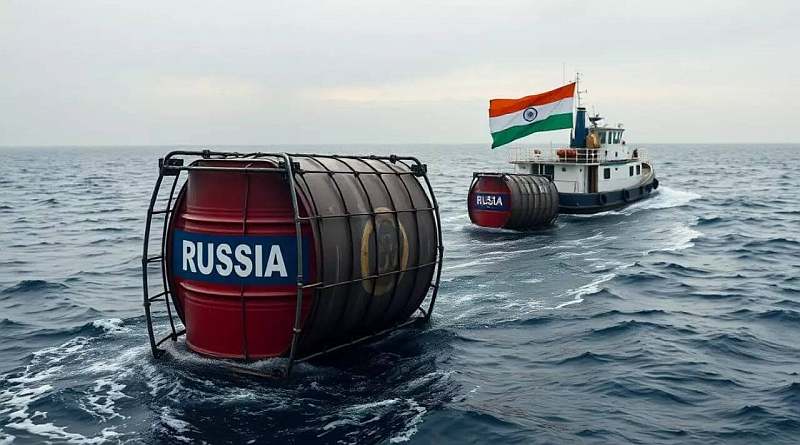
6. Freight rates for exporting Russian Urals oil to India increased by 50%.
– The cost of chartering tankers for transporting Russian Urals oil from western ports to India has increased by about 50% since mid-July. The reasons are higher shipping risks in the Black Sea and a shortage of available tankers, causing some shipowners to refuse to enter Russian ports.
– The charter cost for an Aframax-class tanker, which carries about 100,000 tons of oil from Primorsk to India, has risen from $8–9 million to about $13 million. For Suezmax tankers, which transport about 140,000 tons of Urals from Novorossiysk, the cost of the trip has increased from $10 million to $15 million.
– Russia plans to increase oil exports from western ports in August due to sustained demand in Asia, but the shortage of available tonnage and the unwillingness of shipowners to work with Russian ports may thwart these plans.
– It is estimated that the increase in maritime transportation costs reduces Russia’s export revenue by about $5 per barrel, and in some cases even more. This means that a significant portion of the benefit from reducing discounts on Urals is now absorbed by transportation costs.
7. Russia expands the “shadow” LNG fleet ahead of the EU embargo.
– Ahead of the full ban on Russian LNG imports to the EU, which will take effect in 2027, Russia is actively expanding its “shadow” fleet of gas carriers to maintain exports.
– According to Windward, over the past six months, at least 8 used gas carriers have been involved in transporting Russian LNG, increasing the fleet to 25 ships, including the first two gas carriers manufactured in Russia.
– Unlike the “shadow” oil fleet, which already numbers over 1,000 vessels, creating a similar system for LNG is significantly more challenging. A modern gas carrier costs about $300 million and requires complex cryogenic systems to transport the gas at a temperature of -162°C.
– The same schemes used in the “shadow” oil fleet are employed to conceal the origin of cargo: AIS shutdown, ship-to-ship transfers, and a network of intermediary companies in Dubai, Hong Kong, and Singapore.
– The sanctioned “Arctic LNG-2” project currently supplies products only to China. According to an FT estimate based on Kpler data, it is serviced by 11 gas carriers with an average age of 10 years, conducting gas transshipment at floating hubs before shipping to China. Almost all these ships are already under US sanctions.
– However, Moscow’s ability to quickly expand the fleet remains limited. The delivery of six ice-class gas carriers from South Korea is blocked by sanctions, and French GTT, which effectively monopolizes the production of LNG storage systems, ceased fulfilling Russian contracts back in 2023.
– Even if Russia creates its own technology, it will have to undergo a lengthy international certification process, so it will continue to be forced to purchase used gas carriers.
8. Georgia’s only sanctioned refinery begins switching to non-Russian oil.
– The company Black Sea Petroleum (BSP), which owns Georgia’s only oil refinery in the port of Kulevi, plans to fully transition to processing non-Russian oil by the end of September. This decision was made after the enterprise came under EU sanctions in July.
– The refinery began processing oil from Kazakhstan at the beginning of July and expects the first shipment of Libyan oil at the end of August. An agreement with the Libyan side was signed on July 3 and will be in effect until the end of 2027, with the possibility of extension.
– As part of the 21st package of EU sanctions, the Kulevi refinery was included in the sanctions list, giving the company until January 25, 2027, to completely stop using Russian oil. Brussels stated that the enterprise could be removed from the sanctions list if it proves the transition to non-Russian sourced materials.
– The refusal by even Georgia’s only refinery to use Russian oil indicates a further narrowing of markets for Russian oil companies and the increasing impact of EU sanctions on energy exports.
9. In July, Belgium was entirely reliant on Russian LNG supplies.
– In July, Belgium imported liquefied natural gas exclusively from Russia. This was due to a sharp reduction in Middle Eastern supplies because of the war with Iran, which forced Asian buyers to redirect a significant portion of global LNG volumes to themselves.
– During the month, Belgium purchased about 0.4 million tons of Russian LNG. The total LNG import to the country decreased by more than 40% compared to July of the previous year, but all supplies came from Russia.
– Meanwhile, the country continues to receive pipeline gas from Norway and the UK. The situation complicates the EU’s energy policy. Despite the ban on new short-term contracts with Russian suppliers, which has been in effect since April, and the planned full embargo on Russian LNG starting in January 2027, purchases are not decreasing.
– On the contrary, in the first half of 2026, Europe increased Russian LNG imports by 16% year-on-year, paying 5.96 billion euros for it.
– The largest buyers were France, Belgium, and Spain. Russia remains the second-largest supplier of LNG to the EU after the USA, and low gas reserves in Europe — the lowest for this period since 2009 — prompt some experts to doubt whether the EU will be able to completely abandon Russian LNG within the planned timeframe.
