
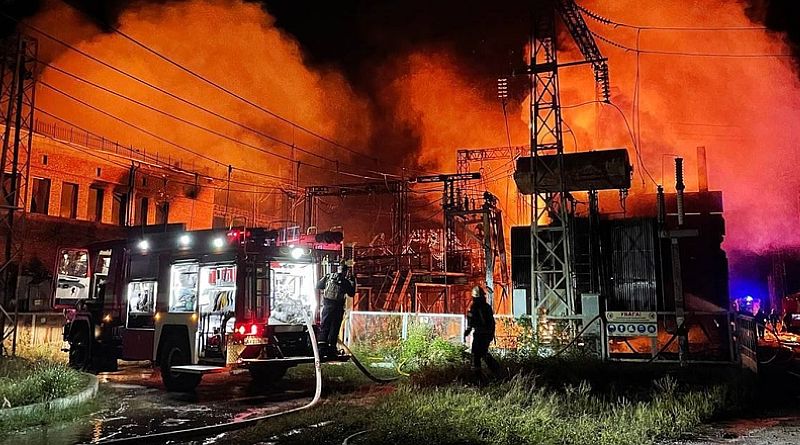
Russian shelling has turned Kyiv into the site of the greatest energy disaster in modern history. How did the occupiers manage to implement the plan of cold genocide, why was Kyiv’s energy system so weak, and what does it mean to be truly energy-secure?
The Final Collapse of Illusions
The period after January 9, 2026, has been the most challenging for Kyiv since the beginning of the Russian-Ukrainian war. Ukraine’s capital is virtually devoid of its own energy generation, and the transfer of energy from outside is maximally complicated.
This winter should go down in Kyiv’s history as the point of ultimate collapse of illusions about the viability of the Soviet model of centralized energy supply. Everyone must understand now: the strategy of “patching holes” at large CHPs has exhausted itself. Currently, Kyiv is a city where comfort in an apartment has stopped being a service guaranteed by the state. Instead, well-being depends on how autonomous (read “decentralized”) a particular building or residential complex has managed to become.
We are on the brink of a phase where “being prepared” means more than just having a charging station or knowing the way to the nearest shelter. It means a fundamental change in the city’s organization approach: from establishing generation in every neighborhood to transforming ordinary basements into life support nodes with generators, communication, and heat.
Chronicles of Energy Collapse
As of early February 2026, the energy situation in Kyiv resembles a zone of constant engineering struggle. Following massive attacks, more than 3,000 buildings remained without heat supply. The number of consumers without power in the city and region often exceeded 500,000 subscribers.
The main problem is the capital’s loss of its internal generation. Experts note that damage to TPPs and substations led to a deficit that cannot be covered solely by imports.
Due to systematic shelling in January, there was a threat of “freezing” internal building networks. During periods of severe frost (-10°C and below), energy engineers were forced to drain water from heating systems in hundreds of buildings to prevent pipe rupture. Although the number of buildings without heat can be reduced to a few hundred over several days, the crisis situation recurs after every massive shelling.
The shelter situation remains complex. Over 4,000 shelters officially operate in Kyiv, supposed to accommodate 97% of residents. However, according to an investigation by Slidstvo.Info, only 77 of these objects are certified publicly accessible civil protection structures, capable of accommodating only 54,000 people (up to 2% of the capital’s population).
The majority of residents cannot quickly reach metro stations, so they use basements and parking lots. These shelters have two major drawbacks during power outages. First, there’s a lack of heat: if the thermal power station stops, the temperature in the basements quickly drops to street level. Second, ventilation is hindered: ventilation systems don’t work without electricity, limiting the time people can stay in shelters.
The most vulnerable area is the left bank (Troyeshchyna and other residential areas), which is supplied by the TEC-6. A stoppage of this station automatically “cuts off” the largest residential district in the country, which is 100% dependent on a single source of heat.
Energy Resilience and New-Type Shelters
Today, the concept of winter preparedness has completely shifted from purchasing gas and other fuel resources to a full technological overhaul. Preparedness today means the ability of a city, district, or individual building to operate autonomously for several days without external power.
Instead of restoring large vulnerable power units, preparation now involves deploying a network of small energy sources (known as distributed generation). For example, gas plants with capacities of 1 to 50 MW, which are hard to simultaneously target and can sustain life in certain areas even during a national grid failure, as happened during the January 31 incident.
At the community level, preparation means moving towards energy independence of houses or residential complexes. Kyiv encourages such actions through financial tools. For example, through the 70/30 program: co-financing energy-efficient works in residential buildings. The city funds 70% of the cost, and residents the remaining 30%. Residents often install individual heating units, backup power for pumps, and solar panels on roofs. In “peaceful” times, installing private generation allows buildings to reduce consumption from the general grid, thereby decreasing energy costs for residents.
As of September 2025, Kyiv had about 1,000 “energy-resilient” buildings (less than 10% of the housing stock). Unfortunately, citizens often are unaware of such opportunities or unable to organize for various reasons. Kyiv’s local authorities should enhance public awareness on energy resilience, including preparing step-by-step instructions.
Another pressing issue is shelter. Current and previous winters have shown that shelters must have autonomous heating and ventilation; otherwise, during a prolonged blackout, they become unsuitable for long stays. The new concept of protective structures in Kyiv (Ukraine Shelter Cluster) envisions their operation in complete isolation from the central network.
The concept includes installing solid fuel stoves or pellet boilers, as it becomes dangerously cold in the basement during low temperatures. Another point is the use of ventilation systems with manual drives or battery power. This will allow people to stay in the shelter during extended alerts without the risk of suffocation.
Cogeneration — the heart of the new energy system
To date, Kyiv’s energy security has relied on monstrous CHPPs: until 2022, they accounted for 49.5% of the capital’s own consumption. However, the future belongs to the aforementioned small energy sources.
Cogeneration should be the heart of the new energy strategy. These are systems of installations (mainly gas reciprocating or gas turbine) that simultaneously produce electricity and heat. Such an installation continues to power water and heating pumps within the radius of its neighborhood, even in case of significant damage to the central network.
As of January 2026, Kyiv has received over 40 such installations from Germany and other partners. The local government plans to create a network with a capacity of up to 100 MW, which will allow maintaining a minimum level of services throughout the city. Additionally, Kyiv operates a fleet of over 50 mobile boiler houses. They run on various types of fuel (gas, diesel, pellets) and are immune to the shortage of any particular energy resource. This equipment needs to be significantly increased to cover entire districts.
Of course, if Kyiv authorities had seriously engaged in installing a cogeneration system over the past four years, the situation with Troyeshchyna could have been avoided. Experts believe that to prevent a similar situation next winter, at least the following three steps should be implemented:
- Install dozens of small generation facilities in Troyeshchyna neighborhoods. This will power critical infrastructure independently of CHPP-6’s status;
- Create a system of thermal jumpers that will allow rerouting the heat carrier from backup mobile boiler houses in case of an emergency;
- Install individual heating points with batteries in each building to ensure the heating system’s autonomy, allowing it to operate on internal circulation, preventing pipe freezing.
Everything would have been much simpler if these measures had started to be implemented at least after the difficult winter of 2022–2023. Now, by the winter of 2026–2027, a maximum of 30% of the critical load previously provided by CHPP-6 can be decentralized. However, achieving even this level will allow the district to avoid repeating the dreadful situation of the current winter.
Not to Worry, But to Work
Finally, we cannot help but remind you: the sole perpetrator of the catastrophe in Kyiv and other cities of Ukraine is Russia, which is conducting a genocidal war against the civilian population. However, we have been living in these realities for four years, and we should be prepared for them.
In Ukraine, there are cities that are set as examples of preparedness for winter mass shelling, such as Zhytomyr and even Kharkiv. Not to mention cities like Helsinki in Finland, which have successfully implemented cogeneration strategies.
Nevertheless, we must not allow ourselves to dwell on lost time. Kyiv and other settlements in Ukraine, regardless of their size, must take maximum measures to avoid the scenario of January 2026 in the future. Especially since all this is entirely achievable even in our wartime realities.
