

Information on Russia’s current losses due to sanctions as of 02/03/2026.
1. Russia has recorded the onset of a banking crisis, even acknowledged by Kreml-close analytical center CMAKP.
– In the January report, the center states that the banking crisis scenario, previously predicted, now meets the formal criteria for a systemic crisis.
– According to CMAKP’s assessment, the share of non-performing assets in the banking system has already exceeded 10%, indicating a transition into a crisis phase. There are also increased risks of deposit outflows: so far, it is restrained by the latent nature of the processes, but in the event of further deterioration, a sharp “flight of depositors” is possible.
– The worst situation is in lending to small and medium-sized businesses, where the share of non-performing loans averages 19%, indicating a sharp deterioration in the financial condition of enterprises and a contraction of business activity.
– Data from Russia’s Central Bank confirms the scale of the problems: by the end of October, 11.2% of corporate loans amounting to 10.4 trillion rubles and 6.1% of retail loans amounting to 2.3 trillion rubles were problematic.
2. In January, freight transport by “Russian Railways” (RZD) decreased again, confirming the worsening situation in Russia’s basic economic sectors.
– According to RZD data, the volume of loading was 89.3 million tons, 4% less than in January last year. The primary negative contribution came from key sectors for Russian logistics — coal and metallurgy, where shipment reductions have continued for several months.
– The trend indicates weakening industrial activity and a reduction in both export and domestic raw material flows.
– The decline in railway loading volumes, traditionally considered a key indicator of business activity in Russia, points to a loss of economic momentum and the exacerbation of structural problems, intensified by war, sanctions pressure, and shrinking external markets.
3. The export of Russian pipeline gas to Europe increased by approximately 10% year-on-year in January.
– This growth does not change the overall picture of a sharp decline. Deliveries occurred practically only through the “Turkish Stream” and reached 1.73 billion cubic meters — 160 million cubic meters more than a year ago.
– Thus, Turkey has finally secured itself as the sole remaining route for Russian gas to Europe.
– After Ukraine refused to extend the transit agreement, which ended in January 2025, Russia was left with no alternative land supply routes.
– According to ENTSOG, the average daily export through the “Turkish Stream” in January was about 55.8 million cubic meters — a level that only underscores the narrow “bottleneck” of current logistics.
– At the same time, on an annual basis, 2025 was disastrous for Russian gas in Europe. Exports decreased by 44% — to about 18 billion cubic meters, a minimum since the mid-1970s.
– For comparison, in 2018–2019, Russia supplied over 175–180 billion cubic meters per year to Europe.
– The current volumes clearly demonstrate the scale of the structural collapse and Russia’s loss of status as a key gas supplier to the European market.
4. Export of Russian LNG is complicated by sanctions.
– The Arctic LNG-2 project, under US sanctions, uses a floating storage in the Barents Sea as a temporary hub for gas accumulation and transshipment, effectively acknowledging the inability to operate in a normal export mode.
– The floating storage “Saam FSU” has become a key element of this scheme. In winter, only icebreaking LNG carriers of the Arc7 class can approach the plant, while ordinary vessels can approach the storage. This allows Russia to partially bypass seasonal restrictions and sanction pressure, transferring gas to a “buffer zone” without guaranteed buyers.
– The LNG carrier “Alexey Kosygin” — the only Arc7 class LNG tanker built in Russia — recently picked up a batch of gas from “Arctic LNG-2” and headed to this storage.
– At the same time, both the tanker and “Saam FSU”, and the Arctic LNG-2 project are under US sanctions, which drastically narrows the possibilities of further fuel sales.
– Moscow is trying to create a temporary LNG accumulation system “waiting for better times,” but such logistics only emphasize the depth of the problems: Russian gas is stuck at sea without stable routes and sales markets, and sanctions increasingly turn LNG exports into an expensive and risky quest.
5. The “shadow” tanker fleet, which rapidly expanded in 2025 amid sanctioned trade in Russian oil, may face a trend reversal in 2026.
– A combination of factors — political changes in Venezuela, increased pressure on Russian oil processors, instability around Iran, and a surplus of raw materials — is changing the configuration of global trade and gradually pushing “gray” logistics to the market periphery.
– The loss of the Venezuelan direction is already becoming a significant blow to the shadow segment that actively serviced sanctioned flows.
– Simultaneously, the reduction of long routes and disruptions on certain pipelines are changing the demand structure in favor of medium-tonnage vessels, reducing the need for outdated VLCCs involved in transporting Russian oil.
– Amid the weakening of the West–East route, demand for large-tonnage tankers is concentrated mainly in the Persian Gulf. Meanwhile, the restructuring of Russian oil and oil product supply routes increases the volatility of freight rates and raises operational risks for carriers linked to Russia.
– The tanker sector is entering a phase of reassessment, where the “shadow” logistics model created to circumvent Russian sanctions is increasingly losing stability under new geopolitical and market realities.
6. The EU is considering the possibility of introducing new sanctions against Russian metals — copper and platinum — as part of preparing the 20th package.
– This potentially includes an embargo on iridium and rhodium, which can only be approved with the unanimous support of all EU member countries.
– If the decision is made, the main impact will be on “Norilsk Nickel” — a key producer of platinum, copper, iridium, and rhodium in Russia. The company had long been outside sanctions due to its role in global supply chains, but now this factor ceases to be a deterrent.
– Restrictions could significantly hit Russia’s foreign exchange income and further limit its ability to finance the war.
– Meanwhile, palladium, which accounts for about 40% of the global market for auto-catalysts, is not currently planned to be included in the sanctions list due to risks to European industry.
7. Leading international consulting companies continue to cooperate with major Russian structures under international sanctions, including “Sberbank.”
– The Chinese divisions of international KPMG and Bain & Co have agreed to provide services to the Russian state bank as part of a project to establish its branch in China.
– The cooperation included assistance in obtaining licenses, passing state inspections, evaluating IT systems, and preparing tax reports. The relevant service agreement was dated November 6, 2023. The contract’s fee exceeded $400,000.
– Additionally, in September 2024, the Chinese division of Bain & Co proposed a project to “Sberbank” for analyzing the electric vehicle market in China. According to internal correspondence, the cost of the three-week work was also estimated at more than $400,000.
– During the negotiations, Bain representatives acknowledged the impossibility of directly receiving payment from a sanctioned organization and discussed options for involving a mediator.
– Such practices indicate attempts by Russian state structures to circumvent sanction restrictions with the involvement of international consulting, using third-country jurisdictions.
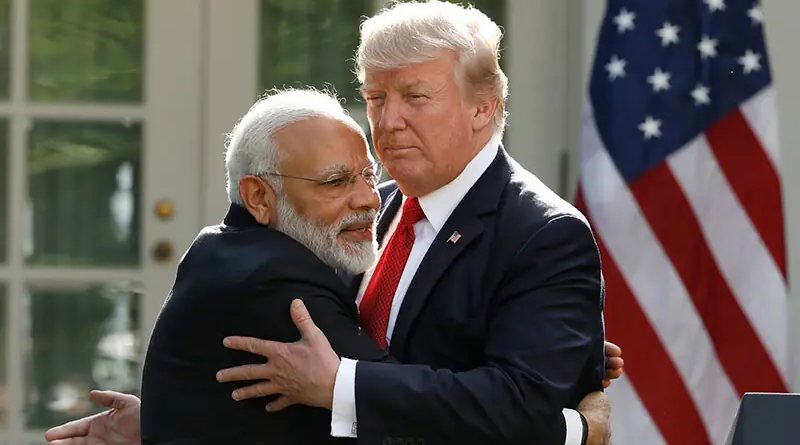
8. The USA and India agreed on a phased reduction of New Delhi’s purchases of Russian oil as part of a broader trade agreement.
– This was stated by US President Donald Trump after talks with Indian Prime Minister Narendra Modi. In exchange for reducing the import of Russian energy resources, the United States agreed to lower tariffs on Indian goods from 25 to 18%, and India will expand access for American companies to its market.
– The US and Venezuela are considered as alternative supply sources. For Russia, such agreements pose a risk of losing one of its key export markets.
– After the start of the full-scale war against Ukraine, India became the largest buyer of Russian seaborne oil at a significant discount, allowing the Kremlin to partially compensate for the loss of the European market and maintain oil budget revenues.
– At the same time, according to Reuters, Indian refineries will require a transitional period to effectively wind down imports from Russia. Industry sources note that cargoes contracted for February will arrive in March, and only after fulfilling current agreements will real reduction in purchases be possible.
– The Indian government has not yet issued a formal order for the immediate cessation of Russian oil imports. The most vulnerable remains Nayara Energy — a refinery linked with Russian capital and a capacity of about 400,000 barrels per day, which is almost entirely dependent on Russian raw materials.
– The enterprise plans an extended shutdown for maintenance starting in April, which will further reduce demand for Russian oil.
– Trade data already records a negative trend for Russia: in December, Russian oil imports to India fell to a two-year low, while the share of supplies from OPEC countries increased.
– Indian refineries are increasingly reorienting towards the Middle East, Africa, and South America, gradually pushing Russian oil out of their energy balance.
