
Today — Lyman direction.
1. The Russian forces (UF) “West” continue an operational offensive operation towards Lyman, with the main task being to move Russian troops to the near approaches of the Sloviansk-Kramatorsk agglomeration from the northeast.
The execution of this operational task evidently involves encircling, assaulting, and subsequently capturing the city of Lyman, eliminating the entire Lyman bridgehead of the Armed Forces of Ukraine, and advancing these troops to the Siverskyi Donets on a sufficiently broad front (from Sviatohirsk to Zakitne) with a very likely crossing of the river in southern and southwestern directions.
To achieve this task, the command of the Russian UF “West” has deployed troops (forces) from its two combined-arms armies (CAA) the 20th and 25th CAA, reinforced by part of the forces of the 2nd Motor Rifle Division (MSD) from the 1st Tank Army (TA).
Thus, the enemy has directly concentrated an operational group of troops towards Lyman consisting of:
– 144th MSD of the 20th CAA (254th, 283rd, and 488th Motor Rifle Regiments/MRR, 59th Tank Regiment/TR);
– part of the forces of the 3rd MSD of the 20th CAA (possibly units of the 362nd MRR);
– units of the 2nd MSD of the 1st TA (units of the 1st and 15th MRR);
– 67th MSD of the 25th CAA (31st, 36th, 37th MRR, and 19th TR);
– 164th Separate Motor Rifle Brigade (SMRB) of the 25th CAA;
– 169th SMRB of the 25th CAA;
– 11th Separate Tank Brigade (STB) of the 25th CAA.
Moreover, it is evident that the main forces of the 3rd MSD of the 20th CAA (252nd, 752nd MRR, and 237th TR) are actively defending in the northern part of the Russian troops’ bridgehead on the Chorny Zherebets River along the line of Karpivka-Hrekivka, covering the offensive actions of this group from the northern flank.
2. Since the beginning of the offensive operation of the left flank forces of the Russian UF “West” towards Lyman (approximately 2.5-3 months ago), the enemy’s 20th CAA has managed to advance to the line of Seredne-Shandryholove, cross the Netrius River, and create a tactical bridgehead on its western bank, as well as reach the line of Derylove-Kolodizi, attempting to break directly towards Lyman from the north.
In turn, the advanced units of the enemy’s 25th CAA moved towards Torske — Yampil, managing to capture the latter, broke through the defense of the AFU in the tactical zone in the direction of Zarychne — Drobysheve, infiltrated small infantry groups into the southeastern outskirts of Lyman, and advanced to the line of Dibrova — the northern outskirts of Ozerne, southeast of it.
The overall depth of the Russian troops’ advance towards Lyman during 3 months of intense offensive fighting was:
– In the 20th CAA zone – up to 14.2 – 14.5 km;
– In the 25th CAA zone – up to 11.3 – 11.5 km.
Currently, the advanced units of the Russian troops continue to conduct offensive/assault actions in the following directions:
– In the 20th CAA zone, evidently, assault groups and advanced units of the 144th MSD are trying to capture the village of Drobysheve, attacking it from the north, from the side of Derilove. So far, not very successfully, the enemy has managed to “cling” to the northern outskirts of Drobysheve, but for several weeks has not been able to advance further. Also towards Shandryholove — Novoselivka.
Units of the 2nd MSD of the 1st TA of the enemy (likely with the support of units of its 144th MSD and possibly the 362nd MSP of the 3rd MSD of the 20th CAA) are trying to advance in the direction of Kolodiazi — Stavky. However, so far unsuccessfully.
– In the 25th CAA zone a few weeks ago, likely by the forces of assault infantry groups of the 37th and 1234th MSP of the 67th MSD, the enemy managed to advance west from Zarychne by 4 km.
Additionally, acting with several small infantry groups along the Zarychne-Lyman road, most likely comprised of the 169th OMSBR and the same 67th MSD, the enemy managed to “cling” to the southeastern outskirts of Lyman (in the area of Partizanska and Vyshneva streets).
The enemy’s attempts to break through to Lyman, acting directly from the side of Yampil, along the railway, to the southern outskirts of the city, have not yet brought similar success.
The assault units of the 164th OMSBR and 11th OTBR of the 25th CAA, acting from the side of Yampil and north of it, have currently been able to reach the Lyman-Zakitne road and advance further southwest, starting battles for Ozerne and Dibrova. Currently, the enemy is actively trying to completely capture these villages, constantly transferring reinforcements here through Yampil and from the Zarychne area.
Regarding the further (possible) plans of the Russian troops in the Lyman direction, it is worth noting that their command is clearly focused on creating convenient “initial” (starting) positions for the encirclement and assault of Lyman itself.
Additionally, the troops (forces) of the left flank of the Russian UW “Zapad” (mainly the 25th CAA) are trying to provide maximum support to the troops (forces) of the Russian UW “Yug” (3rd CAA), who are advancing south of the Siverskyi Donets directly towards Sloviansk.
Thus, at the tactical level, the following actions by the enemy can be expected in the near future:
– In the 20th CAA zone, evidently, the enemy will try to simultaneously solve two tasks — to take control of the Yarova — Novoselivka — Drobysheve — Pryshyb area with a possible advance to the Oleksandrivka — Sosnove line to block the AFU defense area in Lyman from the northwest and to break through the northern outskirts of Lyman through Drobysheve and Stavky.
– In the area of the 25th Combined Arms Army (CAA), the enemy is likely to continue active assaults from Zarichne and Yampol directly towards Lyman, attempting to secure the southern and southeastern outskirts of the city. They will also continue to “roll up” the defenses of the Ukrainian Armed Forces (UAF) along the northern bank of the Siversky Donets River (possibly reaching the Brusivka and Staryi Karavan areas) and support the Russian 3rd CAA (Southern Grouping) advancing along the southern bank of the Siversky Donets towards Zakytne — Kryva Luka and Svyato-Pokrovske – Riznykivka.
In other words, almost around the entire perimeter of the Lyman bridgehead, the UAF should expect continued enemy attacks (assaults) of varying intensity shortly.
However, at the operational level, the future prospects of Russian troops in the Lyman direction seem unclear, mainly due to their very slow pace in fulfilling current tactical tasks. This significantly prolongs the timeframes for achieving operational objectives in this direction.
It is likely that the Russian command intends to fully implement their plans in the Lyman direction by mid-to-late spring this year (as well as in the Kramatorsk-Kostiantynivka direction). This is to be able to start an offensive against the Slovyansk-Kramatorsk agglomeration from May to June of this year.
In other words, the enemy has, let’s say, a very limited time for the actual assault and capture of Lyman (elimination of the UAF’s Lyman bridgehead). Meanwhile, the situation in the entire Lyman direction is currently such that Russian troops of the 20th and 25th CAAs do not yet have a real opportunity to initiate the direct assault and capture of the city itself, despite some of their small infantry (assault) groups breaking through to its outskirts. In reality, both Russian armies are essentially bogged down in tactical battles near Lyman, and if they have made progress recently, it is minimal even by tactical standards.
To be able to assault the city itself, Russian troops clearly need a significant reinforcement in the sectors of the 20th and 25th CAAs, which means regrouping additional forces and resources there. Primarily, assault infantry. The previous three-month battles in this direction (and the advance of Russian troops over a dozen kilometers) have been very costly for both Russian armies (in terms of losses, they regularly rank among the “top three” groups of Russian forces operating on other operational directions).
The problem is that the Russian command is unlikely to use reserves from the Western Grouping for this purpose, as it is currently engaged in very stubborn and intense battles in the Kupiansk direction, where its main strike force — the 1st Tank Army (comprising 3 full divisions and a separate motorized rifle brigade) — is engaged with its main forces. Under such conditions, even the forces and resources that the Russian command had previously allocated for the Lyman direction from its composition (part of the 2nd Motorized Rifle Division) will likely need to be returned “to the Kupiansk area.”
Therefore, to assault Lyman itself shortly, the Russian command will need to regroup forces and resources from other operational zones or use some of its strategic reserves. Furthermore, all this will require the appropriate time and resources.
If the battles for the capture of Lyman drag on like those for Pokrovsk, Mirograd, and Kupiansk (as well as for Kostiantynivka and Druzhkivka), then in the spring and summer, Russian forces will be forced to advance towards Sloviansk solely with the UV “Yug” and exclusively frontally, i.e., from the east, which will evidently lead to significant losses.
It should be understood that the Russian command hopes that they will still manage to capture Lyman relatively quickly, as was the case with Siversk. However, these hopes have a significantly increasing chance of dissipating almost “symmetrically” with the prolonged battles in the tactical zone near Lyman.
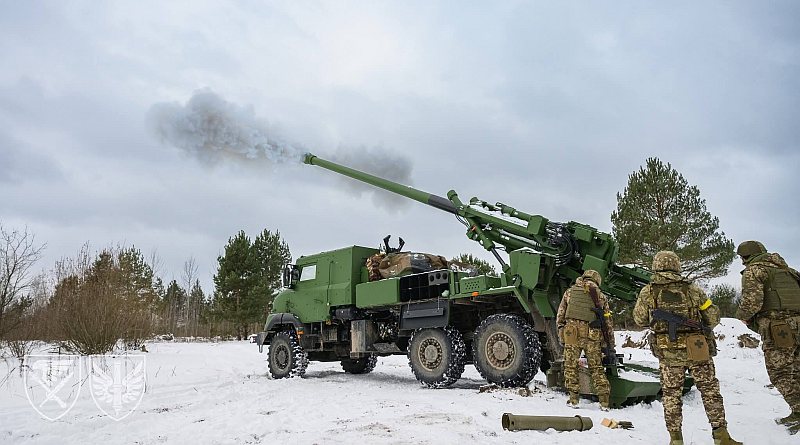
Photo: 147th Separate Artillery Brigade of the Air Assault Forces of the Armed Forces of Ukraine
