

Information on current Russian losses due to sanctions as of 01.07.2026.
1. Ukraine attacked the oil refinery in Ufa and the defense industry facility in Penza that produces missile components.
– On the morning of July 1, Ukrainian drones struck two important targets on Russian territory — the oil refining complex in Ufa and the Research Institute of Physical Measurements (RIFM) in Penza.
– According to Ukrainian monitoring resources, the RIFM in Penza, part of the “Roscosmos” structure, was hit. The facility produces sensors and measurement systems for missile, space, and aviation technology, including Su-34 and Su-57 fighters, X-101 and X-59M2 cruise missiles, as well as Iskander, Bulava, and Topol-M missile systems. The institute is under U.S. sanctions.
– A strike was also reported on the oil refining complex in Ufa, located over 1300 km from the front line. Preliminary data indicate that the Bashneft-Ufaneftekhim and Bashneft-UNPZ enterprises, which had already been struck on June 25, were targeted.
2. Since the beginning of the year, Ukraine has carried out almost 64,000 drone attacks on Russian territory.
– In the first six months of 2026, Ukraine conducted nearly 64,000 drone attacks on Russian territory and the areas it occupies in Ukraine. This estimate is based on data from the Russian Ministry of Defense. The majority of attacks occurred in May and June.
– According to the Russian side, 14,195 Ukrainian drones were recorded in May and 17,832 in June, accounting for almost half of all attacks since the beginning of the year. In comparison, in January and February, the number of drones involved did not exceed 6,000 per month.
– The largest attack, according to the Russian Ministry of Defense, took place on May 17, when Russia reported over a thousand Ukrainian drones. Days with the most intense raids also included June 18, June 30, June 6, and May 23.
– Belgorod, Kursk, and Bryansk regions, the occupied Crimea, as well as the Moscow region, Rostov region, and Krasnodar Territory were most frequently hit.
3. In Russia, gasoline prices exceeded 100 rubles per liter for the first time.
– In Russia, the fuel crisis continues to worsen. At independent gas stations, gasoline prices have surpassed 100 rubles per liter for the first time, reaching 120-140 rubles at some stations.
– Just two weeks ago, some stations couldn’t display three-digit prices due to software limitations not designed for such values. By the end of June, after a technical update of the systems, gasoline began selling for over 100 rubles per liter.
– In the Central Federal District, A-92 gasoline costs 115 rubles per liter at independent gas stations, A-95 about 120 rubles, and diesel fuel 130-140 rubles. Despite the sharp price increase, demand remains high as many major oil company stations are temporarily closed due to fuel shortages.
– At the networked stations of major oil companies, retail prices remain significantly lower at 63-66 rubles per liter for A-92 and 70-73 rubles for A-95. These companies adhere to an informal agreement with the authorities to keep prices within inflation limits.
– Meanwhile, the situation in the wholesale market continues to deteriorate. Sales volumes of A-92 gasoline and diesel fuel at the exchange are more than twice as low as a year ago, and A-95 gasoline is about one and a half times lower. Demand significantly exceeds supply, and many fuel purchase requests remain unfulfilled.
4. Russia’s oil exports increased to a record level, but revenues fell to a minimum since March.
– In June, Russia increased its maritime export of crude oil to 4.13 million barrels per day — the highest level since the start of the full-scale war. However, the increase in supply volumes did not offset the drop in world prices: gross export revenue decreased to $1.9 billion per week, the lowest level since March.
– Over the four-week period leading up to June 28, the volume of oil in maritime transport increased to around 133 million barrels, a 34% rise compared to mid-April.
– In the last week of June, Russia shipped oil on 43 tankers — a record number during the war. Prices for Russian oil continued to decline. The average price of Urals dropped to about $63 per barrel, and ESPO to $74.
– After agreements between the USA and Iran and the resumption of shipping through the Strait of Hormuz, global oil quotes went down, increasing pressure on Russian oil revenues.
– Ukrainian drone strikes on several Russian refineries, including in Ufa, Yaroslavl, Slavyansk-na-Kubani, and Moscow, may have contributed to redirecting more crude oil for export due to reduced domestic processing.
– Asia remains the primary export direction. Supply to Asian countries reached 3.98 million barrels per day, with approximately 1.08 million going to China, 740 thousand to India, and over 2.1 million barrels transported by tankers without a specified final destination.
– The market is already showing signs of oversaturation: tankers are accumulating off the coasts of Egypt and near Singapore, awaiting unloading. Amid weaker demand from China, Russia will have to offer even larger discounts to buyers on its oil.
5. Investment decline in Russia accelerates amid high rates and falling business confidence.
– Investments in fixed capital in Russia continue to decline. By the end of 2025, they decreased by 2.3%, and in the first quarter of 2026, the decline accelerated to 14.3%. The main reasons include a complex budget situation, high credit rates, limited bank lending opportunities, and reduced business investment activity.
– Surveys of enterprises also show a sharp deterioration in investment sentiment. Currently, 54.9% of companies are not implementing production investment projects — the highest figure since 2016, and 27.1% of enterprises do not plan to start new projects in the next one or two years, the worst result since at least 2012.
– Businesses are increasingly opting for bank deposits or government bonds instead of investing in production. An additional restraining factor has been the policy of nationalization.
– It is estimated that since the beginning of the full-scale war, the state has seized assets worth more than 6 trillion rubles, intensifying business fears regarding the security of private property and long-term investments.
6. In June, India increased its import of Russian oil to a record level.
– The import of Russian oil to India in June rose to a record 2.7 million barrels per day, according to data from Kpler and LSEG. This is significantly more than in May, when supplies were estimated at 1.95–2.13 million barrels per day.
– The increase in purchases is linked to Indian refineries’ efforts to offset the risks of supply disruptions from the Middle East due to tensions around the Hormuz Strait.
– Overall, India’s crude oil imports in June remained almost unchanged — about 4.9 million barrels per day, but the share of Russian oil exceeded 50% of all imports compared to 36.5% in May.
– Russia maintained its status as India’s largest oil supplier, taking advantage of discounted crude demand.
7. The US has again postponed sanctions against Serbia’s NIS, controlled by Russian companies.
– The Serbian oil company NIS, whose controlling stake belongs to Russia’s “Gazprom Neft” and “Gazprom,” received another sanctions postponement from the Office of Foreign Assets Control (OFAC) of the US Department of the Treasury — until July 31, 2026.
– The delay allows NIS to continue importing crude oil and maintain the operation of Serbia’s only refinery while the process of changing ownership structure is underway.
– Earlier, the Hungarian company MOL signed an agreement to acquire 56% of NIS shares owned by “Gazprom Neft” and “Gazprom,” but the transaction is not yet completed. Additionally, Serbia plans to increase its stake in NIS by another 5%.
– Currently, “Gazprom Neft” owns 44.9% of the company’s shares, “Gazprom” — 11.3%, the Serbian government — 29.9%, and the remaining shares are held by small shareholders and company employees.
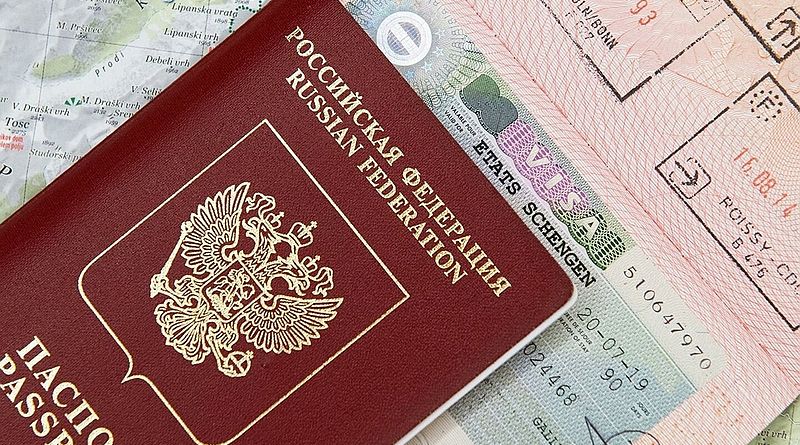
8. France has tightened the rules for issuing Schengen visas to Russian citizens.
– France has become the fourth EU country to recently tighten the rules for issuing Schengen visas to Russian citizens. From July 15, the French visa center in Russia will stop accepting applications through third parties, except for close relatives of the applicant.
– Only the applicant, parents or guardians of minors, as well as spouses, children, and parents, subject to proof of family ties and previously submitted biometric data (within the last 59 months), can submit documents. Biometry remains mandatory for all applicants aged 12 and over.
– Previously, similar restrictions were introduced by other EU countries. Spain extended the processing time for visa applications to 45 days, Italy to 60 days, and Hungary suspended document acceptance in visa centers in Kazan, Samara, and Ufa. This indicates a further tightening of visa procedures for Russian citizens.
9. Ukraine has called on the UN to recognize Russian “shadow fleet” tankers as legitimate military targets.
– Ukraine has appealed to the International Maritime Organization (IMO), a specialized UN agency, calling for the recognition of Russian “shadow fleet” vessels as legitimate military targets.
– The initiative aims to create an international legal basis for strengthening attacks on Russia’s maritime logistics. It is estimated that over the past year, Ukraine has targeted about ten “shadow fleet” vessels.
– The appeal also emphasizes that since the start of the full-scale invasion, Russia has attacked more than 200 civilian commercial vessels, including the Turkish cargo ship MV Victress and the German ship Helga.
