
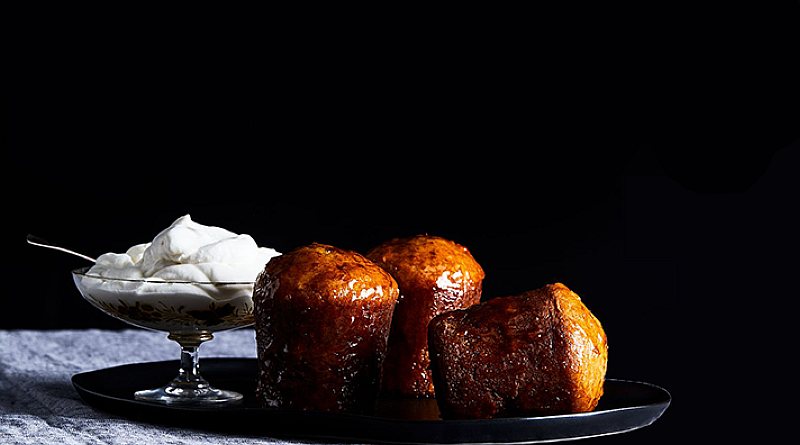
The blockade of Leningrad became one of the most mythologized events of World War II in the Soviet Union long before the victory in this war turned into the main ideological platform of Putin’s Russia. Yes, even then, before the post-Soviet times, there were those who spoke about inequality in hunger and cold, and talked about rum cakes for party officials—a figure and fact used by one of the most famous Leningrad writers of the postwar decades, veteran Daniil Granin. And after the collapse of the Soviet Union—in that short period when it was still possible to debate something in Russia—voices began to emerge that questioned the actions of the Soviet party and military leadership during the blockade.
But all this, of course, does not refute the very fact of the suffering of ordinary people who became hostages of war. In the Soviet Union, attention was focused on these sufferings, on the cold and hunger. Efforts were made to ensure that the sufferings of the Leningraders were perceived as one of the greatest disasters of World War II, so that in the consciousness of the empire’s residents they overshadowed even such large-scale and unprecedented atrocities as the Holocaust. And yes, Moscow always did everything possible to make these tortures of hunger and cold be considered genocide—the last time such a definition was used in a statement by the Russian Ministry of Foreign Affairs in 2024.
Of course, the impact of the tragedy was primarily felt in St. Petersburg itself, where among the pre-war residents there were practically no families who could not recount their own sufferings and sacrifices. The Piskaryovskoye Memorial Cemetery became one of the main city landmarks, no less important for the sense of the city than Nevsky Prospect or the Petersburg canals.
And what an irony of fate was the fact that a person, supposedly brought up in this blockade tradition of memory, a person who made the victory in World War II one of the main foundations of his regime, decided to repeat these unspeakable atrocities. After all, the desire to freeze Ukrainians and precisely by suffering force them to surrender has been evident in Putin practically since the first weeks of the big war. And now, in the fifth winter, he might believe he’s come closer to his goal.
However, I would not be surprised at Putin’s desire to freeze the elderly and children in cold apartments. Because in reality, there have always been two blockade myths. One is the myth of people who starved and died from the cold. And the other—is the myth of people who ate rum cakes.
The one who was at the social bottom might want to change his own and others’ lives so that neither the horror of hunger and cold nor the horror of rum cakes would repeat. But the “right” Soviet person—and Putin is precisely the “right” Soviet person—always had a completely different instinct: to become part of the leadership, never to get into trouble, and not to perceive as people those who didn’t succeed.
That’s why he may feel a special satisfaction when he sees the suffering of Kyivans, Kharkivites, or Odessans—because he is confident that nothing similar can happen to him. That he made the right choice when as a schoolboy he visited the Leningrad KGB department with the question of how he could join the “office.” Because he understood—that’s where he would have protection, those people ensure a career and security, and also the impossibility of ending up in a situation where you die in a cold apartment in twenty-degree frost while somewhere on the next street the “servants of the people” in a warm office spread caviar thickly on bread.
He wanted to become a “person with a rum cake”—and he became one. In the “moral code” of such people, it is not just to have the opportunity to achieve the desired success, but also to have the opportunity to mock others. That’s why this war, for a person with sadistic inclinations, is a true gift of fate. None of us can even imagine the satisfaction he gets when planning another attack or learning about the temperature in Kyiv apartments. A person under whose residence windows his most prominent opponent was killed—uncomplicated, smiling, and cheerful—can’t be any different. Simply, every new day of such a person’s stay in power naturally pushes them to new and new crimes, to new and new satisfaction with life.
To new and new rum cakes for dessert.
Collage: Zbruc
