
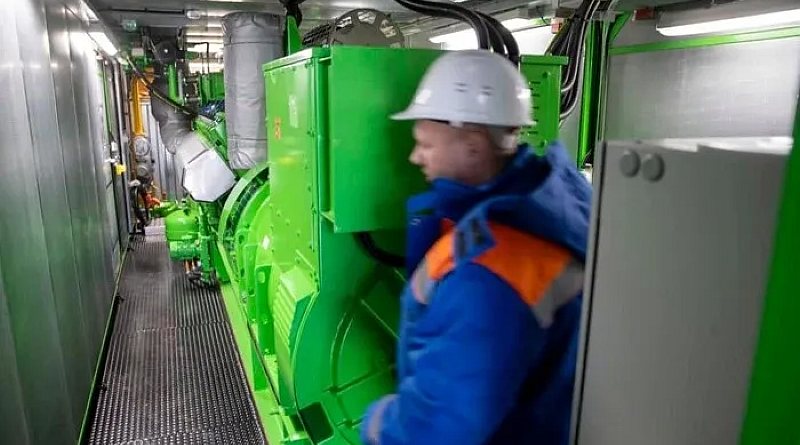
Diana Kuryshko / BBC News Ukraine
In January 2026, in Obukhiv, Kyiv region, the electricity was cut off for 18-20 hours a day. A year earlier, in January 2025, American donors had provided the city with two cogeneration units. The equipment, which can produce energy and heat, had remained unassembled the entire time.
During the frosts and power issues, these units could have made the outages less severe, but they were not activated, says Bohdan Yatsun, a deputy of the Obukhiv City Council, in an interview with BBC News Ukraine.
This story is not unique. About half of the cogeneration units available in the country are still not operational. This is confirmed by the Ministry of Energy and experts.
At the end of January, the new Minister of Energy, Denys Shmyhal, stated that they had counted the units in the Kyiv region and found that only a third of them were working.
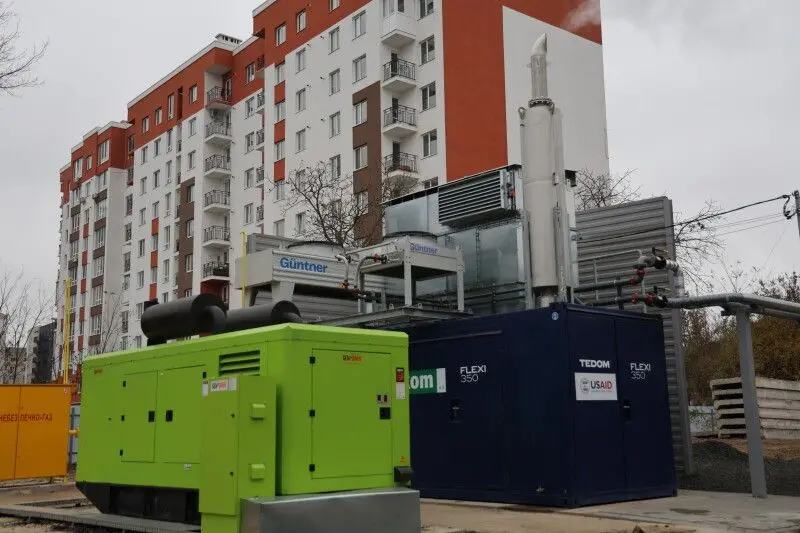
International organizations transferred 9 units to Poltava, only one is operational.
Odesa, which had long suffered from blackouts, received 13 units from donors. By the end of 2025, two were operational.
In Kyiv, which purchased them with its own funds, two out of five are operational, and a few more were recently brought in.
Why, in a country with a huge demand for heat and light, is the equipment that can produce it not fully operational? Can cogeneration save Ukraine from cold and darkness?
Does Obukhiv not need it?
“As soon as I turned on the washing machine, the power was cut, even though they promised to keep it on for three hours. The refrigerator is not working; I am throwing away food by the kilogram. We catch light day and night,” describes her daily life, Obukhiv resident Nina.
In the city, as in many places in the Kyiv region, severe power outages followed Russian shelling.
A year ago, the United States Agency for International Development (USAID) provided the city with two cogeneration units with a capacity of about 4 MW, along with transformers and cables for their connection.
A cogeneration unit is an energy complex that can simultaneously produce electricity and heat from a single type of fuel, mainly gas. Depending on the capacity, one unit can provide heat and light to a hospital, school, kindergarten, and several can power a neighborhood.
According to Bohdan Yatsun from the city council, connecting two cogeneration units with a capacity of 4 MW in Obukhiv could change the situation in the community, which reportedly consumes around 10 MW of energy.
Additionally, according to the deputy, the city council allocated funds for the connection of the units and provided land plots – places where they can simultaneously connect to gas and supply energy to the grid.
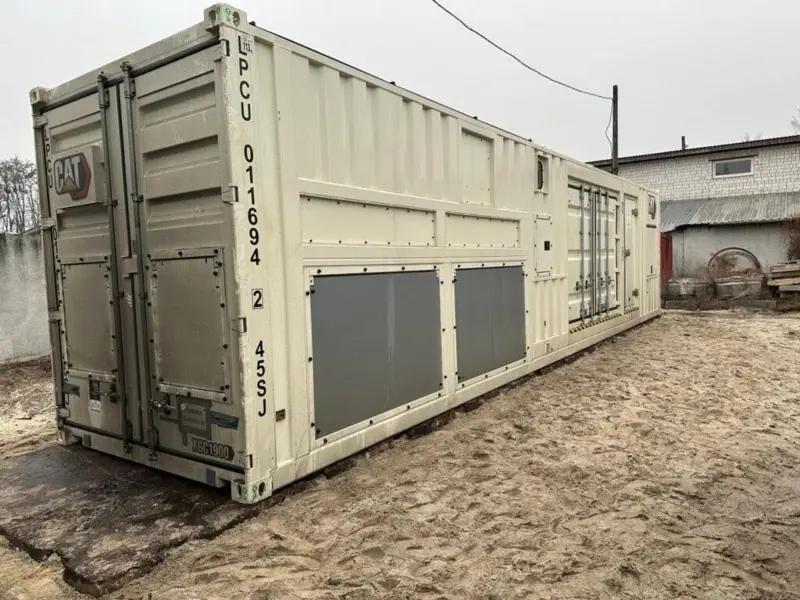
Why did the city not utilize this equipment?
The project documentation was not approved, there were no complete expert assessments, the networks were not ready, responds Larisa Ilyenko, secretary of the Obukhiv Council, who fulfills the functions of the city mayor, to the accusations.
Moreover, she stated that these installations could not be connected to residential buildings because their purpose is “exclusively critical infrastructure of the city.”
Eventually, a few days after attracting media attention, Ilyenko announced that Obukhiv would transfer the cogeneration plants to Slavutych.
“Why was this aid accepted then, and now are these installations being transferred? It looks very much like an attempt to hide their inaction,” believes deputy Yatsun.
He shows a protocol from the DTEK company about the readiness to connect the installations. So, the networks were ready, notes the deputy.
When asked why Obukhiv accepted such aid from donors, Larisa Ilyenko wrote on Facebook that “in wartime, no community has the right to refuse resources that can strengthen the country’s energy resilience.”
How many installations are in Ukraine and how many are operational?
Over the last two years, to support Ukraine’s energy stability, donors have massively imported cogeneration installations. The equipment was provided by USAID, UNDP with the support of the governments of Japan, Sweden, Norway, Germany, and many others.
What of this aid has become operational?
More than 250 cogeneration installations have already been installed in the country, and about 200 more have not, said recently Minister of Energy Denys Shmyhal in the Verkhovna Rada.
Mykola Kolomyichenko, a former member of the board of the State Agency for Energy Efficiency and Energy Saving, has monitored the import of cogeneration installations to Ukraine from open sources for several years.
He has slightly different figures for operational equipment – according to his data, as of mid-January, 80-85 out of 180-200 machines were in operation.
If they were all operational, the total thermal capacity, according to calculations, would be 240-280 MW.
“This could provide heat for 150-180 thousand apartments or the critical infrastructure of a medium-sized city,” says Kolomyichenko.
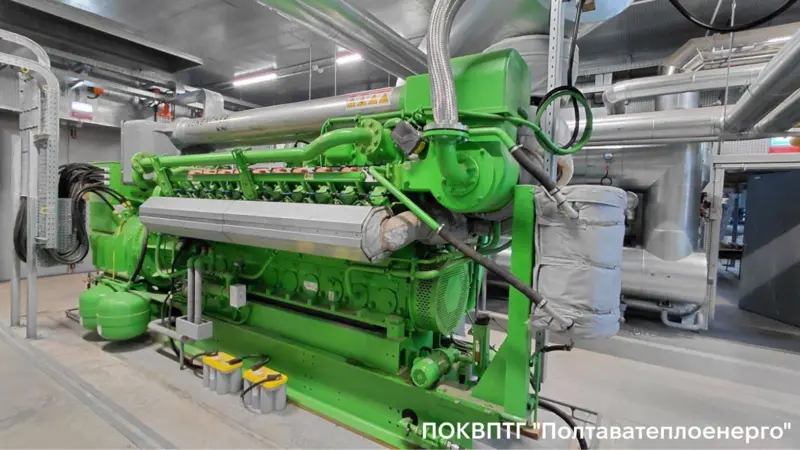
Shmyhal promised deputies that cogeneration units would be promptly delivered to the cities that need them the most — Kyiv, Odessa, and others.
Odessa received 11 cogeneration units from partners in 2024 and 2025. Read more
Last year, the city council allocated funds for their launch. In the spring of 2025, the head of Odessa, Hennadiy Trukhanov, promised to connect the maximum number of cogeneration units before the start of the heating season. By the end of 2025, two were operational.
To date, the city already has 13 units, according to the Odessa city council as reported by BBC News Ukraine.
They declined to specify the number of operational machines, noting that it is sensitive information.
The city council states that launching the equipment takes time due to the need for project work, obtaining technical conditions for gas and electricity supply, and reconstruction of boiler networks.
What has Kyiv built?
Kyiv also launched two cogeneration units, with three more in the process, stated Mayor Vitali Klitschko recently. Although earlier promises were made to launch units by 2025, with a total of 15 units expected.
The city council asks not to compare the capital with other cities by the number of installations, as their capacity is significantly higher — 60 MW. For example, one unit in Odessa has a capacity of 3.3 MW.
Regarding the difference in quantity, the city authorities say that Kyiv purchased 15 gas-piston equipment complexes with a total capacity of 60 MW. Based on this equipment, 5 cogeneration units, known as mini-CHPs, have been built.
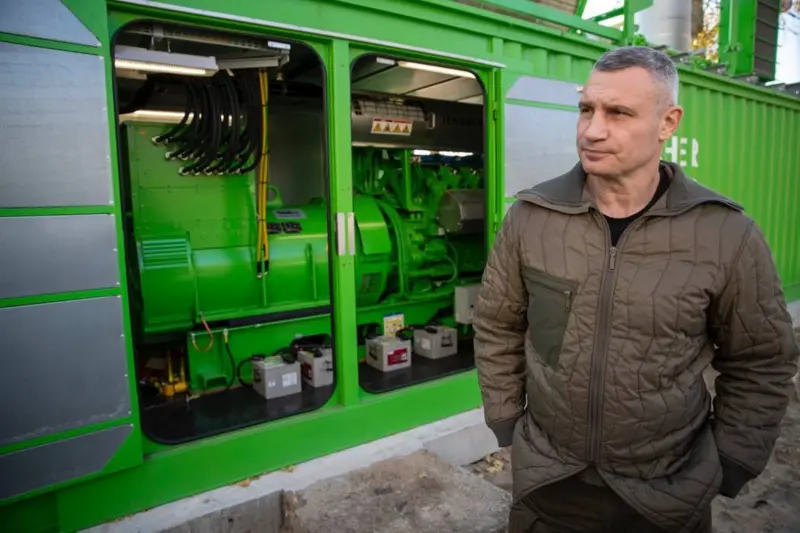
“This is cogeneration with a capacity of 60 MW. No one in Ukraine has built this yet. Yes, we planned to launch them back in December, but we are constantly being shelled. It’s a huge construction, including ventilation systems, temperature control, gas supply connections, and storage,” the city council told BBC News Ukraine.
These units are located on critical infrastructure sites and integrated into the general network. They “secure” key city infrastructure objects.
Testing is currently being completed. In February-March, three cogeneration units will start operating as full elements of Kyiv’s energy system, according to the city council.
However, even these five units are not enough, acknowledges the authorities. In reality, Kyiv needs significantly more.
Why is everything so slow?
“Ukraine received cogeneration but did not establish a system to operate it,” says Mykola Kolomiychenko, chairman of the supervisory board of the NGO “Center for Sustainable Development Strategy.”
In his opinion, the problem with cogeneration is not the equipment, but the lack of timely management decisions.
Almost half of the installations that could produce energy and light in Ukraine are either not assembled, assembled but not fully operational, or everything is in place, but “the button hasn’t been pressed.”
One of the reasons is that international organizations often provide installations without the necessary equipment. To install, one needs additional purchases such as relay protection, automation, heat stations, and cables.
The price of project work, construction, launch, and equipment can reach 200-250 thousand euros, which the community needs to find. Plus, there is a shortage of personnel to operate the installations.
Mykola Kolomiychenko explains that a lot of documentation needs to be prepared for the launch: connecting the installation to the general network requires 94 approval documents, while local connections to a hospital or kindergarten require 13 to 40 sets of documents.
“That’s why many officials are reluctant to proceed. They say it’s better to delay than to end up in the prosecutor’s office,” the expert states.
In his view, timely management decisions at the state level could accelerate these processes—such as developing standard connection projects, organizing installation and commissioning teams, and adopting a single standard for integrating installations into heating networks.
How did Cherkasy succeed?
However, there are examples in Ukraine where cogeneration installations are launched much faster—not in years, but in a month or a month and a half.
“Thanks to cogeneration installations, Cherkasy doesn’t freeze. The city almost always has hot water and no heating problems,” Pavlo Karas, director of “Cherkasyteplokommunenergo,” tells BBC Ukraine.
Currently, the city operates 18 cogeneration installations with a capacity of 20 MW: five were purchased by the community, and the rest were provided by donors. International partners also partially helped with equipment and launch.

“We have built a distributed generation system, 28 km of high-voltage networks connecting the city’s boiler houses. This system provides the critical infrastructure of Cherkasy with backup power,” Karas notes.
Thanks to the installations, Cherkasy hospitals receive light and heat, while residential buildings receive heat and hot water.
According to Karas, the system can operate in “island” mode, independently of the unified energy system.
Currently, it operates in a “peninsula” mode—90% of electricity is supplied to the general network. Cogeneration installations are just one element of this system.
However, power outages in Cherkasy are quite severe.
As several residents of the city told BBC News Ukraine, there is more time without power than with it. They turn it off for 4-5 hours and turn it on for one or two.
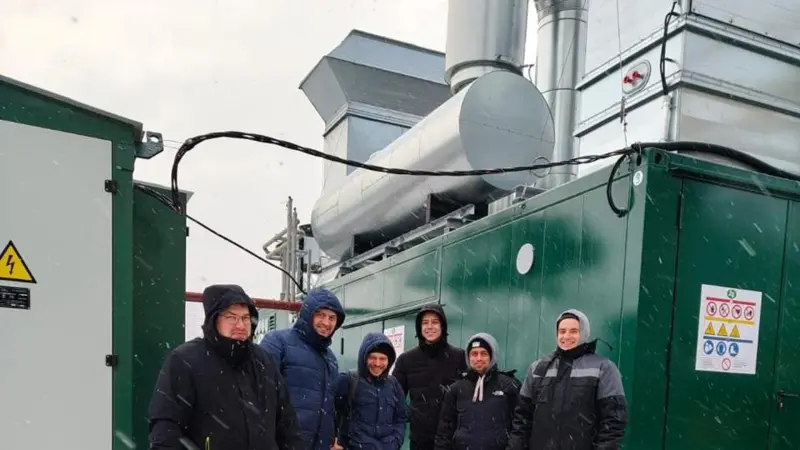
Installing cogeneration equipment cost Cherkasy about 20 million UAH, 1-1.5 million per installation. Part of the funds for the launch was provided by the city community, and part of the installations earned themselves.
“I install cogeneration equipment linked to existing facilities – gas, electric. Building from scratch is long and much more expensive,” says Pavlo Karas.
He calls unlaunched units a crime and criticizes those whose cogeneration equipment has been idle for years.
“How can you take some help from a donor and not use it when it’s urgently needed? This is a question of the city’s priorities,” says Karas.
It is worth noting that over the past four years, Cherkasy has not experienced such significant and regular strikes from Russia as Kyiv or Odesa.
Can these installations save from the cold and darkness?
Can cogeneration installations save Kyiv, which is many times larger than Cherkasy, and fully replace the damaged giant CHPs?
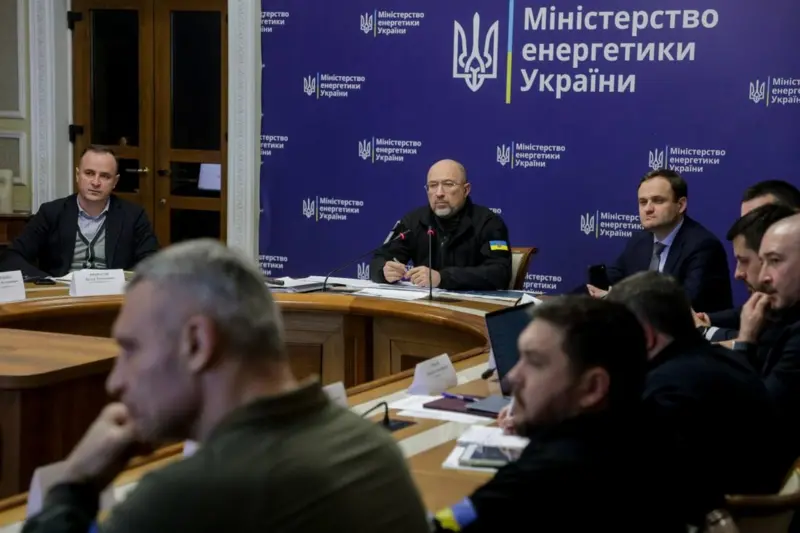
On January 26, at the headquarters meeting, Minister Shmyhal talked about how the government “developed specific steps to replace the generation of damaged CHPs.” In particular, through the installation of cogeneration units and block-modular boilers.
Shmyhal demanded from Kyiv to “urgently calculate the necessary number of cogeneration units to compensate for the losses.”
But can small installations with a capacity of 1-3 MW achieve this?
Cogeneration units can provide additional power to municipal enterprises, for example, supplying electricity to a water utility, but it is impossible to completely replace the huge Kyiv CHPs-5 and CHPs-6 with them, says Sviatoslav Pavliuk, Executive Director of the Association “Energy Efficient Cities of Ukraine.”
If Kyiv’s energy needs exceed 1.5 gigawatts, more than a thousand such machines would be needed to supply the city. And even if they existed, integrating them into the city network quickly would be complicated.
“In the world, cogeneration installations are primarily used as emergency heat sources, as an emergency reserve. They cannot fully replace centralized heating. But they can provide time and support the infrastructure while repairs are made to the permanent heat and power source,” says Mykola Kolomychenko, Chairman of the Supervisory Board of the NGO “Center for Sustainable Development Strategy.”
He notes that this will in no way replace the warmth of the power station. After all, the CHP plants in Kyiv are among the largest in Eastern Europe. They have been constructed over decades, and it is precisely these plants that the central heating of the capital depends on.
Cover photo: Vitali Klitschko’s social media
