

Why did Putin decide to listen to Trump and not target energy facilities for a week? The answer lies in the news that Congress has once again delayed systemic sanctions against Russia.
Chakhlik is very worried about his needle.
After all, the West and Ukraine are hitting Russia’s shadow fleet, depriving it of oil revenues.
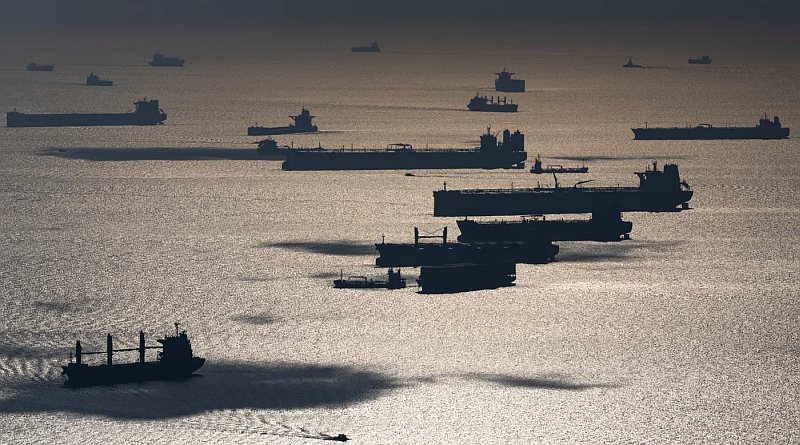
Western countries, together with Ukraine, have sharply intensified pressure on Russia’s so-called shadow fleet, which is used to circumvent sanctions and export oil. In 2025 alone, more than 600 tankers were added to the sanctions lists, double the number from the previous year.
Currently, around 40% of ships transporting Russian oil are under sanctions, and tankers are forced to take longer routes, often idling at sea and losing efficiency.
Estimates suggest that after sanctions, the productivity of such ships falls by 30–70%, sharply increasing logistics costs. An additional pressure factor has been Ukraine’s strikes against the shadow fleet tankers. Since the end of 2025, at least nine ships have been attacked, leading to rising insurance rates and increased transportation costs.
As a result, the discount on Russian Urals oil has increased to $27 per barrel, the highest since spring 2023. If current trends continue, Russia’s oil and gas revenues may fall below $10 billion per month, increasing pressure on the Kremlin’s budget.
Attempts to transfer the shadow fleet under the Russian flag only increase costs and complicate insurance, further depleting the state’s financial resources.
Seeing this, clients are abandoning the aggressive petrol station.
For example, India has openly stated it will further reduce purchases of Russian oil. India’s Minister of Petroleum, Hardeep Puri, directly acknowledged that imports of Russian crude will continue to decrease, even though no formal government bans for companies have been imposed. According to him, the decline in supplies will continue starting in January, despite Russian oil being sold at the highest discount in Indian ports during the entire period of sanctions.
This indicates that the problem for Russia goes far beyond price — risks, logistics, and sanction pressure increasingly repel even those buyers who only recently actively exploited the situation.
India is systematically diversifying imports and is now purchasing oil from 41 countries. Companies are interested in increasing supplies from the USA and Canada, i.e., from jurisdictions that carry no sanction or reputational risks.
Against this backdrop, Russia’s role as the “cheap savior” for the Indian market is rapidly losing value. Average daily Russian oil supplies have already dropped to 1.3 million barrels compared to 1.8 million barrels last year.
Meanwhile, after sharply reduced purchases by Indian refineries, Russian oil is increasingly accumulating at sea. Since the end of August, the volume of crude oil stuck on tankers has risen by approximately 60 million barrels and stabilized at around 140 million barrels. Deliveries to India last month fell to about 1.2 million barrels per day — the lowest in more than three years, and decreased even further in January.
This is happening amid sanction risks and the enactment of the EU ban on the import of petroleum products made from Russian oil. As a result, dozens of tankers are idling off the coasts of India and Oman, with some cargoes being redirected to China or temporary storage in Indonesia.
News is changing dynamically. The rashist strike on Zaporizhzhia shows that there is no talk of humanitarianism or honoring the word of the aggressor. This enemy understands only one language – force.
Ukraine’s task is to prove this to its partners. And then more will follow. For us.
Photo: SeongJoon Cho/Bloomberg
