

Information on current Russian losses due to sanctions as of 02.06.2026.
1. Ukraine attacked one of the largest oil refineries in southern Russia for the fourth time since the beginning of the year.
– On the night of June 2, drones struck the Ilsky Oil Refinery in the Krasnodar region. This is the fourth attack on the plant since the beginning of 2026: previously, Ukrainian drones struck the facility twice in February and once in January.
– The Ilsky Oil Refinery is one of the largest oil processing enterprises in the Southern Federal District. Its designed capacity is about 6.6 million tons of oil per year. The plant specializes in producing gas gasoline, gas condensate distillates, high-sulfur diesel fuel, and fuel oil. A significant portion of the products is aimed at export markets.
– It is estimated that since the beginning of the full-scale war, the Ilsky Oil Refinery has suffered at least 16 attacks. This indicates the systematic nature of the Ukrainian campaign to destroy Russian oil refining and fuel infrastructure.
2. One of the largest oil refineries in Russia halted operations after an attack by Ukrainian drones.
– The Volgograd Oil Refinery of the company “Lukoil” stopped oil processing as of May 29 due to damage sustained from the UAV strike and subsequent fire.
– Both the primary oil processing units and some secondary equipment were damaged. In particular, the AVT-1 unit with a capacity of 18.6 thousand tons per day, which provided about 40% of the plant’s production capabilities, was stopped. AVT-6 and AVT-5 units, which accounted for more than half of the plant’s capacity, were also decommissioned.
– This effectively means almost a complete shutdown of one of the country’s key oil refining enterprises. In 2024, the Volgograd Oil Refinery processed 13.5 million tons of oil, which accounted for about 5% of Russia’s total oil refining volume.
– The enterprise plays an important role in supplying the domestic market with fuel. Last year, the plant produced 1.9 million tons of gasoline, 6 million tons of diesel fuel, and about 700 thousand tons of fuel oil.
– After the attack, the products of the Volgograd Oil Refinery disappeared from trading on the St. Petersburg International Commodity Exchange.
3. Disputes within the Russian leadership are intensifying regarding the cost of the war against Ukraine.
– Representatives of the Ministry of Finance and the Central Bank of Russia warned Putin that the current military expenditures are becoming increasingly incompatible with the budget and the economy’s capabilities.
– The financial bloc informed the Kremlin that the planned defense spending could lead to a dangerous increase in the budget deficit. Officials also expressed concerns over the state of the economy, which, after several years of military stimulation, shows signs of slowing down and structural problems.
– Representatives of the Ministry of Finance and the Central Bank proposed reducing military spending or at least curbing its further growth. In their view, without revising the defense budget, stabilizing state finances will become increasingly difficult.
– However, these proposals faced strong resistance from the military department and parts of the Kremlin officials. They insist that cutting defense spending could hit the economy, which has become increasingly dependent on state military orders in recent years.
– As a result, Putin effectively sided with the military. He instructed the Ministry of Finance to seek opportunities to cut other budget items without affecting war funding. The Russian authorities are faced with an increasingly difficult choice.
– On one hand, the war requires constant funding increases. On the other, military expenditures are becoming one of the main factors of budget imbalance and the structural exhaustion of the economy.
4. The Russian authorities have begun involving big business in directly financing state needs amid growing budgetary problems caused by the war against Ukraine.
– After a closed meeting of Vladimir Putin with the biggest Russian oligarchs, the budget began to receive so-called “voluntary contributions” from private companies.
– As of May 28, gratuitous receipts from non-state organizations reached 225.5 billion rubles. For comparison, the federal budget for the entire year 2026 included only 1.7 billion rubles under this item. Thus, actual receipts have already exceeded the plan by more than 130 times.
– The wave of payments began after Putin’s meeting with big business representatives at the end of March. The situation indicates increasing financial pressure on Russian business.
– Despite the official status of “voluntary payments,” it is essentially an additional mechanism for extracting resources from the private sector to cover the state’s growing needs.
– Involving oligarchs in financing state expenses indicates that traditional budgetary resources are becoming insufficient.
– At the same time, such practice increases uncertainty for investors and worsens the investment climate, as it shows the state’s willingness to use administrative pressure to mobilize private sector funds.
5. The leasing sector in Russia has lost profitability for the first time since the start of the war amid worsening business conditions.
– Leasing companies in Russia ended 2025 with zero profit, marking the worst result since 2022. This is according to data from the Bank of Russia’s review, which recorded further deterioration in the industry amid economic slowdown and increasing financial problems in the corporate sector.
– The total leasing portfolio decreased by 9% in 2025, and lost another 3.7% in the first quarter of 2026. The biggest impact was on transport companies and small businesses, which traditionally form the basis of demand for leasing services and are the first to suffer from declines in business activity.
– Amid declining customer solvency, risks of non-repayment have begun to materialize. The capital adequacy of the leasing sector fell to 9.7%, and the share of problematic debts among small and medium-sized businesses increased from 5.9% to 7.6%.
– The problems of leasing companies reflect the overall weakening of the Russian economy. The total profit of Russian businesses decreased by 6.8% in 2025 — to 25 trillion rubles. In January-February 2026, the corporate sector earned only 3.4 trillion rubles, which is 33.1% less compared to the same period last year.
– Additional pressure is created by a sharp decline in investment activity and rising financing costs.
– Leasing traditionally remains one of the key tools for updating production equipment, transport, and machinery. Therefore, the decline in the sector indicates a reluctance or inability of businesses to invest in development.
6. Despite sanctions, “Arctic LNG-2” became the main driver of growth in Russian LNG exports.
– The growth of Russian liquefied natural gas (LNG) exports by 11.5% in January-May 2026 was primarily driven by the “Arctic LNG-2” project. This is reported by the Russian Oil & Gas Monitor, analyzing the latest data on LNG production and supply.
– The project continues to operate far below full capacity, but it has become a key factor in increasing Russian exports. It is estimated that “Arctic LNG-2” is currently loaded at only 25–30% due to a severe shortage of ice-class gas carriers needed for product transportation from Arctic fields.
– Even under such conditions, the enterprise managed to significantly impact overall Russian indicators. Meanwhile, the current growth is largely explained by the low base effect.
– Although the first and second technological lines of “Arctic LNG-2” were practically ready for operation in 2025, sanctions and logistical problems led to the first successful delivery only at the end of August last year.
– Despite Moscow’s attempts to reorient gas exports to Asian markets, sanctions continue to limit the development of new energy projects.
– The shortage of specialized fleets, transportation insurance challenges, and limited access to Western technologies remain serious obstacles to increasing Russian LNG exports in the long term.
7. The Russian “shadow fleet” continues to gain access to financial and insurance services linked to European infrastructure.
– The operation of hundreds of tankers transporting Russian oil requires insurance, banking operations, port services, and financial guarantees. Although most Western insurance companies officially left the Russian market after the start of the full-scale war, some insurance coverage continues through a complex network of intermediaries linked to European financial markets.
– The European Parliament recognizes that Russia has created an extensive system to circumvent sanctions. According to European legislators, funds pass through numerous intermediaries and financial structures, allowing the operation of tankers carrying sanctioned oil.
– This issue becomes particularly relevant ahead of the preparation of the EU’s 21st sanctions package. Brussels attempts to cut off financing channels for Russian oil exports, but part of the infrastructure they plan to limit continues to indirectly function through European financial systems themselves.
– After losing access to traditional insurance markets, Russia was forced to create alternative insurance and logistics schemes. Russian insurers, offshore companies, shell structures, and opaque financial mechanisms are used for this purpose.
– At the same time, such a system remains vulnerable. It is estimated that Russia increasingly relies on complex schemes to bypass restrictions, which require significant financial resources.
– Around 1,700 vessels participate in the operation of the “shadow fleet,” each needing insurance coverage, servicing, and financial guarantees. Insurance is one of the weakest points of Russian oil exports. If the EU can more effectively cut access to financial and insurance services, it would significantly increase the risks for transporting Russian oil and raise the costs of maintaining the operation of the “shadow fleet.”
– Despite massive sanctions, Russia still maintains the ability to bypass some of the restrictions. However, every new tightening of control over insurance, banking, and logistics services gradually narrows the room for maneuver and increases the cost of exporting Russian energy resources.
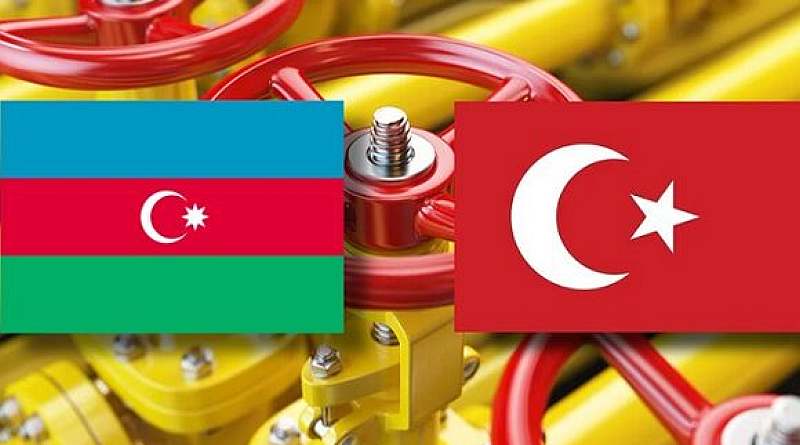
8. Turkey continues to reduce its dependence on Russian gas and strengthen its energy security.
– Ankara and Azerbaijan have signed a 15-year agreement for the supply of natural gas from the Absheron field in the Azerbaijani sector of the Caspian Sea.
– Turkey will receive 33 billion cubic meters of gas, and from 2029, 2.25 billion cubic meters will be supplied annually through the Baku–Tbilisi–Erzurum pipeline. The agreement was concluded by BOTAŞ, SOCAR, TotalEnergies, and ADNOC.
– For Turkey, the agreement is of strategic importance: it helps diversify gas supplies, meet future needs, and strengthen the country’s role as an energy hub between the Caspian region, the Middle East, and Europe.
– For Russia, this indicates a gradual loss of positions in the Turkish gas market, as Turkey increasingly diversifies supplies and collaborates with other suppliers.
– The Turkey-Azerbaijan agreement is part of a restructuring of regional energy flows, which in the long term weakens Russia’s influence through gas exports.
