
In the first part, we analyzed the structure of Russian troops, their real tasks in the north and east, and the operational situation in the Sumy, Kharkiv, and Kupiansk directions.
However, we should look at the other directions from our perspective.
The enemy has two large-scale operational goals that could become significant points before a negotiation pause or similar truce — the Ukrainian “fortress belt” of Sloviansk — Kramatorsk — Druzhkivka — Kostyantynivka and Zaporizhzhia.
The task of capturing the “fortress belt” has been assigned to the “South” and “Center” groupings, reinforced by a group of marines (here all Russian marines except the 810th brigade of the Black Sea Fleet, which is suffering losses in Sumy) and the 76th Airborne Assault Division, recently withdrawn from the front near Myrnohrad due to losses. Northeast of Sloviansk, the enemy’s 20th and 25th armies are attempting to bypass the agglomeration through Lyman and create a threat of encirclement.
The campaign towards Zaporizhzhia is being executed by the “East” Group, attacking through Hulyaipole, and the “Dnipro” Group, advancing north along the Dnipro River in the Orikhiv direction.
“Fortress belt”: along the highway from Sloviansk to Kostyantynivka, it is about 40-50 kilometers, from Sloviansk to the front line — 26 km (to Riznykivka), from Kramatorsk — 30 km (to Vasyukivka), from Druzhkivka — 15 km (to Virolubivka), with battles already occurring on the outskirts of Kostyantynivka. After Defense Forces units withdrew from Siversk, the enemy attempted to advance on a section about 2 km wide between Siversk and Svyato-Pokrovske. In January, the invaders achieved local success west of Siversk, attempting to encircle Svyato-Pokrovske (almost completed as of January 28), but encountered resistance at Riznykivka and cannot move further.
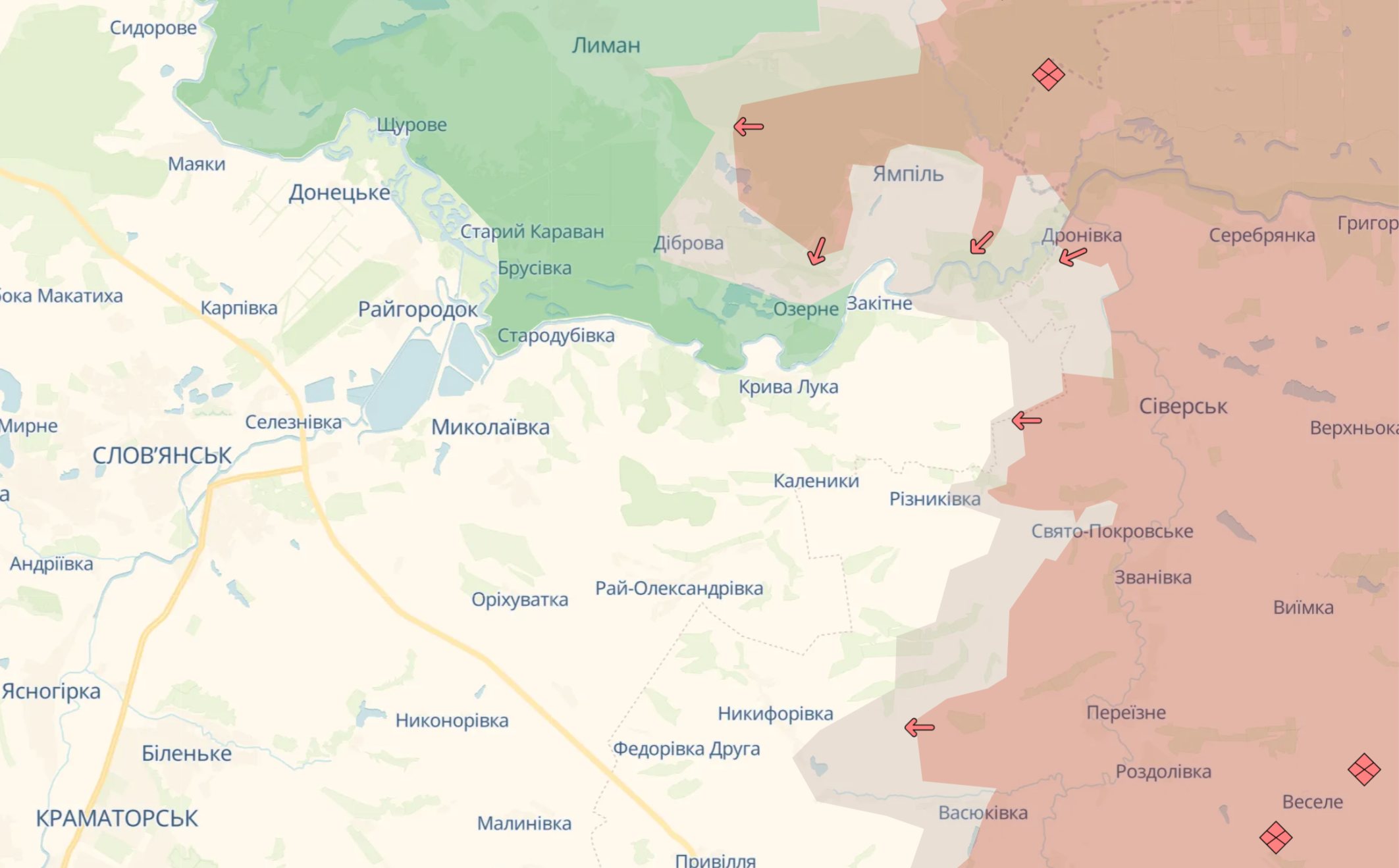
At the beginning of the year, the enemy had two penetrations 3 km south of Zvanivka and 5 km between Fedorivka and Vasyukivka towards Nykyforivka. After separate advances on January 17 and 22, the enemy was stopped, and positional battles continue. The direction of the assault actions indicates that the enemy is breaking through to Nykyforivka.
Further south, the enemy tried to bypass Chasiv Yar from the north and advance near Novomarkove. The enemy is active in the Novomarkove — Mayske area and southeast of Pryvillya. On January 26, the aggressor advanced on Minkivka and entered the village.
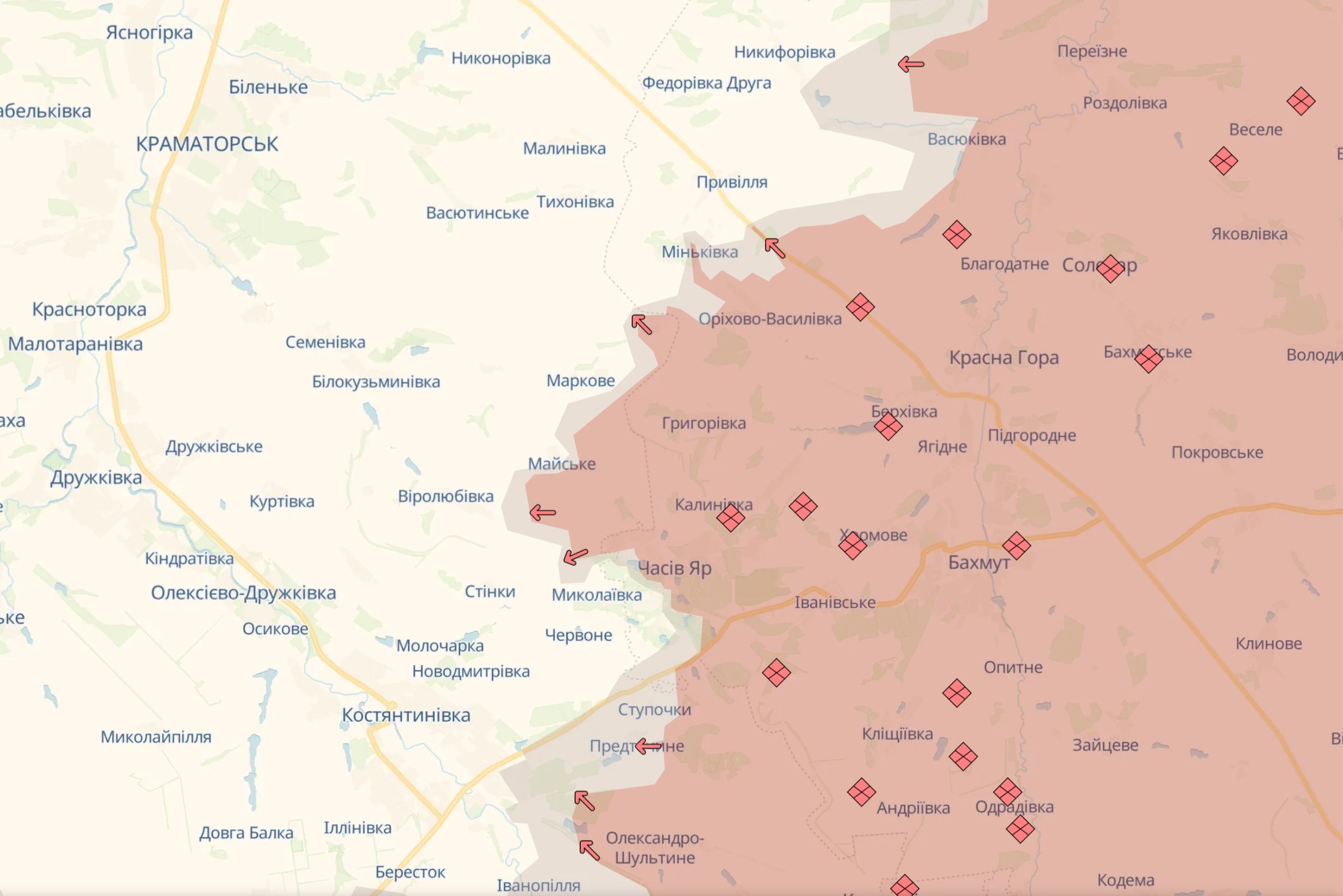
The main events are unfolding southeast of Kostiantynivka. The enemy is advancing along three highways (simplifying their logistics) — Bakhmut — Kostiantynivka, Yasynuvata — Kostiantynivka, and Myrnohrad — Kostiantynivka. The main actors conducting constant assault operations against the Defense Forces are the 103rd Motorized Rifle Regiment of the 150th Motorized Rifle Division, the 255th Motorized Rifle Regiment, and the 68th Reconnaissance Battalion of the 20th Motorized Rifle Division of the 8th Army, who are trying to press along the entire front line around Kostiantynivka. Since the battles for Bakhmut, the 72nd Separate Mechanized Brigade of the 3rd Corps and the 78th Motorized Rifle Regiment of the 42nd Motorized Rifle Division of the 58th Army, transferred from the Orikhiv direction, have been advancing here. Regarding the 20th and 150th divisions, their main forces are also here, although there are few mentions of them in open media.
In the Kostyantynivka area, the enemy is primarily pressing with assault units, supported by artillery, UAVs, and occasionally separate armored groups. Reconnaissance-strike UAVs play a significant role in adjusting fire and scouting Ukrainian positions.
The enemy’s tactic is not to achieve a rapid breakthrough, but to gradually push out Defense Forces units: intense shelling, small group attacks and infiltrations, attempts to flank through villages and industrial zones, securing on intermediate lines, and gradually expanding captured footholds around settlements on the approaches to Kostyantynivka. Armored vehicles are used sparingly, mostly for fire support or short dashes after artillery preparation, to minimize losses from ATGMs and drones. The enemy constantly tries to cut the logistics of the 19th corps and reduce defense resilience, forcing Ukrainian units to maneuver and expend reserves, but this does not guarantee rapid operational success.
The enemy suffers significant losses during large breakthrough attempts, but pressures with constant shelling and assault actions on several directions around the city.
Pokrovsk direction in the context of the offensive on the fortress belt is only an interim objective, though the intensity of fighting there is the highest. In this way, the enemy command “Center” tries to form the southern flank for a future offensive operation on the Slovyansk-Kramatorsk agglomeration.
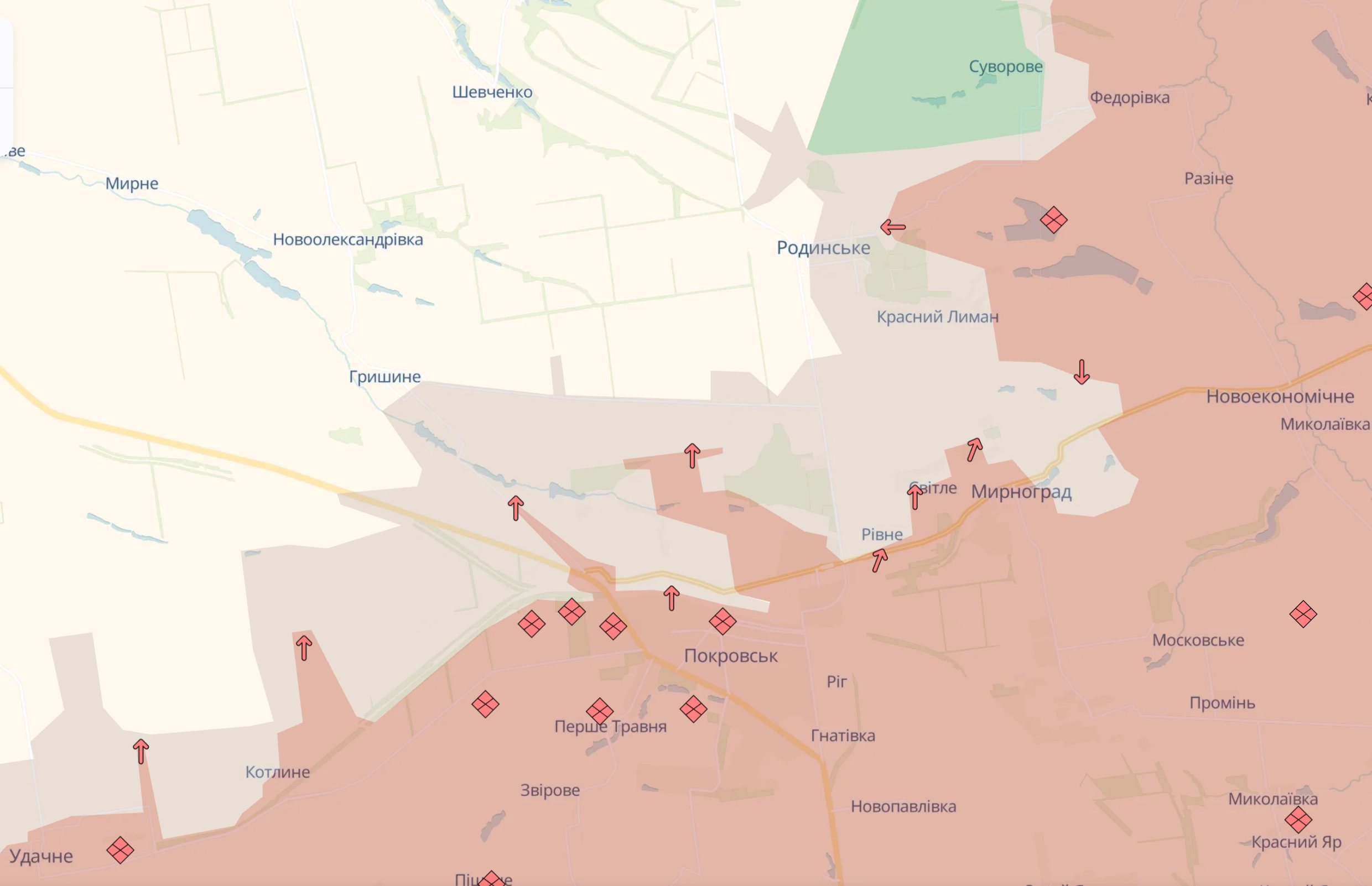
In brief, the situation in the direction was comprehensively described in an interview recently by Brigadier General Lasiichuk, Commander of the 7th Rapid Reaction Corps of the Airborne Assault Troops of the Defense Forces: Ukrainian paratroopers partially control the northern part of Pokrovsk, Myrnohrad, although Russian forces continue efforts to encircle the city from the north and attack from positions in Kotlyne, accumulating manpower and combat equipment in occupied Novohrodivka for attacks on Myrnohrad from the north, continue to attack Hryshyne, and actively use FPV drones.
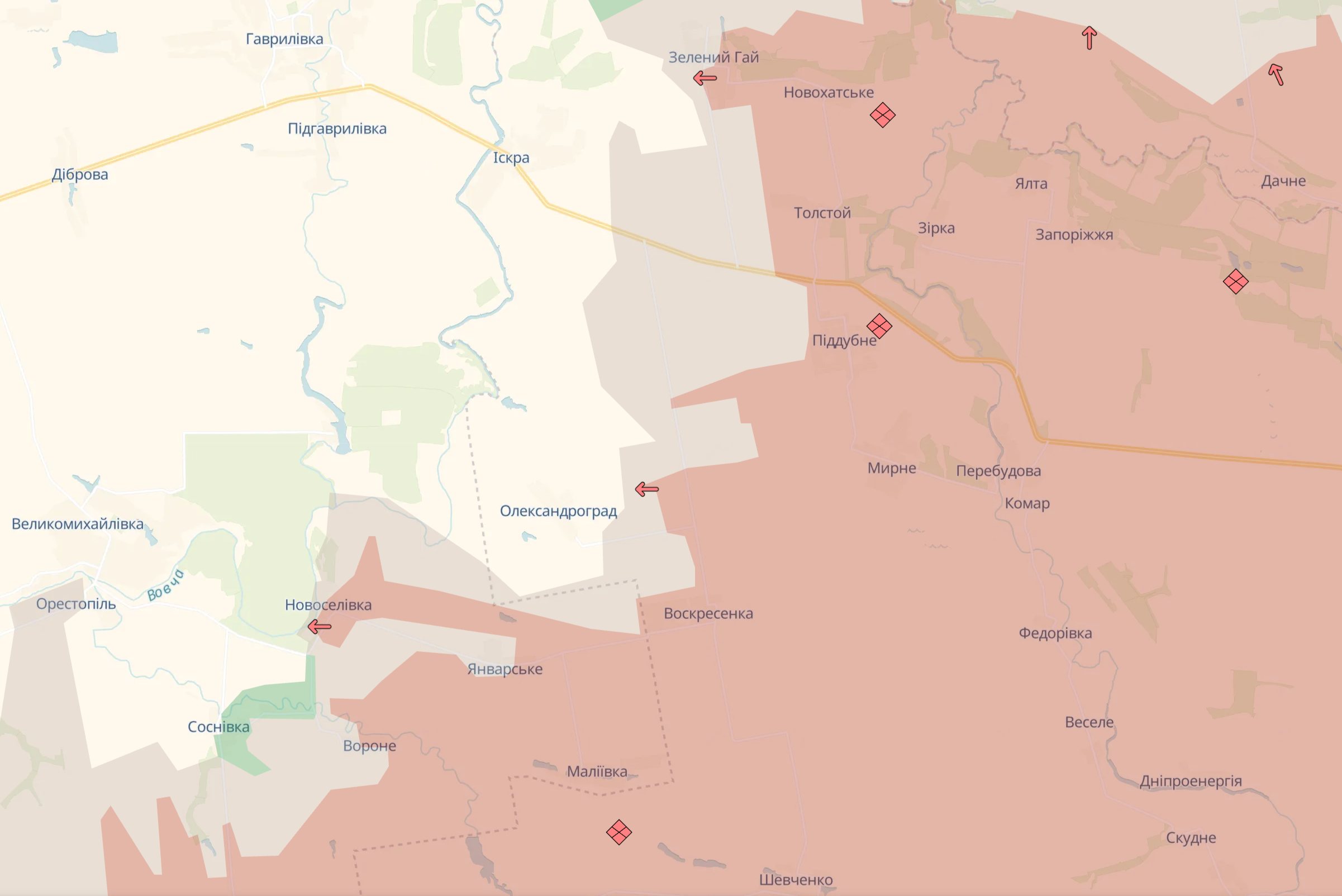
Oleksandrivsky direction is also intermediate. The enemy’s goal is the complete occupation of the Donetsk region. The Defense Forces hold the triangle of Filiya — Oleksandrohrad — Iskra. The enemy tries to advance along the Donetsk — Zaporizhzhia highway, break through to Pokrovske, which will facilitate the capture of Hulyaipole.
Zaporozhzhia: if the occupation of the Donetsk and Luhansk regions was immediately declared the goal of the so-called special military operation, the occupation of the Zaporizhzhia region was somehow absorbed in the battles to cut Ukraine off from the sea coast. After the Lviv paratroopers broke the Russian attempts to break through to the Pivdennoukrainsk NPP in Voznesensk, Mykolaiv region (which was awaiting the fate of the Zaporizhzhia NPP), and the 406th artillery brigade of the Ukrainian Navy sank the missile cruiser “Moskva” along with the Russians’ hopes for a naval landing in Odesa, the circus labeled “State Duma” had to amend the constitution to include the Zaporizhzhia and Kherson regions of Ukraine as their territories. But the Defense Forces broke these plans too, so the “constitution” states one thing, while the line of combat engagement shows something entirely different.
This contradiction is driving the Eastern Operational Group through Huliaipole and the Dnipro Operational Group through Orikhiv toward Zaporizhzhia — the regional center of Ukraine, which had almost a million residents before the war. From zero along the Mariupol-Zaporozhzhia highway is 72 km, from Huliaipole across the fields is 87 km, and from Donetsk to Zaporozhzhia via the Iskra Highway is 113 km. We see that with the current pace of the enemy’s advance, it would take several years to reach this area, at the very least. However, for them to do in Zaporizhzhia what they are currently doing in Kherson, the enemy needs to reach the Vilniansk-Komyshuvakha line. Then, the enemy’s 2S19 self-propelled guns could shell the eastern and southern parts of the city, and UAV operators could initiate terror against the civilian population. These plans are critically affected by the Defense Forces’ kill zone, which extends 20–25 km, so anyone approaching the maximum firing range will be destroyed. This is what is currently happening in the Plavni area: theoretically, the range allows for firing on the southern outskirts of Zaporizhzhia, but it doesn’t work; everyone who would like to move into positions here understands they would die. So, they do not advance.
Throughout January, in Huliaipole, there were intense battles to hold advanced positions and deter enemy attempts to advance west. Occupiers are conducting energetic assault operations near Huliaipole, in Zeleny, Varvarivka, Solodke, and Dobropillia. Every day, the 102nd Zaporizhzhia Brigade of the Territorial Defense repels 16–20 attacks in Huliaipole. The 65th Mechanized Brigade of the Defense Forces is also fighting here. After losing some positions in the city on January 14, including the command post of the 102nd Brigade battalion, the Defense Forces Command sent reserves here — the 425th Assault Regiment “Skelya” significantly improved the situation.
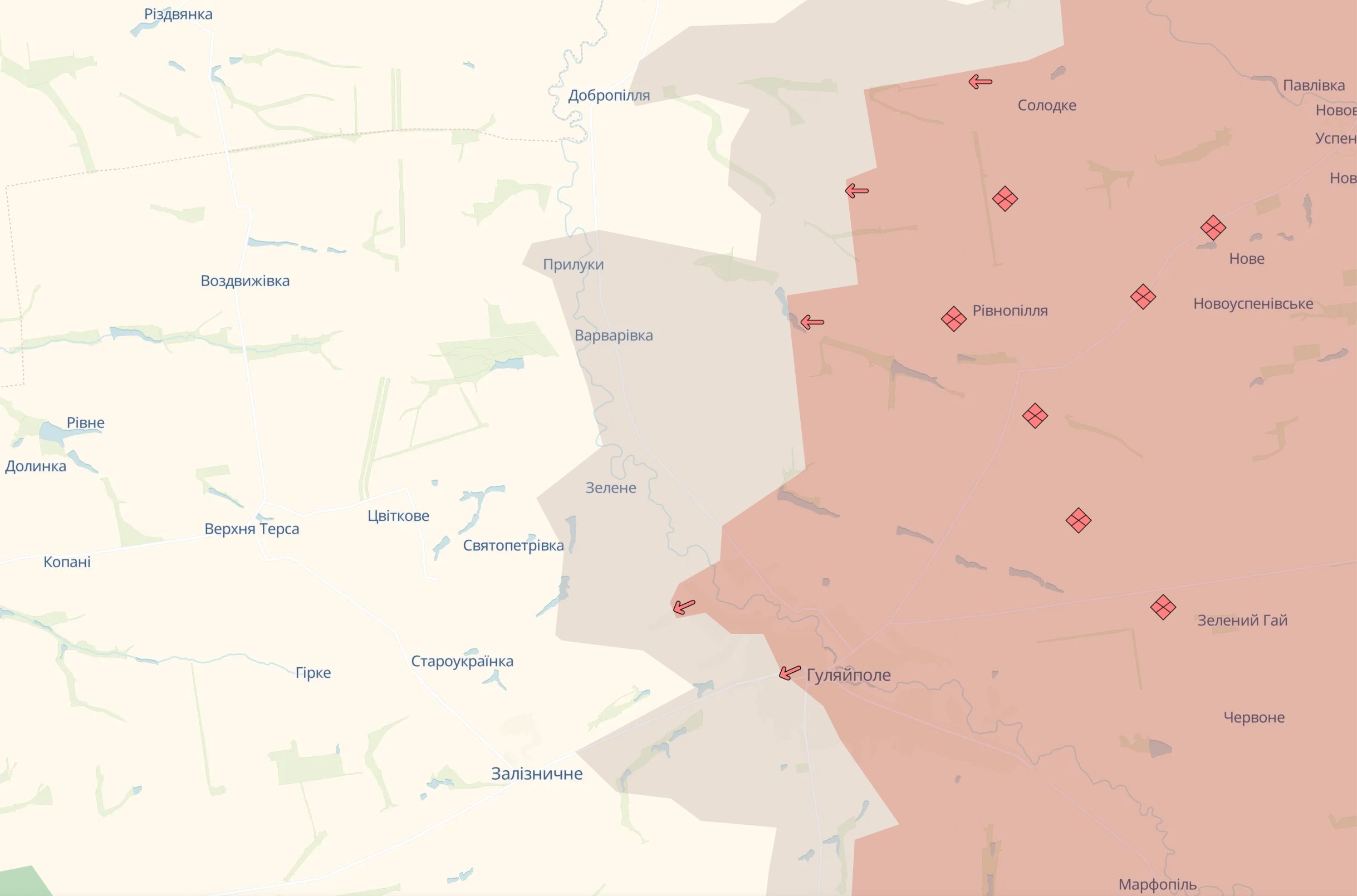
The assault troops are actively defending, conducting search and strike operations in the city area. Simultaneously, several rotations occurred, strengthening the Huliaipole garrison. The enemy lost its offensive drive, suffered losses, and had only local successes near Pershotravneve and Dorozhnianka in the last two weeks, advancing only a few hundred meters.
Orikhiv direction: The enemy’s “Dnipro” group, mainly formed from Airborne Units and the 58th Army, is intensely attacking near Stepnohirsk in Zaporizhzhia, the shortest route along the Dnipro to the regional center. A month of intense positional standoff with regular assault actions occurred, but no large-scale breakthroughs of the defense line happened. The Defense Forces are holding their positions. The enemy is shelling the Plavni area and adjacent sectors. The main directions of attacks are Prymorske and Lukyanivske.
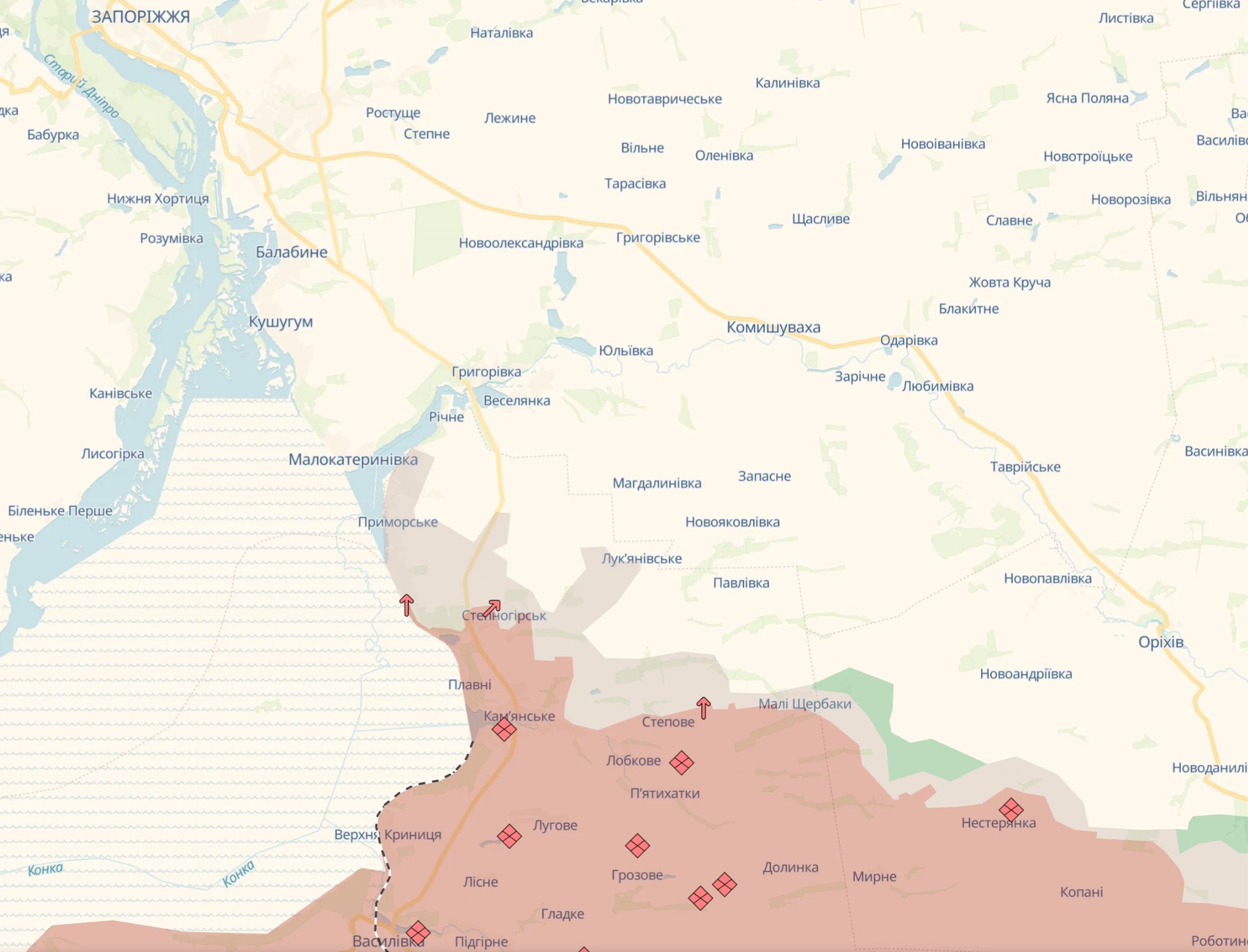
The redeployment of the 78th Regiment of the 42nd Division from this direction to Kostyantynivka, thus reducing the combat potential of OTG “Dnepr,” may indicate the secondary importance of this operational direction. This is also confirmed by the regrouping of the 70th Division of the 18th Army from the Prydniprovske direction to Chasiv Yar to replace the battered 98th Airborne. It can be stated with high probability that advancing near Huliaipole along the highway to Zaporizhzhia is more of a priority for the enemy, and resources do not allow them to operate on all directions simultaneously.
Between Dorozhnianka and Mali Shcherbaky, there is almost 60 km of the front line, and along this entire section, the intensity of combat encounters is assessed as low.
Prydniprovske direction: battles for the islands in the Dnipro delta will continue, with attempts by the enemy to create tactical bridgeheads on our bank of the Kherson region near the bridges, possibly near the crossings in Tyahin and Lviv. At the end of January, the enemy evacuated from Oleksiyivsky Island near Oleshky due to the complete loss of combat capability of the personnel, who could not withstand Ukrainian shelling and UAV attacks.
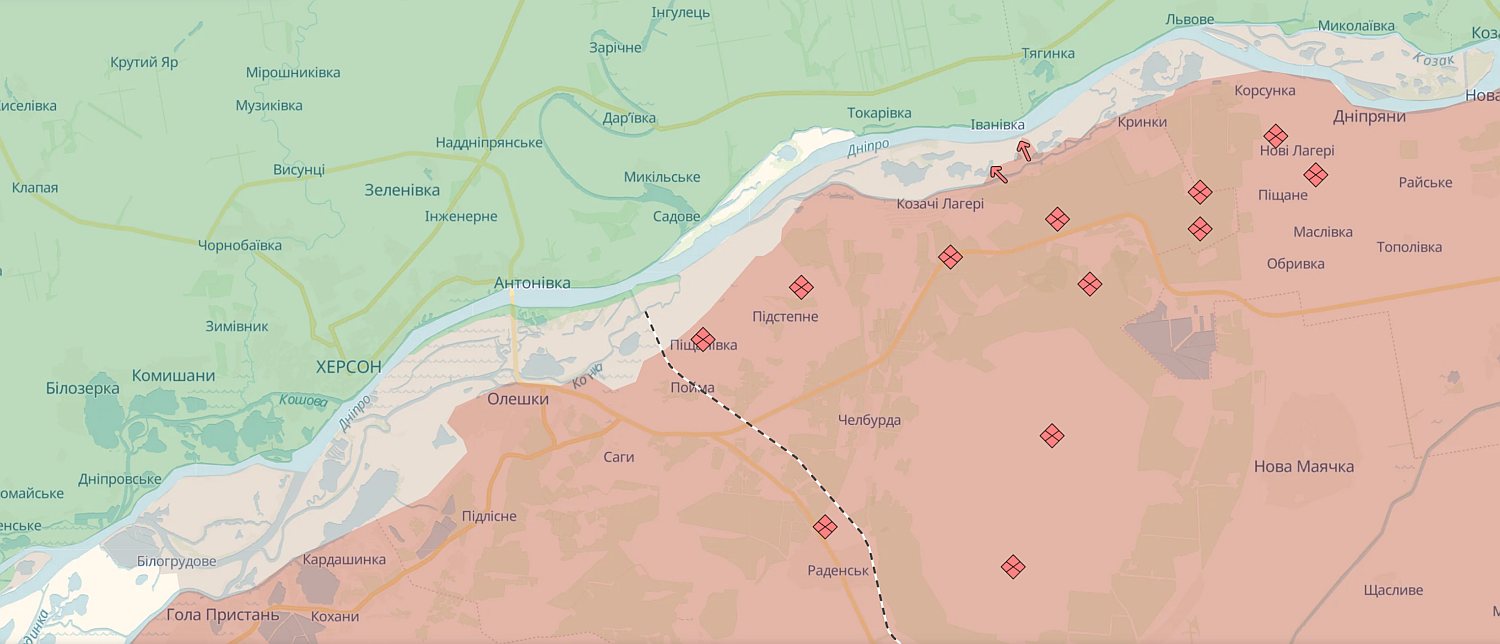
The enemy has not abandoned the idea of forming a flotilla on the Dnipro, so strikes on the enemy’s accumulation sites of any watercraft will continue.
The course of hostilities shows that during the winter, enemy groups will be resolving very limited tactical tasks, creating conditions for offensive operations during the spring-summer campaign, the goals of which will be to storm the “fortress belt” and make a breakthrough to Zaporizhzhia.
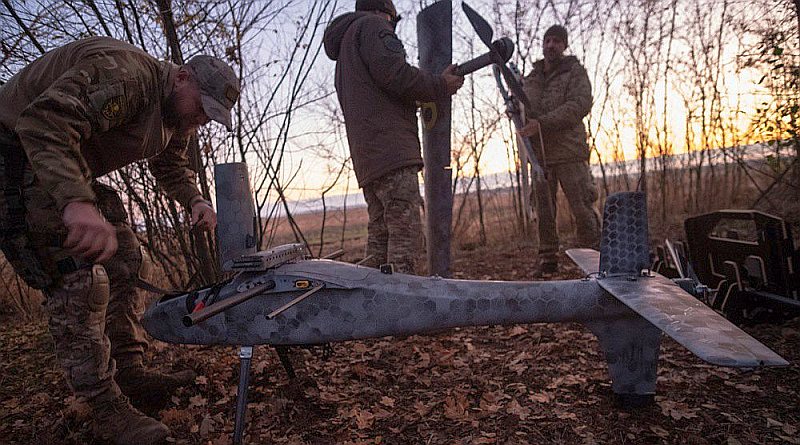
Cover photo: 46th Separate Airmobile Podil Brigade of the Airborne Forces of the Armed Forces of Ukraine
