
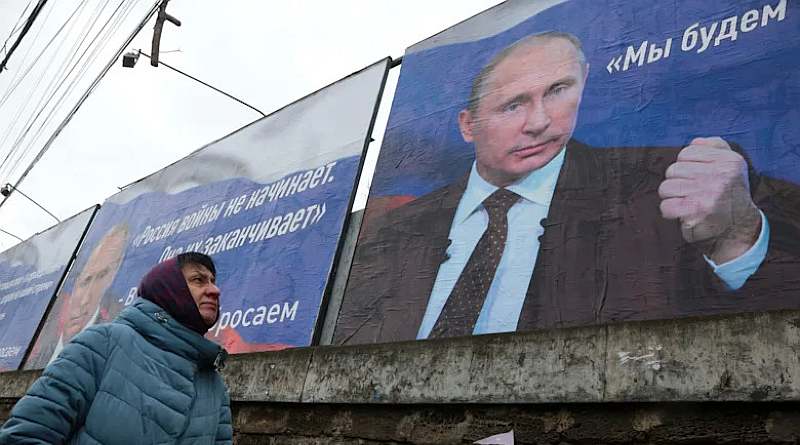

The ostentatious “stability,” boastful reports, and summaries of the Russian Ministry of Defense hide cracks of trust in the government within Russian public opinion. Fresh data from sociological services, including the pro-Kremlin VTsIOM, show that Putin’s government is facing a systemic problem: trust ratings in state institutions show a steady decline—almost 2 percentage points each week, based on trust in the leader. Russian citizens are endlessly tired of isolation, economic turmoil, and internet blockages. Society is frozen, waiting for positive changes, but the repressive apparatus of dictatorship by nature is incapable of providing them.
Realizing that the decline in ratings has gone too far, the Kremlin has switched to emergency political maneuvering. Within a short time, Vladimir Putin has already publicly declared a near-end to the conflict with Ukraine for the second time, specifically at the EAEU summit. The thesis that “the conflict is nearing its end” has become the main target narrative of state propaganda. It is artificially imposed from above because it perfectly hits the sore spot and aligns with the real sociological expectations of Russians longing for a return to stability.
However, there lies a cynical deception. Firstly, Putin deliberately avoids specifying exact timelines, hiding behind the standard formulation: “in conditions of hostilities, this is impossible.” Secondly, instead of real peace, the Kremlin tries to sell the population a prolonged illusion of an imminent victory to buy time and maintain the declining rating.
According to Western intelligence sources, the Russian military command has given Putin another “sacred” promise: to fully take control of the Donbas region by this fall. To achieve this media goal, which can temporarily revive the leader’s authority, Moscow is ready to go all-in.
Military experts agree that instead of de-escalation, Russia is preparing a large-scale combinational scenario aimed at paralyzing both Ukraine and its allies.
The plans of the Russian General Staff include a whole group of elements.
Energy terrorism is back in play—new massive strikes on Ukraine’s critical and civilian infrastructure are likely. Next is stretching reserves to divert key military reserves of the Armed Forces of Ukraine by opening a northern front from Belarus. Simultaneously, work is underway on “hybrid arsons,” such as initiating controlled local conflicts in the Transnistria region and at the borders of the Baltic states to divert NATO’s attention.
This strategy proves: the Putin regime is stuck in a historical deadlock. It can offer society nothing but perpetual war but is forced to mimic peacefulness to contain internal dissent.
Escalation and the apex of the conflict will be the main characteristics of the military-political situation in 2026. In trying to save its ratings with the illusion of a near end, the Kremlin only tightens the noose on its economy and army, bringing an inevitable systemic crisis within Russia itself closer.
