
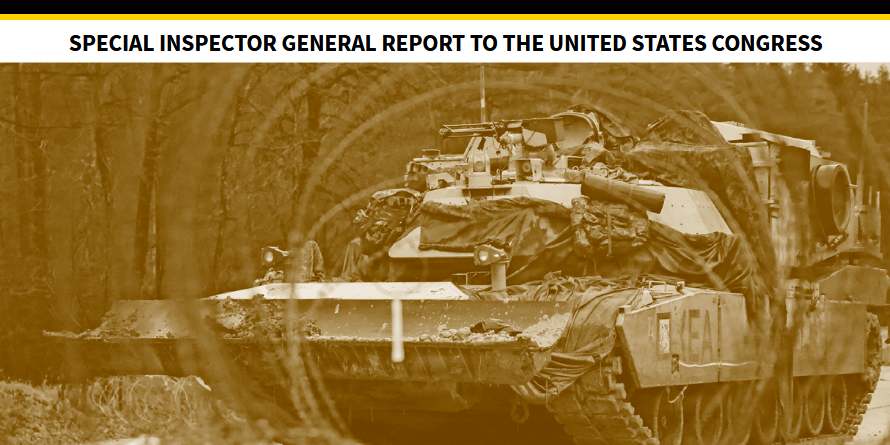
The report for the US Congress on the Atlantic Resolve operation (OAR) for the second quarter (January – March 2026), prepared by the offices of the inspectors general of the Pentagon, the State Department, and USAID, is a treasure trove of facts about the real state of the war between Russia and Ukraine. American auditors objectively describe the war of systems, shortages, and strategic stalemate without unnecessary embellishments.
Strategic Stalemate and Breakdown of Peace Negotiations
Negotiations between Ukraine and Russia, mediated by the US and held in Abu Dhabi and Geneva, reached a dead end. Ukraine categorically rejects any territorial claims by Moscow, while the Kremlin flatly refuses to agree to a comprehensive ceasefire until a final agreement is signed. It’s the same dance again – withdrawal from Donbas in the morning, promises in the evening. We’re doing everything right here because giving up well-fortified urban areas for a promise of a ceasefire (not even a truce) is absurd. Inspectors dryly record: peace negotiations have stalled precisely because Ukraine categorically and successfully rejects Moscow’s territorial claims, and Western pressure has not forced Kyiv to make capitulatory compromises.
The round of trilateral talks (US – Ukraine – Russia) scheduled for March 11 in Istanbul was disrupted and postponed indefinitely due to the start of joint US and Israeli military operations in Iran. It’s clear – the priority for the US is its allies in the Middle East and the Gulf because if they don’t get their enriched uranium now, it’s only a matter of time before Tehran tries again. Judging by what the US is stating in the negotiations – a 20-year moratorium suits everyone except the ayatollahs. Thus, a strict blockade and redeployment of forces for a possible repeat strike continue.
European Contingent of the Future
The United Kingdom, France, and a number of other European allies have officially committed to deploying future multinational forces within Ukraine after a possible ceasefire. Their task: long-term deterrence of Russia and a comprehensive restructuring of Ukraine’s Armed Forces.
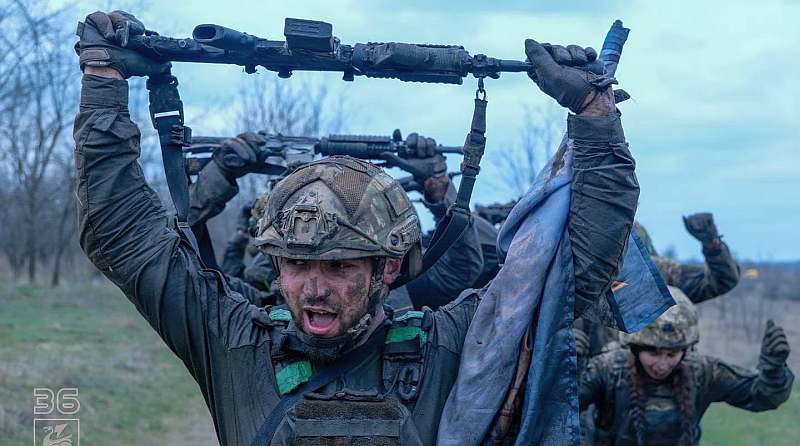
The forces of the “coalition of the resolute and very resolute,” it seems, will be based in a zone as far as possible from the contact line and plan to engage in missile defense, logistics, and training of new brigades. It is clear that they will also receive patches of experience from us in drone warfare and electronic warfare. But the main thing is: the West has morally and legally matured to the physical presence of its troops in Ukraine. This is a direct path to real security guarantees (umbrella), which will make it impossible for the scenario of “Putin gathering forces and attacking again in three years” to occur.
War in the Air: Exhaustion of Air Defense
The intensity of Russian air strikes on Ukraine’s military and critical infrastructure has stabilized at an extremely high level. In total, over three months (January-March 2026), Russia launched approximately 19,044 aerial attack means at Ukraine (missiles of all types and strike UAVs). This is 210 units per day—I am confident that a significant portion of these are “decoys” and false targets to exhaust channels, but the scale is colossal.
The Armed Forces of Ukraine have even managed to raise the average interception rate compared to the end of 2025, shooting down most of these attacks. However, American inspectors explicitly emphasize that the Ukrainian air defense system is totally and critically dependent on uninterrupted foreign supplies of anti-missiles. This is obvious: countries with our GDP have no secret developments capable of intercepting ballistic missiles, and a consortium from the leading EU economies (France and Italy) produces several dozen missiles for SAMP/T per year.
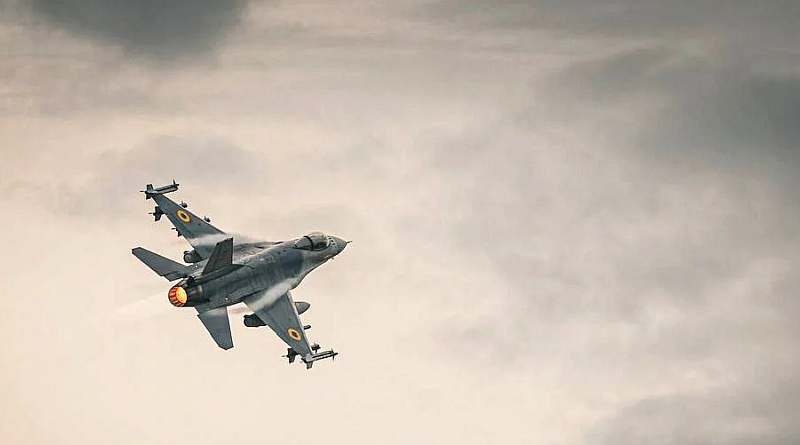
Therefore, the combination of interceptor drones, mobile fire groups, helicopters, An-28, old anti-aircraft missile systems, and F-16s successfully grinds down loitering munitions, while small ballistics and “Kinzhal” defenses are tightly linked to partners and their conveyors. The report confirms the high learning ability of Ukrainian units and the successful integration of Western systems with Soviet remnants into a unified layered network. The network withstood the peak loads of winter and early spring.
The Second Use of “Oreshnik”
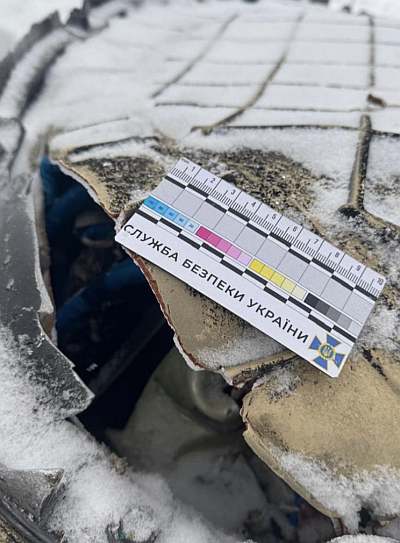
The report officially recorded the second historical combat use by Russia of the new medium-range ballistic missile “Oreshnik.” According to its authors, the strike was aimed at energy infrastructure in Lviv. Strangely, the actual target was the LDARZ (air repair plant), penetrating the roof and causing a quickly localized fire in the workshop—it’s unclear what energy infrastructure the auditors wrote about. But the essence is clear: their superweapon’s use yielded neither strategic nor tactical results.
Military-Technical and Economic Assistance
In the context of Trump and the USA cutting direct free aid (shifting to credit lines and ‘only if the EU pays’ format), European NATO allies sharply increased their direct military contributions. The European defense industry (especially joint cross-border defense enterprises) is beginning to realistically compensate for American shortfalls. Essentially, one Czech initiative plus the EU conveyor already amounts to several million shells. The report states that Ukraine is gradually transitioning from the status of a ‘pure recipient’ of Western aid to a format of technological partner, especially in the field of unmanned systems and electronic warfare.
Audit and Control
The traditional block of American inspectors involves strict control over the use of allocated weapons. There have been no detected cases of large-scale misuse or loss of Western high-tech weaponry; logistics chains under U.S. control operate stably. Thus, the logistics of the Armed Forces of Ukraine are completely transparent for donors. This completely undermines the main argument of isolationists in Congress who claimed that “weapons are going to the black market.” So, have Mexican cartels appeared with “Javelins” or not? Has the Russian Federation taken everything it wanted from the warehouses?
Advantage in Manpower and Mobilization Rates
Despite colossal losses, which NATO estimates at 20-25 thousand killed per month (and this is far from all), the Kremlin manages to fully compensate for them by enlisting new “volunteers,” convicts, and mercenaries. Astronomical signing bonuses and regional allowances in Russia still work as an effective pump for extracting cannon fodder from depressed regions. This means that the absolute priority of targets is the Kremlin’s pockets. The economy will be affected, contracts will immediately crumble.
Inspectors directly contrast Russian recruitment rates with Ukrainian mobilization problems. The report notes that the Ukrainian mobilization resource has been exhausted by years of war, and forced methods of enlistment cause internal social tension, creating a power imbalance in favor of the Russian Federation in manpower at the line of contact.

There are no simple solutions here anymore – a salary of 30 thousand outside the combat sector will be accepted by society only when florists in civilian life already have 40. Preferential mortgages, various medical insurances for the family, and other benefits are needed, but without mobilization and further tightening of the screws, it won’t work. No 50,000 NRCs (ground drones) will cover an active front of 1000 km – live infantry is always needed.
Shell Shortage and Artillery Imbalance
Despite the fact that the European military-industrial complex has accelerated and Germany is producing more shells than the USA, Russia still maintains artillery superiority in key front areas (in the Pokrovsk and Zaporizhzhia directions). This is understandable: the absence of a wild disparity of ten to two in their favor across the entire front does not mean they cannot locally accumulate more ammunition in a specific breakthrough sector.
The Kremlin has managed to balance its own production deficit through million-dollar supplies of artillery ammunition from North Korea and stable imports of powders and nitrocellulose from China via complex logistical chains in Central Asia.
Dominance in Guided Bombs and Heavy Aviation
The report emphasizes that the Russian Air Force continues to hold an absolute advantage in the use of modernized guided bombs and free-fall bombs with extended range equipment. Russian tactical aviation has learned to drop bombs beyond the range of most Ukrainian medium-range air defense systems. They target unmanned systems forces by striking pilots and navigation antennas, moving closer to the launch zones to prevent takeoff, laying mines on approach routes to airfields, disrupting logistics (guidance heads, batteries, fuel and spare parts), and infiltrating through communication networks.
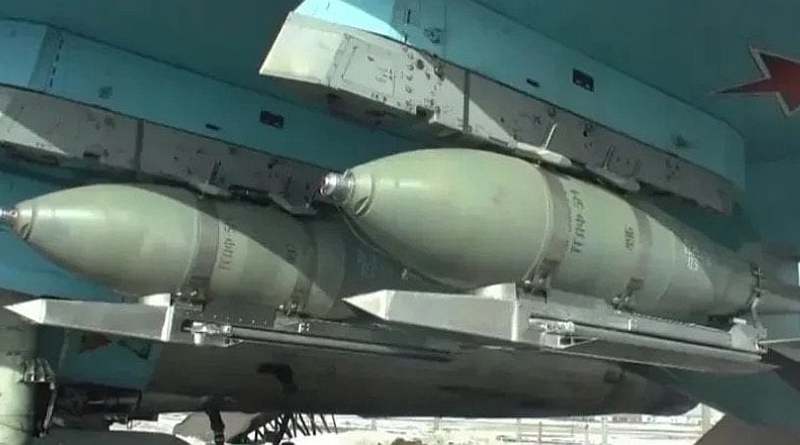
Guided bombs remain the main tool for Russians to obliterate Ukrainian fortified areas. Without saturating the frontline zones with long-range air defense systems like Patriot/SAMP-T and Western-style aircraft, countering this advantage is extremely difficult, allowing Russian forces to make incremental tactical advances in the East. We are acquiring Swedish Gripens and modern French Mirages to keep iron casters away from the frontlines. However, it will not operate as a single system quickly, even if the first Swedes arrive this year. Operating within a squadron against individual bombers with fighter cover, in heavy electronic warfare environments, amid obstacles and enemy air defenses, is very challenging.
Adaptation of the Military-Industrial Complex and Resilience of the Military Machine
American analysts state: Russian industry has fully adapted to the conditions of a prolonged war. Factories are operating in three shifts. Despite sanctions, Russia has managed to establish mass licensed and makeshift production of analogs of Western chips and boards, or successfully purchases them through gray intermediaries.
The Russians are showing a high speed of restoration of Soviet armored vehicles from storage bases. These are not new tanks, but their quantity allows maintaining a high intensity of assaults, turning the war into an industrial grinding of resources. Although the end of their storage bases is near, they will have another chance to try to press with the mass of armored vehicles (albeit outdated), not just “mopeds” and Chinese quad bikes.
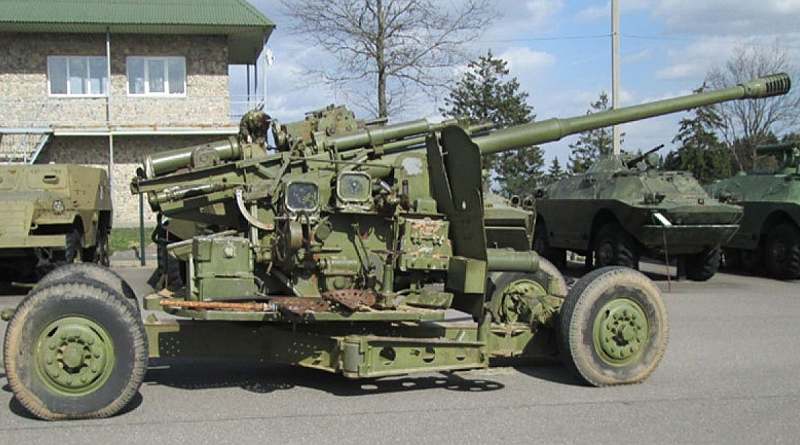
The report paints a very clear and harsh reality. Yes, it is objectively difficult at the front: Russia has a huge mass of infantry, CABs with UMPK, and enough restored equipment for at least one more major strategic offensive. But at a global strategic level, Ukraine has achieved full transparency in arms supplies, forced Europe to accelerate and launch its own military factories, and most importantly, secured the Europeans’ readiness to send their troops as guarantors of our security in the future.
These are markers that institutionally the West has made an unconditional bet on our survival and integration, and no one is going to roll back this process. But, as always, everything will ultimately be decided on the ground.
