
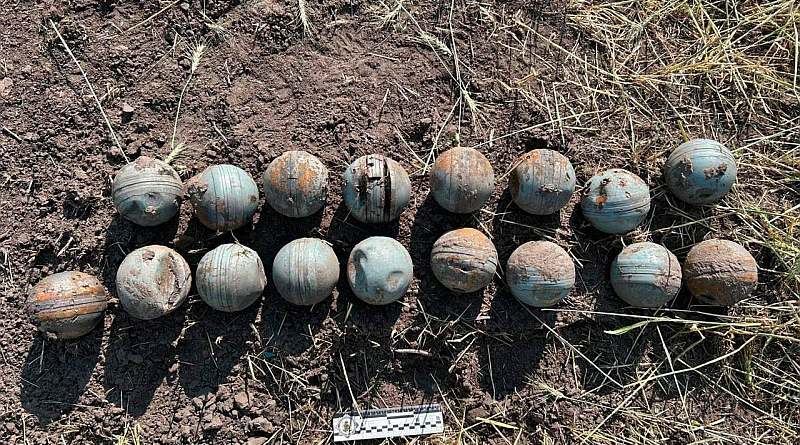
Alexander Kovalenko / Obozrevatel
During massive missile strikes on Ukraine, Russian occupiers repeatedly used cluster munitions. Most often, these were ballistic 9M729 and cruise X-101 missiles. Recently, there is also a noted use of Shahed-136 kamikaze drones with containers that release cluster-type submunitions during flight. What goals does the enemy pursue with such actions, what threat does this pose, and how should one act upon discovering these “surprises”? Let’s figure it out.
But first, we should answer the question: for what purposes are cluster munitions used and what tasks do they perform?
They are primarily intended not for precise, high-precision tasks, but for rough area strikes. In certain cases, cluster munitions are extremely effective against large concentrations of enemy personnel or equipment, but they are not suitable for effective high-precision targeting of single targets.
During Soviet times, cluster warheads became the most popular for multiple rocket launcher systems (MRLS), as the technological backwardness of the Soviet military-industrial complex did not ensure high-precision targeting of single targets with fragmentation shells. Meanwhile, Western counterparts exhibited significantly higher precision, as evidenced by the example of the M142 HIMARS MRLS, renowned for its precise target strikes.
Regarding high-tech issues, it should be noted that cluster warheads for rocket projectiles, which gained monopoly popularity in the USSR, did not become popular for barrel artillery, whereas NATO countries smoothly operated 155-mm cluster shells. This was due to the complexity of manufacturing such shells in the USSR, linked to the technological backwardness of production lines, while Western countries could produce them without significant energy expenditure.
Thus, the popularity of cluster warheads in the USSR, and later in Russia, was a consequence of outdated technological processes and the lack of ability to meet minimal accuracy requirements for target strikes.
Russian forces literally started using cluster munitions against Ukrainian cities from the very first days of their full-scale invasion.
Initially, these were rocket projectiles for the Soviet BM-21 “Grad” MRLS family – 9M28K, BM-30 “Smerch” – 9M55K, and BM-27 “Uragan” – 9M27K. However, after some time, cluster ballistic missiles 9M723 and cruise X-101 were also employed. Furthermore, they were used not only under field conditions along the line of contact but also when striking Ukrainian cities.
International Factor
Overall, many countries around the world have rejected the use of cluster munitions due to the high risk of collateral damage to civilians not only during their use but also afterwards.
The issue is that submunitions dispersed from warhead containers do not always detonate and can remain in the ground for years until someone steps on them or a vehicle runs over them.
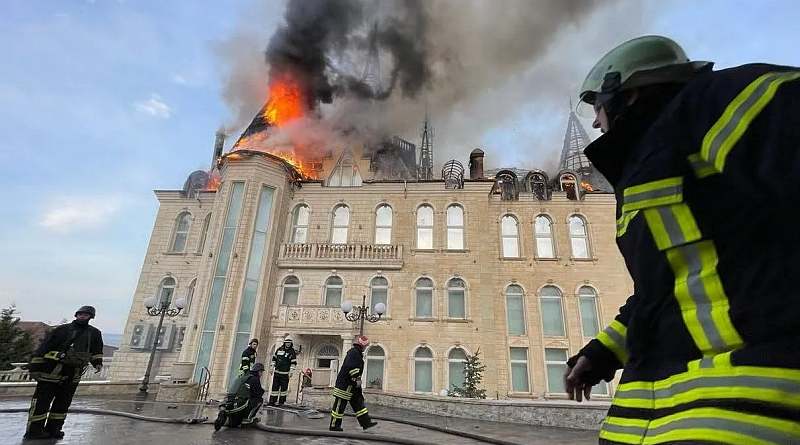
For this reason, the use of cluster munitions is prohibited in cities and densely populated areas.
Specifically, according to Protocol I to the Geneva Conventions of 1977, the use of cluster munitions is prohibited:
Article 48 – according to the principle of distinction between civilian and military targets;
Article 51 section 4 – prohibition of indiscriminate attacks not directed at specific military targets;
Article 51 section 5-b – attacks with clearly excessive harm to civilians are prohibited;
Article 57 – obliges compliance with precautions in planning and conducting attacks.
Therefore, the use of cluster munitions in cities or densely populated areas can often be classified as a violation of international humanitarian law, even if a country is not a signatory to the main international act explicitly banning such munitions. Specifically, the 2008 Convention on Cluster Munitions (CCM).
Notably, Russia, Ukraine, the USA, China, India, Israel, and several other countries are not participants in the CCM, but this does not absolve them from responsibility for non-compliance with the Geneva Convention.
For its part, Russia has constantly violated and continues to violate all international acts.
Cluster Means of Terror
Russian occupying forces regularly use 9M723 ballistic missiles (“Iskander-M”) with cluster warheads and X-101 cruise missiles on Ukrainian cities and villages. This results in a large number of deadly submunitions scattering over a wide area during an attack, catalyzing fires, destruction—and it poses a direct threat to human life.
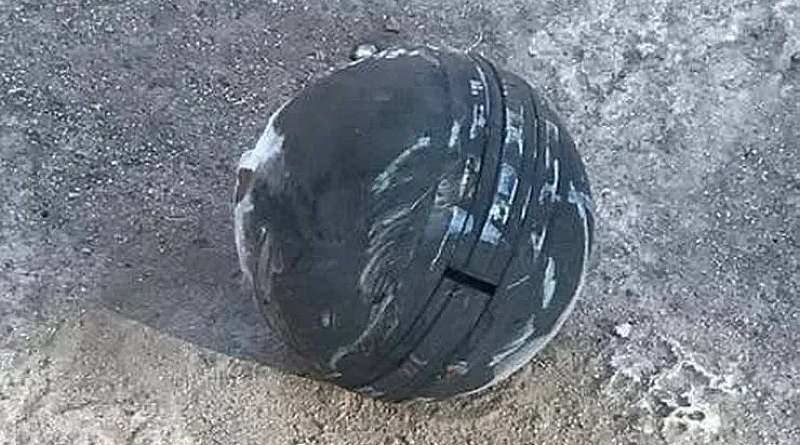
For example, the cluster warhead of the 9M723 ballistic missile consists of 54 submunitions weighing 7.5 kg each, containing 1.5 kg of an explosive mixture based on A-IX-2 (RDX, aluminum, etc.). The dispersion area of these submunitions, depending on the height and angle of the warhead’s opening, can be up to 25 hectares!
The use of such a means of destruction in densely populated cities, regularly conducted by Russia, is not a high-precision targeting but indiscriminate terror, aimed at causing as much destruction as possible to the civilian sector, sowing terror and panic.
Rockets with cluster warheads cannot cause catastrophic destruction to fortified structures, especially of the bunker type, but present a direct threat to the civilian population.
This is what Russia is betting on, while expanding the use of these means of indiscriminate terror with the help of kamikaze drones.
Cluster Shahed-136
The Russian occupiers have repeatedly tried to scale up terror against the civilian population of Ukraine by transforming the Shahed-136 into ersatz bombers.
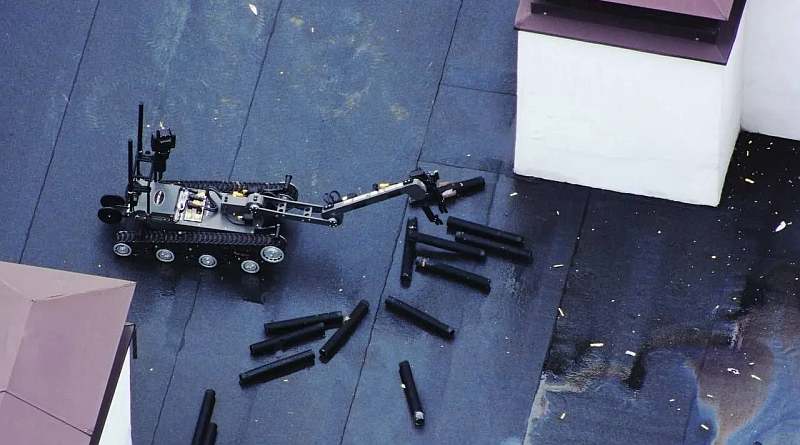
In particular, they installed PTM-3 anti-tank mines on them, which were dropped during the flyover of kamikaze drones along roads and above cities. These mines are dangerous because they have a non-contact magnetic detonator that reacts to metal. If a vehicle, armored equipment, or even a person carrying metal objects weighing more than 50 grams approaches the mine, it automatically detonates.
After a massive combined raid on Ukraine on May 13-14, dropped cluster munitions from Shahed-136 were discovered in several cities and regions, and containers, often already emptied, were found on the downed kamikaze drones, indicating that they had been released.
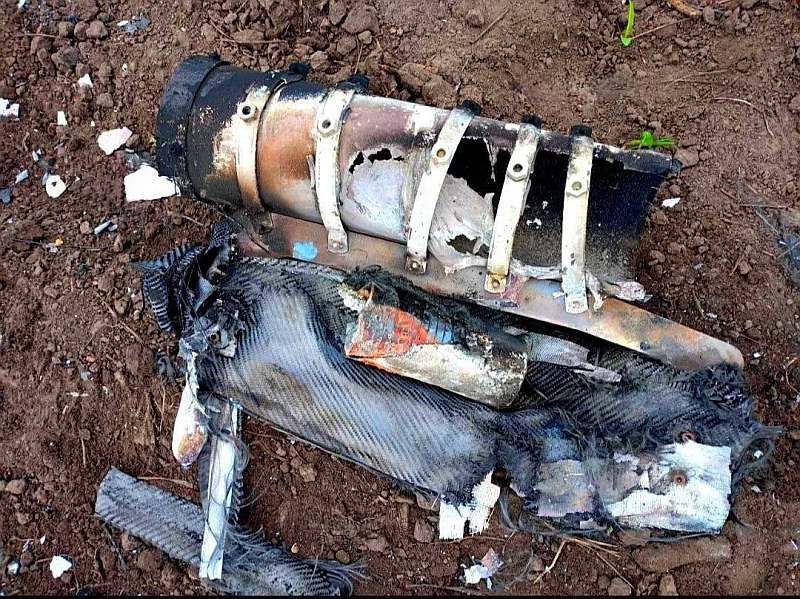
Thus, the enemy is trying to scale terror against the civilian population, using all possible tools to take the genocide of Ukrainians to a completely different level.
Precautionary Measures
I won’t be original if I say a well-known truth – the best precaution is to “parachute” away from potential danger and unfamiliar objects scattered on the street.
It should be a cardinal rule not to approach places where missiles or drones have been shot down. Even if this means of terror is downed, it does not mean it is no longer dangerous.
Any means of destruction, whether it’s a missile or a kamikaze drone, even after being shot down and falling, may have an unexploded warhead that can detonate at any moment.
Furthermore, as mentioned earlier, Shahed-136 may carry PTM-3 mines on them, which can react to the approach of a person.
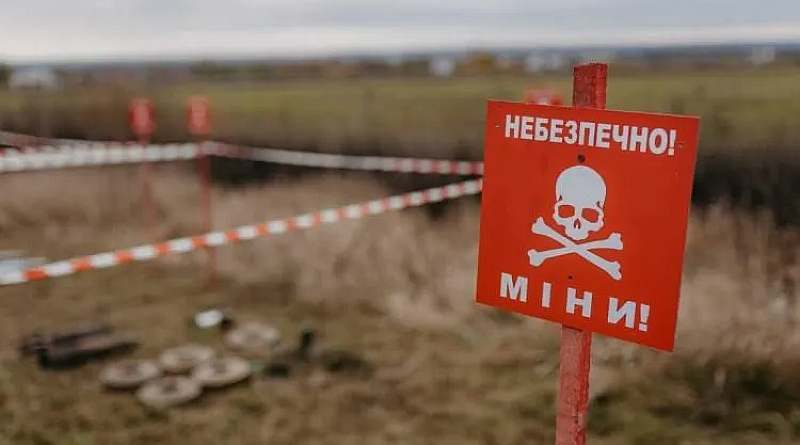
Therefore, the classic but unchanged safety measures have been, are, and will remain:
– do not approach or touch suspicious, unfamiliar objects;
– if such objects are found, immediately report them to the police or the State Emergency Service;
– under no circumstances try to neutralize unfamiliar objects;
– warn children about the danger of unknown objects;
– avoid open spaces immediately after massive raids and watch your step.
Following these measures, as well as understanding the enemy’s treachery, will help save many lives and health.
Unfortunately, we live in a time when vigilance and responsibility for our lives and the lives of our loved ones must become the highest priority.
The material is published as part of a joint project between OBOZ.UA and the group “Information Resistance”.
On the cover: cluster munitions. Photo: National Police of Ukraine
