

I remembered how in January 2022, Americans came to our office. They spoke almost without diplomatic niceties: a big war is coming. And they added a strange but very telling phrase:
“We understand that you are in the opposition, but you have experience. Explain to your authorities that they need to prepare because they aren’t listening.”
After this, I spoke with several people in power. I literally shouted about obvious things: we need to strengthen borders, dig trenches, prepare for the evacuation of people.
The response I heard was:
— Stop, nothing will happen.
I asked:
— Where does this confidence come from?
And the answer was roughly:
— Because Yermak said so. And he is in direct contact with Kozak.
I remembered this moment very well.
Because it wasn’t even a political mistake. It was the psychology of power, which believed more in the Russian interlocutor than in Western partners. Trusted more in the behind-the-scenes “channel” than the reality the whole world was already seeing.
At that time, Andriy Yermak was the main person in the negotiation track with the Russians. His Russian counterpart was Dmitry Kozak. And somehow, the very presence of this contact seemed to many in power as a guarantee of security.
Today, looking at the almost empty bench of support for the once all-powerful head of the President’s Office, I’m thinking not only about him.
I’m thinking about the phenomenon of favorites.
Yermak was a classic favorite. Without an electoral mandate, his own public legitimacy, or a party. Without a political biography accountable to the people in the elections. But with colossal power.
He was associated with staffing decisions. Consider just the meteoric career of his favorite Yulia Svyrydenko, his associate Oleksiy Kuleba, and other government careers, appointments in the President’s Office, political deals, influence on parliament, law enforcement, diplomacy, media.
Around him, a system of personal loyalty was built over the years. And now this system has shown its true nature.
When a favorite is strong — many people are around him. When the favorite falls — everyone suddenly remembers that they were just passing by.
Because politics is really made not by favorites or “5-6 managers.” Politics is made by teams, values, institutions, and responsibility.
Favorites do something else: they build a vertical of fear and personal dependence. And are very surprised when in a critical moment, this vertical turns out to be not a fortress but a decoration made of sand.
This is a lesson not only for Yermak.
This is a lesson for everyone in Ukraine who again and again tries to build absolute power. To appoint “their own” everywhere. To push out all inconvenient ones. To turn the state into a system of personal phone calls. And Veronica Feng-Shui’s recommendations…
In Ukraine, this can work for a long time. And then—it falls apart in one day. Because power without institutions is not a state. It’s a supermarket without a cashier, where everyone takes from the shelves for a long time, only to suddenly find out that they still have to pay at the exit. Therefore, you should think about the cashier at the exit already at the entrance.
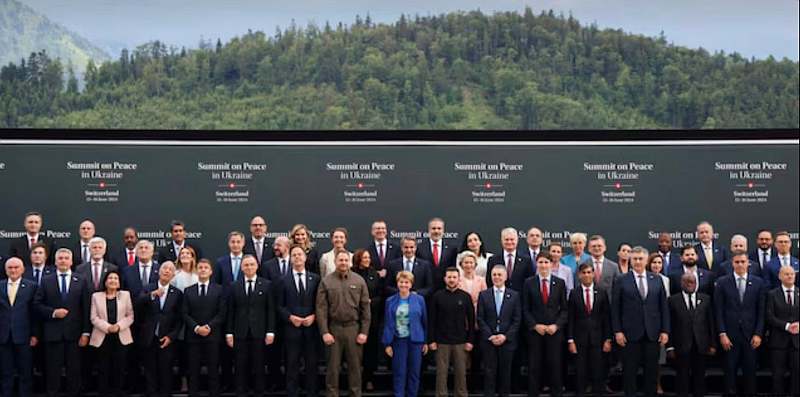
P. S. Was: how unelected Yermak was at the center among world leaders at the Peace Summit in Switzerland.
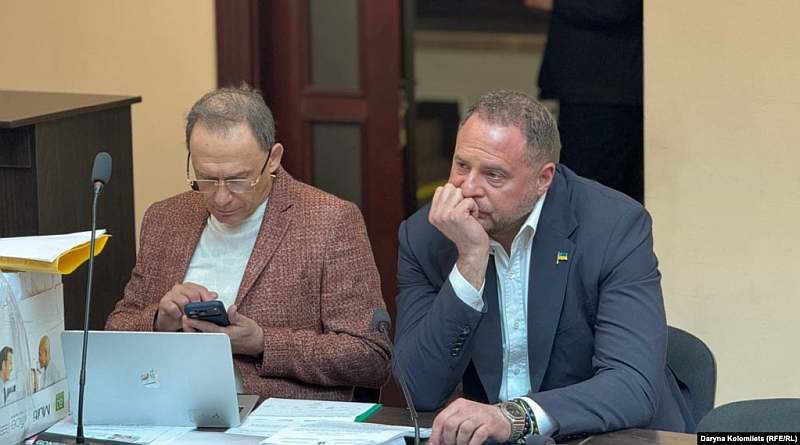
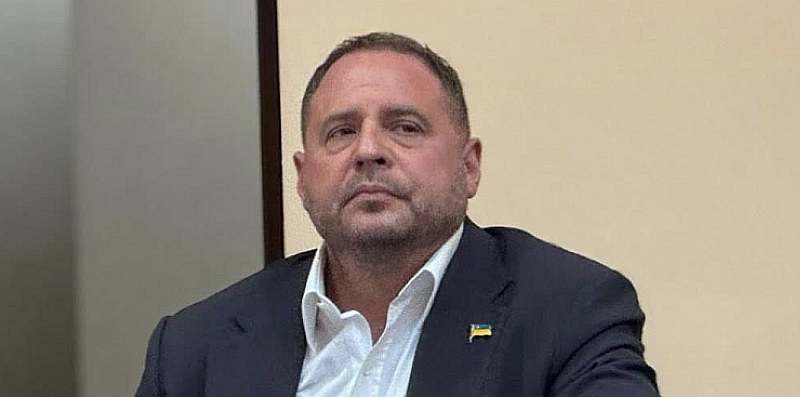
Became: how he’s all alone, and an empty bench of support in the higher anti-corruption court.
Between these two photos lies the entire moral of the story of the favorite in Ukrainian politics…
 |
 |
* * *
Today, Ukraine passed an important European test.
Not the one where you have to say the right words about reforms. But a real one, when during the war, political turbulence, and the case concerning one of the most influential people in the country, institutions still work.
The anti-corruption court decision regarding Yermak is not yet the end or a verdict, but a signal.
For Ukrainians—that justice exists, and it can catch up even with those who long considered themselves nothing less than the locomotive of history.
For Brussels—that Ukraine is capable of overcoming crises not only through revolutions but also through legal institutional mechanisms.
And for all the European skeptics who today are considering whether to “detach” Ukraine from Moldova in the Euro-integration process, it is worth taking a close look at this case.
The main thing now is not to stop.
The next test is the reform of the State Bureau of Investigations. And as Ukrainian history shows, it will happen too. Sooner rather than later. Because Ukrainians definitely deserve to be in the EU.
And they will be. Because Ukraine is once again proving that it’s too early to categorize us as “problematic assets” of Europe. We are rather its most challenging yet promising investment.
Photo: Radio Liberty
Copyright © 2020 RFE/RL, Inc. Reprinted with permission from Crimea.Realities (Radio Free Europe / Radio Liberty)
