

Information on current Russian losses due to sanctions as of 13.05.2026.
1. Strikes on Russia’s energy infrastructure have caused fires at Gazprom and Transneft facilities.
– On May 13, new incidents were recorded at fuel and energy facilities in Russia following attacks by Ukrainian drones.
– Notably, a gas processing plant near Astrakhan, owned by Gazprom, caught fire. This is not the first strike on the enterprise: previous attacks forced it to partially halt production, directly affecting fuel output.
– Simultaneously, one of the key oil transport stations in Bashkortostan, “Nurlino,” part of the Transneft system, ignited. The station is a critically important hub for oil pumping in the Ural direction.
– The series of strikes on Russia’s oil and gas infrastructure is having a systemic effect. Damage to refineries, gas processing plants, and logistics hubs is already leading to reduced processing, fuel supply disruptions, and increased emergency repair costs.
2. The seventh refinery in Russia shut down after drone strikes.
– The systematic disabling of oil refining infrastructure continues in Russia. After a UAV strike on May 7, one of the country’s largest plants, “Permnefteorgsintez,” part of the Lukoil structure, completely ceased operations.
– The enterprise, which processes over 12 million tons of oil per year, was forced to emergency halt key primary processing units. Some capacities have been non-operational since the end of April following a previous attack, indicating the cumulative effect of the strikes and the inability to quickly restore production. “PermNOS” has become the seventh refinery to cease operations since the beginning of spring.
– Previously, several large enterprises, including Rosneft assets in Syzran, Novokuibyshevsk, Tuapse, and other plants in different regions, had already stopped or significantly limited operations.
– The consequences already have a macroeconomic dimension. The total volume of oil refining in Russia has fallen to its lowest since 2009 – about 4.7 million barrels per day. This means not only reduced fuel production but also a loss of export revenue and additional pressure on the budget.
– Strikes on refineries are destroying one of the key segments of the Russian economy – refining, which provides a significant portion of added value in the oil and gas sector.
– Unlike extraction, restoring such facilities requires more time, investment, and technology, access to which is restricted by sanctions.
3. The Russian oil industry is entering a phase of prolonged decline.
– According to Russia’s Ministry of Economic Development forecast, oil production in 2026 will decrease to 511 million tonnes, the lowest level since 2009.
– The reduction occurs despite OPEC+ quotas, which formally allowed Russia to pump more. This directly points to internal industry problems: declining profitability, sanctions pressure, and investment deficit.
– Oil companies reduced drilling after financial results fell and shifted to saving, which is already leading to a decline in production and will continue to exert pressure in the coming quarters.
– Stabilization requires investments in complex fields with a cost of $35–40+ per barrel, but due to sanctions and capital shortage, the industry and the state lack sufficient resources for such investments.
– A “trap” is forming: without investments, production falls, and due to declining revenues, there are no resources for investments. This leads to a gradual yet steady weakening of the oil sector — a key part of the economy.
4. Rosneft’s Tuapse Refinery loses positions in the export market after a series of infrastructure strikes.
– By the end of 2025, the plant was among the top five largest export terminals for oil products in Russia, accounting for about 8% of maritime export processing. The shipment volume was then estimated at 4.7 billion euros.
– However, after intensified drone attacks, the situation changed dramatically. In the first four months of 2026, exports from Tuapse plummeted by 65% year-on-year.
– This is a striking example of how damage to individual infrastructure nodes quickly translates into foreign exchange earnings losses. In conditions where oil products are a critical source of income, such declines directly impact export potential and increase pressure on the budget.
5. Russian oil exports through Black Sea ports show instability, directly impacting foreign currency revenues.
– From May 4 to 10, only one oil tanker left Novorossiysk. Satellite images captured nearly empty berths for several days. Likely reasons include the threat of UAV attacks and weather restrictions that forced loading to stop.
– As a result, total maritime exports significantly decreased: 21.94 million barrels were shipped over the week, compared to 26.88 million the previous week. Average daily supplies fell from 3.84 million to 3.13 million barrels.
– The financial effect was immediate. Oil export revenues for the same period fell to $1.98 billion — a six-week minimum and $640 million less than the previous week.
– This is another signal that even short-term disruptions at key ports quickly translate into revenue losses.
– Given the budget’s dependence on energy exports, such fluctuations enhance Russia’s financial instability.
6. Internet shutdowns in Russia triggered a record outflow of money from banks.
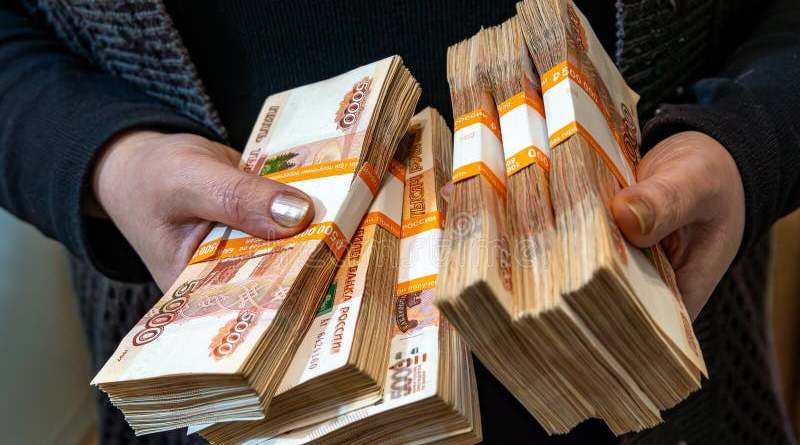
– In Russia, there has been an intensified outflow of funds from the banking system: during the May holidays, the public withdrew a record 210 billion rubles in cash.
– The cause was mass mobile internet shutdowns employed by the authorities to ensure military operations. The amount of cash “in hand” increased fivefold compared to the same period last year.
– The current figure is the highest for the May holidays since at least 2011. The trend is systemic. The outflow into cash has been ongoing for several consecutive months: in April, it exceeded 600 billion rubles, and in March — 300 billion.
– Overall, during regular internet restrictions, the banking system lost more than 2.7 trillion rubles of liquidity.
– Communication disruptions make normal banking services and payments impossible, forcing the population to switch to cash as a more reliable tool in conditions of instability. The Russian authorities themselves provoke financial destabilization: attempts to control the information space and ensure the security of military activities result in undermining the banking system.
– The increase in the share of cash reduces economic transparency, enhances the shadow economy, and complicates monetary regulation.
7. The Russian authorities are setting significant increases in housing and utility tariffs.
– According to the updated macro forecast, by the end of 2029, utility payments will grow by 35.7%. By 2026, the increase will be 9.9%, followed by 8.7% in 2027, 7.1% in 2028, and 6.1% in 2029.
– Electricity will become the most expensive: network company tariffs will increase by approximately 57% over four years. Gas for the population, which has already significantly risen in price since the start of the war, will additionally increase by almost 37%, with the total rise since the beginning of the invasion approaching 87%.
– Effectively, the costs of the state and the energy sector are being transferred to the population amid a growing budget deficit and military expenditures.
– Considering that housing and utility expenses already occupy a significant portion of family budgets, the new wave of increases will inevitably reduce purchasing power and spur inflation.
8. One of the world’s largest analytical companies is leaving the Russian market due to sanctions and restrictions.
– American Nielsen plans to sell its business in Russia. This concerns the division that specializes in consumer market research and analytics of everyday goods segments.
– The company has been operating in Russia since the 1990s. The key reason for its exit is the tightening of state control. Since March 2026, it is effectively prohibited in Russia to commission product market studies from companies with more than 20% foreign participation and significant revenue.
– Additionally, there is a requirement to store all data exclusively within the country. Under such conditions, operations for international players become virtually impossible.
– Nielsen’s exit means not only the loss of another foreign investor but also the degradation of market data quality.
9. Finland restricts medical exports to Russia due to risks of military use.
– Finland is preparing to tighten restrictions on the supply of medical and pharmaceutical goods to Russia, further reducing the country’s access to critically important technologies and equipment.
– The Finnish Ministry of Foreign Affairs has drafted a regulation that may effectively halt the issuance of special permits for exporting certain medical goods starting in July. The decision is linked to suspicions that such products are ultimately used for the needs of the Russian army.
– This involves closing one of the few channels that allowed bypassing EU sanctions through exceptions for “humanitarian or medical reasons.”
– Specifically, restrictions may affect dental equipment and certain medical technologies. Although some supplies will formally remain, the overall trend is clear: even humanitarian exceptions are gradually narrowing.
– Individual companies, such as Lojer-Merivaara, continued supplies to Russia even after the start of the full-scale war. At the same time, they acknowledge that they cannot control the end use of the products, including possible treatment of military personnel.
– The tightening of restrictions by Finland demonstrates growing distrust toward any channels of interaction with Russia.
