
In 2023, China imposed export restrictions on germanium — a critical material for the core of fiber optics and thermal imaging lenses. A single document from the Ministry of Commerce of the PRC suddenly created a problem for manufacturers from San Diego to Hamburg.
In the past two years, this scenario has repeated with rare earths, graphite, gallium, antimony. It’s not a coincidence or just trade disputes — it’s a reminder of how critically dependent the modern tech industry is on Chinese materials and components.
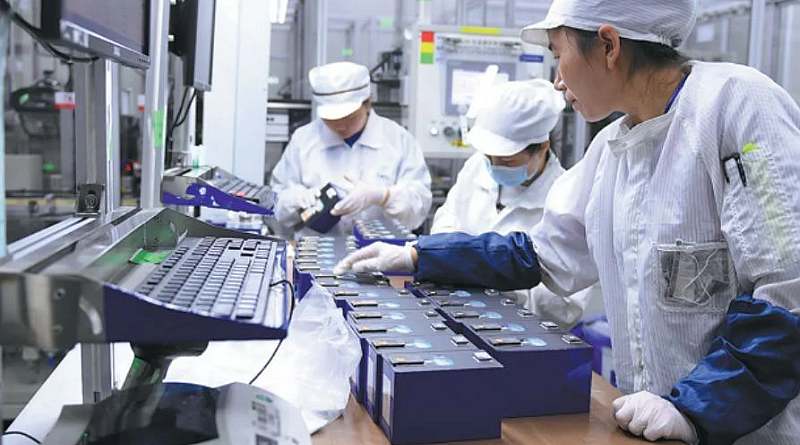
The numbers showing global market dependence on Chinese drones are even more telling. About 92% of global production of NdFeB magnets for electric motors is based in China. Nearly half of lithium-ion battery cells are produced by three Chinese companies. About 60% of printed circuit boards, over 75% of flight controllers for UAVs, dominance in the market for FPV motors, ESCs, video transmitters, thermal imaging cameras — all are largely linked to Chinese manufacturing. Even drones designed and assembled in the USA or Europe often critically depend on China’s component base.
This reality is what the Pentagon tried to address systematically. It released a document titled Drone Dominance Program Supply Chain Framework (DDPSCF). At first glance, a technical document for suppliers. In reality, it’s a strategic declaration outlining the rules of the global drone industry for the next decade.
The key idea of the document is not that the USA bans Chinese components. The NDAA (the annual US defense law) has been doing that since 2019. The new aspect is the Drone Dominance Program (DDP), a large-scale Pentagon program for the development and procurement of drones, consciously getting ahead of the law and setting standards for the future before formal regulations require it.
Why the Pentagon is in a hurry
The Drone Dominance Program is not just an industrial policy. It’s an American attempt to adapt to the reality of modern warfare, rewritten by Ukrainian experience from 2022–2026.
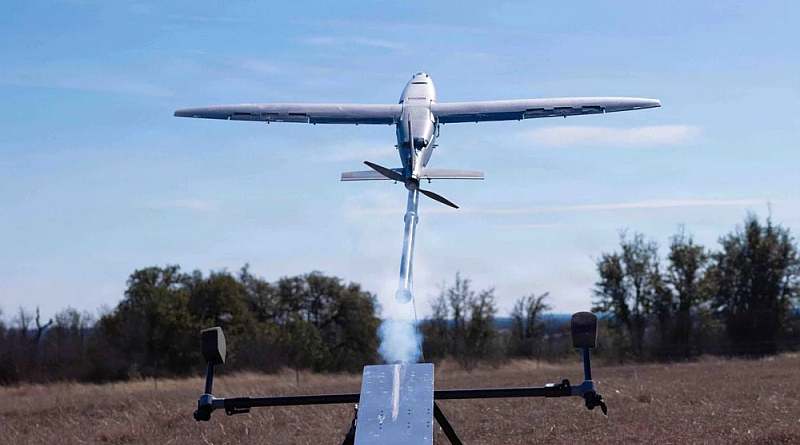
This reality shatters old American perceptions of armament. It turns out that a multimillion-dollar interceptor missile against a drone costing tens of thousands is not advantageous for the West. The defense market, built around expensive platforms and decade-long procurement cycles, is not keeping pace with a war where quantities are measured in millions per year.
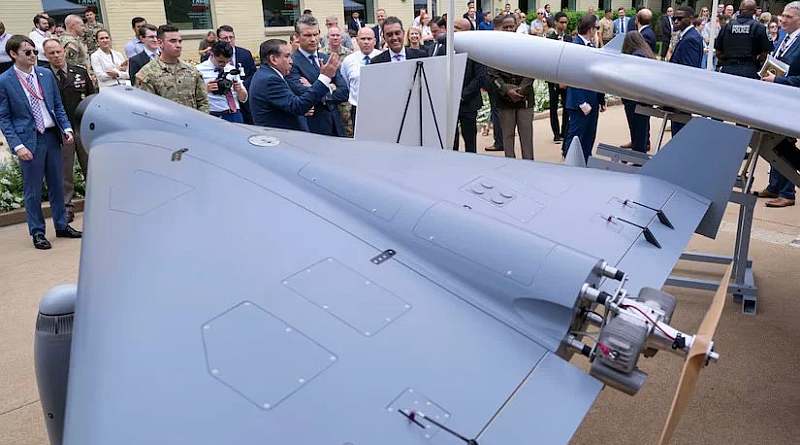
DDP is an attempt to readjust. $1.1 billion in guaranteed purchases of over 200,000 attack small drones, clear deadlines, specific requirements for each component. The program is designed so that for the US, quantity, unit price, and production pace become more important than the elegance of the technical solution.
DDPSCF is the manual for executing this program: which components, from which source and when should be in the drone, so that the manufacturer can qualify for participation.
Where exactly DDP is stricter than NDAA
DDPSCF does not duplicate NDAA. In several critically important areas, it is stricter—and the Pentagon itself calls it acceleration beyond statutory requirements. A few examples.
Engines. NDAA does not prohibit Chinese engines in drones of Group 1 sUAS class. DDP requires that all engine assembly occur in an “uncovered” country (i.e., not in China, Russia, North Korea, or Iran) from August 2026. And not just assembly: the metals for the engines must be smelted in the USA or in one of the 28 countries from the list of qualifying countries (Ukraine is not among them yet). Magnets—in an “uncovered” country; Chinese raw materials for smelting are temporarily allowed but only until 2027.
Batteries. Existing standards work in stages and through percentage thresholds. DDP requires 100% assembly of battery packs in an “uncovered” country from August 2026—17 months earlier than the law requires.
Firmware and source code. Software code repositories for almost all key modules: flight controllers, GNSS receivers, ESC, ground software, and battery management systems (BMS)—must be located in the USA, controlled by an American legal entity, and be available for audit upon request.
The same approach is used by DDP for printed circuit boards, semiconductors, and germanium. In many cases, new requirements take effect several months earlier than U.S. law stipulates. As for the germanium for fiber optics, DDP introduces restrictions where the law currently does not include any.
Why this is a fundamentally different tool
NDAA is regulation. Prohibition. Elimination of the bad. DDP is industrial policy. A guaranteed multi-year demand is consciously created to break the closed loop where any alternative “non-Chinese” component loses on price simply because it is produced in small volumes. This loop is not broken by prohibitions. It is broken by demand.
That is why DDP does not wait for the law to catch up with reality. What today seems like a requirement of a specific American program may turn into a broader standard for defense procurement in NATO countries and partner jurisdictions. In this sense, DDPSCF is one of the first attempts to describe how the West envisions the specification of a “clean” drone for the next decade.
Among the winners of the first phase of DDP is a Ukrainian-made drone from the company F-Drones. Ukrainian systems meet the level of supply-chain verification that the Pentagon has just set as a new standard. And this is a strong signal.
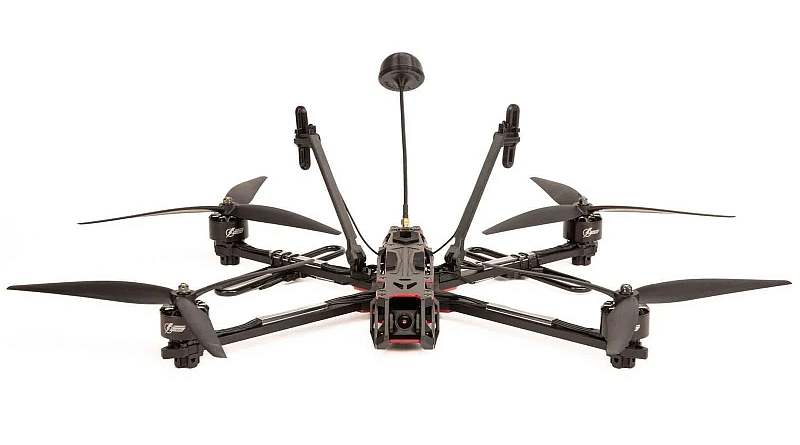
Ukrainian Export Turnaround
The American rationale is important also because it coincides with Ukraine’s shift toward arms exports. On April 28, Volodymyr Zelensky announced that the export of Ukrainian weapons will “become a reality,” with the key form being Drone Deals: interstate agreements with partners for the production, supply of drones and defense systems, technological exchange, and transfer of combat expertise. These formats are already working or being developed with countries in the Middle East, Europe, and the Caucasus. A separate proposal is on the table for American partners.
This is a change in perspective. The Ukrainian defense industry is ceasing to be merely a survival tool and is becoming part of international industrial policy.
If today’s announcements indeed simplify the export of defense products, Drone Deals can transform Ukraine’s combat experience and production capabilities into partnerships, joint production, and long-term presence in allies’ markets.
But there’s a strict requirement for ourselves. Exporting drones is no longer just about “selling a product.” It’s about selling trust: in the origin of components, firmware control, cybersecurity, and technology protection from leaks to Russia and China.
And what if tomorrow?
As we consider DDP as an American story, we should ask a question that directly concerns Ukraine. What will happen to our drone production if one day China introduces new export restrictions—not on germanium, but, for instance, on flight controllers, FPV motors, video transmitters, or thermal imaging components?
This is not an abstract scenario. China is gradually strengthening control over the export of certain technologies and dual-use components even today. Ukrainian manufacturers still buy through intermediaries, but “still buying” is not a strategy. It’s luck.
We are daily ramping up drone production, but simultaneously we must honestly address the question of our own supply chain resilience. Because if critical components become unavailable, quickly building alternative supply chains will be extremely difficult. That is why the US is now trying to create such mechanisms through DDP.
Therefore, the main question for Ukraine today is not “how to adapt to DDP.” That’s only part of the problem. The main question is “where is our version of NDAA or DDP?” What are we doing to ensure that in two to three years, the Ukrainian strike drone does not depend on external solutions?

Part of the answers is obvious
First — state policy of localization of components. Not just “screwdriver assembly” of UAVs, but the production of engines, circuits, antennas, optics, batteries, sensors, and software. For this, customs and VAT preferences, guaranteed orders, grants, and investments in R&D are needed. DDP effectively demonstrates how such a policy can work.
Second — component sovereignty as a separate state priority. Not the logic of “we’ll buy wherever possible,” but controlled, stable supply chains. This means auditing critical dependencies and a strategy for their gradual reduction.
Third — integration of Ukraine into allied production ecosystems: joint production, Drone Deals, participation in European defense industrial programs, and moving towards cooperation formats like the Reciprocal Defense Procurement Agreement with the USA.
The practical guide here is clear: the Ukrainian component must have a transparent origin and an understandable supply chain so that in the future it can be integrated into a DDP-compatible drone. This is about access to Western markets and a gradual reduction of critical dependence on the Chinese component base.
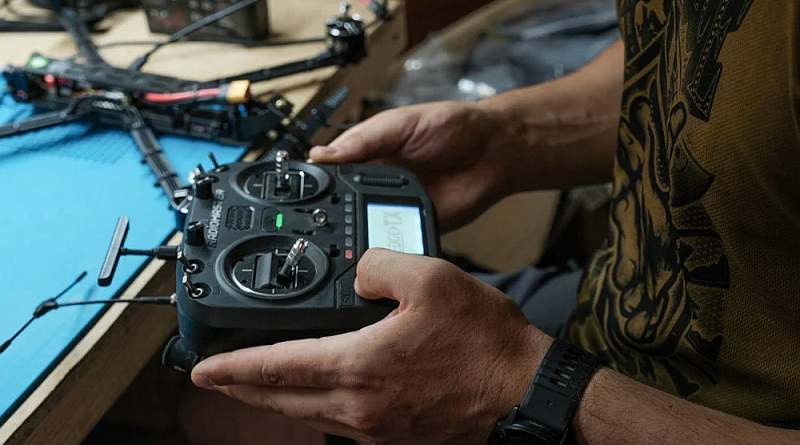
Ukraine’s Window of Opportunity
The world is seeking alternatives to China not in abstract speeches, but in specific components: engines, flight controllers, antennas, radio modules, battery packs, fiber optics, casings, electronics. And Ukraine is one of the few countries that has combat experience in the mass production and application of such systems.
If this experience is combined with a normal industrial policy, the Ukrainian defense tech industry could become for NATO what China has been for the civilian drone market for the past twenty years — a source of scalable, competitive, and technologically comprehensible components. But with a fundamental difference — components from an allied, not risky, ecosystem.
And finally
DDP is one of the West’s first attempts to describe what the defense drone industry could look like in the next decade. The US is largely experimenting on its own, trying to quickly adapt to the new logic of war and Ukrainian experience. But the direction is already clear: a controlled supply chain, component resilience, and technological trust are becoming as important as the drone’s characteristics themselves.
Ukraine is among the few countries that can enter this new system not only as a buyer or follower but as a co-developer of rules and practices. Especially if, following current public statements, the export of Ukrainian defense technologies is indeed opened and simplified.
The only question is whether we can build our own industrial framework in time: a policy that stimulates localization; standards that open Western markets; partnerships that allow building critical supply chains together with allies.
Because the window of opportunity for Ukraine truly exists now. But such windows rarely remain open for long.
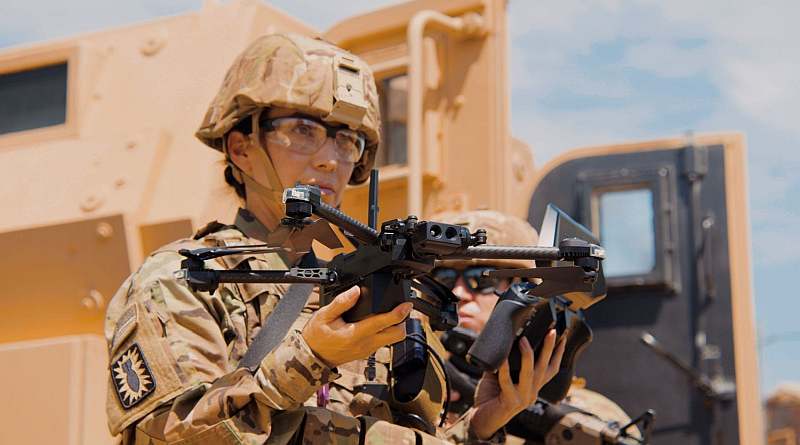
In the image: The American autonomous reconnaissance drone Skydio X2D, intended for defense, inspection, and security. Photo: Skydio
