

Information on current Russian losses due to sanctions as of 12.05.2026.
1. Russia is forced to lower expectations regarding economic growth.
– The Russian government revised its GDP growth forecast for 2026 from 1.3% to only 0.4%. This comes after the economy has already slipped into recession in the first quarter — the first time in the last three years. The key factors for the decline remain unchanged: sanctions pressure, supply chain disruptions, labor shortages, and an economic shift towards military spending.
– It is estimated that about a third of all budget expenditures are directed towards the war, displacing investments in civil sectors. Additionally, tough lending conditions constrain any recovery, and the imbalance between demand and supply in a “war economy” environment only exacerbates stagnation.
– Even a favorable external situation does not save the day. Although the conflict in the Middle East supports oil prices, the government is already laying out a cautious scenario with lower revenues: the forecast for Russian oil prices is left at $59 per barrel, and expectations of a stronger ruble also reduce export revenues.
– Ultimately, a stable picture is forming: the Russian economy is entering a phase of prolonged stagnation with minimal growth, where even short-term external factors cannot compensate for internal imbalances and war expenses.
2. The volume of overdue payments in the Russian economy is rapidly increasing and is already approaching 8.5 trillion rubles.
– This refers to overdue receivables — a situation where companies ship products or provide services but do not receive payment on time. The worst situation is observed in the manufacturing industry, particularly in oil products manufacturing — one of the key sectors of the Russian economy.
– Significant amounts of unpaid debts have also accumulated in the field of professional, scientific, and technical services (almost 630 billion rubles), energy (about 515 billion), and construction (approximately 485 billion).
– The increase in overdue payments is a systemic signal of the deterioration of the financial condition of businesses. Companies are losing liquidity, complicating the payment of salaries, servicing debts, and financing new projects. As a result, the chain of settlements between enterprises begins to break. This creates the risk of a domino effect: problems of individual companies quickly spread to related industries.
– Against this background, the Russian economy is increasingly approaching a prolonged recession, where the decrease in business activity is intensifying due to internal financial imbalances.
3. A gasoline shortage is beginning to form in Russia due to strikes on oil refining infrastructure and a decrease in production volumes.
– According to stock trading data, on May 8, fuel sales decreased by 5.9% to 32,640 tons. AI-92 supplies dropped the most (–8.9%), while demand for AI-95 continues to grow. Meanwhile, the volume of unmet solvent demand already exceeds supply: 23,460 tons for AI-92 and 26,340 tons for AI-95. This means the market is effectively entering a phase of structural deficit.
– This is occurring against the backdrop of refinery shutdowns and damage. In April and early May, after UAV attacks, at least six plants temporarily ceased operations, leading to a drop in oil processing to the lowest level since 2009 — about 4.69 million barrels per day.
– The situation is worsened by prolonged repairs: refinery recovery can take over a month, and fuel shipment times have already increased by 2–4 weeks. This deprives the market of the opportunity to build up reserves before the summer consumption peak.
– As a result, Russia is entering a season of increased demand with a deficit supply. This creates risks of price spikes in the domestic market, supply disruptions, and additional pressure on the economy, which is already facing the consequences of attacks on critical infrastructure and production cuts.
4. In April 2026, Russia’s dependence on the “shadow fleet” for oil exports increased.
– For crude oil, the situation looks critical: 69% of sea deliveries were made by sanctioned tankers. Another 23% were transported by vessels from G7+ jurisdictions, while only 8% came from other segments. In fact, most exports are conducted through risky and non-transparent channels. In the petroleum products segment, the picture is somewhat different but also indicative: here, carriers from G7+ countries dominate (67%), while the sanctioned fleet already controls 26% of transportation.
– This means a gradual displacement of legal operators and an increase in the role of sanction-evading schemes. In April, at least 47 ships with false flags were identified, and a third of them have been idle for over six months without work.
– This indicates an excess of the toxic fleet, which is difficult to integrate into stable logistics chains. At the same time, part of the ships serves several sanctioned destinations at once: at least eight tankers alternate transporting Russian and Iranian oil. Such cross-infrastructure increases risks for buyers and complicates control over the origin of raw materials.
– Despite the decrease in the number of detentions (from four in March to one in April), incidents like the case with the tanker Flora 1 in the Baltic Sea demonstrate environmental and legal risks. As a result, Russian oil exports are increasingly dependent on unstable, non-transparent, and potentially hazardous schemes, which increases long-term costs and vulnerability of the industry.
5. Discounts on Russian oil have started to rise again.
– The discount on Urals oil from Russian western ports has increased to $23.9 per barrel compared to the benchmark Brent for the first time since the escalation of the conflict in the Middle East.
– This means that even amid high global prices, Russian oil is being sold at a significant discount. Formally, higher oil prices should have supported Moscow’s revenues. However, the expansion of discounts negates this effect: the larger the discount, the less tax revenue the budget receives.
– For an economy where oil and gas revenues remain critically important, this creates additional pressure. The situation reflects a structural problem: Russia is forced to compensate for sanction risks and logistical constraints with discounts to retain buyers. Even the temporary increase in demand caused by the Middle East crisis has not changed this trend.
– Further complicating the situation is the uncertainty surrounding American exemptions for purchasing Russian oil, which are set to expire soon. This means demand could decline again, and discounts could expand further. The Russian oil sector finds itself in a trap: even with a favorable external environment, it cannot fully convert high prices into stable budget revenues.
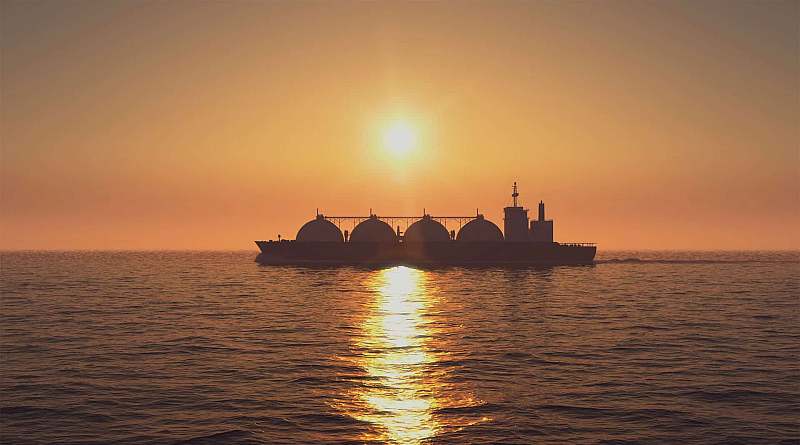
6. India has refused to purchase Russian LNG under U.S. sanctions, despite energy shortages.
– New Delhi’s decision has left the Kunpeng tanker with Russian gas, previously heading to an Indian terminal, in uncertainty. Specifically, this involves cargo from the sanctioned “Portova” project, which could not be unloaded, after which the vessel changed course and is now near Singapore without a defined destination.
– India has clearly indicated that it is not willing to risk violating sanctions, even considering its own energy needs. Unlike oil, LNG shipments are more difficult to conceal due to satellite monitoring, making such operations significantly riskier for importers.
– This decision highlights the limited ability of Russia to redirect LNG exports to alternative markets.
– Although Moscow is trying to promote long-term contracts with India, most available volumes are already contracted or directed to Europe, with China remaining a key buyer.
7. German intelligence services note the increasing use of organized crime by Russia for sabotage and targeted killings in Europe.
– This is reported by Der Spiegel with reference to the response of Germany’s Federal Ministry of the Interior to a request from the Green Party. The document notes that the Kremlin effectively controls the so-called Russian-Eurasian organized crime and may involve it in operations abroad.
– Such structures are forced to cooperate with the Russian security agencies in exchange for a tolerant attitude towards their activities within the country.
– According to German authorities, the use of criminal groups gives Moscow the opportunity to deny its involvement in attacks. At the same time, law enforcement has recorded a significant number of suspicious incidents that may be sabotage, but proving Russia’s direct involvement is often difficult due to the use of intermediaries.
– A new trend is separately noted, focused on involving so-called “low-level agents.” These are people without special training, recruited online to perform specific tasks.
– This reduces the cost of operations and makes them even harder to trace. The German side views these connections between Russian state structures and criminal networks as a serious security threat.
– This indicates the evolution of the Kremlin’s methods of influence — from classical special operations to more flexible and less formalized schemes using the criminal environment.
8. India and Russia have intensified negotiations on access to critical minerals.
– The parties are discussing a preliminary agreement that could cover exploration, processing, and technological cooperation in the field of lithium and rare earth elements. The document could be signed within the next two months.
– India is pursuing a pragmatic goal to reduce dependence on China, which dominates the global supply chains of critical minerals.
– Meanwhile, for Russia, such negotiations are an attempt to find new entry points into foreign markets and attract partners to projects complicated by sanctions and limited access to technology. However, the positions of the parties are unequal.
– India already has agreements with several countries, including Australia, Japan, and Argentina, and is merely diversifying risks. In contrast, Russia is increasingly reliant on a limited circle of partners and has to offer cooperation under high political and sanctions risks. An additional factor of uncertainty is the geography of potential projects.
– This includes the possible return of India to the Rosatom lithium project in Mali, which was previously frozen due to security concerns.
– This underscores that a significant part of Russia’s resource strategy is tied to unstable regions.
– Ultimately, even if the agreement is signed, it is unlikely to be a breakthrough: for India, it’s just one of the diversification avenues, while for Russia, it’s a forced attempt to remain in global supply chains.
