

Information on the current losses of Russia due to sanctions as of 10.05.2026.
1. The Caspian Sea is rapidly becoming a key logistical corridor for bypassing sanctions and supporting military cooperation between Russia and Iran.
– With traditional routes blocked, particularly through the Strait of Hormuz, this route is used for both commercial and military shipments.
– According to American officials, through the Caspian, Russia supplies Iran with drone components, helping to restore its strike capabilities after significant losses. At the same time, civilian cargo flow is also increasing.
– Iranian ports on the Caspian operate around the clock, receiving grain, feed, and other goods. Specifically, up to 2 million tons of Russian wheat, previously transported through the Black Sea, have now been redirected to this route due to the risk of attacks. The cargo turnover through the Caspian is expected to rise sharply, even doubling.
– Meanwhile, a significant portion of the shipments remains opaque: ships often turn off transponders, complicating monitoring. The key advantage of this route is its actual inaccessibility for control by the USA and its allies.
– Only the coastal states have access to the Caspian Sea, making it a convenient tool for circumventing sanctions and hidden logistics.
– As a result, an alternative trade infrastructure is forming, allowing Russia and Iran to partially offset Western pressure, but at the same time highlighting their growing isolation from global markets and dependence on opaque schemes.
2. Russia continues to expand its “shadow” fleet for exporting LNG, trying to bypass Western sanctions and maintain foreign currency earnings.
– The tanker “Mercury,” which recently changed its flag to Russian and came under the control of a little-known company, is likely loading gas from the sanctioned Arctic LNG 2 project.
– The vessel docked near the Saam floating storage facility near Murmansk, which is also under US sanctions. The scheme indicates a systematic attempt by Moscow to use opaque intermediary structures and old vessels to circumvent restrictions.
– Such tankers have the characteristic features of a “shadow” fleet: changes in ownership, re-registration under different jurisdictions, and limited public information.
– Meanwhile, Russia is attempting to reorient LNG supplies to Asia, offering it at a discount. This has become particularly relevant due to the reduction in global supplies following disruptions in logistics in the Strait of Hormuz, which has pushed prices up.
– The involvement of new tankers allows for partial compensation for losses from sanctions, which have already limited production at Arctic LNG 2. At the same time, such an export model increases operational risks, reliance on grey schemes, and reduces the margin of supplies.
3. Russian banks are increasingly integrating into the war economy and are effectively becoming a part of the recruitment system.
– Financial institutions offer military personnel and their families preferential loans, reduced rates, credit holidays, and even debt cancellation.
– Some banks directly use their platforms to attract volunteers, combining financial products with service propaganda. This model is supported by the state: part of the costs is compensated by the budget, but a significant share is borne by the banking sector itself.
– Estimates suggest that in 2024 alone, such programs cost banks 25–40 billion rubles. For now, this is not a critical burden, but it is growing along with the scale of the war.
– At the same time, systemic risks are accumulating. Sanctions have limited access to external financing, and the worsening economic situation is increasing the share of non-performing loans. Banks are forced to increase reserves for potential defaults, which pressures profitability.
– Despite this, a significant part of the sector remains outside sanctions, allowing operations with foreign partners to continue while serving military needs. This dual role highlights the banking system’s dependence on state policy and the war.
4. Japan is considering partially restoring contacts with Russia, despite the general sanctions regime.
– The government may send official representatives to Russia along with businesses by the end of May. The primary goal of the visit is to protect the assets of Japanese companies that are still operating in the Russian market.
– The Ministry of Trade directly states that the government maintains working contacts with Russia to minimize risks for these assets. This is not about political rapprochement but a pragmatic step in response to business losses under sanctions and restrictions.
– Some Japanese companies were unable to quickly exit Russia or sell assets without significant losses, forcing Tokyo to seek mechanisms for their protection.
– At the same time, such steps highlight the contradictory nature of the situation: even countries that support sanctions pressure are forced to interact with Russia to protect their own economic interests.
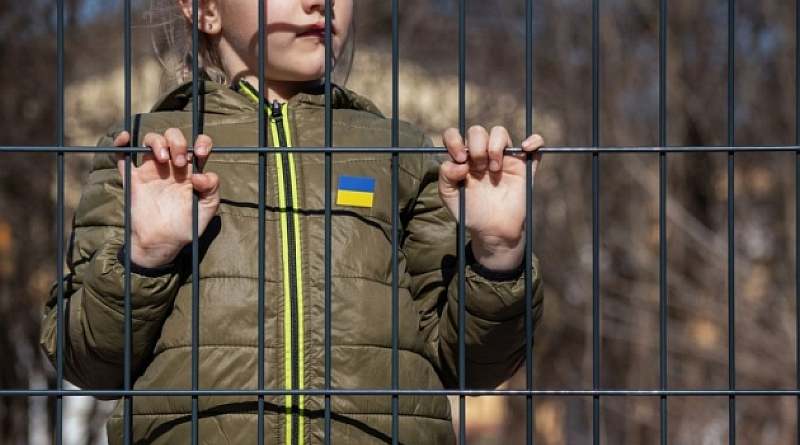
5. EU countries are preparing to increase sanctions pressure on Russia over the deportation of Ukrainian children.
– The European Union foreign ministers may soon implement new restrictions.
– The basis for this is the mass illegal removal of children from occupied territories: the Ukrainian side estimates the number of deported to be around 20,000. The EU explicitly views this as a distinct direction of sanction policy.
– It is expected that a decision will be made at a meeting of the EU Council, where a special session dedicated specifically to this topic will also take place. The specific targets of the sanctions have not yet been disclosed, but it involves further expansion of personal and possibly institutional restrictions.
– Thus, the issue of child deportation becomes not only humanitarian but also a tool for increasing international pressure on Russia, complementing existing sanction mechanisms.
