

Information on the current losses of the RF as a result of sanctions as of 04.05.2026.
1. On the night of May 4, a drone attack was recorded in Moscow.
– An explosion occurred near the city center, after which building damage was recorded. In the wake of the attack, restrictions were introduced at key airports “Vnukovo” and “Domodedovo,” indicating disruption of the normal functioning of transport infrastructure even in the capital of the RF.
– According to available data, it was a strike drone of type FP-1. Its appearance near the center of Moscow is a rare occurrence in recent times and an indicator that the range and accuracy of Ukrainian drones are increasing.
2. Lending to small and medium-sized businesses in Russia decreased for the first time since 2020, reflecting worsening conditions for the real sector.
– In 2025, banks issued 14.5 trillion rubles to small and medium-sized businesses — 14.9% less than the previous year. The real picture is even weaker due to structural distortions. A significant portion of the segment consists of formally small and medium enterprises actually linked to big business, including development.
– Their loan portfolio increased, whereas genuine small businesses, on the contrary, are losing access to financing: the volume of loans for them decreased by 4.2%, and their share dropped below half for the first time — to 47%.
– The worst dynamics are observed in basic sectors: in trade, lending fell by 18.5%, in transportation and logistics — by 13.8%. As a result, banks in the RF are increasingly focusing on large or related structures, while independent small businesses are being pushed out of the financial system.
– This weakens internal economic dynamics and deepens structural imbalances.
3. Russian industry continues to decline, experiencing a prolonged downturn with no signs of recovery.
– The business activity index in the manufacturing sector fell to 48.1 points in April (from 48.3 in March), remaining below the 50 level that separates growth from contraction. Thus, the sector has been in a phase of contraction for the 11th consecutive month.
– Production has been declining for even longer — 14 consecutive months. This occurs against a backdrop of weak domestic demand and a decrease in new orders, which have also been shrinking for 11 months. Export orders remain negative due to worsening conditions in external markets.
– The labor market situation is separately deteriorating: employment has been decreasing for the fifth consecutive month, with the rate of reduction now the highest in four years. Companies are not replacing departing workers and are reducing working hours.
– Additional pressure is created by cost inflation. Purchasing prices are increasing at nearly the fastest pace in the last year, forcing businesses to raise selling prices, shifting the burden onto consumers.
– Despite some formal optimism about the future, the actual behavior of companies indicates the opposite: they are reducing purchases, decreasing inventories, and preparing for continued weak demand. This suggests a deepening stagnation in the real sector of the Russian economy.
4. The Russian stock market does not respond to rising oil prices.
– The MOEX Russia Index is essentially stuck in a narrow range of 2650–2850 points, not showing growth that was previously typical under similar conditions. It has decreased by 8.5% over the year and by 25% over five years.
– Taking inflation into account, the real value of Russian companies has approximately halved in recent years.
– The traditional market model is being destroyed. High commodity prices no longer stimulate the growth of quotations in a system from which foreign capital has exited and that has lost connection with global financial flows.
– The domestic investor is unable to compensate for this liquidity deficit: only the redistribution of limited resources is occurring, while inflation devalues returns.
– As a result, a stagnation model is forming: even a favorable external environment does not translate into market growth. Without restoring access to international capital and investor trust, the potential for an upswing remains limited, and the market continues to lose in real terms.
5. Russian businesses report a noticeable deterioration in consumer demand at the beginning of 2026, becoming one of the main factors of economic slowdown.
– In the first quarter, 37.6% of companies cited the decline in demand as the key constraint on activity — 4.5 percentage points more than at the end of 2025.
– Banking data confirms this: turnover in small and medium-sized business accounts decreased by 16%. This is happening due to the growing financial burden on the population. Costs for utilities, loans, and taxes have increased, so consumers have started to save and cut expenditures.
– As a result, a negative dynamic is forming: weak demand hits business revenue, limits investments, and exacerbates the overall economic slowdown.
6. The Russian state construction system demonstrates chronic failures despite an increase in budget spending.
– In 2025, out of the 170 planned major construction projects, only 76 were completed — that’s 44.7%. Meanwhile, expenses exceeded the plan: instead of slightly over 1 trillion rubles, more than 1.1 trillion was actually allocated (+11.3%).
– The delays are systematic. In the second half of the year, the commissioning of 61 facilities was postponed to later periods. The most significant backlog is in the transportation sector: dozens of projects by the Ministry of Transport and Rosavtodor were not completed on time.
– Some projects remain at a low level of readiness even after significant funding. The problem is persistent: a year earlier, only 40.7% of the planned projects were completed.
– This indicates systemic inefficiency — costs are rising, but the result is not achieved, which undermines infrastructure development and deepens economic imbalances in Russia.
7. The investment decline in Russia is worsening, indicating deepening structural problems in the economy.
– Forecasts for capital investments in 2026 have deteriorated: a reduction of 2–2.4% is now expected instead of the earlier 1.6–2%, while at the beginning of the year, a zero dynamic was anticipated. Business investment sentiment has worsened.
– Industrial enterprise plans in April fell to their lowest since the 2008–2009 crisis. Only 38% of companies consider the current level of investments “normal” — the lowest figure since 2010.
– Some projects are already being frozen. Businesses directly link investment recovery to lowering the key rate, which currently remains high — around 14.5%.
– According to market participants, for economic growth to resume, it must drop below 9–10%, and for infrastructure projects — even to 5%. Even a potential rate reduction to 12% is not seen as a sufficient stimulus. A decline is already being recorded in several industries, from metallurgy and chemistry to equipment and building materials production.
– As a result, businesses are forced to invest predominantly through their own profits, which limits the scale of investments. This means that in 2026, a return to investment growth is virtually excluded, and the economy loses its base for long-term development.
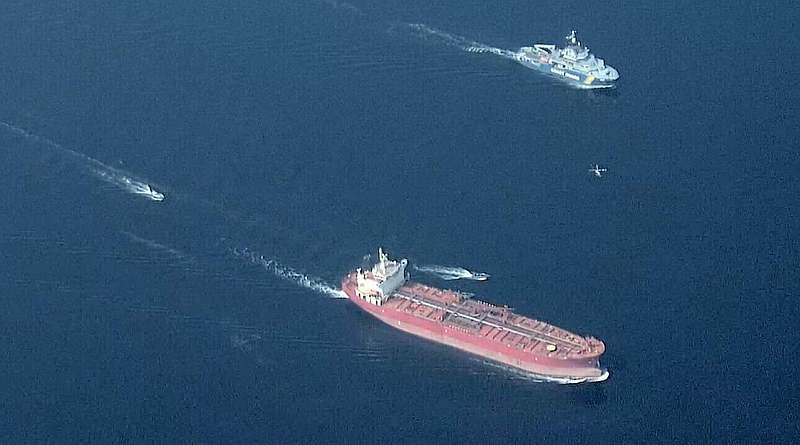
8. The Swedish Coast Guard detained a shadow fleet tanker in the Baltic Sea.
– The Coast Guard detained the tanker Jin Hui in the country’s territorial waters. The vessel was sailing under the Syrian flag. According to preliminary data, the tanker had no cargo, but it is listed in EU and UK sanctions lists. Its route and final destination remain unknown.
– Sweden’s Minister of Civil Defense Carl-Oskar Bolin stated that there are grounds to consider the vessel part of the Russian “shadow fleet” — a network of tankers used to circumvent sanctions and transport oil outside official channels.
– The incident highlights the growing attention of European countries to maritime schemes for bypassing restrictions. Increased checks in the Baltic Sea create additional risks for Russian oil export logistics and complicate the use of opaque supply schemes.
– This year, Sweden has detained five vessels on suspicion of various violations, including oil spills and sailing under a false flag, and has initiated criminal proceedings against some crew members.
