
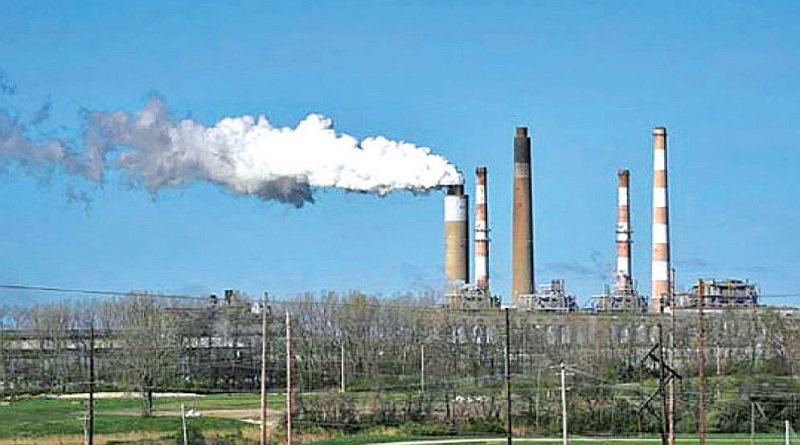
In January, Kyiv is partially without heating, water supply, and constantly facing emergency power outages. The schedules have not been in effect in the Kyiv region for the last few days, with severe restrictions in many regions of Ukraine. On January 23, Ukrenergo explained: the energy situation has worsened because several power units went into emergency repair. At best, the emergency restrictions will be lifted in some time, and it will be possible to return to scheduled hourly outages, which many Ukrainians are now waiting for as the greatest benefit. But will this be ‘at best’ if the Russians do not stop their massive attacks?
We asked the director of the Energy Research Center Oleksandr Kharchenko how realistic it is to expect at least stabilization schedules still in January, whether Western partners can once again help us out of the energy crisis, the path to overcome the crisis this winter, and how to restore the generation system in the coming years to make it less vulnerable to enemy attacks.
A week without shelling and above-zero temperatures are needed
Mr. Oleksandr, what is the current state of the energy system? Has the situation worsened after the shelling on Saturday night, and did even the rise in temperature not help?
There was another attack, also focused on the Kyiv region, as were the strikes on January 9, 13, and 18 (those were larger waves, and in between, something was flying every day). The situation is certainly not improving. But the attack on January 9 became truly catastrophic. They completely disconnected Kyiv’s TPPs for quite a long time, and now the capital has no internal generation. And this is a big problem because Kyiv’s consumption is huge, and the city used to cover at least half of it with internal generation sources. Now they are damaged to such an extent that saying they will resume operation within a few weeks would be untrue. Kyiv must be fully powered from outside. And the high-voltage networks planned for this are also significantly damaged.
Right now in Chernihiv, there are also outages—this can be said to be a secondary phenomenon. It suffered because the Kyiv region was attacked, all objects close to the Kyiv energy hub were hit around the perimeter. And apparently, some object in Chernihiv region was also affected.
And so, due to one powerful attack, when, as we know from the president’s statement, we simply did not have anti-ballistic missiles, practically all the ballistic missiles hit, and our system was just knocked out. If not, everything would have been absolutely calm, controlled, and we would have predictable and understandable schedules. But now even a small percentage of what arrives creates an additional problem because we don’t have enough time to recover. At the end of December, such hits wouldn’t have been a problem, as we had a reserve of strength. What that reserve is now—not saying it’s destroyed, as some part will recover—but partially and very slowly. So, the situation in the Kyiv energy hub is very difficult.
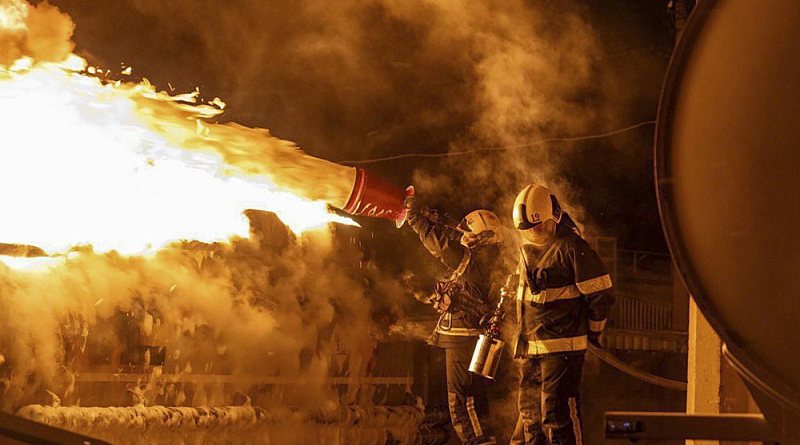
Meanwhile, the Moscow forces are trying to attack the output of the nuclear power plants and everything related to it. They haven’t had much success there, but the tactic of a thousand cuts is in play. They can’t destroy anything significant, but each time minor damage also requires 2-4 days to repair.
Together with the frosts that are still holding, this creates an additional load. When the heating is sometimes on, sometimes off, people try to use electricity as much as possible, and this causes problematic situations.
Thanks to what do we still have at least a little light? Some remote generating units or imports?
Essentially, yes. Nuclear generation is working, plus the remnants of thermal power, and the hydroelectric power stations are operating, though not at full capacity as there is still too little water resource for them. In such weather, the country needs about 17.5-18 GW, but we have about 11.5 and can stretch import volumes to 13. But Kyiv itself needs about 1.9-2 GW in frosts, and there’s only about 700 MW. Of this 700, about 180 is taken by critical infrastructure. Also, it’s impossible to predict consumption by turns. Why do emergency outages constantly happen? Here’s a building, the energy providers know it always consumed 100 kW, but now it’s turned on and begins to consume 300. Because—deferred demand, people rush to turn everything on at once, and minor accidents begin immediately. Everything was turned on—and the transformer automatically switched off the building. A fuse tripped to prevent a bigger accident. Or some cable couldn’t handle the load because it was already old and in bad condition and it burned out. Until it’s repaired, that’s more time without electricity.
To improve the situation, I think we need at least a week without strikes (or for them to be completely repelled by air defense). But so far, those conditions are not available to energy workers.
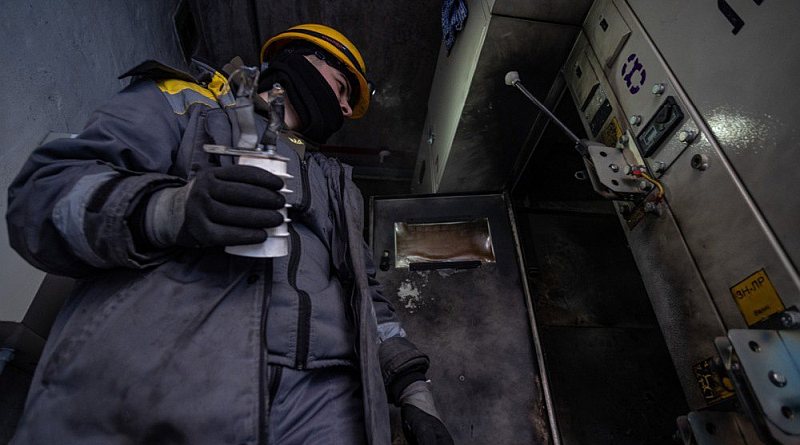
Regarding the numbers — it’s interesting in terms of recovery ability. In September 2024, experts said that Ukraine had only 9 GW out of the 18 needed at that time. And this year in Davos, the Minister of Economy stated that since October 2025, the Russians have knocked out 8.5 GW of our generation. Where did it come from? Did we manage to restore so much in a year?
Absolutely, we have restored a lot. In reality, we entered this season with an operational 17.5 GW.
First, trust must be restored, then Western aid
Can our Western partners help us with this now? Every day we see news that hundreds of generators from EU countries are coming to us. Do they play a significant role?
Honestly? By the time they arrive, they will already be unnecessary. The mechanisms for providing help by Europeans are currently too slow and ineffective. New mechanisms need to be developed. Suppose some generators are sent to Kyiv on a super urgent basis and arrive in two weeks. In two weeks, it will be above freezing, and no one will need them. Or we will recover to a state where generators are not needed. Of course, they will go into reserve, and there will be photos, great achievements… and great gratitude to the EU for helping in principle. But the only truly effective way to help now depends on both sides. In my opinion, we need to clearly say: dear European Union, if you want to help energy, help with money. This would be much faster and more effective, and we would buy what we need. A huge amount of scrap metal sent to Ukraine from all over Europe and the USA is just lying around as scrap metal.
And on our side, we need to remove what is stopping such help now: the risk of corruption. Show a clear and effective mechanism of transparency and clarity in the process, so that they can normally grant us funds.

Is removing Halushchenko’s team not enough for truly constructive processes to start? Or is not all of it removed yet?
We open sources, conservative in evaluation, and see which part of his people remains in their positions. We read yesterday’s address by the head of the energy committee of the Verkhovna Rada about what happened again between Energoatom, NKREKP, and electricity sales. Do you think this increases our chances of receiving real help, not PR and reporting?
Another aspect — many people reacted to the news like this: where is the supervisory board? It was announced in Energoatom and not appointed. There were statements that we selected independent members for the supervisory board, certain announcements — and still no one appointed, contracts with members unsigned. How does this affect the trust of European partners in providing energy assistance? And they know the details of the Mindich-Gate well.
Does this mean the ministry is not working well in terms of control, or does Energoatom have some autonomy and acts as a state within a state?
It is officially subordinated to the Ministry of Economy. Therefore, this aspect is not a matter for the Ministry of Energy. Read what MP Yaroslav Zheleznyak wrote, and what — in the public address of the head of the energy issues committee of the Verkhovna Rada Andriy Herus regarding the latest antics of Energoatom and NKREKP, where 100% of the appointees were appointed there by Halushchenko and his team…
So major purges are still needed, and we don’t see them happening yet.
To achieve real trust from partners, they need to see real actions. The process has started: some deputies have begun resigning from the Ministry of Energy, including notorious figures. But the process overall is still in the mode of “we promised you, but aren’t rushing to act.”
If we want to regain partners’ trust, we need to intensify this process. And also offer partners an effective mechanism for providing assistance, because right now the only real way is through Ukraine’s Energy Support Fund at the Energy Community Secretariat. All partners contribute money there, but their procedures take about a year — from the moment a Ukrainian company submits an application to the moment a contract with the supplier is signed.
What if we wait a year for all the help we need today? That is — sit, Ukrainians, for an extra year without electricity, but at least everyone will be sure that the process is transparent, the tender is held according to the rules. They don’t have outages, and the heating works (though poorly overall in Europe, but still works). It is us who have outages and problems, and it is us who need to propose a quick and effective mechanism that would ensure transparency of procurement and distribution procedures for equipment and allow European partners to understand what is happening. Such a mechanism existed until September 2024, and it was Ukrenergo. Until the corporate scandal provoked by Kudrytskyi’s dismissal (head of Ukrenergo in 200-2024 — Ed.) and the resignation of independent members of the Supervisory Board, who reported political pressure. Before that, Ukrenergo received approximately 1.5 billion euros in aid, and they are currently finishing the last 200-something million of that sum (and they are finishing it very quickly), and nothing new has arrived since then.
Your impression — in the government, in the circles it depends on, is there an understanding of the situation, of what needs to be done?
I have no connection to the government, I do not communicate with them, they are not interested in me…
I am very positive about Denys Shmyhal and his professionalism, but he is probably under a lot of pressure right now, as he has assumed a position amidst chaos. And he needs time, at least for purely bureaucratic processes, to appoint deputies, to check people. In any case, a minister needs time for the team to start working effectively, and we are also in a super crisis now. I understand that the situation is very complex, but we cannot wait — it will not resolve itself. Active measures are needed, and one of the very important tasks is to regain the trust of partners. We can’t handle it alone; we have no money.
It’s time to attract investments and focus on gas
Regarding the way out of the situation — both immediately and in the distant future. Let’s assume that there won’t be catastrophic attacks in the coming weeks (as there are certain forecasts or insights suggesting that the Russians are not yet capable of massive attacks). So in the near future, will they just slowly repair and restore the system?
Why, on the night of January 24, they were quite able to launch 300 drones and 20 rockets, and that is already quite massive. The other thing is that compared to January 9 or 13, the air defense forces worked significantly better. If they continue to work in a mode where they have enough resources to effectively repel attacks, it will give us the pause needed to recover.
In the short term — a calm week will provide schedules in Kyiv, normal heating, and water supply operations. It’s harder to predict further, but in about one and a half to two months, these schedules would transition to a fairly comfortable mode. That is, approximately up to two stages (simultaneous shutdowns — Ed.), so to speak. Theoretically, we could expect that in April-May or even by late March (if we’re very lucky), we will be living quite comfortably. Again, assuming that we systematically repel attacks and several rockets do not hit a single point.
How we will live in July-August depends on how we can restore generation and what new things we manage to launch. But I think that since the overall schedule of nuclear unit repairs is sacred and cannot be touched, July-August might be more challenging. Simply because there will be more consumption and less generation available.
Furthermore, there is maximum active preparation for the next heating season. This includes increasing the number of gas engines, maximizing efforts to build everything possible in the fast-deployment sector (i.e., over months, not years) — lightweight gas generation and ensuring its connection and operation. These are key elements of preparation.
The other horizon is three to five years, and here it’s necessary to work as much as possible now to attract foreign investors, finding ways to bring private Western capital into the Ukrainian energy sector with the support of European, American — and any international financial institutions. But this issue can only be resolved if we solve the problem of debts in energy. They are created not by the war but by administrative decisions, artificial tariffs, and everything else associated with that. Therefore, this is a huge challenge, and how effectively Ukraine can respond to it, I cannot predict.
Regarding business — very interesting, I just saw on Facebook a post by the co-founder of “Nova Poshta,” Volodymyr Popereshnyuk, about how entrepreneurs’ entry into the energy market is restricted by licenses and prohibitions, abolish them and business will quickly fix everything. Would that be the case?
I wouldn’t say there are prohibitions and that this is the main problem now. Many people misunderstand the phrase “technical conditions.” Once, the chief engineer of one company said something that best illustrates the situation: you can negotiate with me, but you can’t negotiate with a transformer. If it’s not possible to connect an object without modernizing the network, then it’s impossible, and deregulation won’t help because it’s physically impossible. And in our case — it’s everywhere now because the networks are significantly damaged — both high-voltage and distribution. And very often, when someone wants to build generation and says — I have the money, I know how to connect, they are told: the connection will cost 20 million dollars. And the entrepreneur decides they are being ignored and that cooperation is unwanted. But it really does require 20 million to connect (I’m giving a real example, just simplifying the numbers). And this is part of the task that the state must carry out because we want to have new generation.
These 20 million can be included in the tariff of the company that is the distributor in this region, so that it builds the necessary capacities to connect the generation (which itself costs another 200 million). Unfortunately, such problems can’t be solved by regulation — only physically. It’s not enough to pass a document; you need to buy a pole, install transformers, stretch wires.
And still, if the business could actively enter the energy sector, what would it be: biogas complexes, cogeneration gas plants?..
Both biogas and natural gas. Over the next ten years in Ukraine, any gas-fired generation will be efficient, great, will work, and will pay off — making a lot of noise.
In any case, no one will build power plants like before. Modern capacities look different, and everyone understands that building something in Ukraine without protection makes no sense. Therefore, modern complexes will be built, relatively small in size but often of high capacity. Because Kyiv cannot be powered with 10 MW gas engines.
Kyiv needs, according to its topology and energy network planning, at least three large CHP plants. This is a historical given; we won’t change it — changing it costs so much that it would be easier to build a new capital. Thus, three large CHPs and many smaller facilities are needed. They will vary — both 500 MW and 10 MW, but many are needed, at least 5-6 GW in total, which is about 7.5-8.5 billion euros to be attracted over the next few years (up to five). We are aiming for a need of about 9 billion euros in building generation across the country.
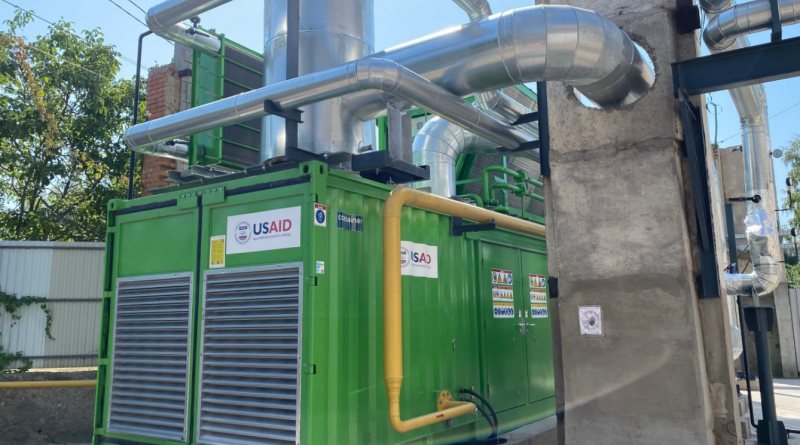
Regarding cogeneration units. When people began to ask questions about the equipment provided by partners, mentioned back in 2024, it turned out that it had often not been put into operation. Right now, there’s a scandal in Obukhiv (Kyiv region): the local authorities handed over a unit, received long ago from USAID, to Slavutych, because they never found a use for it, and the local community is outraged. Apparently, the same thing happened in the capital—they received it but didn’t use it due to difficulties with projects or funding for gas. Is this true?
It’s absolutely true. Indeed, partners distributed equipment randomly, without considering whether the community could install it or understood how to use it. And often—no, they didn’t understand and weren’t capable. So, they provided power worth about $2.5 million, but setting it up costs another one and a half million. When local authorities lack funds, what do they do? They look for someone to give it to. I know dozens of such examples in Ukraine. Kyiv, on the other hand, collected everything possible, and Kyiv received a lot that no one wanted to take. Kyiv just physically hasn’t managed to launch everything. Currently, a large amount of distributed generation is in the startup phase, and they have managed to launch 20-25%.
And, by the way, this is partly why the capital doesn’t completely lose heating. Six thousand buildings lost heating, while there are about 12 thousand buildings in Kyiv. The city remains outside the critical risk zone of being completely without heating. Yes, boiler houses sometimes shut down, and technical problems still arise, but overall, it works.
I don’t believe in the large-scale success of projects not based on private capital. Private capital will do things correctly, quickly, and efficiently. And what happens when partners start distributing among state entities—we saw in the example of some communities in the Kyiv region.
What should be an individual’s survival strategy for Ukrainians in the coming years, preparation for the next heating season? Creation of housing associations, maximum cooperation, purchasing individual capacities for each building… Generators, power banks, candles—is this our reality for years?
Yes, this is our reality for years. Even assuming that the war will be over by the next heating season—all risks will remain. All risks of a broken, seriously damaged system will remain.
But where to find advanced cooperation experience? In Kyiv, there are many smart, hardworking, and competent HOA leaders who are currently demonstrating what needs to be done with a building to ensure it remains in good condition even in the most critical situations.
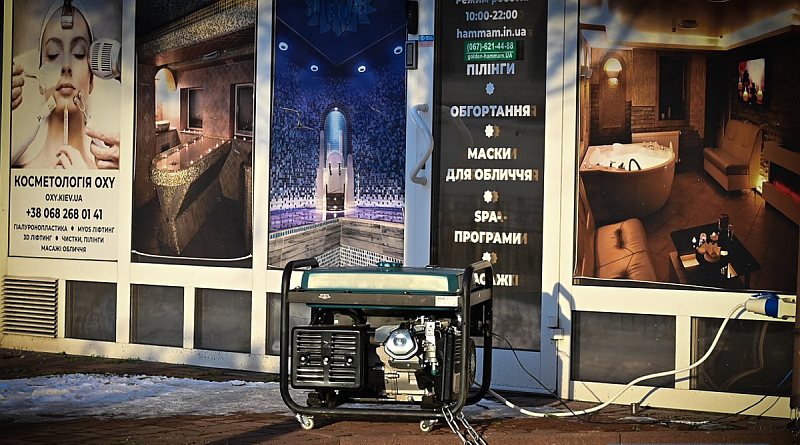
They install battery complexes, solar panels, optimize the building’s energy consumption, and set up backup generators for emergency situations. They install heating circulation pumps with regulation and various optimizing devices. There are HOAs that manage not to drain water in areas where everyone else does, maintaining intact pipes, because they have new efficient circulation pumps. These pumps kept the water circulating inside the building. Yes, it gradually cooled, but they endured until hot water returned to the system. And everything was fine. Water drainage, although a proper procedure when there’s a risk of freezing, is stressful for the building and the heating system. Therefore, I advise spreading and promoting the experience of HOAs in every possible way.
