

Has the enemy started the spring-summer offensive campaign? No, they haven’t. We are observing local tactical actions in certain areas; the Russian army is trying to stabilize its positions after counterattacks by the Defense Forces, preparing and amassing forces, and conducting reconnaissance of our defense with small units.
Forecasts are thankless, but necessary. The dynamics of the hostilities allow us to conclude that in June the aggressor will try to intensify activity in the Hulyaipole and Orikhiv directions. The command of the Russian army will attempt to coordinate the offensive on Orikhiv of the “Vostok” and “Dnepr” groups. In the Kostiantynivka direction, the enemy will continue to exhaust the Ukrainian Armed Forces, and try to restore positions in the Novooleksandrivka direction.
If these actions are at least relatively successful, in July the enemy will begin the active phase of the summer campaign with an emphasis on eliminating the Orikhiv defense area and breaking through to Kramatorsk from the Slovyansk direction. There may be attempts at an operational breakthrough in the Zaporizhzhia direction. The next four to six weeks will be critical for the Defense Forces to prepare defenses and possible preemptive counterattacks.
The war is once again entering a season of major decisions. May traditionally opens a window for active combat operations: dry roads, easier logistics (not considering the factor of fpv here), more opportunities for maneuver and use of equipment.
The enemy still failed to form advantageous conditions for deploying a strategic offensive operation. However, none of the goals of the so-called SVO have been achieved, so most likely the aggressor will act from the positions it has crawled to.
In many areas, there is active probing of Ukrainian defenses, localized assault actions, redeployment of reserves, and attempts to exhaust Ukrainian forces. But there are still not enough signs of a full-scale strategic offensive along the entire front line.
In the Northern Slobozhansky direction (Sumy region), attempts by UG “Sever” to create a “buffer zone” continue. The enemy continues to exert pressure at the border. The plan seems clear – to create a so-called security zone along the border to push back Ukrainian forces and force command to hold reserves here. The enemy is acting with several tactical groups, trying to enter border settlements, often long abandoned by people, with small assault units, establish themselves there, and unite these wedges into a single control strip.
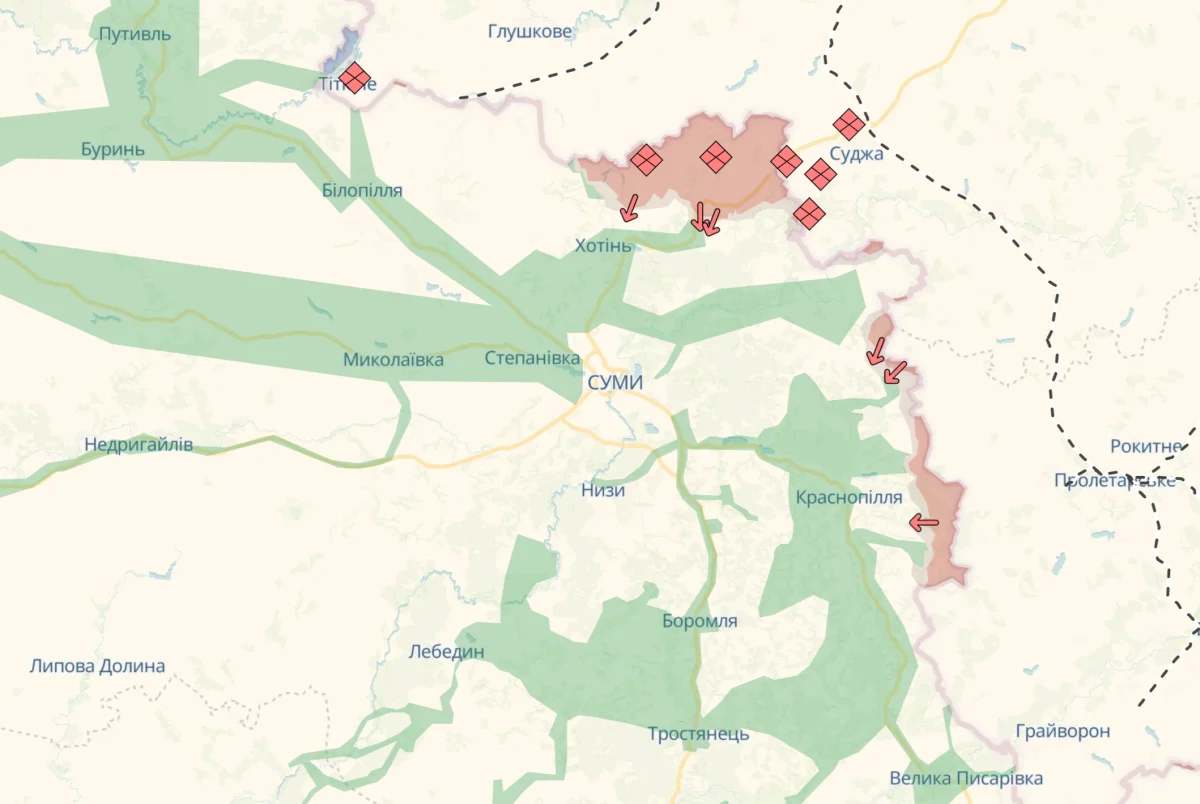
Despite some advances, there is no large-scale breakthrough. The Russians have only advanced a few kilometers in certain directions and so far cannot confidently control key areas. This fact undermines reports to higher headquarters. The operational picture shows that this direction currently resembles more a diversion aimed at drawing Ukrainian reserves, exerting informational-psychological pressure, creating a threat to Sumy as a regional center, and stretching the Ukrainian defense.
In the Southern Slobozhanske direction (Kharkiv region), the enemy’s offensive on Vovchansk has stalled. Defense forces have managed to stabilize the front and are counterattacking locally. Enemy units cannot even achieve their intermediate task — fully controlling the area around Vovchansk, and the lack of such control prevents further advances towards Bilyi Kolodiaz or Staryi Saltiv. Small groups of enemy infantry that have infiltrated forward are often isolated and survive only thanks to supply drones.
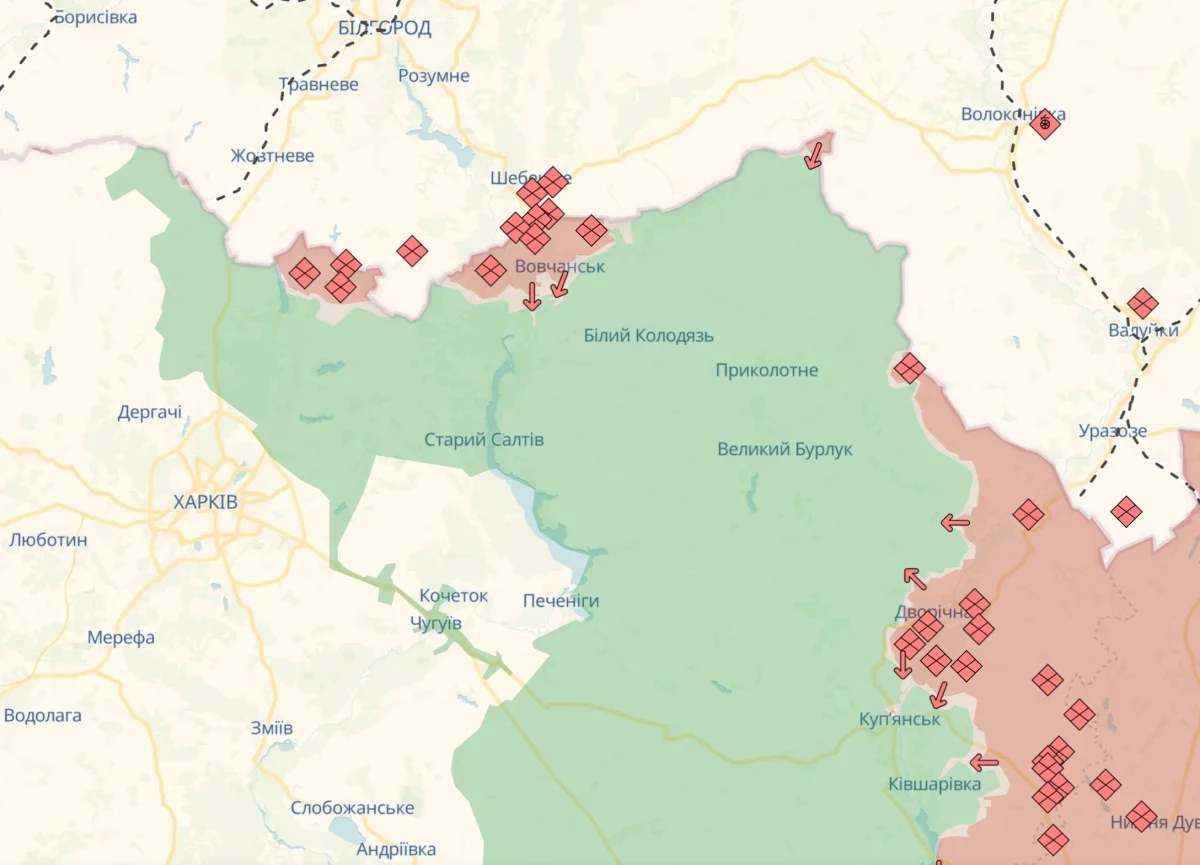
In the Kharkiv region, the enemy has lost the momentum of the offensive. This is no longer a breakthrough area but a zone of attrition.
In the Kupyansk direction, UV “Zapad” is attempting to squeeze the Ukrainian bridgehead on the Oskil, but in recent weeks it has slowed down: the Russians have again crawled into the gas pipeline near Holubivka because they found no other “metro” to Kupyansk.
A similar situation is observed in the Sloviansk direction. Russian forces are trying to create conditions for storming Lyman but are bogged down in battles for villages and forest areas around the city. Unlike previous operations, the Sloviansk direction is key to encircling the Sloviansk-Kramatorsk agglomeration from the north, which the enemy failed to achieve in time—this circumstance will hinder the main strike direction of the aggressor this summer. Especially since Ukrainian counterattacks are pushing the enemy back in some areas. Here, the enemy wants to prepare a platform for an assault on Lyman and further on Sloviansk and Kramatorsk. But so far, this is still far off.
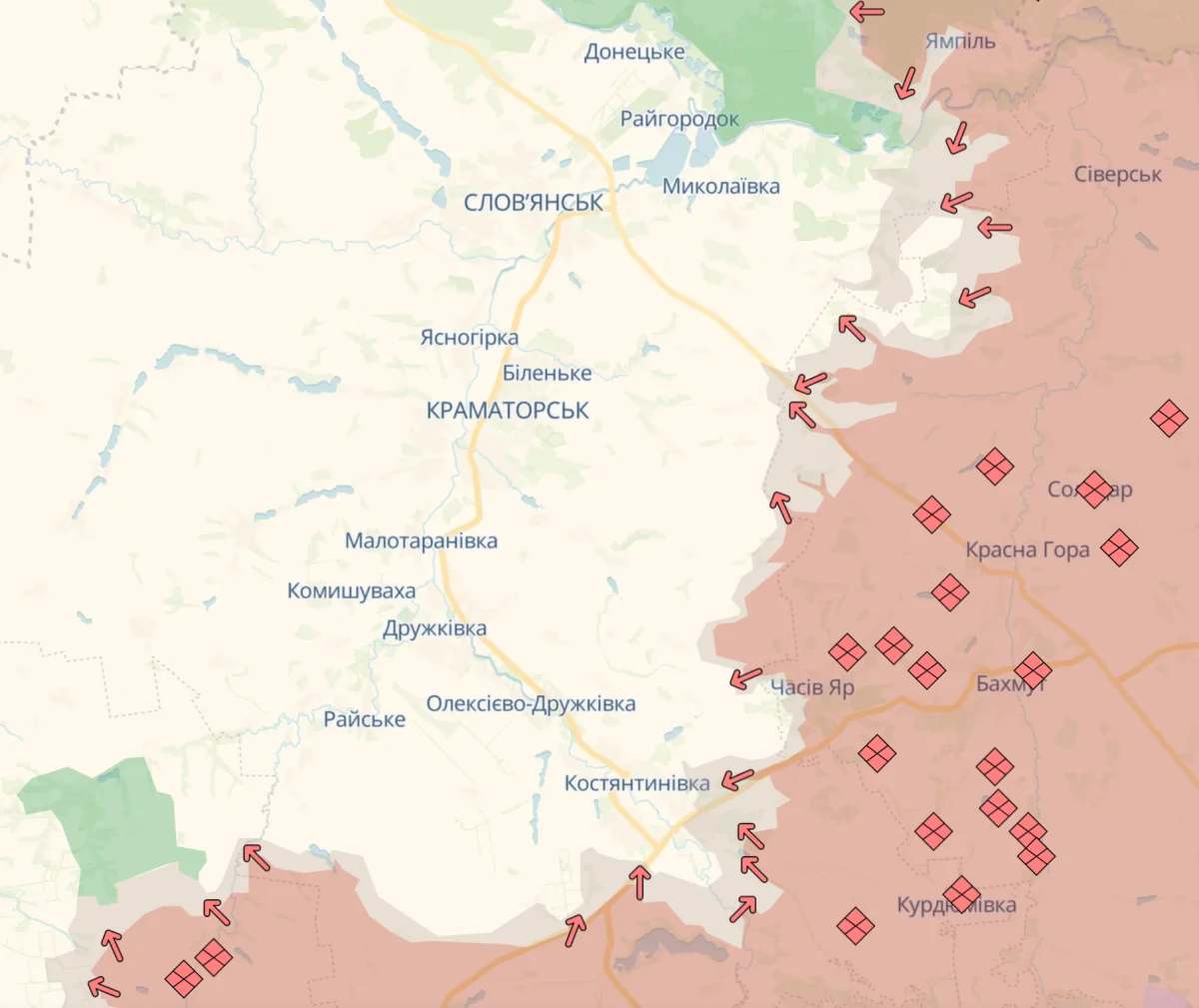
The Kostiantynivka direction mirrors the Sloviansk one. Here, the enemy also failed to form favorable conditions for a summer offensive in time. Our 7th Air Assault Corps held its ground in the Pokrovsk and Myrnohrad area, and its neighbors maintained positions in Chasiv Yar. Of course, not everywhere and not entirely, as Pokrovsk and parts of Chasiv Yar are not under full control by the Defense Forces, but they have prevented the enemy from penetrating deeply, enough to disrupt the Russian timeline for preparing an offensive.
Russian forces are attempting to infiltrate the eastern outskirts of Kostiantynivka with small groups, using wooded areas and industrial zones. This is a typical tactic of the past year: not a massive tank strike, but continuous infiltration of manpower. However, there are no large-scale urban battles as of yet. The Defense Forces are counterattacking in the south and southeast of the city.
In the Dobropillia area, the situation is even more intriguing. The Russian command appears to have received a political order to break through to the Dobropillia area “at any cost.” The result is currently tragic for the enemy: a narrow corridor of advance has turned into a meat grinder, with progress measured in hundreds of meters per week.
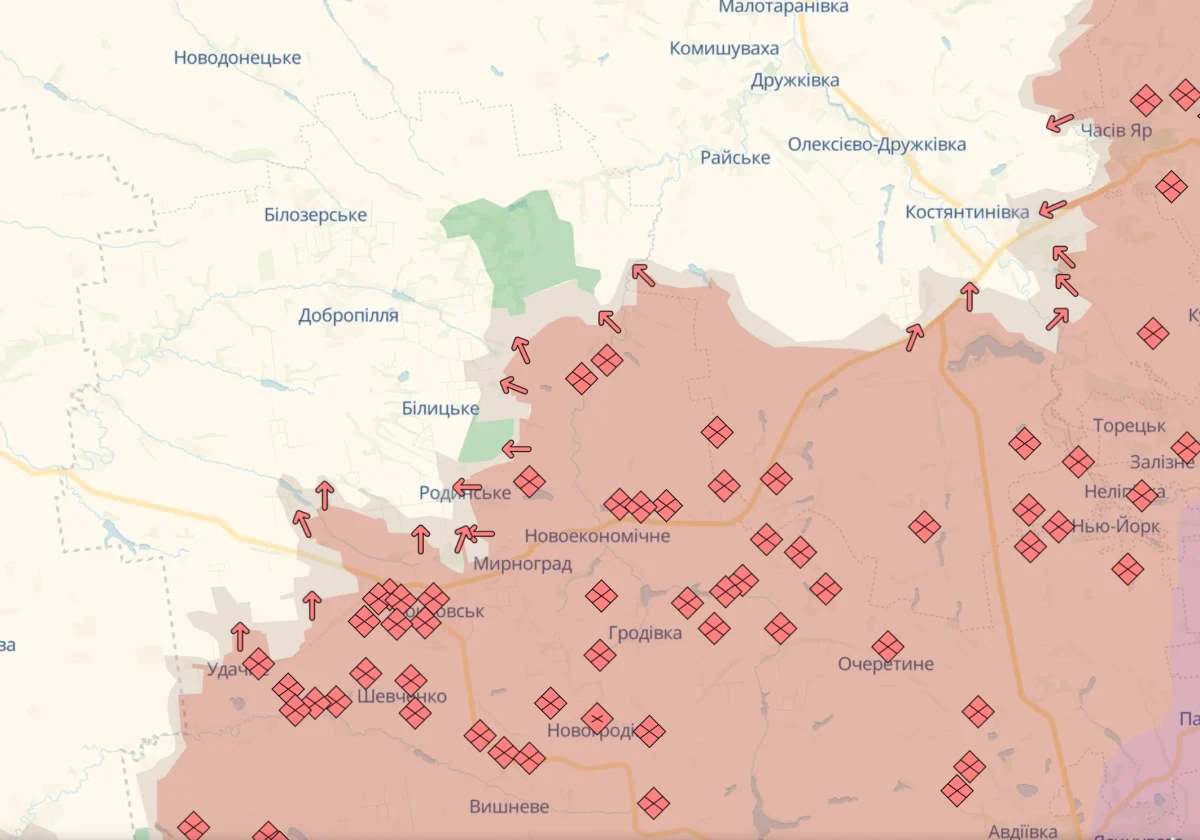
The aggressor is forced to increase pressure in the western part of the Donetsk region, but the cost of these efforts is extremely high.
Events in the Zaporizhia region will undoubtedly become one of the main theaters this summer.
In the Huliaipole direction, the enemy is gradually advancing with small groups of infantry on motorcycles, buggies, and armored vehicles. The operational picture is chaotic: the positions of the parties are mixed, some groups penetrate deep into each other’s rear. The Huliaipole area is not a classic front with a continuous trench line; here, the war of small groups and drones is ongoing. The aim is to exhaust the enemy.
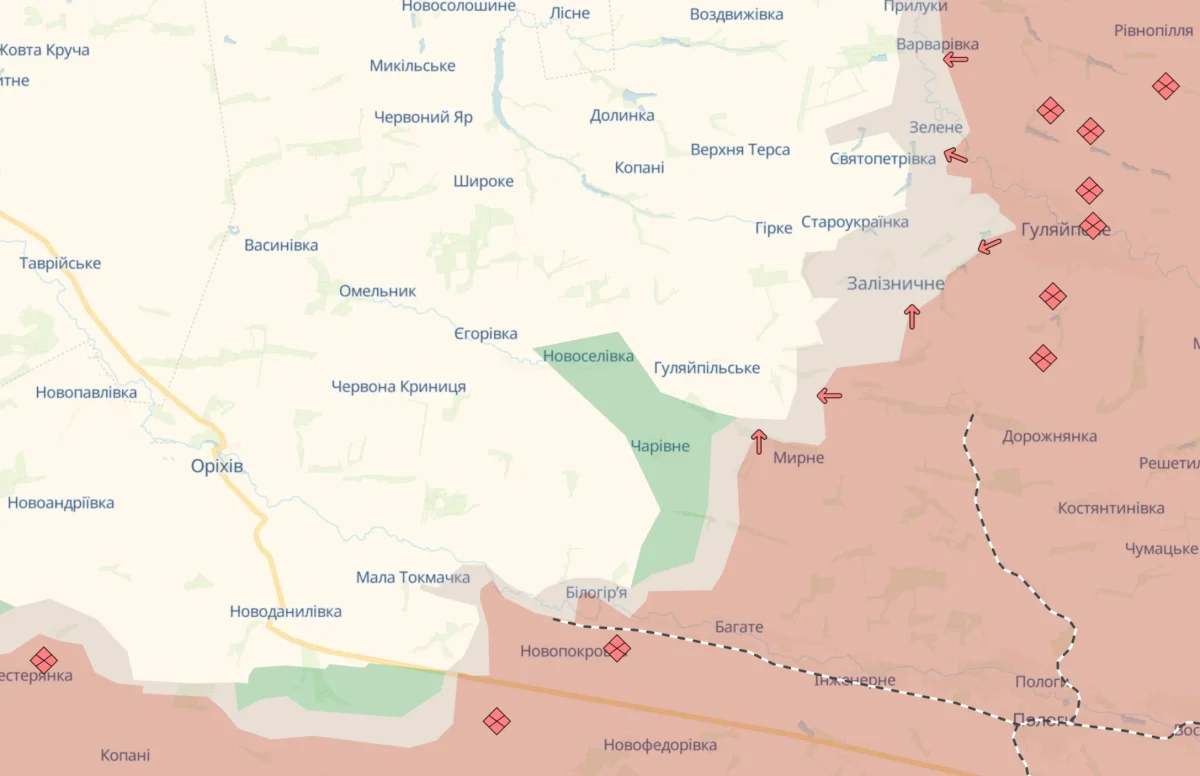
In the Orikhiv direction, the Russians aim to break through closer to Orikhiv. If successful, it would open up the prospect of a hypothetical advance on Zaporizhia.
However, the battles for Mala Tokmachka and the approaches to Orikhiv are not yielding results.
The battles for Orikhiv (more precisely, the Orikhiv defense area) are extremely important for the Kremlin. Success will threaten Zaporizhia, force the Defense Forces to redeploy reserves from Donbas and other directions, and free up additional forces for a strike on Sloviansk-Kramatorsk, as the full occupation of the Donetsk region has a higher priority than Zaporizhia (larger scope of tasks).
We see all the signs of preparation for a large-scale offensive operation: the enemy is transferring reserves, has become active on several sections of the front, probing weak spots, constantly attacking with small groups, accumulating artillery, drones, ammunition, aiming to bind Ukrainian reserves. On the other hand, we don’t see the main signs of an unfolding offensive — there are no attempts of simultaneous breakthroughs in one or several directions, large operational reserves near the front line, and attempts to engage them in operation, or a sharp increase in the pace of the advance. The situation resembles a build-up before the main phase.
In the next month or two, the enemy will try to break through in the Orikhiv direction closer to Orikhiv and create a threat to Zaporizhzhia. In Donetsk region, with the forces of the “South” and “Center” groups, they will form an arc from Sloviansk to Kostiantynivka, as achieving decisive success on the flanks has not been possible for more than six months. They will gradually squeeze the Ukrainian defense in Donbas. This will be a politically motivated offensive with significant losses for the aggressor.
What should the Defense Forces do?
Most likely, besides building a defensive line from the Kyiv Sea to Sumy, the Defense Forces will focus efforts on stopping the enemy’s advance west of Huliaipole, holding the Orikhiv defense district, and preventing an operational breakthrough to Kostiantynivka and Dobropillia.
Therefore, the enemy has not yet transitioned to a full-scale offensive but is completing deployment in the relevant areas. The next four to eight weeks will show whether they have enough resources to turn the current pressure into a real breakthrough. Another point of interest is whether Putin will announce mobilization on May 9.
If the enemy fails — summer will become an exhaustion campaign for the Kremlin, possibly the final one.
If they succeed — the main battles of 2026 are just beginning.
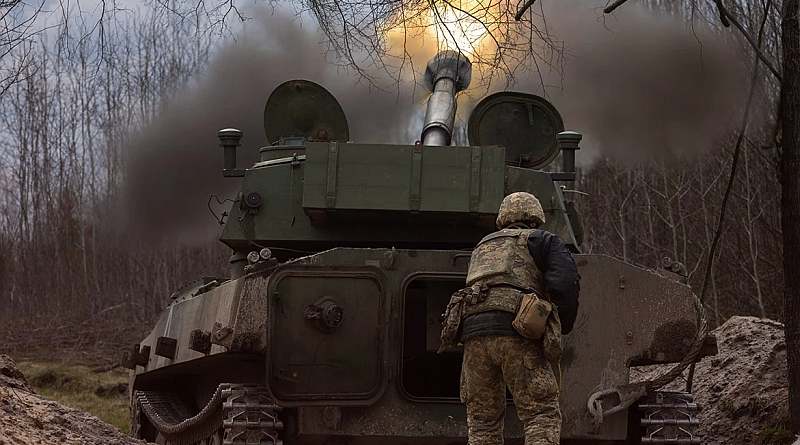
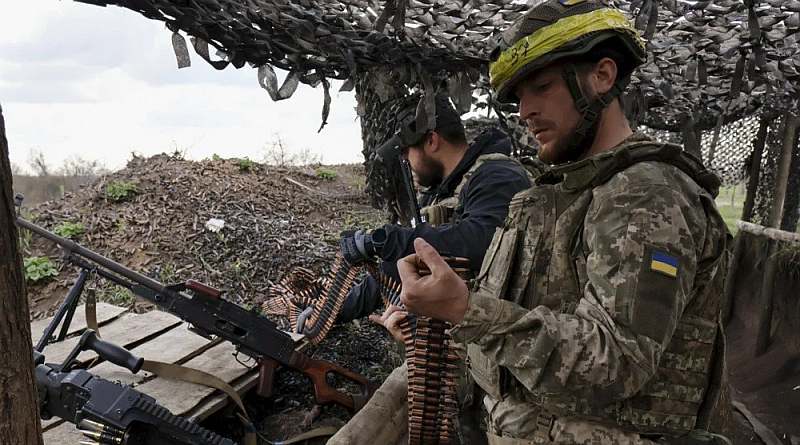
Cover photo: 66th Separate Mechanized Brigade named after Prince Mstyslav the Brave
