
The reaction to my text, which in turn was a response to the text by Daria Mattingly, brought, besides entirely appropriate logical and methodological remarks, a huge amount of what is usually called symptomatic comments. These are reactions and comments of the kind that people often say are more about the speaker than about the subject. Formulating it more refinedly and accurately, it’s about how the person issuing the statement, through the choice of words, their emotional content, sentence structure, and similar details, inadvertently reveals what lies deep in their subconscious. Collectively, all these details from various individuals create the impression that relations with the empire still occupy a large part of the minds of the majority of the public—not just any empire, but a totalitarian one. This is not surprising, considering the duration of the imperial period, as well as the depth and pain of the experience of violence resulting from the totalitarian experience. If I’m being radically honest, I could assert that practically all our ideological and political differences are essentially about the way of living through and understanding two traumas at once, imperial and totalitarian.
And this truly concerns everyone: right-wing, left-wing, liberal, radical, governmental, and oppositional, Ukrainian and foreign. Everyone. Therefore, before I clearly explain my point, I must provide a crucial disclaimer, which I advise keeping in mind as you read further. First of all, this whole story is not about a lack of patriotism or bad intentions. It’s not about “traitorhood” (whatever might be encompassed in this rather poetic term) and it’s not about someone needing to punish someone else. Rather, it’s the opposite: it’s about the fact that we are all normal. Completely normal.
This story is primarily about how the good aspects of our nature as humans make us victims of empires long after their fall. And probably the most accurate description of the phenomenon at the center of this text was given by Shevchenko:
It’s scary to fall into chains,
To die in captivity,
But worse – to sleep, to sleep
And sleep in freedom…
And since we are normal in the sense that each of us (unless otherwise proven with appropriate evidence) is a patriot, has good intentions, strives to understand the situation, and so on—as the list can go on—the story below is essentially about how normal people deal with the inertia of a fundamentally abnormal situation their ancestors were forced into in a very tangible sense. In a way, it’s about the biblical sourness on the teeth of sons from the sour grapes eaten by their ancestors.
For the same reasons, everything described below does not imply a strict ranking based on the principle of “better-worse” or, moreover, a rigid hierarchy. This is simply because at the center of this are people, and therefore differences in regional, familial, personal experience, and various combinations arising from national, religious, social, and other identities must be considered. And if we add to this the possibilities of combining elements, it remains only to describe all this with the mathematical term “plus infinity.” To not get lost in this infinity, it is worthwhile to sketch at least roughly the main possible options—especially since they are available for empirical research.
Finally, responding to the remarks of some colleagues, I will reveal a bit of my methodological workshop. The primary significance in it is the fact that over the past approximately nine years, in search of explanations of how Ukrainians managed not just to survive physically but also to maintain sanity after experiencing Auschwitz (while evidently not believing in various ideological explanations), I stumbled upon the theory of psychological trauma and its overcoming. Particularly valuable was the fact that I partially read authors who themselves had experienced concentration camps or similar situations—such as Bruno Bettelheim. After some time, much to my own surprise, I realized that the majority of compatriots, regardless of level of education, social status, personal abilities, and so on, essentially reproduce the patterns described in those texts to a greater or lesser extent. This became particularly evident during the memorable 2019 elections and the invasion—because both events were evidently interspersed with historical references, and the invasion as a whole became a major trigger for past misfortunes.
After all that has been outlined above, it is time to get to the point. So, at first glance, we are dealing with completely different phenomena, which, however, are activated, and in a distinctly emotional form, when something significant enough occurs outside the narrow professional circle that directly relates to issues of national memory, identity, and “reckonings with the past,” whatever that term may imply. This happens regularly, and many readers will likely recall examples from the past decade, starting with discussions around decommunization.
Some insist on the participation of Ukrainians in the crimes of empires, primarily their totalitarian versions in the form of the Third Reich or the USSR. Bright examples of this approach include discussions about the cooperation of the Ukrainian liberation movement with the Third Reich or the thesis about the presence of Ukrainians and their participation in, for example, the imperial wars of the USSR—Afghanistan is a classic case of such collisions. From this, they believe it logically follows the obligation to recognize part of their own guilt and, accordingly, atonement. This paradigm is associated with the left ideological environment, particularly with supporters of leftist liberalism. I will not discuss here how justified I personally consider this—quite clearly, it is a case of repetitive accidental correlation.
Another perspective on the issue suggests accepting the imperial legacy, emphasizing not the themes of guilt or responsibility, but rather the notion that Ukrainians “built the empire.” As examples, high-ranking officials of the Russian Empire from “Cossack sons” or the “Dnipropetrovsk clan” during Brezhnev’s times are usually cited. Proponents of this view manage to entirely push into the blind spot and overlook, for example, the fact that Count Bezborodko was a co-architect of the annexation of the Crimean Khanate and the partitions of Poland, as well as the fact that the times of the “Dnipropetrovsk clan” marked the apex of Russification in Soviet Ukraine, and we are still coughing up the legacy of those times. However, within this paradigm, the possibility of at least symbolically joining the splendor of the empire apparently outweighs everything, thus compensating for the inferiority complex it imposed.
Another part of the community focuses on the so-called “Valenrodism” in its everyday form – like “those party officials celebrating holidays” or in the lobbying version “thanks to them Ukraine received this and that.”
A mixture of the last two approaches seems to be the “Habsburg myth,” which still smolders in Galicia and combines both the theme of association with the splendor of the empire – starting from the legend of Yuriy Kulchytsky, who saved Vienna, to the theme of “Valenrodism,” appealing to everything gained from the empire supposedly in exchange for loyalty.
Moreover, even representatives of the so-called “right-wing,” from whom Mrs. Daria suffered, at least this time, are by no means free from all this. Although at first glance their version looks completely different – they appeal not to guilt or responsibility, but rather to national honor and dignity and do not push the figure of fighters into the blind zone.
However, it’s not that simple. Indeed, despite the obvious differences in specific manifestations and tenets, if you look at them all purely as phenomena with their own structure, common reference points will be revealed, differing only in specific expressions.
Interestingly, in almost all cases, the main argument from which everything starts is an appeal to subjectivity in general, the need for its return as opposed to viewing oneself solely as a victim. This perspective is indeed characterized by an exceptional degree of martyrology and emotionality, practically on the verge of hysteria, with a pattern of a “besieged fortress,” where in its radical form existential enemies and accursed imperialists appear to be practically all neighbors and national minorities. So it’s no wonder that it already sticks in the throat of anyone even slightly capable of thinking. Yet, subjectivity is suggested to be achieved in different ways. On one side, there are proposals to take on some of the empire’s guilt, on another — some of its achievements, still on another — to come to terms with its existence in our experience, while the “right-wing” proposes to destroy absolutely everything even slightly connected with the empire.
And here the specific narrow perspective becomes visible, which includes only one’s own community and the empire, so to speak, “spherical in a vacuum.” At the center of this perspective always remains the empire. The behavior of Ukrainians is determined precisely in relation to the empire – they serve, participate, are complicit, cooperate, reluctantly keep a fig in their pocket, resist, fight, and precisely from a specific position is determined their positive or negative value in a particular paradigm.
The main drawback of this paradigm is the displacement within its framework of other roles and personas possible in a situation where a community is under imperial oppression. This directly leads to falling into the “blind spot”—particularly of voluntary or involuntary collaborators, observers, and ultimately, those who simply found themselves in that system and tried to survive.
The only exception is the figure of the fighter, understood as the part of the community that decided to resist the empire through underground or armed struggle. From the side of the so-called proponents of guilt, there is a focus mostly on the morally or legally controversial decisions or actions of the underground, which demand acknowledgment of guilt, often ignoring or underestimating the fact that the underground fighters and soldiers acted under fundamentally different conditions than those we judge them by now. But it is no better, despite visible glorification, from the side of their opponents. Because often, behind the streams of praise, it turns out that there is, in essence, no vision of the individual and, again, the context of their decisions. Accordingly, both positions create the impression of a specific othering, a real detachment of the fighters’ figures—from different perspectives.
Moreover, it is notable that discussions about the category of guilt or responsibility mostly concern other communities, predominantly those also oppressed by the empire. As a result, we actively discuss, for example, the OUN’s attitude towards Jews and the UPA’s involvement and responsibility in the context of ethnic confrontation with Poles or the participation of Soviet Ukrainians in imperial practices against other non-Russian, and sometimes non-Slavic peoples. And again, from diametrically different positions: on one hand, there is categorical guilt of Ukrainian actors, on the other—a variant of “we had no choice but to rely on a stronger empire at the time,” and yet another—a depersonalized “such were the times.” Upon reaching this last position, one can hear a long list of grievances against Ukrainians by representatives of a particular people with the subtext “what did you expect.” Interestingly, when one of the contemporaries takes on a subjective role, they are immediately criticized from both sides according to the logic described above.
Since it reached the fact of subjective actions, which imply responsibility, it is also appropriate to note that the topic of responsibility and guilt is last, but not least, and probably one of the hottest reference points on which mutual accusations nearly amount to treason. At the very least, of being sold out to the benefit of either the West or Russia, or someone else. This is when, if you look at this category from the perspective of, for example, Jaspers, it becomes clear that the maximum that can be discussed is a variant of metaphysical guilt, and even then, unlike in the case of Nazism, with many reservations. Yet the noise is such as if we are being dragged to the guillotine as punishment every time.
An interesting fact is that during occasionally overly lively discussions about responsibility and guilt, it is usually quite rare and not very clearly stated that the obvious thing is: it was the empire (in our case—mainly Russian) that created the situation in which Ukrainians had to choose a modus operandi from the standpoint of “preserve and survive”—and in these conditions, often it was not up to others, while at the same time these others were forced to do the same. In these conditions of mutual colonial competition, it often happened that enslaved peoples indeed became the “hands” of the empire against other enslaved peoples.
The apparent paradox lies in discussions about the empire and our invisible legacy from it, where the empire itself essentially plays the role of the “great absentee.” The debate revolves around “our” guilt or responsibility, around “our” actions or those of the “other,” whose position is very similar to ours, around “our” relations with “others” under the pressure of the empire, around the actions of “ours” and the “other,” – but the facts of the imperial presence themselves are at best stated as obvious, to be quickly moved past in favor of more important matters.
It seems at this stage we must become aware of an extremely important matter – during the 20th century, our life with the empire included the experience of totalitarianism and genocide. Given that the empire at that time existed in a totalitarian form, it involved both colonial and totalitarian deformations, and genocide was part of imperial totalitarian practices – this adds another exceptionally complex and deep facet to the problem. Moreover, in practice, it is extremely difficult to clearly separate all three aspects: here we have the empire, here is totalitarianism, and here is genocide.
However, a fundamental substantive difference does exist, despite the similarity of mechanisms and manifestations, so clearly that sometimes the same manifestation can be described simultaneously using the terminology of colonial, totalitarian, and genocidal paradigms. Totalitarianism is distinguished among other imperial and/or authoritarian regimes by its desire to change human nature and the structure of society according to ideological doctrines, which, in turn, rely on a theoretical framework that is assigned the role of scientifically justified grounds in the given system. To change and restructure, obviously, the existing must be eliminated – which means constant systemic extreme violence against people simply because they are who they are. In other words, genocide inevitably enters the toolkit of totalitarianism.
All this together ultimately immerses a community that has both totalitarian and genocidal experience into a situation where literally all supports collapse, and individuals are deprived of the ability to somehow resist this. In parallel, personal death may well threaten them. All together, this forms an existential trauma – a situation of deep deformation through an extreme threat to existence itself. If several generations have to live under such conditions (as happened in our case), not only does a specific worldview and behavioral complex form, but a subconscious conviction in the instability of any moral foundations is also established, as well as the overall futility of anything other than the figure of the imperial totalitarian genocidaire.
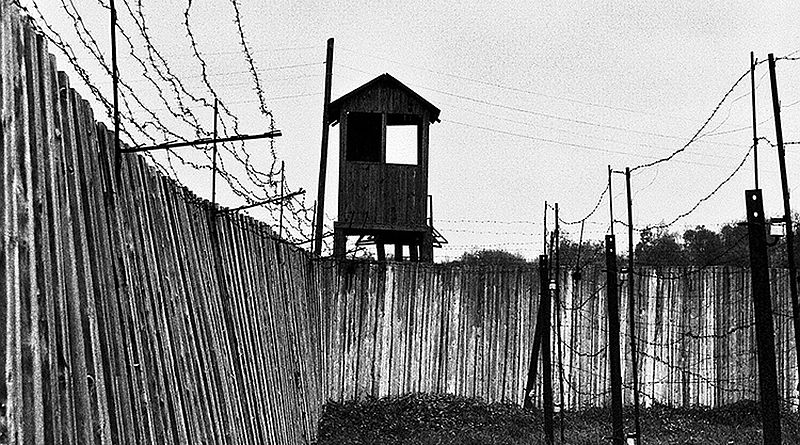
The perpetrator of genocide in our case was a totalitarian empire. Due to its totalitarian nature and experience with genocide, a more or less standard set of colonial deformations was supplemented and deepened with traits associated by researchers of such a vivid element of a totalitarian state as a concentration camp. These traits are linked with the experience of extreme violence that threatens existence as a norm and are clearly observed in those who have experienced concentration camp imprisonment. These include hovering in a threatened state; the association with the perpetrator involves not just outwardly mimicking them as in the case of imperial oppression, but actually adopting their way of thinking and identity; a critical narrowing of planning and contextual horizons; an acute sense of oneself and everything associated with oneself as insignificant and useless; traumatic transference, i.e., attributing heroic, almost superhuman traits to someone who resists the perpetrator relatively successfully; evaluating everything primarily from the perspective of a potential threat to survival; a split consciousness in the form of the well-known Soviet “double-think”; fear not only of resistance but of subjectivity in general, and so on. The list is incomplete, yet sufficient for the purposes of this text.
Most importantly, in the context of these traits, all the paradoxes of our positioning in conversations about the empire become frighteningly clear. It becomes clear why the empire invariably finds itself at the center of a narrowed perspective—because it was the main source of threat, including the threat of death, thus requiring special attention. It also explains why the empire “disappears” in the topic of guilt—how can you blame someone on whom your life and your children’s lives depend? The narrowed perspective explains itself—most likely triggered by the mere presence of the empire, even if hypothetical and imaginary, immediately concentrating on threat No. 1. It also explains the specific otherness of the conditional fighters—everyone fears that involvement in a conscious subjective action, especially aimed against the same empire, might repeat the horror once experienced. Some choose separation from the conditional heroes by emphasizing their crimes or simply ambiguous actions, while others do so by dehumanizing them through glorification, which appears to be one variant of traumatic transference. After all, in the context of reclaimed independence and successful resistance to the enemy, conditional fighters appear as liberators and thus, in the logic of a genocide victim, evoke a mix of admiration and the desire to distance oneself. Both sides also mutually accuse each other, accordingly, of emulating the empire when it comes to potential crimes, or of glorification.
And discussions about guilt in such situations—they are about our shared subconscious fear that we are once again doing something wrong and will inevitably be punished again, with another attempt to kill us such that we won’t survive. In fact, the discussion about guilt, if it can be called that, is the competition between two options for avoiding this very guilt. On one hand, accepting it in the imaginary paradigm of experienced genocide includes fulfilling the perpetrator’s will and allows hoping to survive this time. On the other hand, stubborn denial and rejection of even metaphysical responsibility, as per Jaspers, is nothing more than an expression of fear that acknowledging it will mark the beginning of the end, now once and for all.
In fact, each mentioned manifestation is worthy of a separate text. The depth and generational repetition of the totalitarian experience, reinforced by systematic violence that the empire immersed us in for almost a century, ensured the complexity of emerging from it and perpetuates the unconscious replication of a specific complex long after the threat has been removed. Specifically, it pushes us toward a specific type of traumatic transference—when after the fall of the USSR, we collectively transferred two primary, though not sole, schemes of traumatic transference onto the collective West—without any participation from this very West.
The first of these involves imitation along the logic of “if they, being so strong and powerful, managed to defeat our oppressor, we should learn from them.” In this model, a subconscious ingrained habit of demonstrating similarity to the powerful plays a central role, to at least avoid being crushed, and at best to gain preferences. Ultimately, this is one of the most common survival models under imperial totalitarian pressure. And here, the specific fact that our habit of mimicking within the association with the oppressor fell, among other things, on the stage of imperial repentance before former colonies plays a role. Entirely fair and legitimate—but in our situation devoid of broader context. Paradoxically, this adoption resulted in an enhancement of imperial arrogance. Because it turns out that the oppressed nations, including Ukrainians, are to blame themselves, while the empires seem to be innocent. Blurring of guilt is activated—and again the preservation of imperial dominance. Previously they were the strongest militarily, and now the strongest morally—because they repent, while the oppressed do not want to. It’s noteworthy that this was observed by a representative of one of those empires that bid farewell to its imperialism perhaps most painfully—namely, the Frenchman Pascal Bruckner.
And here it would be worth reminding that during previous Liberation struggles, Europe not only remained silent but also cooperated with our oppressors—whether by blocking typhus medicine, like France in 1919, or establishing diplomatic relations with the USSR, like the USA in 1933. But this does not belong to the list of things to be repented for.
The other model of such traumatic transference, demonstrated by the so-called right-wing, appeals to another image of the West, actually, one that seems suitable for truly forceful overcoming of “their” empire. In this model, the ability to forcefully conquer the empire that poses an existential threat is more important in order to preserve one’s identity. From this, emerges the familiar tendency among many researchers of right-wing movements and their supporters to adhere to tradition almost in the form it was accepted “before the Soviets” and to seek semi-legendary roots of Ukrainian identity. On the other hand, here one can also see the evolution of the old good tactic of seeking an ally against “their” empire in another entity. The problem arises at the level of specific examples to emulate—either classic empires with all their dark sides, or the theme of tactical cooperation with the Third Reich, and when it comes to preserving and nurturing tradition, often due to a lack of understanding of how tradition works and transforms, as well as being “stuck” in a certain form, as the reverse side of being “stuck” in trauma, it sometimes dangerously brushes against the Russian “domostroy”.
Accordingly, they do not emulate the contemporary liberal West but rather the version deemed “fit” for confronting Russia in its totalitarian guise. This involves turning to empires in their “classic” form as a projection of power and unapologetic dominance, as well as fundamentally denying responsibility while blaming the West for being “soft.” However, such an approach leads to significant side effects like the unconscious imitation of the “classic” empires’ attitude toward national minorities.
Occasionally, this entanglement begins to resemble the joke that “in happy relationships, the main thing is to find a partner whose mental disorder is complementary to yours.” By this principle, the relationship of left-wing liberals with the collective West is undoubtedly happy. Just like the relationships of certain “right-wing” groups with the so-called classic empires. Sometimes it feels as if some are emulating an empire in its repentance, while others would rather replicate its crimes.
As for those wishing to join the empire through association with its parade form, their inertia of “empire-building” is well fueled by a desire for revenge, which truly never disappears. Only this time, it has taken the form of “we did everything for you, without us you would be stuck in the swamps, and now you’re ungrateful.” However, this scheme works for Central and Eastern Ukraine, and not always even there. For Western Ukraine and the pro-Western part of the Dnieper public, practically all historical cases of Ukraine’s cooperation with European countries come to the rescue, united under the umbrella of “Ukraine has always been part of Europe.” This list includes everything possible, from Anna Yaroslavna through the topic of “Christianity’s bulwark” represented by the Cossacks and participation of Ukrainians in the struggle against communism. As in other cases, the facts are entirely relevant to the real experience, but when context is added, purely logical problems begin. Galicians in this case occasionally galvanize the Habsburg myth as proof of their “Europeanness,” and sometimes it goes, for example, to the symbolic celebration of the most honorable emperor’s birthday on the internet (it’s interesting whether the Austrians themselves remember this date? I have serious doubts.)
All the mentioned phenomena require thoughtful analysis. And perhaps the only thing that can radically accelerate the process is the experience of a forceful, physical, clearly tangible victory over the oppressor or the one claiming that role.
From this perspective, the time is quite significant when discussions about colonial legacy and what to do with it erupt. They erupt in a situation when we have the experience of enduring forceful domination over our aggressor and the perpetrator of most of our historical misfortunes and tragedies. This painfully resembles Frantz Fanon’s remark that an essential element in overcoming colonial deformation is the moment of victory over the colonizer. In the case of totalitarianism, especially with genocidal experience, it goes even deeper—it’s about the symbolic restoration of order in terms of a thoughtful order based on universal ethical norms through punishment for the crime, even if the crime and punishment are prolonged over time. But even this cannot heal instantaneously—and evidence of it is the very number of symptomatic comments from all sides when discussing such an important issue as our involvement in the actions of our own executioner.
And it is precisely in these intricacies that the roots of many social discussions and divisions are hidden. Particularly notable is the fact that many “pro-Western” liberal representatives of society found it difficult to embrace decommunization. This is because, from the perspective of the described paradox, decommunization was a statement not only against the Soviet and post-Soviet paradigm – it was also an open challenge to the Western model with its avoidance of acute moral dilemmas and the need to make decisions in their context.
The conclusion is rather sad – in reality, the vast majority of us are not concerned with political or ideological beliefs, not with the West and Western values, not with liberalism or radicalism. On a subconscious level, most of us are still dealing with our relationship with the now-defunct totalitarian empire. And when representatives of other nations appear in this duet, it manifests as sublimation of resentment and variants of traumatic transfer. However, there is good news – the very fact that we are discussing these aspects is a symptom of overcoming all of the above. The other side of the coin is that due to the scope and complexity of the topic, a long journey lies ahead of us.
Photo: Nikita Perfiliev
