
Before offering readers the “solitaire” that awaits them below, I must note that the immediate reason for writing it was an article by Ms. Daria Mattingly, published about a week ago on the “Ukraine Modern” resource. Readers will undoubtedly notice the polemical nature of the text—despite this, Ms. Mattingly’s article became more of a final straw that prompted me to express my thoughts in text form for the non-obvious reason that after long pondering the topic of Ukrainians’ triple trauma as a community, I could not help but notice the topic of Ukrainians’ involuntary participation in events on the side of the empire. Additionally, this topic was actualized by certain situations from family history (some of which are mentioned in this text) and fragments of personal experience—I had to somehow respond personally to the questions raised in Ms. Daria’s text in the context of the history of relations between Ukrainians and Crimean Tatars, and the formulations addressed to me were significantly more direct and emotional than in the colleague’s text.
At the center of the article, from which it all began, is the topic of Ukrainians’ participation in imperial practices, primarily of the Russian Empire and the USSR. The very fact of such participation is indeed undeniable, as some of the “Cossack sons” achieved the highest positions in the Russian Empire, and furthermore, such an ardent opponent of the Ukrainian liberation movement as Serhiy Karin-Danylenko was Ukrainian. On his conscience, in particular, is the exposure of the “Andrukha group,” which undermined the potential capabilities of developing the Ukrainian anti-communist underground.
It is worth noting that the typology of the Ukrainian collaborating with the empire has long been given an allegorical name in Ukrainian poetic and literary tradition—“janissaries,” but in the realm of purely scientific studies, as the author of the article notes, it is indeed less visible. Thus, the issue raised is entirely appropriate. However, two points in the text require more detailed consideration.
The first concerns the examples provided by Ms. Mattingly of situations where Ukrainians, according to the logic of the exposition, acted as agents of the empire. The author mentions peasants who traveled to free lands in the Far East, arrivals from Ukraine in Central Asia (both situations occurred in the second half of the 19th to early 20th century), Cossacks who settled in the Kuban at the end of the 18th century, and, more briefly, those “sent” to the territories of Western Ukraine after World War II.
These groups share one common feature—they operated more at a grassroots level, not so much in cooperation with the empire, but in the overall societal processes, and had extremely limited possibilities to influence the situation broadly. The maximum they could do was to make a personal decision and act accordingly—and it is highly unlikely that at the time of making these decisions, they were driven by the high intentions discussed in this context by intellectuals. More likely, at least for the peasants moving to new lands, the primary concern was the well-being of their families and their own personal prospects. And in the case of those “sent” to Western Ukraine or the Baltic countries, the question wasn’t even about the prospects (after all, they were practically guaranteed a privileged status as representatives of power) but about not becoming a victim of the system by refusing to go. Settlers in Crimea and other regions had to reckon with the possibility of repression if they refused.
What happened next? Settler peasants generally stuck together, and among culturally completely foreign surrounding nations, the representatives of the colonial Russian administration were the “familiar devil” to whom they oriented simply because he was known and had power. Furthermore, they had to solve those daily issues requiring appeal to the state apparatus. As for culture, both in the “high” and purely domestic sense, they continued to reproduce the culture in which they had grown up—that is, Ukrainian, that is, in the context being discussed, the culture of an oppressed people.
However, by the next generation, mechanisms of identity erosion of an ethnic cultural enclave isolated from the main mass of the community came into play—and within a few generations, the descendants of Poltava, Cherkasy, Taurida, and others became quite Russified “khokhols,” distinguished only by a specific “balak” and vague memories of a distant land abandoned by their grandfathers. In total, this ultimately led to a situation where Ukrainians essentially lost part of their community to the empire. They lost not in the physical sense, but in terms of identity, associating themselves with Ukraine.
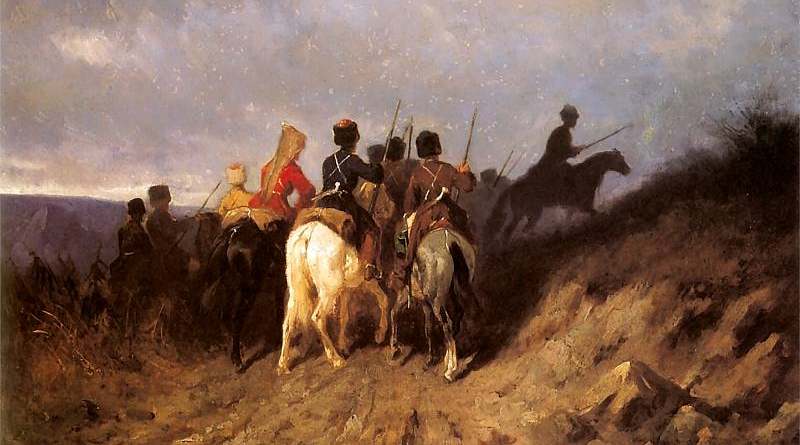
The situations with the Cossacks in the Kuban and those “sent” to Western Ukraine are significantly more complex—because here we’re dealing not just with involvement in the empire due to circumstances but with active participation in its power practices. Seemingly, the guilt is unquestionable. If only the context is not considered. And in the first case, the context is that the Cossacks ended up in the Kuban not of their own volition, but based on a directive from Catherine II after the end of another Russo-Turkish war. And the main mass of those who moved to the Kuban were former Zaporizhian Cossacks, whose homes were destroyed by Russian troops just under twenty years before, in 1775, as “gratitude” for the blood shed on the side of the empire in the war against the Turks 1768–1774. This time, the former Zaporizhians were sent far from Ukraine—to lands where everyone was alien, and the only familiar element remained the imperial power itself.
With Western Ukraine after World War II, the situation is even more interesting, not only because it partly concerns a “Ukrainians against Ukrainians” scenario—most of those referred to as “dispatched” did not come voluntarily, and a certain unofficial hierarchy quickly formed, based on the position of a specific “dispatched” person in the imperial hierarchy relative to punitive practices (I can confidently assert this as someone who grew up in the western region). The representatives of state security, high-ranking army commanders, and party hierarchy members were perceived as the most threatening and utterly foreign. A lower stage was occupied by “ordinary” soldiers—i.e., privates, sergeants, lower-ranking officers, and lower and mid-level civilian authorities. “Harmless” and rather victims themselves were considered ordinary civilian specialists—especially those who demonstrated a desire to “behave humanely,” i.e., simply do their job. This was understood not only by ordinary residents but also by the underground, which consistently distinguished between representatives of the punitive apparatus and the dispatched civilian specialists. Even the Red Army soldiers (who were the battering ram behind which the NKVD and all the horrors of the Soviet totalitarian regime followed) were primarily regarded as victims of the same regime, who needed to be “conscientized” accordingly. Sometimes efforts at “conscientization” had truly striking effects—as in the case of Yosyp Pozychaniuk, who arrived in Galicia as a Komsomol instructor, thus a sufficiently reliable “agent of the empire,” but ended up acting in the underground and perished in a battle with an NKVD unit.
Even from such a cursory overview of specific cases, it is clear that for a truly in-depth conversation about the phenomenon of “soldiers of the empire” or “janissaries” (the very existence of such terms, sufficiently entrenched in the culture, indicates that the phenomenon was quite visible) at least some systematization should be introduced. Simply because there is a difference between a peasant who moved abroad primarily because they wanted to farm without all the restrictions they faced at home, and a person who voluntarily, for example, joined the punitive organs.
If we attempt to categorize the array of Ukrainians who, in one way or another, found themselves as “agents of the empire,” it becomes evident that we are dealing with a very diverse community. The frequently mentioned peasant-settlers will likely be the most numerous, but at the same time, the least “agent,” excuse the pun, group because their decision to relocate was made based on pragmatic life considerations, and their subsequent trajectory, including being “agents of the empire,” was determined by circumstances and the logic of social processes. More conscious and “engaged” agents will include categories comparable to the hypothetical “dispatched”—that is, those who ended up in non-Russian territories or lands in Ukraine previously free from Russian presence with a clear mandate from the authorities in a specific capacity, yet in their position, they were primarily executors of orders from “above.” This group would include not only the “dispatched” at the level of civilian specialists, mid-level officials, or junior army command but also probably all officials and specialists of Ukrainian origin who at various times found themselves as “dispatched” in the non-Russian territories of the Russian Empire and USSR.
And at the highest level will be those who not only voluntarily served the empire but also built it by making decisions. Here, any theoretical discussions about coercion or pressure of circumstances are irrelevant, as these people usually had influence over the situation and could change it. Ultimately, they could resign. The list here will be quite extensive: starting from “Cossack sons” who contributed to the formation of the Russian Empire in its classical form – widely portrayed in mass culture – to cases like the conditional Karin-Danilenko, who voluntarily chose to serve in the punitive organs of the USSR.
Of course, distinctions are needed in the cases of Ukrainians among non-Ukrainians and the conditional Dnipro region resident in Western Ukraine in the 1940s, and partly later. As well as paradoxical situations on a personal level, such as when a person genuinely believed that by serving the empire, they were at least helping Ukraine. Or the predominantly domestic cases of Walenrodism at the local level, when alongside “service to the empire,” an individual secretly helped those threatened by this empire. Or situations where a former “servant of the empire” underwent an internal conflict, resulting in switching to the side of the oppressed – such a path was taken, sincerely or not, by many leaders of post-communist independent states.
On the other hand, all the expressed remarks are rather clarifications. Much more problematic, compared to effectively lumping very different cases of “agents of the empire” together from a historical context perspective, is the general paradigm of posing the question. The author emphasizes at least twice that her goal is to save Ukrainians from what she sees as excessive fascination with the status of victims of imperial practices. And, it seems from the logic of the text, the best recipe for this is the actualization in the societal and scientific space of the topic of Ukrainians serving the Russian Empire – especially when victims of such service were other oppressed peoples. All would be fine (after all, facts are stubborn things), the phenomenon, as mentioned, did occur, were it not for the fact that the proposed solution seems too close to the “perpetrator – victim” dichotomy. At least, no other possibilities are mentioned in the text – which, by the way, thoroughly narrows the context.
This narrowing is indeed problematic, primarily because of its incompleteness. We see only Ukrainians in relation to the Russian Empire, somewhere in the farther perspective – non-Russian ethnicities. And with only two possible roles – either victim or perpetrator (or accomplice), speaking somewhat simplified and radically. All other possible positions are practically defined by their proximity to these two extreme poles. Thus, the position of the perpetrator assumes almost unlimited freedom of action – and, ultimately, the intention to commit crimes based on notions of one’s own superiority and “civilization.”
At the same time, even a superficial review of the examples provided by the author clearly demonstrates that each individual case has its own specificity in the context of the agency of the Ukrainian side’s representatives. Their intentions differ even within the same group, depending on the positions of individual representatives and their awareness of their actions in the context of imperial oppression. Accordingly, when we tackle the topic of the unwilling assistants of the empire in the form of representatives of the enslaved peoples (in this case, Ukrainians) in the colonial, imperial, and sometimes even openly genocidal practices of the Russian Empire, one must seek answers to three fundamental questions in each individual case. The first of these is whether it was voluntary. Are we dealing with a conscious action aimed at helping the empire, which at best neglects, and at worst consciously acts against other enslaved peoples? The second is where the idea originated, who was the instigator and coordinator if the specific situation implies these roles. And the third is who was the beneficiary?
Before attempting to answer all three questions, it is important to clearly understand that the situation in which Ukrainians acted as agents of the Russian Empire would not and could not have occurred without the conquest, occupation, and harsh political domination over Ukraine by Russia. Moreover, in the 20th century, to which the problem primarily pertains, a significant component of this control was systemic terror. In fact, this statement already contains a large part of the answer to the first question – as it becomes obvious that Ukrainians made their decisions in the context of unlimited imperial dominance and often being forced to consider the threat of physical repression by the authorities, which is especially relevant in the reality of the USSR. Thus, voluntariness and agency were significantly limited from the start.
In fact, this limitation of agency, even before the onset of totalitarianism, is most vividly seen in the case of the peasants. They moved in search of free lands not out of a desire to become “agents of the empire,” whatever that might imply, but to secure the possibility of farming and living in relative well-being. At home, they were simply suffocating under the conditions of “land hunger.” And a large part of the blame for the lack of opportunity in Ukraine lies precisely on the imperial economic policy.
The Cossacks who moved to the Kuban were also not too thrilled with their fate, as evidenced by the folklore of those times. In particular, the ballad “Oh in 1794…” clearly sings about the moment that triggered the relocation process being the “empress’s decree” – and from the text, it is clear that the Cossacks perceived this event as a sort of divine allowance – “Heeey… the third land for us to live…”, followed by: “And how we will live… fight the infidel…” All this does not quite resemble a particularly triumphant perception of the prospects of being, in fact, “soldiers of the empire” – especially since it was the empire that deprived the former Zaporozhians of their true home.
As for those “sent” from among the Dnieper region inhabitants during the period of 1939–1941 and after World War II, it was about the consequences of appointments, the so-called “assignments.” After all, the very term “sent” already indicates limited voluntariness in decisions to come to an obviously dangerous region, considering the ongoing resistance from the UPA and underground forces. In Central Asia, Ukrainians began to appear en masse only during the USSR period, primarily as prisoners and exiles. Some remained there after their sentences ended, and the author mentions this—though in such cases, it’s unclear what voluntariness of actions can be discussed, as these were exiles or former prisoners.
After this rather superficial analysis, we also find an answer to the second question—who was the initiator. It is evident that it was the empire—either in the form of an “order from Petersburg,” or the directive to send thousands of specialists to newly acquired territories simultaneously with an effectively occupying military corps.
The issue of the beneficiary requires additional considerations. Here, it is important to note the author’s valid observation that ethnic Ukrainians in the role of “soldiers of the empire,” whether voluntary or not, often embodied a certain model of social behavior, way of thinking, and so forth, which were evidently the result of education in an atmosphere of imperial dominance and inevitable indoctrination—be it Romanov or communist.
This was the result of a highly specific agreement, which the author describes as Russia’s demand for Ukrainians to effectively become “Little Russians,” not only politically but also ethnoculturally. Mykola Riabchuk has intricately described the mechanisms and essence of such an agreement—it essentially involved a willingness to sacrifice one’s identity, sealed by renouncing its markers, primarily language, in exchange for a social advance.
However, the mere existence of this agreement creates a dilemma. Because what happens? Ukrainians became agents of the empire—but to become such, they had to renounce their Ukrainianness in terms of the traits that comprised their ethnocultural identity, break traditional social ties and significantly alter how they maintained them. Thus, culturally, identically, and partly socially, they seemed to cease being Ukrainians. Yet, when it comes to the question of free or involuntary participation in imperial practices, they abruptly become Ukrainians again. Although, by complying with the empire’s proposed agreement, they were often Ukrainians only by the fact of birth in Ukraine, knowledge of the Ukrainian language, customs, and certain unconscious domestic practices and habits acquired in early childhood. To resolve this methodological dilemma, we need to either assume the existence of some ideal essence, something like “blood and soil,” which remains with a person eternally due to being born within a particular community on a specific territory and constantly determining identity and community affiliation, or expand the methodological field, involving a broader context.
First of all, the international context. The text already mentions that the author of the original text focuses only on the Ukrainian case. But didn’t the practice of Russification, to use the czarist term, apply not only to Ukrainians? So, were Ukrainians the only “agents of the empire”?
Of course not. While Ukrainians were being “encouraged” to go to the so-called Central Asia, in Ukraine, for instance, people from that same Central Asia were appearing in the name of “strengthening the friendship of nations” in roles as students of various specialties or as assigned specialists. This practice is described, in particular, by Yaroslav Hrytsak in his “Outline of the History of Ukraine…” This was during Soviet times. By the way, the children of officers were exempt from learning the “local” languages, including Ukrainian. Military families were considered one of the means of changing the social and national structure of non-Russian peoples. A vivid memory—there was an airfield in the area where I grew up, where representatives of different peoples served, and it occasionally happened that local girls married military men. The situation always developed the same way—the newly married lieutenant or captain was immediately transferred somewhere else. What could be behind this, besides attempting to avoid the rooting of an actual “servant of the empire” and the dilution of the national composition and social structure of non-Russian peoples? Something tells me this was not a unique situation.
But since the author mentions, among other things, the Cossacks in the Kuban, it is worth recalling that half a century before the destruction of the Sich, imperial authorities actively encouraged the colonization of the Taurian steppes, particularly by Serbs and Germans. And if the former sought protection from another empire—the Turkish one, then what were the Germans doing in the steppes, whose involvement in the processes was brilliantly articulated by Shevchenko with his “And the wise German plants potatoes at the Sich…?”
In the USSR, there was a practice of sending troops composed of representatives from other ethnic groups to various regions. Thus, in Ukraine, there were units with a high presence of people from the same Central Asia or the North Caucasus, while Ukrainian boys were sent to Central Asia or, for example, the Baltics. It is worth mentioning that General Dzhokhar Dudayev served in Ukraine for a time, as well as in Estonia. Would anyone call him an agent of the empire? Especially after the Chechen people became victims of an act of genocide—forced relocation in the winter of 1944, where the winter in the mountains is harsh. The future general himself was deported with his compatriots at just eight days old. Or perhaps someone will compile a list of Soviet army servicemen of Central Asian origin who served in Ukraine and present relevant claims from Ukraine to the Central Asian states? Ultimately, the very author of these lines does not have to look far—my father once served in East Germany. When I asked for permission to disclose this fact, I heard “Did I want to go there?” Of course not, especially since the family by that time had been to Siberia, having survived forced deportation—not just “for company,” but for quite real participation in aiding the underground movement.
The logic of “I wanted to go there, right?” is not just about the emotional reluctance to perform certain actions. It’s about perceiving the very fact of “service” on a personal level. At this level, more so than when discussing groups, it is appropriate to talk about purely material or status benefits as a sort of “compensation” from the empire, as well as the possibility of choice. In fact, on a personal level, it can be about guilt in the full sense of the word if an individual, without external pressure or the threat of repression, chose to serve the empire, fully aware that they are being offered the role of an instrument of oppression of other peoples. Ultimately, this option has long been known in folklore in a far from complimentary form of “turned Turk… for Turkish luxury, for unfortunate indulgence.”
However, at the group level, even a brief overview clearly shows that the only true beneficiary of the work of all the mentioned and unmentioned “agents” was the empire itself. In the case of Ukrainians, one can speak only about the life advances of some of these “agents,” mostly at the middle and higher levels, yet Ukraine, in any case, lost. It lost people.
And the losses were not limited to people alone. Such a practice generated and repeatedly manifested the painful paradox when, at the level of direct experience, the executors of the repressive actions and policies of the empire were representatives of other enslaved communities. As already demonstrated, sometimes these were Ukrainians relative to other non-Russian peoples, and sometimes these were representatives of other peoples relative to Ukrainians. This practice itself created an extremely convenient path for redirecting hatred towards the empire (which could not be realized due to the imbalance of power relative to the empire and the paralyzing force of the memory of what was experienced) onto the heads of a more convenient and, most importantly, safer object in the role of another enslaved people. The described cocktail could potentially lead to the formation of mutual negative stereotypes and potentially lay a mine in the relations between two peoples. In this context, it is reasonable to recall the practice of “drawing” borders in such a way as to leave enclaves of other nationalities within separate national republics or autonomous regions, which opened the way to potential conflicts and the empire’s proposal to act as a peacekeeper—however, there is no room for a detailed review of this practice.
In the end, it turns out that completely natural mechanisms for living through both colonial and genocidal trauma initiated the principle of “divide and conquer,” which on an imperial scale was an important component of the balance that allowed the imperial center to maintain the “status quo.”
Again, the ultimate beneficiary was always Moscow in terms of the political center of the empire. And, by the way, the Ukrainian liberation movement well understood this, trying to oppose it. There are plenty of examples: from what we may call modern programs of renationalization in the camps for prisoners in Wetzlar and Rastatt during World War I to demands not to send Ukrainian boys to serve outside Ukraine at rallies in the early 1990s. In the end, much is said about the place that the theme of the “janissary” occupies in Ukrainian culture—that is, a person who signed a pact with the devil, that is, the empire, about the loss of identity in favor of “Turkish luxury and unfortunate indulgence.”
It is also important to consider that there was genocide in the history of the confrontation between Ukraine and Russia. Genocide is a trauma that leaves a deep mark on the collective consciousness. One manifestation of this mark is identifying with the oppressor. In this situation, this phenomenon also involved adopting the behavioral patterns both with subordinates in general, and specifically with representatives of subjugated peoples. As a result, the stereotypical Ukrainian — “agent of the empire” — not only switched to Russian as the language of the empire but also adopted a specific, inherently disdainful, and rough model of behavior towards everything non-Russian, especially those dependent on Russia, with all the verbal baggage.
Moreover, the empire itself demonstrated a recipe for success — and it obviously could not have been other than imperial. Eventually, this recipe became almost the only model of success. In the eyes of the subjugated peoples, a connection was formed: “if you want to be successful, become an empire, dominate, and suppress.” This logic was further fueled emotionally by a natural thirst for revenge for subjugation and genocide, which, under conditions of impossibility for realization, sublimated into suppressing others similarly subjugated.
In this context, the adoption by some Ukrainians of the identity offered by the empire and the acceptance of the position of “soldier of the empire” can be seen simply as a successful case of this very genocide, as victims changed their social and national identity under the pressure of both terrible memories of mass killings of their community and the temptation of prospects for this renunciation. Conversely, accepting the role of “soldier of the empire,” combined with the renunciation of one’s own ethno-cultural identity, can be interpreted as a survival strategy.
Of course, such a victim, who uses even the slightest means to survive, even if not very moral, will not seem ideal. So aren’t we, by accusing Ukrainians of collaborating with the empire that arranged their genocide, actually taking the side of that very empire? But before making moral accusations, one should inquire — who created the conditions in which the victim must fight and survive? Again, questions naturally arise, previously posed closer to the beginning of the text.
And despite all the author’s remarks about not diluting the blame or guilt of Ukrainians, one would have to be somewhat naive to seriously believe that raising such a topic as the conscious or unconscious participation of subjugated peoples in imperial practices does not objectively open the doors to justifying empires and, again, diluting the blame. Because if not only empires are guilty, then according to formal logic, everyone is somewhat guilty; there are no truly innocent parties. Finally, the empire loves dead victims — they do not come for justice. And here lies a delicate point that on a personal level, the alternative to forced service to the empire and the acceptance of its identity could very well have been, at the very least, being reduced to the position of social destitution, at most — arrest, prolonged imprisonment, and even execution. So, we are essentially talking about a choice between death (at least social death) and forced disgrace — but still life and, at the very least, relatively tolerable material conditions, which in the situation of chronic poverty overwhelming the majority of USSR residents, had significant importance. This raises the question — is this not just blame placed on the victim, but demands of a level that only the Eternal Judge could pose? Because, in fact, people are being required to be ready to suppress basic survival instincts, to face death, yet adhere to all moral rules.
Moreover, the author herself, to her credit, mentions that the presence of Ukrainians in non-Russian and even non-Slavic territories was largely a consequence of the repressive actions of the empire—whether Romanov or communist. She also notes that the Scottish and Irish cases had their own “complex pages” in their relations with the empire, in which some Irish and Scots acted as its agents. These “complex pages” include, for instance, the Battle of Culloden for the Scots, the consequences of which can be compared to the aftermath of the Battle of Poltava for Ukrainians. In the case of Ireland, the potato famine of the 1840s, which resulted not only in horrific human losses but also in a drastic reduction in the use of the Irish language, serves as a reference. The consequences of both events remain unaddressed to this day. After acknowledging these “complex relations,” the question arises again: is it appropriate to consider the phenomenon of “agents of empires” as part of the agency of subjugated peoples? Or is it more a tactic for survival under imperial pressure?
Furthermore, a component of the trauma of genocide is the fear of speaking out, known as the trauma of silence. The question then arises: if we agree to narrow the discourse about Ukrainians as victims of the empire in favor of discussing the involuntary participation of Ukrainians in imperial practices without considering deeper contexts, are we not to some extent deepening this trauma? Are we not becoming accomplices ourselves? Moreover, in the context of the “trauma of silence,” the cautious phrasing by the author regarding the repressive actions of empires as a significant reason for the mass appearance of Ukrainians outside Ukraine and in the experiences of Scots and Irish with Britain becomes intriguing. Is this not a continuation of that trauma?
After reading everything written above, one might wonder: what was the author’s purpose in writing her text? Certainly not to defame Ukrainians, as some readers hastily claimed. She is clear about her goal: to break Ukrainians out of the unconscious inertia of replicating imperial patterns in the perception of other non-Russian peoples. It’s hard to disagree with her that the issue exists and frequently surfaces in regular scandals concerning the treatment of Crimean Tatars and Islam. Overall, the experience of relations between Ukrainians, particularly with Muslim peoples, remains in a blind spot, and it cannot be considered addressed through poetic-stereotypical notions of “yasir” and poetic references to Shevchenko’s “Caucasus,” especially concerning the peoples of the Caucasus. Thus, the problem is relevant.
However, its manifestation in the context of colonial heritage is not only the displacement of uncomfortable elements for a certain stable model of self-perception into a “blind spot.” Colonial experience (in our case, “supplemented” by the experience of systemic totalitarian violence and genocide) primarily leaves a feeling of inferiority and, moreover, worthlessness, along with a set of habits aimed primarily at demonstrating, at a minimum, loyalty, and at maximum, similarity to the empire.
And the inertia of this pattern is strong enough that after the fall of “its” empire (in our case, the USSR), the community affected by it begins to seek another embodiment of the empire—especially if it has a genocidal experience. By the pendulum principle of trauma, we have found it in the Western world and have projected all our complexes onto it regarding all the various incarnations of the Russian Empire. However, the totalitarian experience invariably cries out from the subconscious about the need to camouflage under the current empire, and sometimes it seems that persistent attempts to transfer a sense of guilt onto Ukraine and other subjugated countries in one form or another are nothing but a manifestation of this bizarre mix, considering the spread of the pattern of repentance among former empires.
However, from the perspective of the colonial experience of Ukrainians and, I believe, other victims of the Russian Empire, this is rather the continuation of colonial inertia with its hidden sense of inferiority and need for association with a “great empire,” than its overcoming, which the author rightfully points out as necessary.
In the illustration: a painting by Maksymilian Horimsky “Kuban Cossacks.” Kept in the National Museum of Warsaw.
