
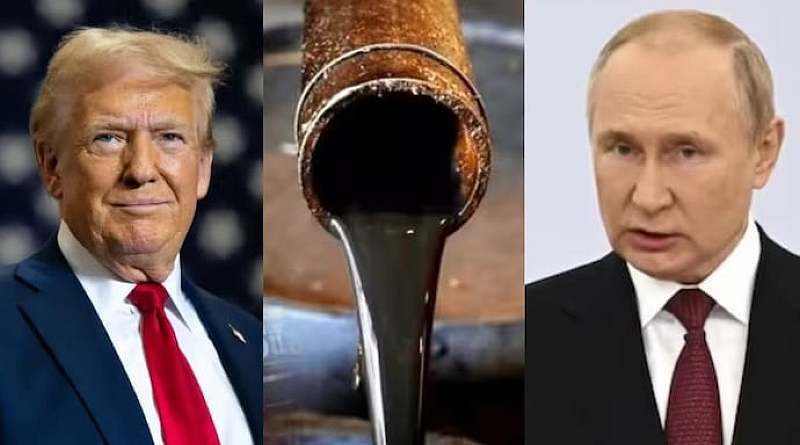
The Russian president will not be able to fully take advantage of the extraordinary generosity organized for him in the United States amidst the war with Iran and attempts to somehow balance the oil market after the Strait of Hormuz was closed.
Yes, Putin will receive billions of dollars from the sale of oil from the tankers strategically sent out to sea. But he expected more.
This greater benefit will not materialize thanks to the efforts of Ukrainian military forces. Attacks on Russian refineries began in the fall of 2023, but their intensity has increased now. Most importantly, Ukrainians realized that it was necessary to target not only refineries but also, primarily, the oil ports of the Russian Federation.
These combined attacks are pushing the Russian president into a vicious circle. Russia cannot sell oil, nor can it process raw materials for domestic use because the refineries lack capacity. They are forced to shut down wells and use foreign currency reserves to purchase oil products abroad.
However, due to the war in the Middle East, there are more and more problems, and yes, these oil products are becoming more expensive. The economy is beginning to really and visibly decline.
The journal Foreign Affairs notes that the Ukrainian strikes have achieved what could not be achieved by all Western sanctions combined.
Last year, the Kremlin’s oil revenues fell by 24 percent, marking the worst indicator since 2020. In January 2026, Russians earned half as much from oil sales as they did a year ago. In March, according to Reuters, revenues were down 52 percent compared to March 2025. For the first time in years of full-scale war with Ukraine, Russia spent more on it than it earned from oil. As a result, Putin had to convene a special meeting and scold his ministers for GDP decline.
Of course, he does not want to end the war and until now has considered peace negotiations solely as a way to reach an understanding with his American counterpart. But the issue is not only about Putin’s desires — it’s about his capabilities. If Russia lacks money and conditions for social destabilization arise, Putin will simply have to stop. Risking regime stability is not in his interest.
Thus, 2026, thanks to Ukrainian efforts, turns into a time of real pressure on Putin. However, it’s important that only Putin is caught in the vicious circle, not Trump.
Because when Trump, on one hand, wants to quickly end Russia’s war against Ukraine, and on the other, agrees to issue and then extend the license for selling Russian oil from the “shadow fleet” tankers, he essentially saves Russia’s oil infrastructure and creates conditions not for ending but for continuing the war. And not only that, but also for aiding Iran.
Iran, aware of the possibility of such assistance, continues to blackmail Trump and block Hormuz. And Trump, trying to reduce the pressure of oil prices on the congressional election results, helps Putin in selling raw materials again.
I like Putin’s vicious circle. Trump’s circle — not so much, because it provides an escape for Putin, at least temporarily. To force Putin to stop, Trump’s “vicious circle” should be broken.
Moreover, it would also positively influence events in the Middle East.
